
Local

Monday, June 6 to Tuesday, June 14, several locations in Central Ohio
We seek to celebrate and enhance understanding of diverse approaches to peace and community-building through politics, art, health, industry, and beyond. The Ohio Peace Festival is an annual event organized by the Ohio Peace Collaborative, a collective group of peace-driven individuals, organizations, non-profits, and companies within the State of Ohio.
Mission: To build unity through peace.
Vision: A collaborative world of peace, justice, and understanding.
Our values: Nonviolence, positivity, collaboration, and non-partisanship.
Events: See events listed below and at ohiopeace.com.
Contact: Ohio Peace Festival, 1501 Neil Ave., Columbus, OH 43201; or 614-327-8389 (voice/text) or 614-292-3810 (voice); or ohiopeacecollaborative@gmail.com
ohiopeace.com/
Ohio Peace Festival Events
Peace Film Festival Showcase
Tuesday, June 7, 6pm, Gateway Film Center, 1550 N. High St.

Lewis Carroll’s beloved Alice has returned in a film that offers wondrous imagery but little else.
Alice Through the Looking Glass is the sequel to 2010’s Alice in Wonderland, which already was a sequel of sorts. Directed by Tim Burton, it imagined Alice as a teenage version of the young girl who once found herself in the eccentric world of the Mad Hatter and the Cheshire Cat.
Though admired for its surreal photography and characters, the earlier film was criticized for its ho-hum storytelling. Nevertheless, it was a huge hit, setting the stage for the current release.
Whether or not Looking Glass is equally successful at the box office, it’s sure to draw even more brickbats. Director James Bobin fills the screen with images as odd as anything Burton could have concocted, but the storytelling is blandly uninvolving.

I’ll admit it. I built this month around watching the Cleveland Cavaliers in the playoffs while scrolling Facebook and IG on my phone.
1. I like the idea of LeBron coming home and getting the title more than I like the idea of him not winning the title and having to move. How heartbreaking would it be if he doesn’t get a title in Ohio?
2. LeBron is the co-owner of Blaze Pizza on Campus. Blaze Pizza is a pizza start-up that boasts LeBron James as an owner. It’s similar to Chipotle, Piada or Subway where they make the food in front of you.
It differs from Subway, Piada or Chipotle in an important way for me. Blaze Pizza offers vegan cheese as an option with no extra charge. So when you watch the Cavs game while eating a pizza with a zillion toppings you can thank LeBron for going the extra mile if your vegan.
If you’re not vegan: I’m sure there is something special about the pepperoni, anchovies or whatever.
This is a left-wing paper. The above was a vegan paragraph.
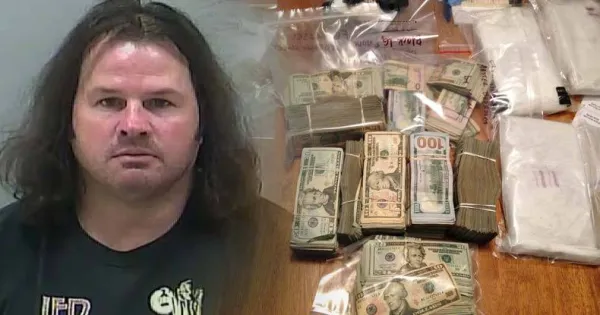
In a way, corrupt cop Tye Downard, along with his wife and children, are also victims of the war on drugs.

In 2008 I visited the lovely, dangerous Helmand Province in our 51st state, Afghanistan, as a guest of the 23rd Marine Expeditionary Unit and my hero, Dick Cheney, during which I was wounded by a Taliban tape worm and had dysentery for more than a month. For which I earned the marines' coveted Gomer Pyle Media Dumb-Ass Award.
Ain't been the same since, literally. But the V.A. wouldn't help me and nobody bid when I put the medal on Ebay. Probably because it doesn't exit. And if you don't know that by now then let's get together so I can sell you one slightly used record store on High Street.
But I did get to briefly meet Fox News commentator, Oliver North of Iran-Contra infamy, in a tiny grimy little marine combat outpost 50 miles from the Paki border. We exchanged Geraldo Rivera jokes. We didn't share MRE's. He had his own Humvee.
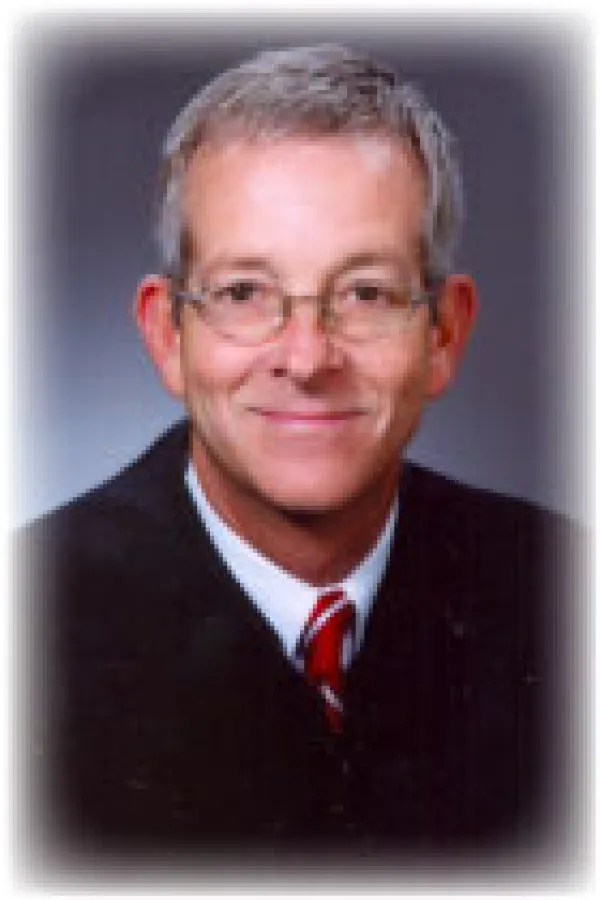
Thanks to U.S. District Court of Southern Ohio Judge Michael Watson, the voting public should have more days to cast their ballots. On Tuesday, May 24, Judge Watson ruled that Ohio violated voters’ rights by reducing the number of days included in “early voting.” In 2014, Ohio cut early voting from 35 to 28 days and eliminated the “Golden Week” when citizens can both register to vote and cast a ballot. Judge Watson deemed this “unconstitutional” and decided it violated the Voting Rights Act.
Judge Watson’s opinion rejected Ohio Secretary of State Jon Husted and Ohio Attorney General Mike DeWine’s contentions that cutting early voting was necessary to prevent fraud and voter confusion. The Judge stated that the shorter early voting period would instead cause longer lines at the polls and potentially deter would-be voters.

In 2013, a group of Columbus citizens became RadioactiveWasteAlert.org when we learned that the Ohio EPA had permitted a local business to “recycle” frack drill cuttings (the dirt, rocks, sludge from a frack bore hole) along the Alum Creek, next to our homes.
We got busy, got the word out, sold t-shirts, put up billboards, and brought in good science professionals: Soil and Watershed consultant -Julie Weatherington-Rice; Microbiologist -Yuri Gorby; Pediatrician -Larysa Dyrszka; and Radiochemist -Michael Schultz, to help us understand the threat. Turns out the Marcellus and Utica shale is naturally radioactive.

Ohio Governor John Kasich picked “poodles” – softball interviewers – for his return to public view after dropping out of the Republican presidential primary race in early May, following another shellacking at the polls in Indiana.
Ohio's lame duck governor invited CNN celebrity Anderson Cooper to come to the largely unoccupied Ohio governor's mansion (because Kasich chooses to continue to live in his rural Westerville palatial estate at additional cost to the taxpayer).
Cooper took time off from promoting his latest money-making project -- a book about him and his celebrity mom -- sandwiched in between his stand-up appearance in Columbus with a friend -- to welcome Kasich back to the public spotlight by letting Ohio's blabbermouth Gov say whatever, largely unfiltered and completely unobstructed by follow-up questions.

Copious Restaurant just delivered – for those seeking amazing vegan (and even gluten-free) options – a new and exciting, fine dining experience. WOW! The only thing currently missing is a decadent dessert (rest assured, they are working on it). Everything is top notch – from the grains, greens and beans to the avocado gazpacho (hits the spot on a hot summer night). I was quite likely drooling whilst dreaming about the steak and potatoes for days after my first experience. The only thing good about losing my camera recently, was returning there to replace my lost food photos and assuage my woes with another meal.
In other Socially Just Dining news, according to The Telegraph (UK) the vegan population in Britain has boomed by 360 percent over the last ten years. Mintel reports vegan options have increased in Germany 633 percent from 2011 to 2015. Al Jazeera reports The Not Company (Chilean), has a computer program, Giuseppe, which has algorithms to replicate the molecular components for the taste, texture and nutrition of animal-based foods with enhanced plant-based substitutes.

The medical marijuana bill passed May 25 by the Ohio Senate with a vote of 18-15 did not inspire ground swelling support from the cannabis activist community.