
Local
In the lead-up to the November 3 referendum on pot legalization in Ohio, reputable mainstream polls show it winning.
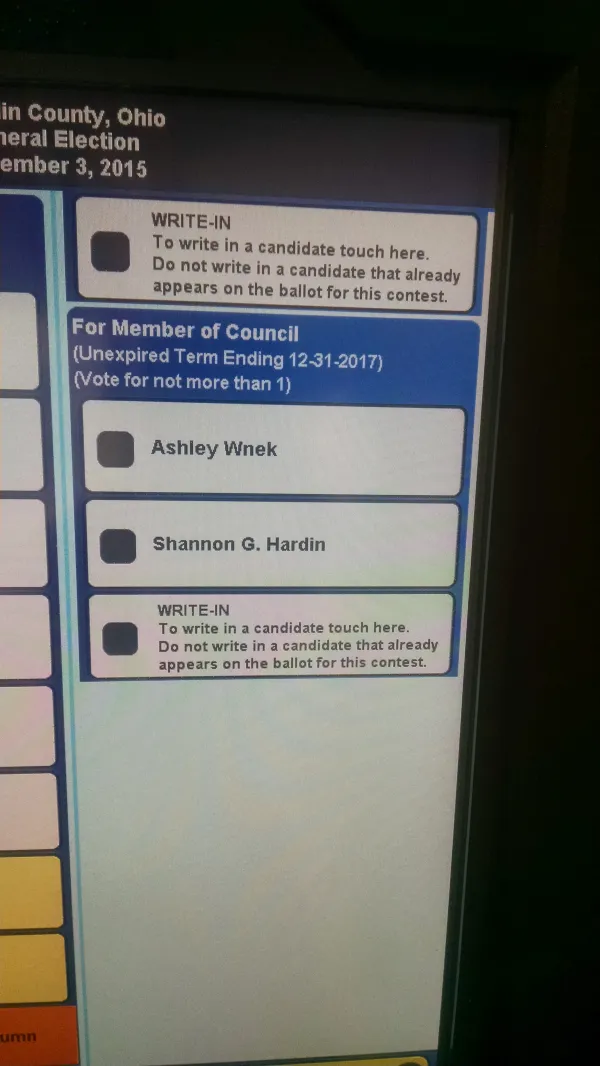
Then, amidst the usual “glitches” that distinguish the Buckeye State’s electronic elections, it officially failed by a 2:1 margin.
The outcome is a virtual statistical impossibility. But it fits a pattern that has made Ohio elections infamous since the 2004 “selection” of George W. Bush over John Kerry.
As in 2004, this year’s balloting was supervised by a Secretary of State with a heavy partisan stake in the outcome.
In 2004, the presidential voting was supervised by J. Kenneth Blackwell, who simultaneously served as the co-chair of Ohio’s Committee to Re-Elect Bush and Cheney.
In 2015, the general voting was supervised by Jon Husted, who vehemently opposed pot legalization and threatened legal action against the sponsors of the referendum.
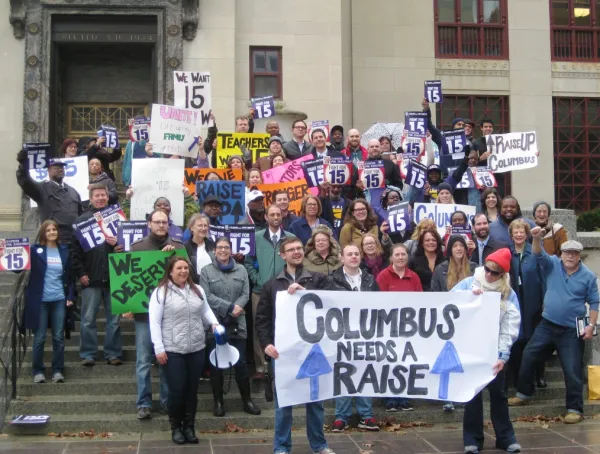
“I’m here to stand up for people who don’t make a decent wage,” said Genelle Rhynehardt, who works as a janitor in the Huntington Center in downtown Columbus. “People have to earn more to better their communities and better themselves.”
A member of Service Employees International Union (SEIU) Local 1, Rhynehardt was speaking on November 10 at a #FightFor15 rally on the steps of Columbus City Hall. It was one of 230 solidarity protests held across the U.S. as part of a national day of action. Fast food workers went on strike in 270 cities, demanding a $15 an hour wage and the right to join a union.
The current minimum wage is not a living wage, Rhynehardt said. “For people to try to live on it and live on welfare at the same time is not fair. We want to be able to stand up for ourselves financially, to be able to go to the grocery store and not rely on food stamps.”
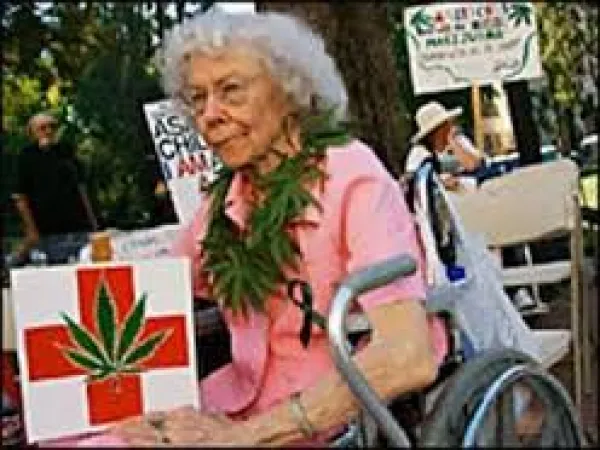
When word began to spread on election night that Athens County – a long-time stronghold for Ohio marijuana legalization – was soundly defeating Issue 3 by nearly 30 percentage points the death knell for medical marijuana in the state became earsplitting.
The pro-legalization base in Ohio was mostly unified in their defiance of the oligopoly Issue 3 tried to create. An anti-corporate push back in the age of Occupy. The Free Press itself was critical of ResponsibleOhio and its big money investors who clearly had aspirations of astronomical profits for years to come.
But not all marijuana activists stood behind those who believed the issue was putting a massive marijuana industry in the hands of a few.
The activists who did support Issue 3 say the base’s outrage over marijuana corporatization may have blinded them. Building up enough contempt that it took away any compassion for the many Ohioans who use medical marijuana (illegally) for whatever ailment they have.
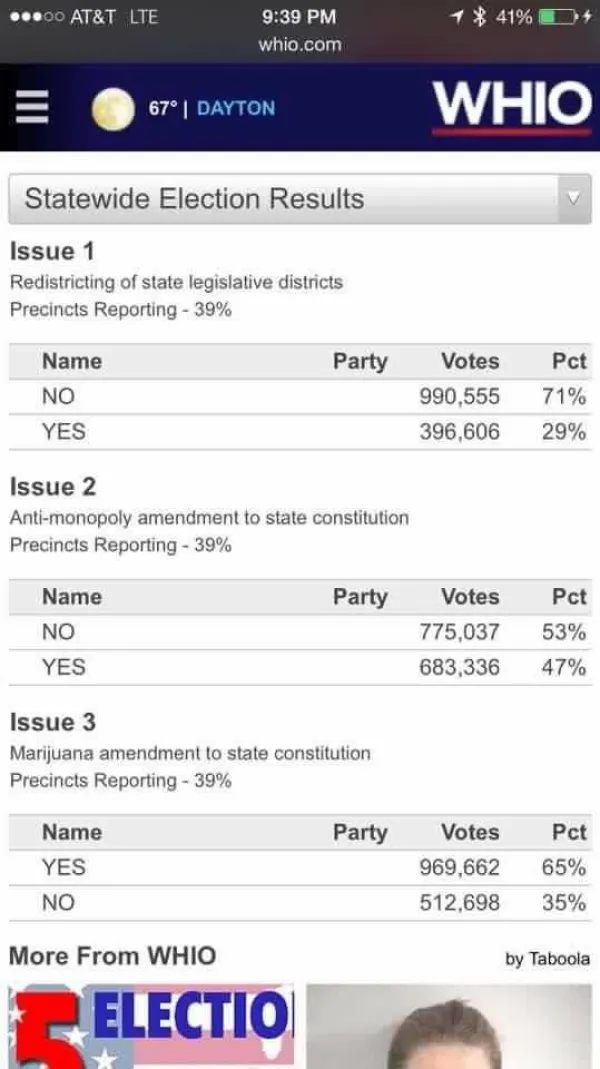
According to the Ohio Secretary of State, the people of Ohio defeated a November 3 proposition to legalize marijuana by a tally of nearly 2:1.
The official vote count is not plausible.
The assertion that the election was probably stolen fits a well-established Ohio pattern of official manipulation of electronic poll books and voting machines.
Issue 3’s promoters should demand a recount, though the system is rigged and they would certainly be stonewalled. As in 2004, critical election records are likely to not materialize even though they are legally required to be maintained.
Given evidence at very least from Cincinnati, Dayton and at least three pre-election statewide polls, the margin of defeat approaches the range of virtual statistical impossibility.
The controversial measure would have established an oligarchy of ten licensed growers operating regulated indoor grow sites of up to 300,000 square feet each. The pro-marijuana activist community was divided on the measure (disclosure: Bob voted against it, Harvey voted for it).
Here are some basic facts:

Official vote counts in Ohio indicate a major defeat for the nation’s first corporate-sponsored marijuana legalization referendum.
Is there such a thing as too much sex?
In the very first scene of Love, director/screenwriter Gaspar Noe lets us know he’s leaving nothing to the imagination. Lovers Murphy (Karl Glusman) and Electra (Aomi Muyock) are shown in bed manually pleasuring each other.
The scene is filmed both beautifully and graphically. Everything—and I do mean everything—is out in the open.
For the next two hours and 14 minutes, Noe keeps everything out in the open with one sex scene after another, some of them even more explicit than the first. As if to remind us that we’re seeing all of this in 3-D, he even includes a close-up of a penis just as it ejaculates right into our expectant faces.
Would you believe me if I said the main product of all these adult-rated escapades is utter boredom?
The first problem is that we don’t care a fig about the characters whose most private moments are playing out in front of us. How could we, when we see almost nothing but their most private moments?
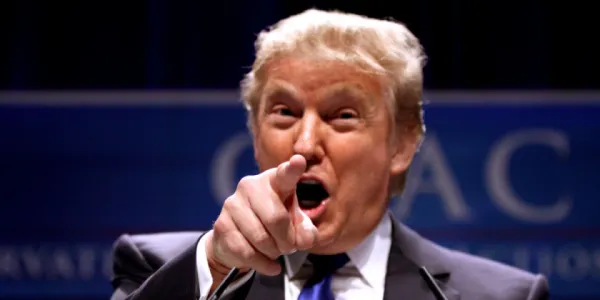
If your name is Donald Trump, or Dick Cheney, or George W Bush, then don’t bother reading this. This article is to help the rest of us to better understand how Donald Trump et al think. The psychiatric literature has long known that people with narcissistic personality disorder, also called the narcissistic sociopath, are far more common at the upper end of politics and business in the United States. About 1% of people in general show the criteria of the condition, yet 20% of CEOs in “Fortune 500” companies and many politicians in this country have these characteristics.
So it pays to know how these people think since it allows us to accurately predict their behavior. The cause of narcissistic personality condition can be summarized in three words: low self-esteem. The person’s thinking process is overwhelmed with the need to show them as powerful and important. It is much more common in men than women, and, thus, testosterone, one of the key driving forces of emotional behavior, powers this condition.
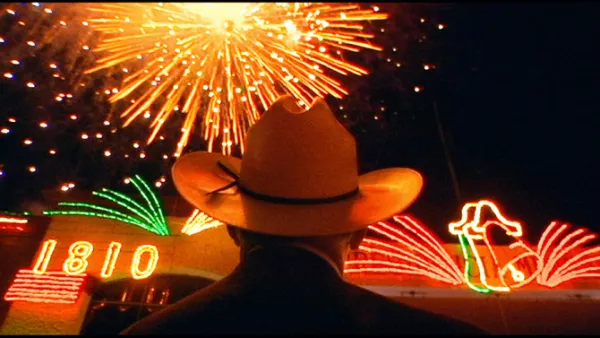
Are you kicking yourself for missing this year’s Telluride Film Festival? Not to mention Sundance, Tribeca and Cannes?
Have no fear. You can still catch a film festival—in fact, two of them. And you don’t even have to leave town to do it.
Every November, a pair of festivals vie for local film lovers’ attention. True, you aren’t likely to see Hollywood celebs at either of them, but if you happen to like non-mainstream films—especially those with a Jewish, LGBT and/or Ohio connection—you’re in luck.
First up is the Columbus Jewish Film Festival, running Nov. 1-15 at various venues. Just how Jewish is it?
“We don’t really have strict criteria,” said festival director Emily Schuss, explaining that a film might be chosen simply because it has a Jewish director or touches on Jewish themes.