
Local
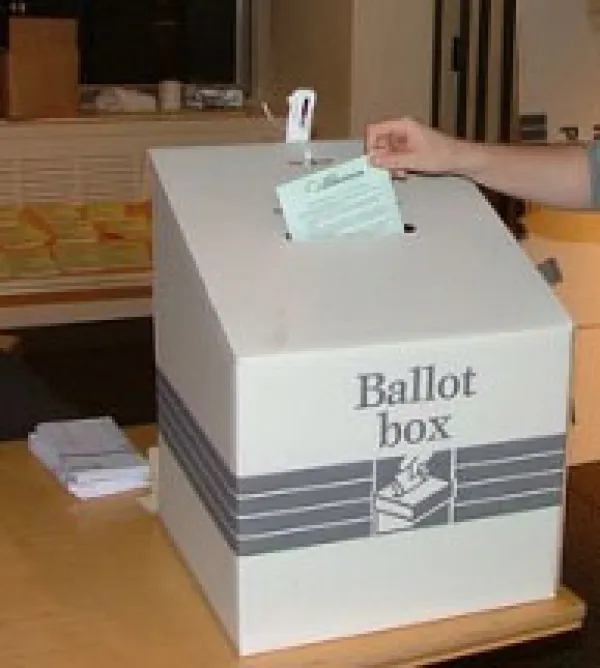
When you are lazy, ignorant and not willing to do research – accuse your more-informed opponents of being “conspiracy theorists.” A recent Columbus Dispatch editorial utilized this technique in its defense of Ohio’s antiquated and easily hacked voting apparatus.
The Dispatch, with few facts or statistics, stated that, “Secretary of State Jon Husted claims ‘…Ohio’s current voting equipment should be in fine shape through the 2016 election.’” In a subhead, the Big D also claimed “Transparent bipartisan approach should head off conspiracy theorists.”
Here are some points to consider.
In 2005, highly-regarded scholar Tracy Campbell published Deliver the Vote: A History of Election Fraud, and American Political Tradition 1742-2004. The book makes a solid case detailing that election fraud is the norm throughout U.S. history.
Community Shares was established in 1993 by a group of nonprofits for the purpose of fundraising on their behalf through workplace giving campaigns. Through these campaigns, each individual donor gets to decide which charity or charities will receive their donation based on which organization is working on the issues and causes they care about most in their community.
There are nearly 60 member agencies working on local issues in the following categories: Animal Welfare and Rights, Civic Involvement and an Inclusive, United Community, Civil Action and Social Justice, Ensuring Affordable, Accessible Housing, Fighting Hunger and Malnutrition, Fostering Literacy, Education and the Arts, Healthy Lifestyles and Choices, HIV/AIDS Care and Support, Preservation and Environmental Protection, Promoting the Potential of Individuals Violence Prevention and Safety, and Youth-Focused Services. The Columbus Institute for Contemporary Journalism, the non-profit organization that published The Free Press through the years, is a founding and current member of Community Shares.
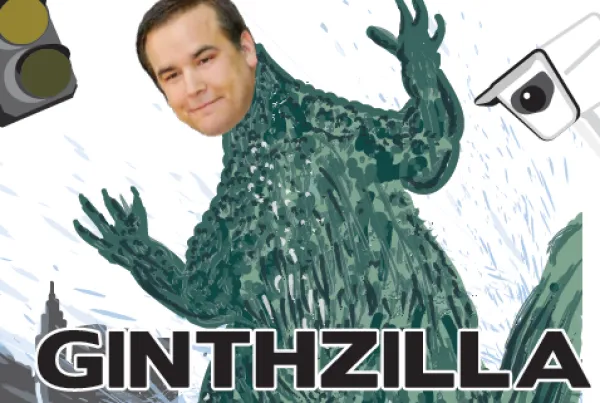
Last month, The Free Press reported on how the Ginther Express was losing its steam. As events have unfolded, the Ginther train has left the tracks and is doing nothing but damage to those around it. The first casualty is former Mayoral candidate James Ragland, who announced he would be supporting Andrew Ginther, the candidate he had criticized so harshly in the primary. Ragland went from saying “if you can look outside your front window and things are getting better then perhaps Andy is right” and calling for Ginther’s apology for the school data scrubbing scandal, to saying “it has become clear to me that in spite of our many differences, Andy understands my views on these issues, accepts them, and has asked for my help in bringing solutions to the table to solve them…”
Ragland’s about face caused immediate damage to the reputation he had been cultivating, and he received heavy criticism from friends, former supporters and advisors for this reversal. Most people commenting believe he hurt himself, more than helped Ginther.
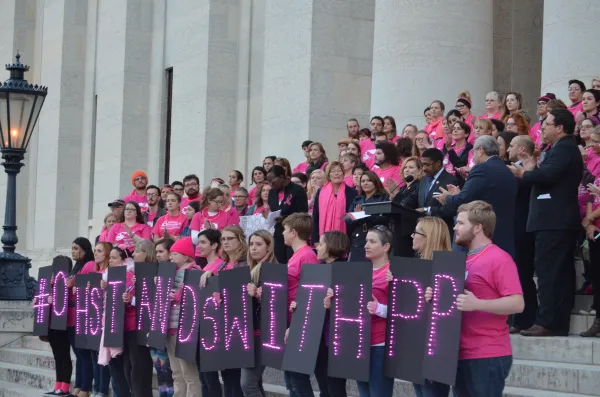
The young woman hands me a hot pink tee shirt and a clipboard. “Please sign your support for funding Planned Parenthood.” She smiles broadly and continues, “I’m testifying tomorrow!” Chelsea Golferman was referring to the Ohio House of Representatives hearings which began Tuesday, October 20 for House Bill 294 to defund Planned Parenthood. In spite of the House panel limiting individual testimony to 90 seconds, women are signing up to testify that Wednesday.
“I first went to Planned Parenthood because I couldn’t afford to go to a private practice,” Golferman says. “I kept going because I got good health care. And I’ve never had an abortion.” You hear that a lot from women and families who use Planned Parenthood as a healthcare resource.
Demonstrators gathered on the steps of the Ohio Statehouse on that warm autumn evening to make clear the importance of Planned Parenthood in Ohio. It was a good turnout; several hundred people, young, old, women and men, mostly white that evening though Planned Parenthood is a mainstay for diverse and ethnic communities.

New map shows most states would be corridors for high-risk, high-level radioactive waste shipments
Expert Tele-Briefing 2 pm (Eastern), Tues., Oct. 27 (See end of press release for call-in details)
Washington, D.C. – Thousands to tens of thousands of high-level radioactive waste shipments would cross through 45 states and the District of Columbia, if plans for the country’s first nuclear waste repository at Yucca Mountain in Nevada move forward. Today, Beyond Nuclear, in coalition with NIRS and dozens of grassroots groups nationwide, released maps of the likely routes radioactive waste shipments would use. The groups want residents in these corridor communities across the country to weigh in with Congress about the dangers.
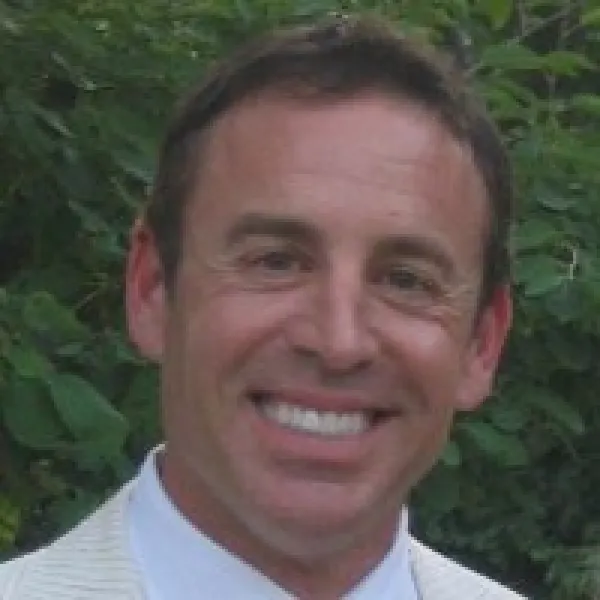
Just who in the heck is Rick Kirk?
If Issue 3 indeed becomes law, and you reside in Franklin County and a marijuana user, Kirk is going to be growing your legal green, selling you your legal green, and taking your monetary green.
Kirk is one of the 20 primary investors aligned with ResponsibleOhio, the “AstroTurf” effort behind Issue 3. The Columbus-based strategy group has said it will spend at least $20 million to get the investor-backed constitutional amendment passed.
After getting injured while trying to make the Dallas Cowboys, Kirk embarked on a career in construction and eventually founded Hallmark Campus Communities, now headquartered in the Empire Building at 150 E. Broad Street. He’s the company’s CEO and also ResponsibleOhio’s lead investor for the Franklin County potentially massive indoor grow site planned for Grove City on Seeds Road (of all places), and just off I-71.
According to the U.S. Securities and Exchange Commission, Kirk initially paid $4 million to become Franklin County’s future marijuana Kingpin. A pittance compared to what his investment could eventually return.
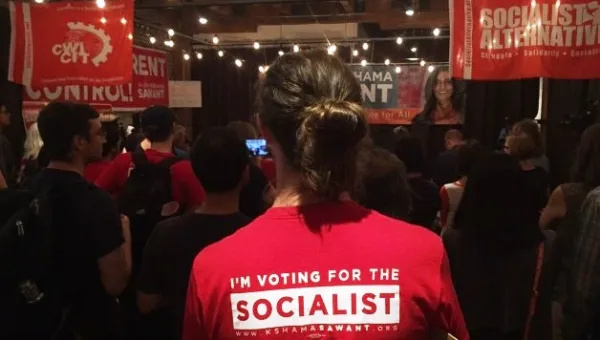
As Election Day draws near, a lot is at stake for working people in Seattle. But the outcome of Seattle’s City Council race will also reverberate in communities across the nation who want their city government to serve its constituents instead of corporate interests.
By making it the cornerstone of her platform in the 2013 City Council race, Kshama Sawant created the political will in a city controlled by the Democratic Party to raise the minimum wage to $15/hour. The Democratic establishment wouldn’t have got there on its own.
Sawant won the election for District 3, unseating a 16-year incumbent Democrat and making her the first independent Socialist in decades to be elected in a major U.S. city.
After years of stagnant wages and an ever-increasing cost of living, Sawant's minimum wage initiative was tremendously popular with working class voters. To maintain their image as the “progressive” party, Democratic mayor Ed Murray and the rest of City Council had no choice but to get on board with a city charter amendment to raise the wage to $15.
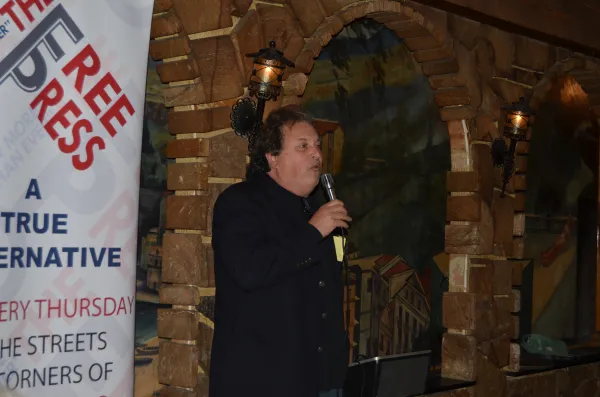
The Free Press celerated 45 years with over 100 supporters on October 19 at the Florentine Restaurant. Six local activists were honored at the dinner in a lively ceremony emceed by Editor Bob Fitrakis filled with positive messages about effective organizing and activism in Ohio.
The Free Press is now “Ohio’s oldest locally-owned news source,” since the Wolfe family recently sold the Columbus Dispatch. This October marks our 45th anniversary, and the paper has re-shaped political debate in Ohio’s capitol city since 1970.
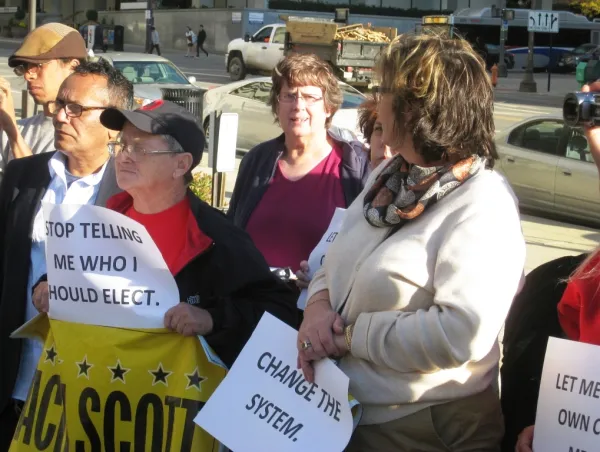
A politically diverse coalition of concerned citizens and community leaders wants to make a foundational change to how Columbus City Council represents the people of Columbus. “We’re fighting to give every community a voice, end corruption in Columbus, and bring accountability back to city government by creating districts in our City Council,” said Represent Columbus co-chair Whitney Smith at a press conference outside City Hall Monday afternoon.
Represent Columbus is collecting petition signatures for a city charter amendment to be placed on the May 2016 primary ballot. The initiative would have ten City Council members elected by districts in which they live. Three at-large Council members would be elected to ensure that city-wide issues are addressed.
“It’s time to return government to the people of Columbus,” said attorney Bill Todd, former Republican mayoral candidate. “It’s time to create transparency, and a system that allows everyone in the neighborhoods to be heard.
Simply Living will hold its 10thannual fundraiser on Wednesday, October 28that the Boat House restaurant at Confluence Park in downtown Columbus, located at 679 W Spring Street. More than 300 people are expected to enjoy a complimentary luncheon in this beautiful setting where the Scioto and Olentangy rivers join.
This year the theme is Sustainable U: Learn, Engage, Transform! We will be highlighting our new initiative, Simply Living Sustainable University, which invites learners and instructors from the community to teach a wide variety of topics related to sustainability. Simply Living has earned a reputation as the hub of a wheel turning communities toward a sustainable future in central Ohio. The event is an opportunity to showcase the current work and future plans of Simply Living.