
Local
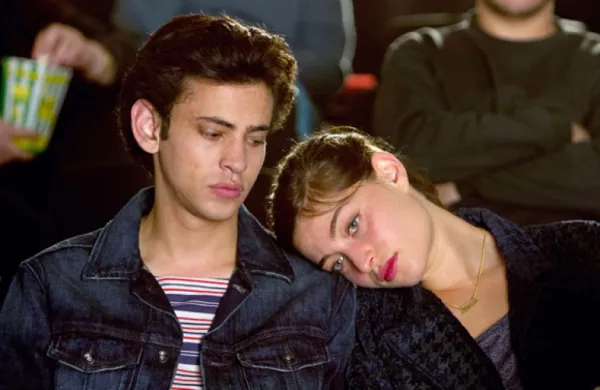
Teen flick tackles Israel’s cultural divide
If politicians were replaced by filmmakers, the hostility between Arabs and Israelis would soon evaporate. That’s the impression you get after watching any number of imported flicks that treat people on both sides of the issue with respect and understanding.
Often the stories focus on a friendship or romance between a Jew and a Muslim. Sometimes, as in the case of A Borrowed Identity, they focus on both.
Eyad (Tawfeek Barhom) is the proud son of Salah (Ali Suliman), a Palestinian Israeli who was forced to drop out of college after being implicated in a long-ago bombing. Salah wants his brainy son to have the opportunity he lost and is elated when Eyad is accepted into a prestigious school in Jerusalem.
As one of the school’s few Arabs, Eyad at first feels isolated. It’s not long, however, before he’s made his first two Jewish friends: Naomi (Danielle Kitzis), a flirtatious young woman, and Yonatan (Michael Moshonov), a fellow student who has muscular dystrophy.
The Ohio Secretary of State, Jon Husted, declared that the citizens of Medina, Fulton, and Athens Counties may not vote on their own county charter initiatives, despite meeting requirements to place those initiatives on the November ballot.
In a statement released yesterday, Mr. Husted – elected by the citizens of Ohio – made clear that his interests lie with the oil and gas industry, rather than We the People. Despite the people’s constitutional right to alter or reform their own government, Mr. Husted claims “unfettered authority and being empowered by the Ohio Revised Code” to deny the people their constitutional right.
This summer, Medina, Fulton, and Athens County residents secured the necessary signatures to place county charter initiatives on the November ballot. Each of these counties faces fracking wastewater injection wells, LNG pipelines, and other infrastructure projects that threaten to pollute clean air and pure water, regardless of community wishes.
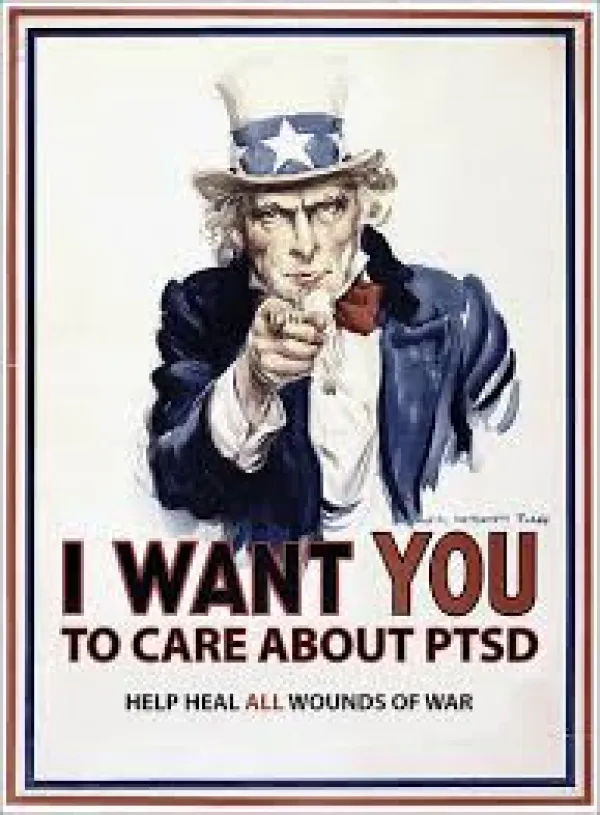
Last month in Colorado, Iraqi veteran Steve Otero, with his toddler twin boys by his side, told a crowd at a Colorado Board of Health meeting, “Without cannabis, I’d be dead.” Otero said he had a noose (literally) around his neck when a civilian friend suggested he take a couple puffs off a joint to ease his troubled mind, and lo and behold, it worked. Yet even after the testimony of Otero, the Colorado Board of Health denied approving medical marijuana for PTSD due to a lack of hard information on the benefits of such treatment.
Clearly, Colorado is conflicted, because a veteran can purchase marijuana for recreational use, but if the VA tests his or her urine and it’s positive for THC, they can lose their VA benefits. This is a perfect example of a few bureaucrats sticking to their ideology while also having their heads too far up you-know-where to realize what’s good for combat veterans when the only combat these health officials have experienced is a snow ball fight.
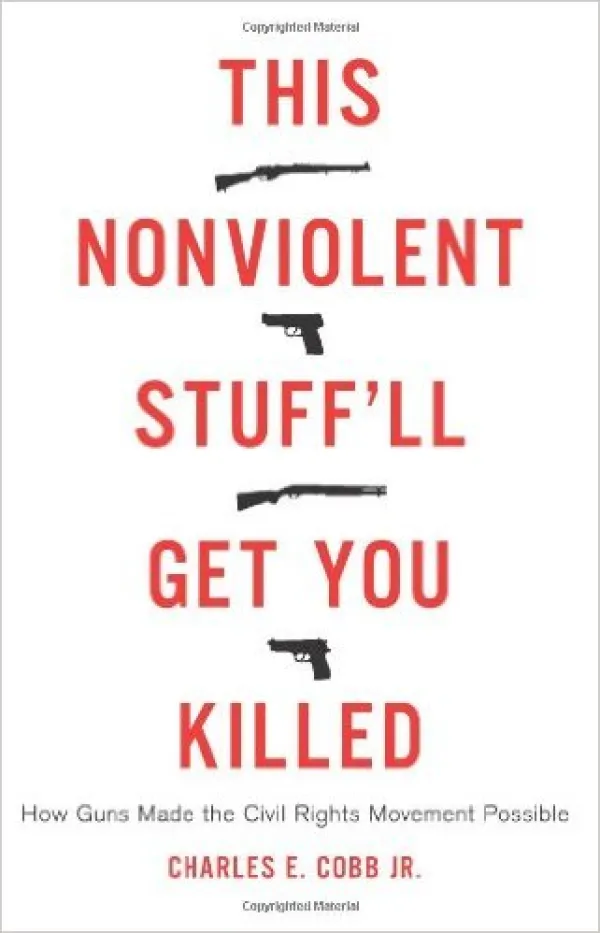
Book Review: This Non-Violent Stuff’ll Get You Killed: How Guns Made The Civil Rights Movement Possible
By Charles E. Cobb, Jr.

The US added Yemen to its 14 years of continuous war somewhere
 he American-backed genocidal war on Yemen is in its fifth month, making it one of the hotter issues in the 2016 Presidential campaign, right? Wrong.
Have you seen the dash-cam video of Sandra Bland’s arrest? Beyond the unknown role that racism may have played in the incident, it displays the dangers that arise when a cop abuses his authority.
After basically tricking Bland into breaking the law—she clearly changed lanes without signaling because she saw a squad car racing up behind her and was anxious to get out of its way—the patrolman then goaded her until her temper boiled over. Bland should have gotten away with a ticket or even a warning, but instead she was threatened with a Taser, thrown to the ground and tossed into a jail cell from which she never emerged alive.
Why do some cops treat their badge as a license to abuse? It almost becomes a chicken-or-egg question. Do professions such as policing attract people with a penchant for abuse, or do they take ordinary people and turn them into abusers?
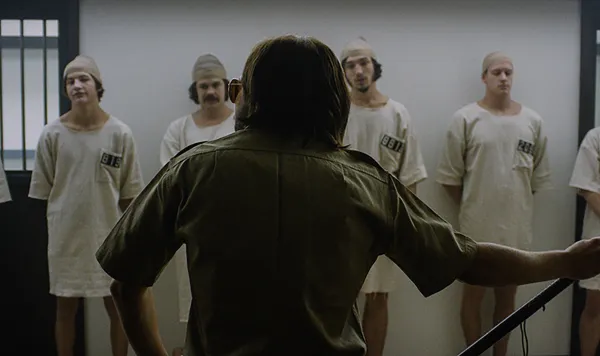
That’s a key question that arises in The Stanford Prison Experiment. Though it doesn’t deal specifically with policing, it does focus on the ways a position of authority can be a corrupting influence.
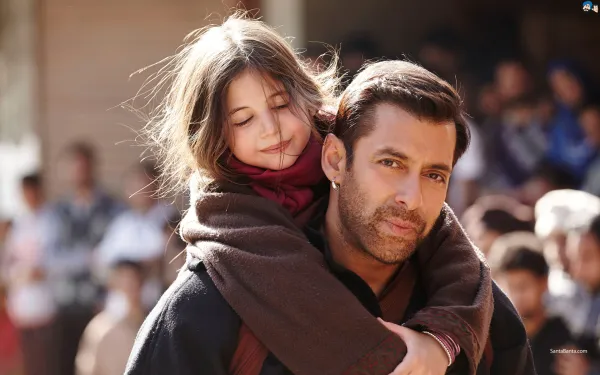
“Bajrangi Bhaijaan,” showing at AMC Village 18 in Dublin, is still sold out even after a week of its release. This speaks volumes about two things. The first is the power that Salman Khan, the lead male actor, still holds – even after his conviction in the trial courts of India for drinking and driving and killing one person and injuring three others. The second one is its unique message – humanity above all.
The film is a story of a mute Pakistani girl played by Harshaali Malhotra. Shaahida, or Munni as she is fondly called by the other characters in the film, gets left behind while visiting a famous religious place in India. She is helped by Pawan Chaturvedi, aka Bajrangi Bhaijaan, played by Salman Khan. The story revolves around the efforts taken by Bhaijaan to reunite Munni safely back with her parents in Pakistan. The various hardships that Bhaijaan faces while taking Munni back to Pakistan and how he finally manages to do it is the film’s plot.

Hi
I am recently married. (50 days). My husband showed little interest in sexual intimacy right from day one of our brief courtship. He never once tried to kiss me. When I asked him if everything was okay he sad yes.
However after marriage I was desperate. He showed no interest in undressing me/ caressing me or being remotely physical. I asked if he was gay/ disliked me/ health issues and he denied all of these.
He now claims to be not interested in sex though he did manage to have sex only once and technically the marriage is consummated. I am going mad trying to figure out what is the problem. We visited a counselor/sex therapist and he advised me to have patience.
I think that sex is really not on my husband's mind (anytime) What is your advice?
From your brief description it appears that he was not dishonest with you about who you married.
He didn't kiss you, didn't try to have sex with you and wasn't touchy/feely. This tells me this person is not interested in being physically intimate.
When Kix Roxx takes the Jazz Meets Origami Festival stage with his band, Razor Dragon Assault, he’ll be doing so for the final time.
“I’m tired of being the only purveyor of eardrum destroying thrash that plays the Jazz Meets Origami Festival, and I feel that another finger-tapping wizard of shred should have the opportunity to rock the brains out of people drinking lemon shake-ups in the park,” Roxx said by phone during a break from recording RDA’s latest album, tentatively titled “Space Demon Wizards of the Night.” “We’ve been doing this for seven years now, and half the audience has plainly memorized most of our dive-bombing pinch harmonics and floating arpeggios – we can see them walking away as soon as we begin our first song! It’s time to usher in new acts like Flaming Sword of God to scorch the souls of those waiting in line to fold paper into amusing shapes.”
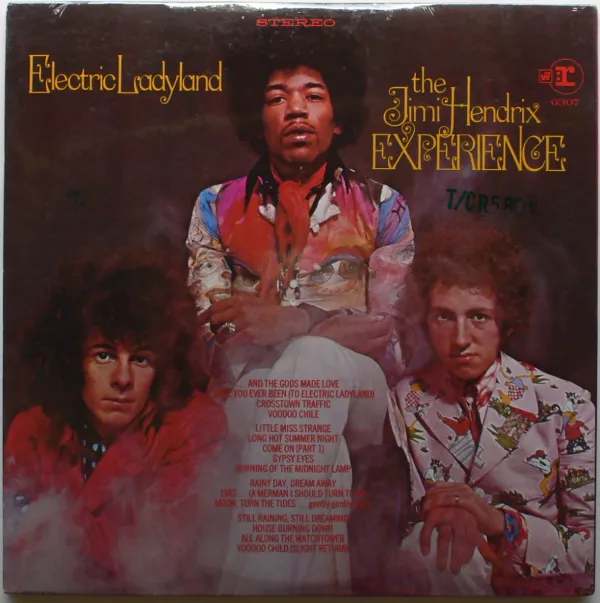
Imagine waking from your own funky dream world right into another's--or, exactly how nice is it is to wake up with a Jimi Hendrix song playing in your head?
Very nice, indeed.
Especially when it's a relative obscurity from the magnificently surrealistic epic Electric Ladyland, which I've spent quite a bit of time rediscovering this summer as part of my parole.
Ah, I know what you're thinking, stupid hippie: Obscure Electric Ladyland song? Ain't no such thing, m-a-n. I've tripped 457 times to Electric Ladyland and there are no obscure songs. Dude, duke up your puts, I mean, put up your dukes. Ain't no obscure songs on Ladyland!
Calm down, Comfest crud. You and I are on the same side. But if you'll gimme a minute, I'll explain.