
Local

When I sing in the shower, or the car or am the weird dude rapping to himself, you might catch me randomly yelling Kevin Gates lyrics like “I’m f*cking with the plug daughter.” It’s probably because I lack the verbal dexterity to say, “Six years ago I purchased a car. Most likely something you can’t afford.”
To be honest I lack the ability to go word for word with Gates, Wu-Tang Clan, Nas or most rap.
I listen to rap. I tried to email the Louisiana rapper’s publicist prior to his concert Saturday. I wanted Gates’ opinion on the shootings in Lafayette, gun control, what his six jobs are, and insight on some of his more humorous interview subjects.
But Gates either viewed the gun control/Lafayette question as problematic or just didn’t really need to talk to me because he is famous and transitioning from being someone who tours the club circuit to being a full-fledged rap star.
He sold the Newport out.
The line was crazy. It was mixture of how a club rap line looks--i.e. people dressed tough and fabulous, mixed with college and just regular people of all sorts.

Walrus has distinguished itself as the first restaurant in Columbus to entice diners to the delicious and delightful, compassionate and ethically consistent, as well as healthy and sustainable delicacy of a char-grilled cauliflower steak drizzled in richly decadent balsamic “glaze” paired with sweet potatoes garnished with edible flowers. Thank you for breaking the Midwest cultural barrier on this ecologically and economically resilient plant-based alternative to disease promoting and chemical/radiation and pathogen cocktail infusion dominantly contributed to by conventional daily exposure to consuming animal-based products. In 1983 the NYT publicized the FDA’s knowledge that America’s animal products contained 500-600 toxic contaminants not listed on the labels, so one has to wonder; why have these atrocities remained a staple on menus for so long? Any critical thinker should be led to question; what part facts like this play in the health and financial crisis our nation is presently collapsing under?
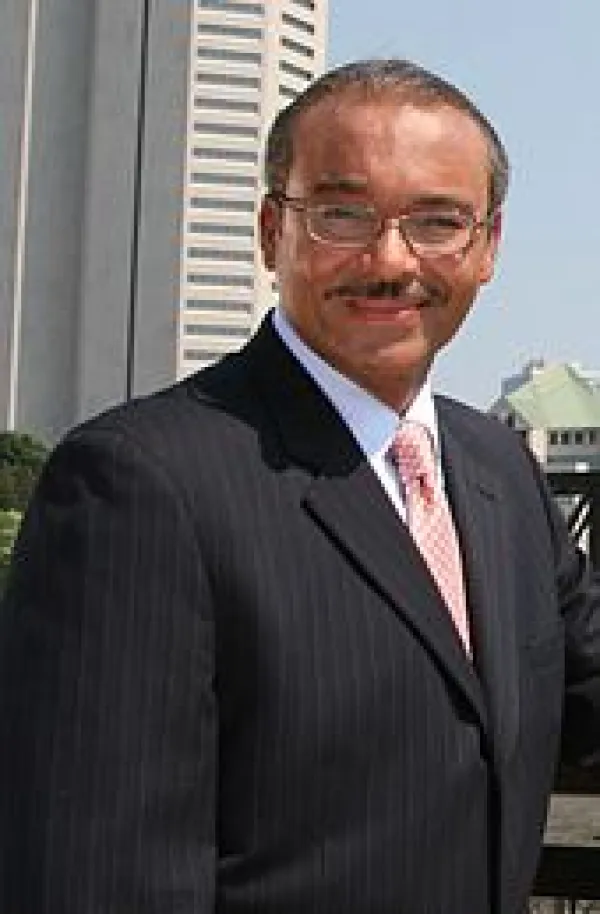
As the FBI continues to scrutinize the relationship between Mayor Michael Coleman and Chinese business woman Jianhua Li, their investigation has exposed a tiny window into how local power brokers are wooing foreign nationals to ship their foreign-manufactured goods into Columbus’ booming and secretive Foreign Trade Zone hub at Rickenbacker airport. Where the corporate taxes are low and a significant number of workers are temporaries who “pick pack” the imported goods and paid $9-an-hour while being treated like second-class citizens, say local labor activists.
The Free Press earlier this year wrote about Rickenbacker’s “Free Trade Zone #138,” an FTZ that by all accounts is growing into a juggernaut. In 2013 over $6.3 billion worth of merchandise was imported into Rickenbacker, ranking it in the top-ten for the nation’s 177 FTZs.

JP Marat writes:
Imagine a narrow strip of land extending about two miles on either side of Interstate 71 and running through Columbus from I-270 North to I-270 South. Now imagine 1.8 million Ohioans are forced to live there behind a large militarized wall that prevents the free flow of people, food and material in and out of the enclave. Attempts to enter or leave without proper authorization are met with force. Resistance brings artillery and aerial bombardment of civilian neighborhoods within the wall.
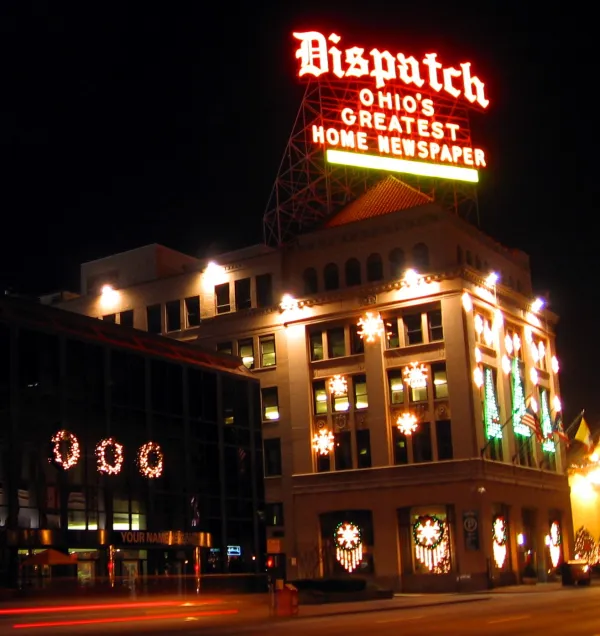
In early June The Columbus Dispatch and related publications were sold to New Media Investments for $47 million and became part of the hedge fund’s GateHouse Newspapers. Part of the deal reportedly was that current employees would keep their jobs for 90 days before the news owners could make cuts.
That 90-day moratorium on layoffs ends around Labor Day, Sept. 7. How ironic that heads will likely roll around the time that we celebrate the working women and men of the United States.
Typically, when a big chain purchases a family owned newspaper, the newsrooms are gutted to the tune of 25 to 50 percent. That means that dozens of Dispatch journalists will walk the plank and that eventually the paper will be a shade of its journalistic self. When the number of layoffs from other Dispatch departments is added to the journalist departures, it may cause a boost in the jobless rate in central Ohio.
You won’t read about any negative consequences of the Dispatch takeover in the Dispatch because its editors are walking on pins and needles to please their new owners, hoping to save their jobs.
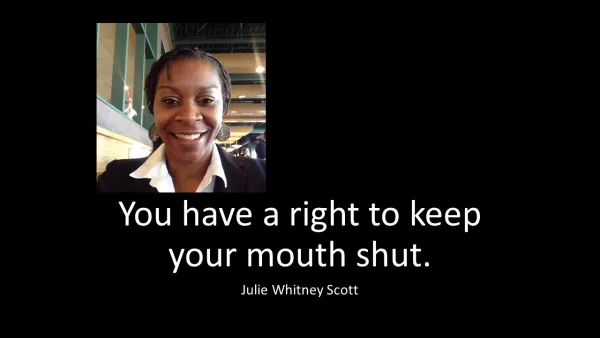
Americans are once again faced with the real “reality show” of life in regards to what happens when you are a person of color, male or female, and are arrested by a racist police officer.
On July 10, 2015 Sandra Bland, a twenty-eight year old African American woman from Illinois was pulled over while driving her car, in the southern state of Texas, and arrested. We’re not able to see the actual “take-down” and physical arrest from the troopers’ dash cam because the State Trooper conveniently moved Ms. Bland out of the vision of the camera. The only reason we know what happened, outside of the vivid verbal description given “blow by blow” from Ms. Bland on the dash cam, is due to the brave witness who documented the troopers’ abuse on video and posted it on social media for the world to see. The last words we hear Ms. Bland say to this person is “Thank you for taping this, thank you.” Words I’m sure that person will never forget.
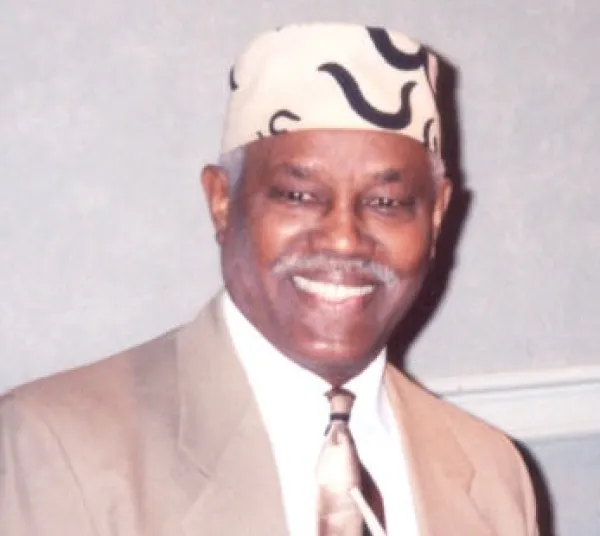
Ten years ago on August 2, 2005, the city lost an extraordinary man, Bill Moss. As an independent politician – with no Party machine to fund him, handle him, or promote him – he built his own movement of people who voted him onto the School Board for five terms.
He fought relentlessly for equality for all children and a quality public education. He was an uncompromising advocate for the poor and the and repeatedly exposed corruption and sweetheart deals. His actions saved WCBE from being privatized and sold for pennies on the dollar.
But Bill was more than a political maverick. He was a soulful prophet who warned us of the shape of things to come. He was Columbus' Berry Gordy, his Capsoul record company standing as a monument to his creative genius. He was the Nassau Daddy of barbeque and as “the Boss with the Red Hot Sauce,” one of the best damn disk jockeys in the city. The Reverend Moss also could preach a great sermon a la the Rev. Al Green and provide a rousing gospel music show to heal the afflicted and afflict the well-heeled.

Aug. 6: Peace Vigil at Goodale Park Gazebo and Pond, Park Street and Buttles Avenue, northeast side of the park. 7:30-8:30pm for a sunset ceremony marking the 70th year of the atomic bombings of Hiroshima and Nagasaki, Japan.
Aug. 7: "Message from Hiroshima" film, Belle's Bread in Kenny Centre, 5pm. Narrated by George Takai, This powerful and intimate documentary provides an inside look at the devastating effects of the first atomic bomb ever used, as depicted in heart wrenching testimonials from survivors, and computer generated recreations of the city and way of life that were lost.
Aug. 8: Peace Conference at First Unitarian Universalist Church, 93 Weisheimer Road, Columbus. 10am-4pm. The History calls US to resist Wars and Oppression. Participants include John Carlarne, Greg Elish, Julie Hart, Ruben Herrera, Kevin Kamps, Janet McLaughlin, Marc Simon, Aramis Sundiata and Harvey Wasserman.
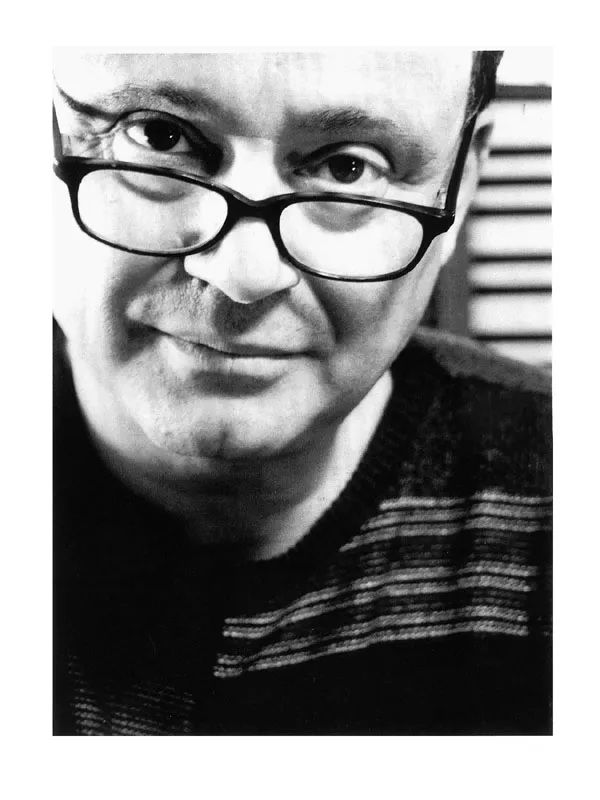
Rocco Di Pietro is a renowned composer and pianist based in Columbus, Ohio. He is also a writer (among whose many publications is Dialogues with Boulez) and educator (currently teaching at Columbus State Community College). Visit www.dipietroeditions.comfor some of his works available online.
Q. What is the title of your latest work reflecting upon the 70th anniversary of the atomic bombings of Hiroshima and Nagasaki?
My latest work is called Taubes VII (Hiroshima Set). It is part of an ongoing series of interactions between photographs and other visual elements with a programmatic, even syncretic, interplay between music and visual art, which I relate to ectoplasms in sound extracted from a visual presence.

What conditions bring peace? What conditions bring war? How do people address them? Many families and communities have split over these topics, as they can bring a great divide of opinion and historical recollection.
This year, August 6 marks the 70th anniversary of the U.S. atomic bombings of Hiroshima and Nagasaki. The bomb “Little Boy” was dropped on the Hiroshima population of 255,000, causing 135,000 casualties: 66,000 dead and 69,000 injured. On August 9, another bomb “Fat Man” was dropped on a population of 195,000 in Nagasaki, causing approximately 64,000 casualties: 39,000 dead and 25,000 injured. These are the Manhattan Engineer District's best available figures.
Mark Stansbery is president of the Columbus Campaign for Arms Control, a local affiliate of Peace Action. He does not believe that a large military society brings peace.