
Local

Surly Girl Saloon announced rather abruptly that this would be their last week in operation. I stumbled in Wednesday Night not fully aware of the importance the Short North Bar’s Open Mic Night had to local comedy for the past 9 years.
There were 60 comics signed up to pay their last respects.
The comedy night will be moving next door to Barrel on High. But still, bars have different cultures that surround them. Chemistries and friendships between workers, patrons and owners all play into people’s personal histories and experiences with places they hang out.
Surly Girls' closing comes on the heels of the Milk Bar shutting down in the Short North.
Here's my open letter to Campus Partners, OSU's development arm which recently bought nine acres of High Street, from 14th to 17th, promising to raze and re-do the entire area real pretty-like.
Ahem, dear sir(s) and/or madame(s),
It's recently come to my attention that my way of making a living, indeed my gay (1890's sense) lively, lifestyle of music and commerce is soon to go the way of the buffalo, the Indian, the Edsel and Don Kirshner Presents Rock Concert. Is there any way you can build around me?
You don't seem to understand the cultural impact of your actions. The kids crave authenticity. Suburbia, for all its delivery of paradise and safety, simply does not belong on High Street. High Street is supposed to be a little bit wild, a little bit dangerous and a whole lotta untamed. Lemme tell you a little story.
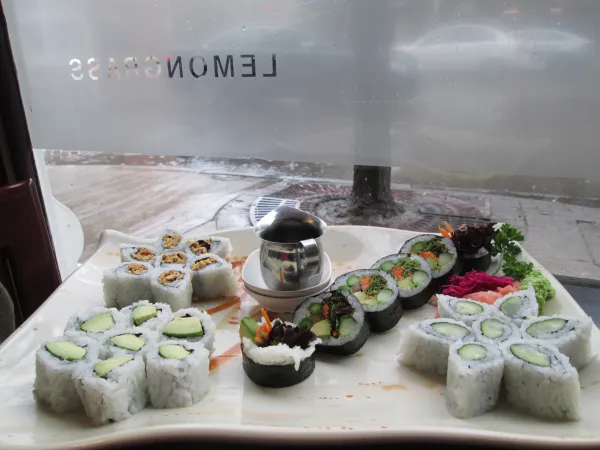
Lemongrass has been a Short North go-to for me when I’m in the mood for Thai tea (iced w/coconut milk or hot) and the best chive dumplings I’ve ever had. They also distinguish themselves from many restaurants by providing a plant-based menu with several items satisfying a comprehensive dining experience (instead of a token vegan option) where most selections are vegan, with the exception of those containing the sauté dressing (it has cream in it). They are happy to make vegan substitutions as desired.

My generation – the so-called Millennials – are coming of age and bringing along a lack of empathy for older generations. Both the Baby Boomer and Gen X’ers can degrade on hipsters by calling us “the dead end of Western civilization,” as Adbusters once stated so famously. But what Millennials see in older generations, is that they are not able to look much further past the needs and politics of our own country, let alone grasp something as innocent as Instagram.
The digital revolution and the Internet took us Millennials by the hand as toddlers and dragged us into adulthood. Our entire lives have been dominated by the digital world. Perhaps for a significant number of Millennials half their waking life has been spent online.
In an instant we can reach friends and families across the planet. We can do our grocery shopping from the comfort of our own couch. We can meet the love of our lives online. We can be victimized online. Wars are even being fought online.
Millennials see this revolution as a way to fix the mistakes of our elders. I can think of one, and I served there in our military – Iraq.
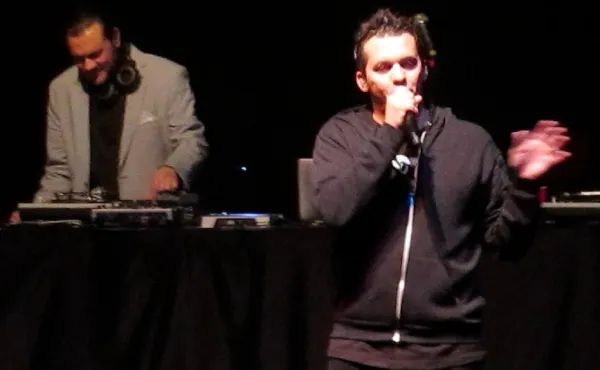
Atmosphere played Columbus April 29. Their performances always seem warm and familiar because of Slug’s everyman approach, and his label’s Rhymesayer’s releasing music by Blueprint and Soul Position.
Heck, they had Blueprint put together a video that starred Yellow Brick Pizza’s proprietor Bobby Silver as Teen Wolf for “We Aren’t Going To Die Today.” off their latest album “Southsiders.”
I could tell you everything I think I know however:
I’m actually using this to set-up the following:
I walked in as opening act B. Dolan was having the crowd scream “Film the Police.”
This relevant:
1) The resistance effort in Baltimore and the current petition drive from a Civilian Review board in our own city.
2) The Columbus-Minneapolis shared ARA history which was a big proponent of Cop-watch which advocated Filming the Police.
Dolan is not from the Twin Cities. He is from Rhode Island and glaringly a member of Sage Francis’ Strange Famous label.
But this is all connected so nothing about 2015 at the LC was different than shows of underground hip hop past within this culture.
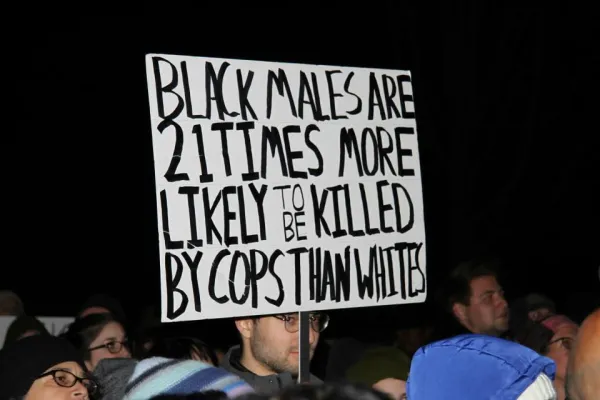
Join us Saturday May 2nd in the Short North as we protest in Solidarity with the people of Baltimore.
*Columbus students please read note at the end*
We are marching for the people of Baltimore.
We are marching in remembrance of Rekia Boyd, Mya Hall (a Black Transwoman who was killed by Baltimore Police on May 30th) and Freddie Gray, a Black Man who was killed by BPD on April 19th.
We are marching because the Columbus Police Department still remains silent on the community’s concerns though they promised us a response by the end of April.
At 6pm we will be meeting outside of the Ohio Union and marching to the Short North.
Why the Ohio Union/Short North?
We recognize that before the expansion of The Ohio State University and what is now called the “Short North” these neighborhoods belonged to Black/Brown families. OSU, the Gateway and the Short North have played a big role in the gentrification these neighborhoods and the police harassment of Black people who used to call these streets home. On Saturday, May 2nd, we are taking these streets back!
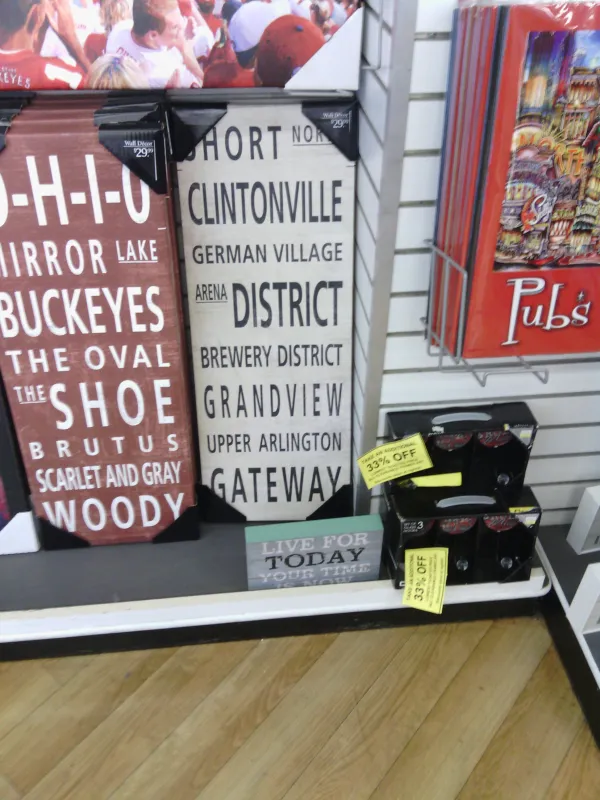
Columbus's historical border may be two rivers, but in a way, it's still land-locked. We are a supposed oasis of progressivism and independent spirit. Our fair city that is above all of your problematic favorite urban spaces. All we do is develop and win. Yet beneath all the glimmering Columbus Underground headlines, we are little more than yet another sand dune in the desert of American hubris. Like literally, the name of our city is Columbus, y'all. Well a couple Mondays ago, this sand dune got a well-deserved duststorm.
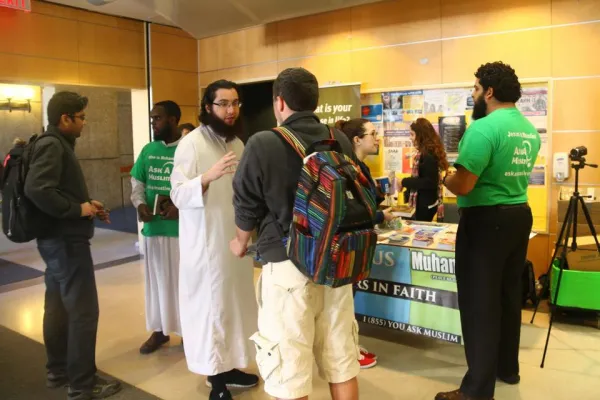
"First Person Singular" is an occasional column by JP Marat that empowers artists, musicians and community activists to speak in their own voice. Sincere thanks to The Columbus Free Press for the opportunity to let our voices be heard . . .
My First Encounter with “Ask A Muslim”

I was having a debate with my friend the other day. He cried hoax – April Fool’s! I said brave new world. So, which is it? Is genetically modified – GMO – marijuana under development, or is this just a joke?
The news article that kicked off this debate entitled, “Monsanto Creates First Genetically Modified Strain of Marijuana,” appeared in the online newspaper World News Daily Report. Actually, not the optimal source. In its own disclaimer, the Report calls its articles “satirical and fictional.” Further, a website calling out fakery labeled the article “False.” Score one for my friend.
But the question remains open. Is genetically modified pot little more than an April Fool’s joke?
A February article in The Columbus Free Press described GMOs as “living organisms whose genetic material has been artificially manipulated in a laboratory.” Without question, they are getting a bad rap. GMOs have been banned in some countries, linked to illnesses and even deemed unethical by the Vatican. So why would a company want to genetically modify marijuana?
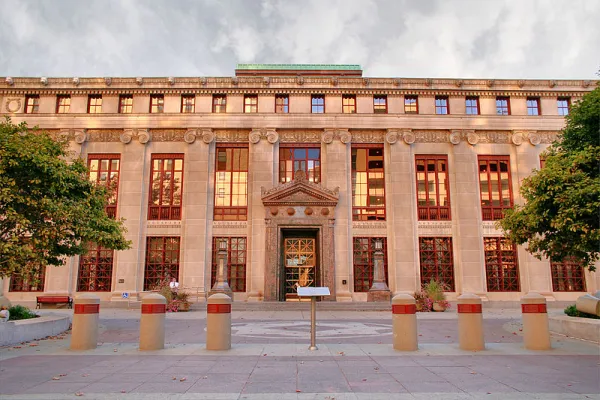
How do some of the candidates for Columbus City Council stand on some of the most contentious issues in our city? The Columbus Free Press contacted all ten Columbus City Council candidates on the May 5, 2015 primary ballot and asked for their positions on three key issues of concern to our editorial board. Only half of the candidates responded.
The three incumbent Democrats – Zack Klein, Melissa Mills and Jaiza Page – did not respond. State Representative Michael Stinziano was the only Democratic Party-endorsed candidate that sent in his answers. Of the three Republican-endorsed candidates – John Rush, Dimitrius Stanley, and Besmira Sharrah – only Rush responded to our questions. All three candidates who are not endorsed by the two major parties responded to our questionnaire: Will Petrik, Ibrahim Sow, and Kiwan Lawson. Petrik is endorsed by the Franklin County Green Party.
A ward system
The first question the Free Press asked was: Where do you stand on incorporating a ward system into the Columbus City Council structure and do you support any ward representation?