
Local
Image

You have probably seen her. Jazzmary has opened every mall in the central Ohio area in the last thirty-five years, and has performed her unique piano jazz and vocals in countless venues and festivals. You have probably heard her. Jazzmary has been on Youtube, Facebook and Twitter for over two decades, and you have probably checked her website: www.jazzmary.com. Jazzmary has performed at every type of event from intimate house parties on grand pianos, to opening of famous restaurants and fund-raisers, such as Romancing the Grape for Easter Seals. Jazzmary plays fresh and lively entertainment music with a touch of jazz. After graduating from Wittenberg University, Jazzmary has run the choral and music programs at Columbus Public Schools, at Mifflin High School -- which produced a hit record the "M.E. Experience", and at Fort Hayes School of the Performing Arts. She taught world famous bassists from Columbus: Foley, who toured with Miles Davis, and Jay Demarcus of Rascal Flatts. Also, she founded and led a band of nine women in the 1990's called MOXIE, which toured and played extensively in the central Ohio market.
Image

Take Five with Jazzmary Daniels
I saw 63 year-old Tommy Smith play at Dick’s Den a couple weeks ago. His drumming matched what he told me on the phone Sunday: “I’m a Bebop drummer. That’s where I come from.” Tommy Smith comes from the South side of Columbus originally and has been a lot of places.
In the 1950’s, he started playing with his grandfather in the Elk’s Lodge Marching Band, and fell in love with jazz after going to shows with an uncle at the Palace Theatre downtown.
During the 60’s, the teen Tommy was living on the West side, attending Central High School and becoming part of small city-wide jazz community.
“In high school, in Columbus, there were a bunch of us,” Smith said. “Not a bunch…I would say we were the young lions. And we were all into Jazz.”
Tommy and his friends would go to Columbus jazz spaces such as The Regal on Long Street, The Copa on Mt. Vernon, The Cadillac Club, the Starline and the 502 on St. Clair.
At the 502 they would watch greats such as Miles Davis and Horace Silver during Sunday matinee shows.
Tommy recalled the dream.
“I walked all the way from the West side.
Image

Citing a wide range of ailments from leukemia to blindness to birth defects, 79 American veterans of 2011’s earthquake/tsunami relief Operation Tomadachi (“Friendship”) have filed a new $1 billion class action lawsuit against Tokyo Electric Power Company (Tepco).
The suit includes an infant born with a genetic condition to a sailor who served on the USS Ronald Reagan as radiation poured over it during the Fukushima melt-downs, and an American teenager living near the stricken site. It has also been left open for “up to 70,000 U.S. citizens [who were] potentially affected by the radiation and will be able to join the class action suit.”
Now docked in San Diego, the USS Reagan’s on-going safety has become a political hot potato. The $4.3 billion carrier is at the core of the U.S. Naval presence in the Pacific. Critics say it’s too radioactive to operate or to scrap, and that it should be sunk, as were a number of U.S. ships contaminated by atmospheric Bomb tests in the South Pacific.
The re-filing comes as Tepco admits that it has underestimated certain radiation readings by a factor of five.
Image

There is a book in the Grandview Heights Public Library I check out once a year and struggle with. It's about 70 years old. Its cover is unlike any I've seen, except those of some Bibles: very softly worn and gently creased burgundy leather, suggesting age, wisdom, timelessness, strangeness.
It's a collection of poetry and plays by the late great Spaniard, Federico Garcia Lorca, a member of the Genereration of '27, a group of writers between 1923 and 1927 who explored the Spanish avant-garde of letters. I struggle with it because it is entirely in Spanish and is often abstract, as only they can be.
Picasso is easier. But the book is precious.
As I struggled to understand the magnificent mysteries of the Pixies and their main man, Black Francis, Friday night at the LC, I couldn't relate their impenetrable sound to any other way of expression from which they tellingly may have sprang. Looking at his bald-domed inscrutable aura, listening to his utterly weird lyrics, his guitarist's overlay of noisy psychedelia, only one thing made sense of it all: the Spanish key to his mental highway--that beautiful, ancient book.
Image

Since Winter’s Tale is a romantic fable starring the dreamy Colin Farrell, you might assume it’s the perfect flick to take your date to on Valentine’s Day.
But you’d be wrong. Good Lord, would you be wrong. Judging from the audience at a recent preview screening, this would-be tear-jerker is likely to leave you laughing hysterically. And not in a good way.
Scripted and helmed by first-time director Akiva Goldsman—whose past writing achievements range from A Beautiful Mind to the ludicrous Batman & Robin—this adaptation of Mark Helprin’s acclaimed novel has so many problems that it’s hard to know where to begin.
Farrell plays Peter Lake, a crook in early 20th century New York who’s gotten on the wrong side of the crime lord who raised him, Pearly Soames. Pearly is played by Russell Crowe.
OK, that’s a good place to begin.
Crowe portrays Pearly with a menacing demeanor and a growled Irish brogue, making him such an over-the-top depiction of evil that his Javert from Les Miserables is a work of art by comparison.
But we can’t blame this whole mess on poor Crowe.
In 1973 six black men filed a class action lawsuit in the US District Court, Southern District, Eastern division, against Columbus city officials for racial discrimination in the hiring of firefighters. The city was found guilty of employing practices that “established prima facia showing of racially adverse impact by city officials employment practices for firefighters.” Knowing the trajectory of our history allows us to conclude that there were several barriers to the recruitment and hiring of African Americans as firefighters and the court based its findings on easiest observable obstacles to African American employment in the fire department. What they didn’t, or couldn’t, account for – in a document based on constitutional precepts- are the systemic obstacles that retard our progress: low high school graduation rates, low family employment and higher dishonorable military discharges.
Image
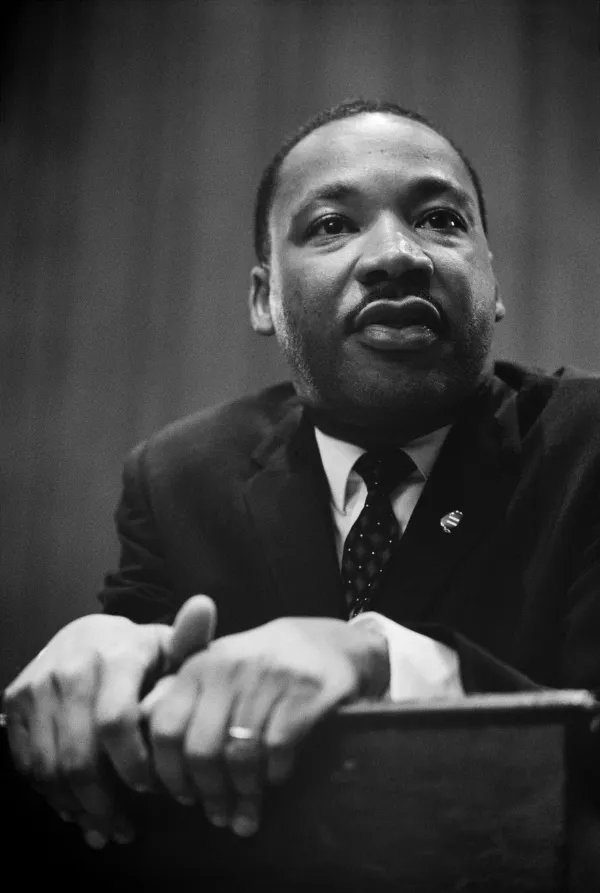
When we think of Martin Luther King, Jr., most of us think of King the dreamer, who spoke to the more than 200,000 people amassed in front of the Lincoln Memorial on that sultry August day in 1963. We think of the man whose soaring rhetoric–some of it extemporaneous–let us in on his dream of living in an America where his four children would be judged by the content of their character rather than the color of their skin. The King of the March on Washington for Jobs and Freedom has been defined as the man who was looking to build a color blind America in which all men and women were bound together by their very humanity, and neither their race or ethnicity mattered. King is frozen in the American psyche: a deeply religious man who merely wanted to see peace on earth and good will among the races.
Ever since that famous speech, he has been co-opted by politicians and consumerism. Every year he becomes more cardboard cut out and less radical. It is as though we have a vested interest in remembering only the King who constantly turned the other cheek, exhorted blacks to love their enemies, and eschewed violence.
Image

Wow, this show sure is dope. If you don’t know any vintage hip-hop slang before seeing How We Got On, don’t worry. You’ll pick some up along the way.
And besides, you don’t have to be in tune with rap culture to understand what’s going on here. You just have to understand human nature.
Set in 1988 in the suburbs of an unnamed Midwestern city, Idris Goodwin’s assured play introduces us to a trio of 15-year-olds who are trying to define themselves through rap.
First up is Hank (David Glover), who boasts, “I got the skills to pay the bills,” but isn’t nearly as self-confident as he likes to pretend. When he learns a freshman at a nearby school is rhyming his way to suburban fame, Hank sets up a rap battle in an attempt to prove his dominance. But he then has doubts about his own battle-worthiness.
And well he might. The macho Julian (Rudy Frias), who bills himself as Vic Vicious, beats Hank so soundly that he’s reduced to slinking away with the crowd’s boos still ringing in his ears.
Image

As a child in the sixties living in Poindexter Village, I remember running and playing in the safe surroundings of the apartment buildings on our court. I didn’t know, or care at the time, that Poindexter Village was one of the oldest public housing communities in the United States.
I had no clue that it was named after the honorable Reverend James Poindexter who, in 1882, was the first African-American to serve on the Columbus Board of Education and was also the first elected to Columbus City Council in 1880. He was the Pastor of the historic Second Baptist Church from 1848 to 1898. I didn’t know any of that history. I just knew we lived in the “Village.”
As I used chalk to draw pictures on the sidewalk, little did I know that I might possibly be drawing on the same piece of ground that Aminah Brenda Lynn Robinson, the great African American artist, had drawn on when she lived there from 1940 until 1957, the year after I was born, before I could meet her in the village and possibly become a person in her “A Street Called Home” series about Poindexter Village and Mt.
Image

I first saw the Devil Doves in June of 2013 on the main stage at Comfest. On a stage that could probably fit 20 comfortably, it was just three guys with an acoustic guitar, an electric bass and the box-like latin percussion instrument called a cajon. The sound, though was massive; the audio engineer was on the top of his game that day, and the band took full advantage. All three players were concentrating on giving life to the groove, and letting everything else follow. More than anything else, of all the music I heard that day, they were different.
Recently, I had the opportunity to see the Doves at the 3 Legged Mare in the Arena District. I fought through a mob of Blue Jackets fans (4-2 win over the Capitals!), accidentally purchased a Guinness, and found the band onstage toward the back of the bar. They were doing it up for the hockey folk, tossing out the occasional cover tune, noting the existence of the tip jar and generally enjoying themselves. Again, it struck me that this was something far more interesting than the usual Columbus band Americana.
It’s the group thunk of the beat that does it.