
Arts

From 1954 to 1956, nineteen Black mothers and thirty-seven children in Hillsboro, Ohio marched daily from their homes to the segregated Webster Elementary School to demand Black students be allowed to enroll. The school for Black children, Lincoln School, was in a poorly-resourced, deteriorating school building. The Hillsboro School Board refused to admit Black children to the white school, despite the Brown v. Board of Education of Topeka ruling calling to integrate public schools “with all deliberate speed.”

A gay couple’s marriage is thrown into crisis when one of them begins a passionate affair with a younger woman.
After completing his latest project, filmmaker Tomas (Franz Rogowski) impulsively begins a heated love affair with a young schoolteacher, Agathe (Adèle Exarchopoulos). For Tomas, the novelty of being with a woman is an exciting experience that he's eager to explore despite his marriage to Martin (Ben Whishaw). But when Martin begins his own affair, the mercurial Tomas refocuses his attentions on his husband. Set in contemporary Paris, "Passages" charts an escalating battle of desire between three people, where want is a constant and happiness is just out of reach. The film creates an insightful drama exploring the complexities, contradictions, and cruelties of love and longing.
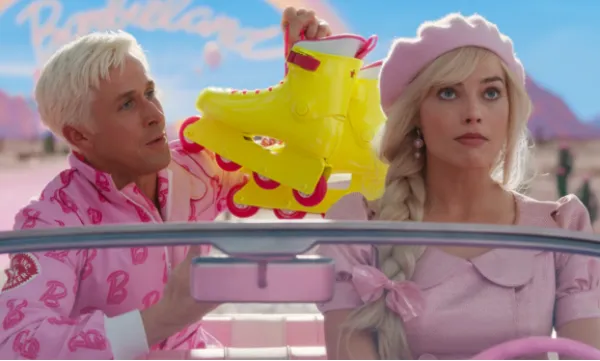
"Barbie" is a clever, colorful comedy that expertly balances contemporary women's issues, social satire, and personal discovery. It smartly critiques societal norms in today's changing social landscape. We are currently in a time where we are gifted a Barbie movie that is both profoundly moving and insightful.
Directed by Greta Gerwig and co-written with Noah Baumbach, the film showcases their knack for addressing important issues and presenting them in a tangible yet thought-provoking way. Gerwig keeps cinephiles in mind as she wisely includes jokes about the red pill from "The Matrix," the snow globe from "Citizen Kane," and the male definition of Coppola's "The Godfather."

Christopher McQuarrie and Tom Cruise consistently show their passion for high-octane action-adventure movies. They are in the business of giving audiences a seat-gripping, thrilling experience every time they release a Mission Impossible movie.
The 7th installment in the acclaimed spy-action franchise delves into the imminent concerns surrounding AI –– a theme anticipated to be the next cinematic trend akin to multiversal movies. While the concept of AI as a threat is not new to cinema, MI7 presents it in an eerily realistic parallel, reflecting genuine fears driven by our forever-advancing technology. Everything that Elon Musk has warned us about AI is essentially the setup in this movie. The threat of AI serves as the most formidable challenge yet for Cruise's character, Ethan Hunt, setting a heightened atmosphere of paranoia, suspense, and tension.
The movie opens with a Russian submarine in the Bering Strait, followed by a series of thrilling action sequences in the desert and Amsterdam, all filled with tons of exposition, shootouts, explosions, and fake deaths –– everything you'd expect in an MI movie –– and this is before the title card shows.
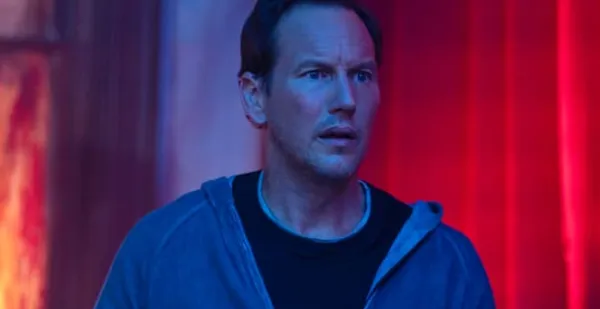
The first "Insidious" was released back in 2011 with James Wan as the director, and it's still undoubtedly the best in the series. Good horror films depend on characters, atmosphere, subtle occurrences, and mounting dread. "Insidious: The Red Door," the fifth and supposedly "final" installment in the franchise, only ticks a few of these boxes.
I wanted to love "Insidious 5," especially with it being Patrick Wilson's directorial debut––having established himself as a bona fide scream king between "The Conjuring" and the first two "Insidious" movies. Plus, with Blumhouse's reputation for producing some of the most acclaimed horror films to date, including "Get Out" (2017) and Paranormal Activity (2007), my expectations were high. However, the "final" installment of the "Insidious" franchise was a mixed bag for me.
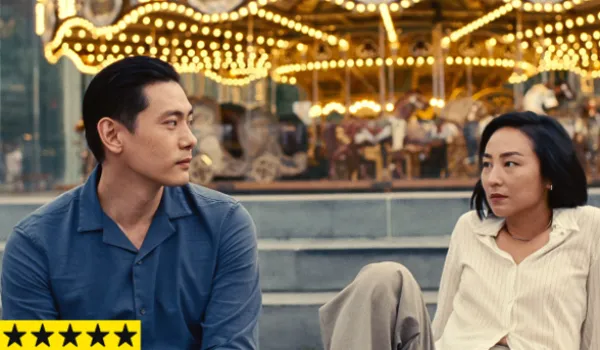
"Past Lives" is a masterpiece about deep, genuine human emotion. In her directorial debut, Celine Song demonstrates a self-assured confidence and delivers immense emotional impact through a film that explores the rich, layered connections between characters and their past and present experiences.
It delves into the deep concept of 'In Yun,' a Korean term, suggesting that anyone we interact with in this life is someone we've connected with in a past life.
Twelve years after Nora (Greta Lee) and her family immigrated to North America from South Korea, she rekindles an old connection with her childhood best friend, Hae Sung (Teo Yoo). The duo picks up right where they left off, and their connection remains as strong as their childhood bond.
Despite their lives taking different paths, another 12 years pass, and a vacation reunites them, leading to introspective contemplations about love and fate. Their story, set against our modern, technology-driven world, is infused with elements of romance and melancholy, exploring the notion of past lives and multiple soulmates.
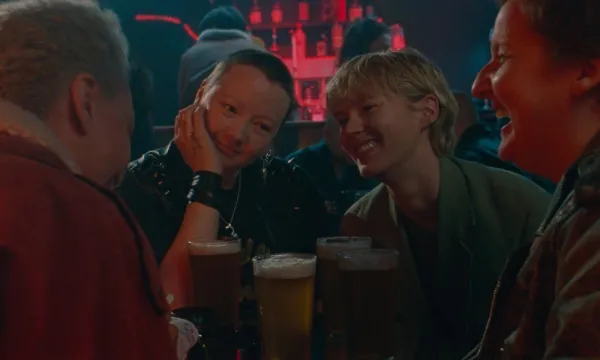
It’s 1988! England and Margaret Thatcher’s conservative government is about to pass a law stigmatizing gays and lesbians, forcing Jean (Rosy McEwen), a gym teacher, to live a double life. As pressure mounts from all sides, the arrival of a new student catalyzes a crisis that will challenge Jean to her core.
Jean coaches the netball team, itself a riot of burgeoning teen emotion and conflict. She's quite middle class. She's still in touch with her family. Likewise, she does not always behave in a morally exemplary fashion. As news stories proliferate about the impact of Section 28. Tory ministers pontificating on moral decay, activists storming the House of Lords, Jean is hyper-aware of every glance and murmur in her direction. She makes bad decisions; but she's so unaware.

Parade as a Protest Artform: Photographs of Doo Dah 1990 presents a small collection of printed images originally recorded by artist Carolyn P. Speranza on Kodachrome slide film. These photographs document that year's Anti-Censorship Demonstration led by the "Censor-Ship" (a metal, vehicle-sized, mobile sculpture) and featuring the "See No Evil, Hear No Evil, Speak No Evil" Drill Team, the "Censorship Banned" Band, the "I Don't Like It, You Can't Look at It" Porno-Police, and other groups.
Parade as a Protest Artform: Photographs of Doo Dah 1990 presents a small collection of printed images originally recorded by artist Carolyn P. Speranza on Kodachrome slide film. These photographs document that year's Anti-Censorship Demonstration led by the "Censor-Ship" (a metal, vehicle-sized, mobile sculpture) and featuring the "See No Evil, Hear No Evil, Speak No Evil" Drill Team, the "Censorship Banned" Band, the "I Don't Like It, You Can't Look at It" Porno-Police, and other groups.
Parade as a Protest Artform: Photographs of Doo Dah 1990 presents a small collection of printed images originally recorded by artist Carolyn P. Speranza on Kodachrome slide film. These photographs document that year's Anti-Censorship Demonstration led by the "Censor-Ship" (a metal, vehicle-sized, mobile sculpture) and featuring the "See No Evil, Hear No Evil, Speak No Evil" Drill Team, the "Censorship Banned" Band, the "I Don't Like It, You Can't Look at It" Porno-Police, and other groups.