
Arts
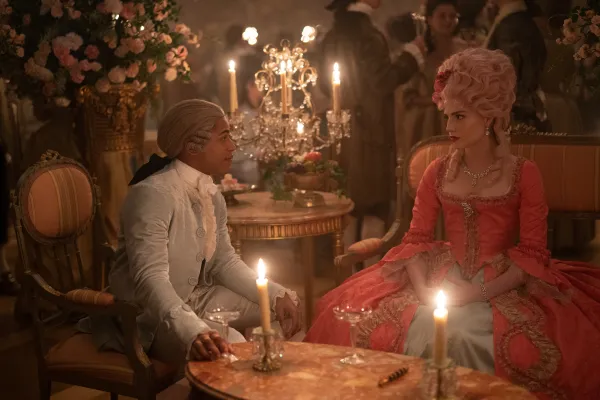
"Chevalier" is the story of composer Joseph Bologne, Chevalier de Saint-Georges (Kelvin Harrison Jr.) The illegitimate son of an African slave and a French plantation owner, Bologne rises to improbable heights in French society as a celebrated violinist-composer and fencer, complete with an ill-fated love affair and a falling out with Marie Antoinette (Lucy Boynton) herself and her court.
As a man of mixed race, Joseph Bologne is, during his time, undeniably shackled by French laws and by social conventions. He comes to defy the aristocracy he once moved within and is changed by a love made impossible by his race. And he rediscovered his heritage, bringing Creole influences to his music and fighting for his people. And yet, is remarkable virtuosity and persona allowed him to enter, however precariously, the circle of elites enjoying wealth, power, and the outrageous excesses of the age.
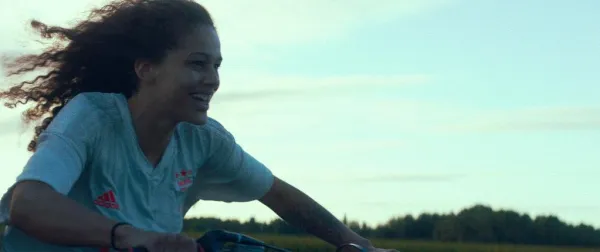
The film is inspired by a group of kids living in a suburb of Paris who are cross-bituming and called themselves “Dirty Riderz Crew.” The engines are very strong and what they do quite brutal. They cross each other on lines that are narrow two-way roads. We've to understand the environment, its rules, and its philosophy.
What's this practice? Why do they do it? Who are these young people? That's where we meet the character of Julia (Julie Ledru), who responded to a rather intimate desire to see this dream of joining a community come true. The character of Julia is a perfect example. It surprises us because it escapes the fixity of a single, uniform representation. Her face changes all the time, her outfits, her traits. She performs multiple figures, navigates between genres, codes, social environments.

"Shazam!: Fury of the Gods" is the sequel to the light-hearted, likable superhero "Shazam!" (the misfit orphan teen that acquired adult superhero powers after visiting a wizard's lair in the original). Asha Angel again plays Billy Batson as the kid and Zachary Levi as the Shazam incarnation. I loved the first "Shazam," but the sequel doesn't add anything new or special to the superhero genre.
The sequel falls short in terms of charm and coherence when compared to the original. The detachment between Billy and Shazam is apparent, and they fail to come across as a unified character, a defining feature of the first film. Despite attempting to go bigger and better, it loses the emotional depth that gave the original its heart. The sequel entirely abandons the childlike wonder that was unique and captivating previously.
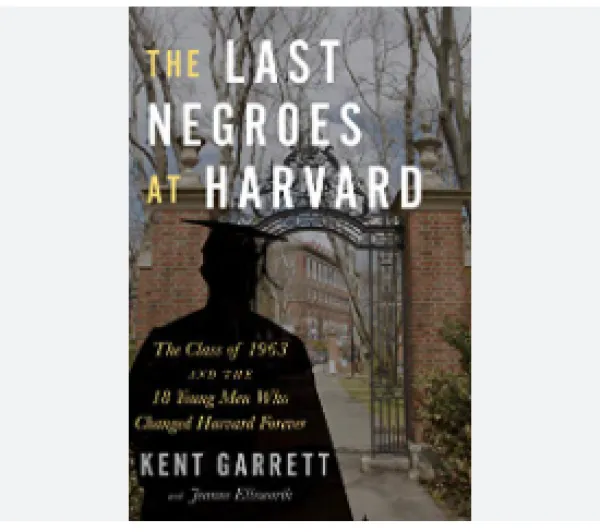
In 1978 the United States Supreme Court rendered its decision in Regents of the University of California v. Bakke, a case about affirmative action in higher education. It opined that colleges and universities could not use race as an exclusive basis for granting admission to an institution of higher learning because it violated the Fourteenth Amendment’s equal protection clause and Title VI of the 1964 Civil Rights Act.
Allan Bakke was a white man, an engineer, and a veteran of the United States Marines. When he was thirty-two years old, he applied to a number of medical schools, including the University of California Davis School of Medicine without success. U Cal Davis rejected both his applications. (When I initially read the facts of the case back in the day, my first reaction was that he was probably turned down because of his age. At thirty-two, he was eight years older than the average first-year medical student. Indeed, two institutions rejected his application citing that reason. This was not an uncommon practice at the time.)

Sandra Kienzler (Léa Seydoux) is a widowed young mother raising her daughter Êlodie (Sarah Le Picard) alone, while also caring for her sick father Michel (Pierre Meunier). She’s dealing with the loss of the relationship she once had with her father, while fighting to get him the care he requires. At the same time, Sandra reconnects with Clément (Melvil Poupaud), a friend she hasn’t seen in a while and, although he’s married, their friendship soon blossoms into a passionate affair.
Sandra Kienzler (Léa Seydoux) is a widowed young mother raising her daughter Êlodie (Sarah Le Picard) alone, while also caring for her sick father Michel (Pierre Meunier). She’s dealing with the loss of the relationship she once had with her father, while fighting to get him the care he requires. At the same time, Sandra reconnects with Clément (Melvil Poupaud), a friend she hasn’t seen in a while and, although he’s married, their friendship soon blossoms into a passionate affair.
Sandra Kienzler (Léa Seydoux) is a widowed young mother raising her daughter Êlodie (Sarah Le Picard) alone, while also caring for her sick father Michel (Pierre Meunier). She’s dealing with the loss of the relationship she once had with her father, while fighting to get him the care he requires. At the same time, Sandra reconnects with Clément (Melvil Poupaud), a friend she hasn’t seen in a while and, although he’s married, their friendship soon blossoms into a passionate affair.
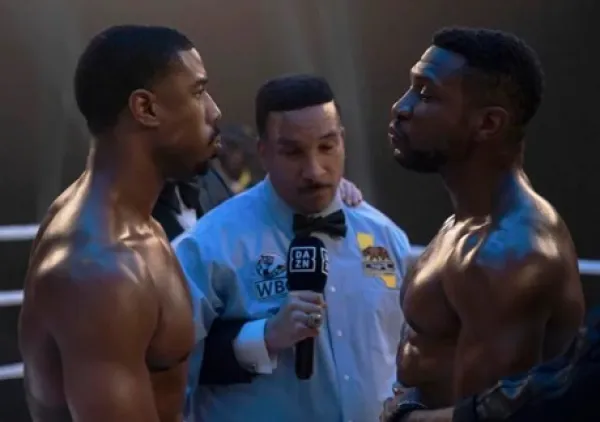
Creed III is the latest Rocky spin-off franchise installment. Michael B. Jordan, making his directorial debut, continues the legacy as Adonis Creed, the son of legendary boxer Apollo Creed. He is continuing Ryan Coogler's established story. Due to creative differences, Sylvester Stallone, who stars in Creed and Creed II as Creed's mentor, is not in this. It's nice to see how Creed deals with obstacles, mostly on his own and with help from his family in this aspect of his life. I'll admit, it's safe to say the franchise can stand independently without Rocky.

Irene (Rebecca Marder) is a young Jewish woman leading a vibrant life, in the summer of 1942 in Paris. Her family watches her as she grows and discovers the world around her, making new friends, finding new love, and her passion for theater. Irene wants to become an actress and her youthful days go by without a care in the world.
At the very beginning of the film, one may wonder: What's this movie about? And it only takes one line, “You've to put the 'Jew' stamp on the papers” to understand where you are. And as everyone knows what happened in 1942, there’s really no need to add more by showing a German soldier or a German flag.
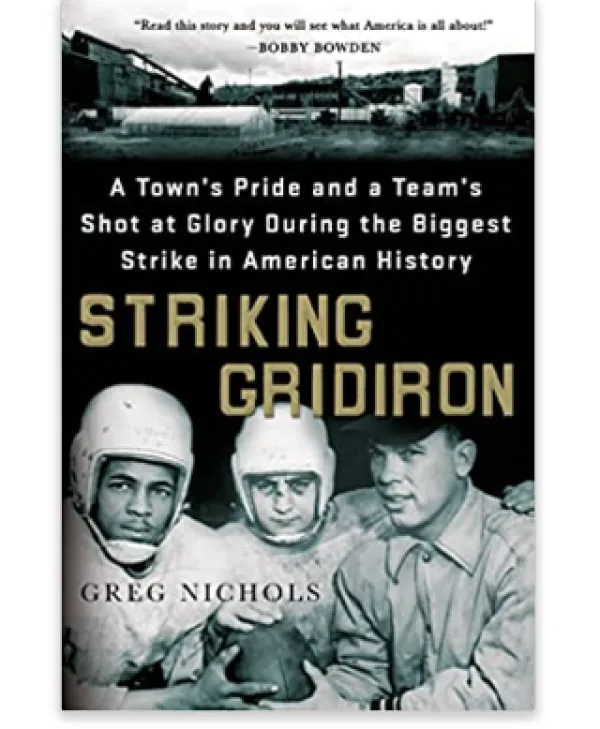
Many of us collect something, and know that feeling of finding that once-in-a-lifetime treasure. Or you’ve had that feeling of glancing down to find a $20 bill, a four leaf clover or something you’d been looking for but had given up. That’s what It felt like when, buying my monthly weight in books at the Half Price store, I happened upon Striking Gridiron, (Greg Nichols, 2014, Thomas Dunn Books).
Striking Gridiron is based on the 1959 undefeated season of the Braddock High School football Tigers. That was a season in which Braddock broke the previous high school winning record of 56 games that had been set by a Massillon High School team coached by the great Paul Brown, in his first coaching gig two decades earlier, prior to Brown’s founding of the Cleveland Browns.