
Arts
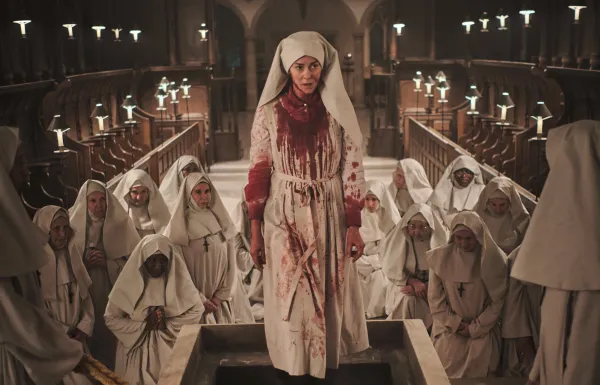
In "Consecration," after the suspicious death of her brother Michael (Steffan Cennydd), a priest, Grace (Jena Malone) goes to the Mount Saviour Convent in Scotland to find out what really happened. Once there, she uncovers murder, sacrilege and a disturbing truth about her own past.
"Consecration" is the story of Grace, an accomplished ophthalmologist in London, who's summoned to Mount Saviour Convent deep in the Scottish Highlands following the sudden and mysterious death of her brother who was a priest. Refusing to believe the convent’s insistence that he took his life and determined to discover what really happened to him, Grace starts her own investigation into her brother’s death as the nuns prepare a consecration ceremony to purify the holy site.

ComFest showcases the very best in live music in Columbus and Central Ohio. Entertainment applications for all stages are now open through April.
You can be a part of ComFest history by designing the official ComFest 2023 logo.
Designs must have the dates “June 23, 24, & 25, 2023” and the name “Community Festival” and must incorporate the Hopewell symbol (graphic above) into the logo. Images must be camera ready and one color image (no grayscale). Go to comfest.com and look for the logo contest link for more information.
223 ComFest Logo Contest
Thursday, March 9, 2023, 7:30 PM
The Vanderelli Room
218 McDowell St, Columbus, OH 43215
Or upload entrie prior to March 8 at logo@comfest.com

The Community Festival (ComFest) is seeking applications for its 2023 Community Grants program. Each year, ComFest invites grant applications to support and sustain innovative programming demonstrating a commitment to ComFest’s principles and mission which are rooted in community, social justice and progressive activism.
ComFest established the grants program in the spirit of giving back to the community. Since 2006, nearly $350,000 has been awarded to local organizations.
To learn more about ComFest’s Grants program, application requirements, previous grant recipients, and submit an application, please visit: https://www.comfest.com/committees/grants.
The deadline for submitting applications is Monday, March 13, 2023. Applications received after the deadline cannot be considered.
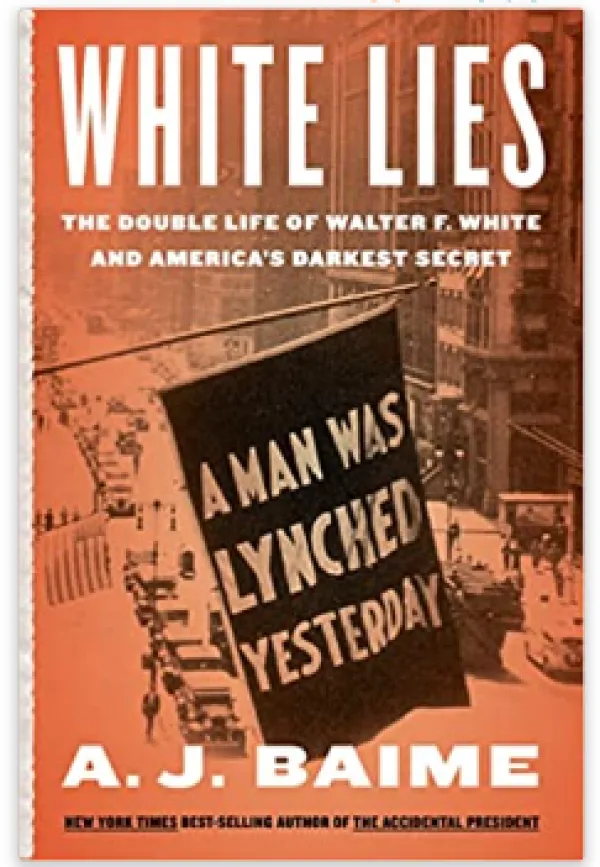
Surely Walter F. White, the superlative black investigative journalist, civil rights leader, author, and member of the Harlem Renaissance, is one of the most neglected figures in the twentieth century freedom movement. Perhaps it is, in part, because he was a black man who looked white. He once wrote of himself , “My skin is white, my eyes are blue, my hair is blond. The traits of my race are nowhere visible upon me.” An essay in the Winter 1998 issue of the magazine American Legacy, says “The Ethical Culture Society leader Algernon Black was called upon to introduce him before an address. Mr. Black was introducing Mr. White, but Mr. Black was white and Mr. White was black, while of a whiter complexion than Mr. Black.”

Agnes (Zackary Drucker), the pioneering, pseudonymized transgender woman who participated in Harold Garfinkel’s gender health research at UCLA in the 1960s, has long stood as a figurehead of trans history. In this rigorous cinematic exercise that blends fiction and nonfiction, "Framing Agnes" explores where and how her platform has become a pigeonhole. Framing Agnes endeavors to widen the frame through which trans history is viewed, one that has remained too narrow to capture the multiplicity of experiences eclipsed by Agnes’s. Through a collaborative practice of reimagination, an impressive lineup of trans stars take on vividly rendered, impeccably vintage reenactments, bringing to life groundbreaking artifacts of trans health care. The films' signature form-rupturing style radically re-envisions the imposition of the frame on the cultural memory of transness through his communally driven excavation. This reclamation tears away with remarkable precision the myth of isolation as the mode of existence of transgender history-makers, breathing new life into a lineage of collaborators and conspirators who've been forgotten for far too long.
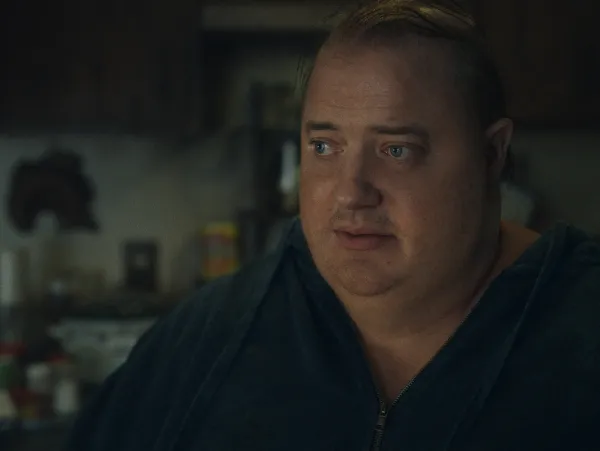
"The Whale" is the story of Charlie (Brendan Fraser), a reclusive English teacher, living with severe obesity who attempts to reconnect with his estranged teenage daughter Ellie (Sadie Sink) for one last chance at redemption.
When we meet Charlie, he’s in a kind of literal and emotional limbo: physical because his size prevents him from moving very well; emotional because of the enormous roiling grief he has towards his dead partner, Alan. He's full of guilt over Alan’s passing, guilt over walking out on a life with his daughter, guilt over all the things that might have been.
Unable to forgive himself for his own role in Alan’s death and deeply guilty about his desertion of his young daughter and wife Mary (Samantha Morton), Charlie begins to self-destruct through compulsive binge-eating. Unprocessed grief is the ground floor of everything for Charlie. He’s suffering from congestive heart failure, but maybe he’s really dying of the grief he’s never reconciled.
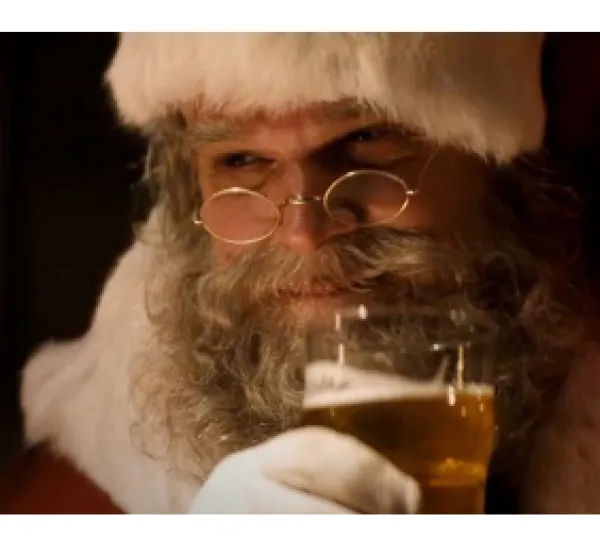
Violet Night is directed by Tommy Wirkola ("The Trip," "Hansel & Gretel: Witch Hunters") and stars David Harbor as Santa Claus. The film opens with Santa Claus, who's currently fed up with Christmas and is taking a break from delivering presents by chugging a few beers at a Bristol pub on Christmas Eve. Santa has grown a little cynical over the centuries and is disgusted that all kids want for Christmas are video games and money. He feels they have become increasingly materialistic and unaware that he exists. Drunk and disappointed, he flies off with his reindeer and sleigh, and this version of Santa leans over his sleigh to vomit.
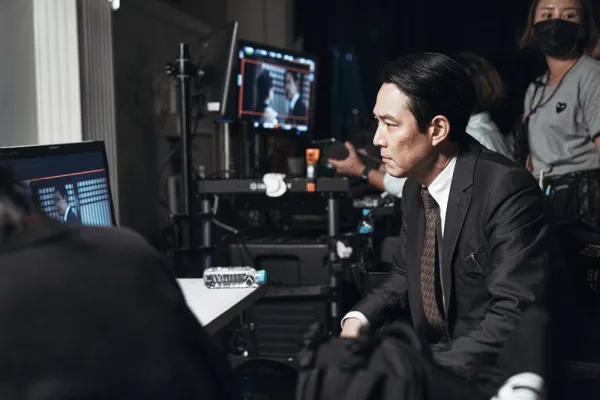
After a high-ranking North Korean official requests asylum, KCIA Foreign Unit chief Park Pyong-ho (Lee Jung Jae) and Domestic Unit chief Kim Jung-do (Jung Woo Sung) are tasked with uncovering a North Korean spy, known as Donglim, who's deeply embedded within their agency. When the spy begins leaking top secret intel that could jeopardize national security, the two units are each assigned to investigate each other. In this tense situation where if they cannot find the mole, they may be accused themselves, Pyong-ho and Jung-do slowly start to uncover the truth. In the end, they must deal with an unthinkable plot to assassinate the South Korean president.
Taking place in the 80s against the backdrop of a cold war between the two Koreas, "Hunt" tells an engrossing tale of a spy agency conducting a smoke out operation to root out a mole. Understanding that the film takes place in the 80s, the set is designed to match the era down to even the smallest detail. Although the circumstances surrounding the film are based on actual events in history, the story itself is a work of fiction in its entirety.
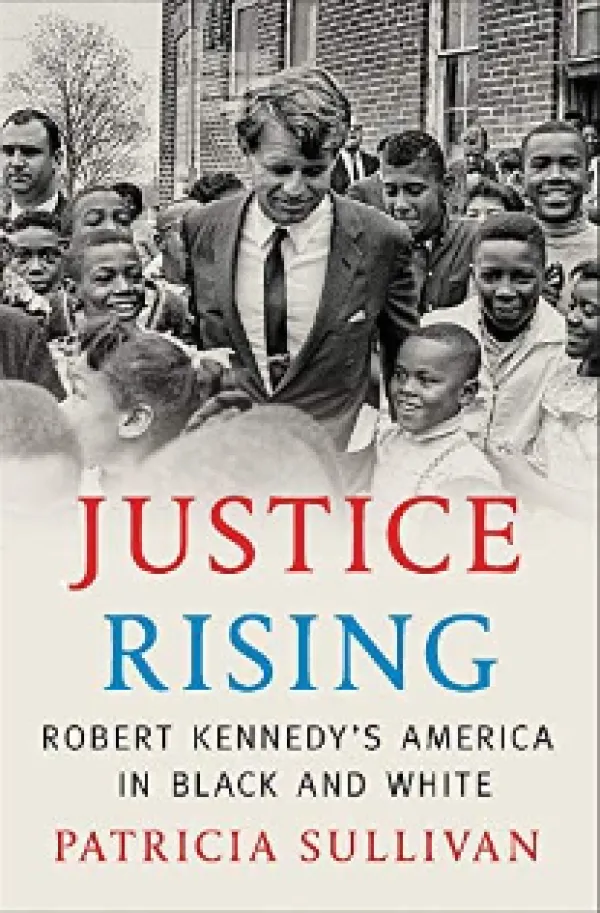
This past June 5 marked fifty-four years since the assassination of Senator Robert F. Kennedy. He was forty-two years old when he was struck down by an assassin’s bullet after claiming victory in the California presidential primary. (Sirhan Sirhan, the convicted assassin, was granted parole last year, the sixteenth time he tried. While he was approved by the parole board and two of RFK’s children supported his release, six of their siblings and his widow did not. California Governor Gavin Newsom declined to free Sirhan.) Although race relations in America have, in many ways, greatly improved over the years, they are in just as many ways not much different than when John and Robert Kennedy were in power.
Sullivan, a history professor at the University of South Carolina, is an accomplished civil rights historian who has written three books on African American history and edited two others. While many historians have written about Robert F. Kennedy and his role in the freedom movement of the 1960s, she is the first who has done so in such detail.
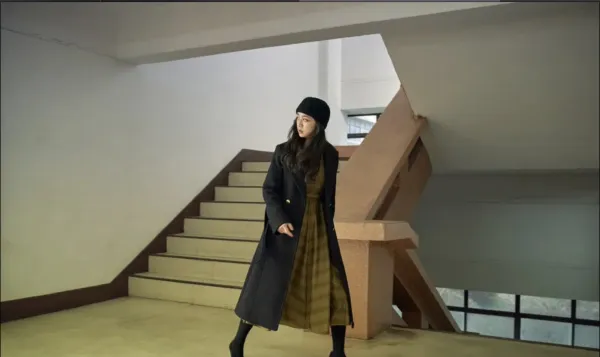
From a mountain peak in South Korea, Soo-wan (Go Kyung-Pyo), a businessman, plummets to his death. Did he jump, or was he pushed? When detective Hae-joon (Park Hae-il) arrives on the scene, he begins to suspect the dead man’s wife Seo-rae (Tang Wei) may know more than she initially lets on. But as he digs deeper into the investigation, Hae-joon finds himself trapped in a web of deception and desire, proving that the darkest mysteries lurk inside the human heart.
Set against a contrasting backdrop of mountains and seas, "Decision To Leave" captures the tension of a police investigation while simultaneously being focused on the changing psychology of a man and a woman. The film begins with the detective Hae-joon investigating the death of a man who fell from a mountaintop. The character is similar to the police character Martin Beck from the Swedish detective novel series.