
Arts
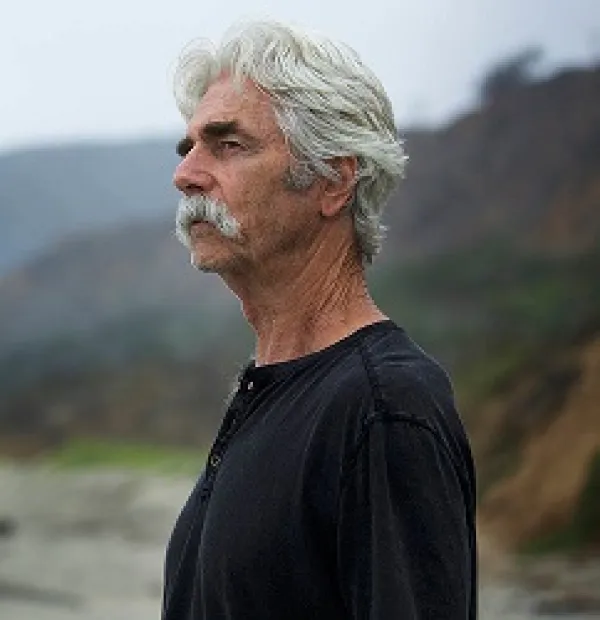
It’s so nice when a movie gives you more than you expect. That’s the case with The Hero, a gentle tale that continually surprises us.
The biggest surprise involves the relationship that develops between 71-year-old actor Lee Hayden (Sam Elliott) and 30-something Charlotte Dylan (Laura Prepon). Romances between young women and older men are so common in Hollywood flicks that you expect this one to be treated as no big deal. Instead, Lee himself questions Charlotte’s obvious interest, only to be told she has a thing for old guys.
A smaller surprise occurs when Lee tries to mend fences with estranged daughter Lucy (Krysten Ritter) after a lifetime of disappointing her. We suspect he’ll end up disappointing her yet again—and, actually, he does, but not in a way we could have foreseen.
Lee—a role director and co-writer Brett Haley created especially for the gravelly voiced Elliott—is a movie star whose best days are behind him. Forty years behind him, to be precise, because that’s how long ago he made an iconic Western called The Hero. Now, he spends his days smoking weed with former co-star Jeremy (Nick Offerman) and waiting for roles that never come.
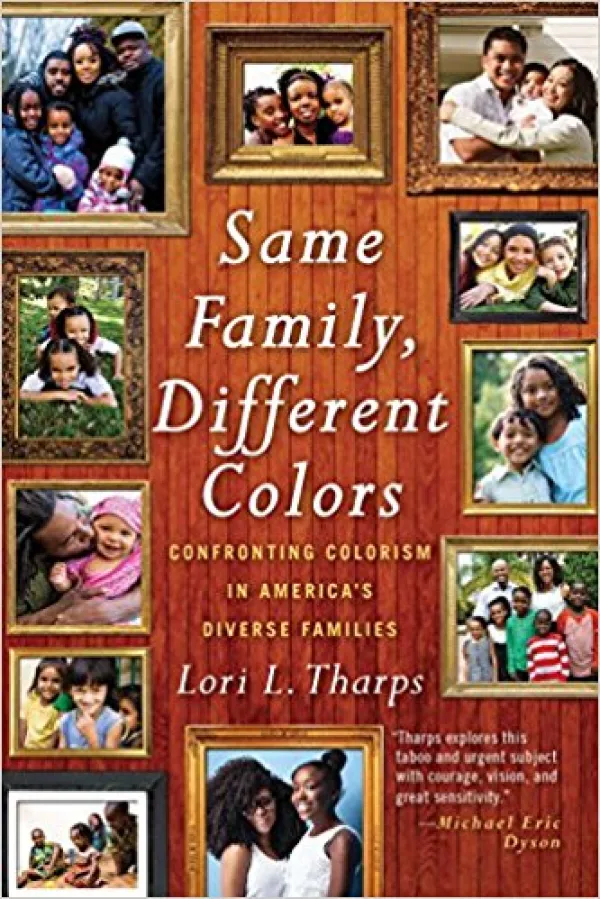
Like many black people, I grew up knowing families in which the color of everyone’s skin was different, sometimes dramatically so. I also have people in my own family on both sides who at first glance, appear to be white, but who identify and were reared as black. There are six interracial marriages in my generation–I’m a Baby Boomer–and five of the couples have children and grandchildren, so clearly this will be our reality for some time to come.
As I was growing up I also learned the color descriptors—high yellow, cinnamon, red bone, coffee colored, blue black—the jump rope ditties, and was aware of the advantages light skin and “good” hair can present for black people. I didn’t dwell on it, though, and except for the occasional jokes about “must have been the milk man,” no one I knew did either.
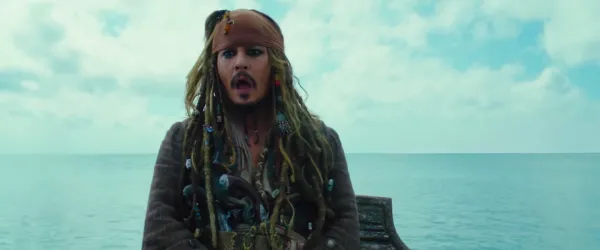
Pirates of the Caribbean: Dead Men Tell No Tales is awash in mysteries, but the biggest is existential in nature. Namely, why does this flick exist?
In 2003, Disney gave us the first film in the series, The Curse of the Black Pearl, starring Johnny Depp as Capt. Jack Sparrow. The eye-shadowed scamp of a pirate was such a hit that the studio brought him back in a trio of sequels that drowned the original’s charm under scattershot plots and frantic action sequences.
Despite critical brickbats galore, Disney continued to earn shiploads of booty from the series, which is why Depp is back with Dead Men Tell No Tales. The title of this fifth installment is based on a quote from the chief villain, Javier Bardem’s Capt. Salazar, who reveals that he and his cursed crew leave one man alive from each ship they attack because they want someone to tell the tale.
Of course, that’s assuming anyone is capable of explaining the tale. Like its predecessors, Dead Men is a convoluted mess involving undead or missing parents, curses, quests, revenge and a series of magical objects: a compass, an unreadable map, a mythical island and Poseidon’s trident.

It’s no surprise that so many movies focus on the teenage years. Just think what this time of life puts us through.
After ambling our way through adolescence, we suddenly have to make crucial decisions about our future while simultaneously dealing with changing bodies, insistent urges and, for many of us, crippling inferiority complexes.
All of this makes teenagers a fascinating subject for movie fiction, and it makes them an equally fascinating subject for movie documentaries. At least, it does when the documentaries are as sensitive and thoughtful as All This Panic.
Director Jenny Gage and cinematographer Tom Betterton reportedly followed a group of Brooklyn girls through three years of their lives. In the process, they created a deeply personal record of the small and large crises they faced along the way.
And make no mistake about it: Though the flick’s title could be misinterpreted as a condescending comment on teen angst, these young women lead very complicated lives.
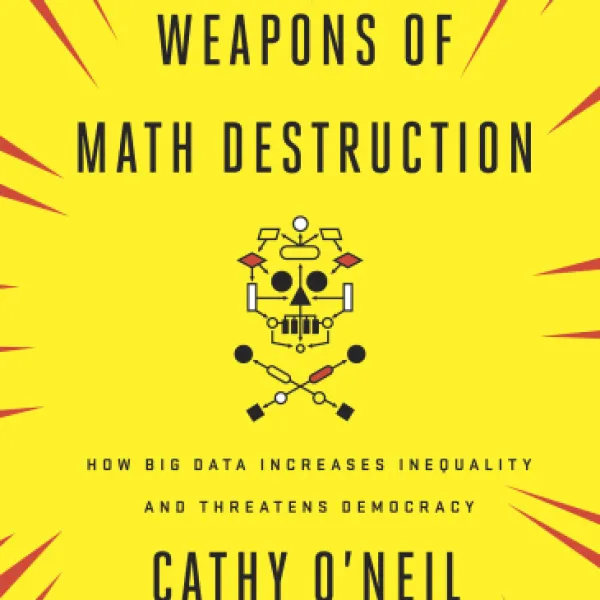
Weapons of Math Destruction: How Big Data Increases Inequality and Threatens Democracy by Cathy O’Neil
Like millions of students, I never liked math. I thought it scary, mysterious and evil. I joke that I can’t even sit next to math professors during meetings! Generally a bright student with high grades, my lack of prowess at math let me down every time. And then in the ninth grade, the lottery placed me in Arnold Anderson’s general math class. He had a reputation for transforming struggling math students into, if not math wizards, students who would see that math was no longer mysterious and could even be interesting and—borrowing a term from my students—fun. (My favorite mathematical task? Balancing equations.) It was the first time I was interested in math, liked math and earned As in math. Alas, that was the last time for me; I managed to make it all the way to a PhD without math. I came to ruefully regret my lack of math prowess when I began my career in higher education. I was the person who always interrupted meetings so that someone could explain the math behind the data so ubiquitous in our field.
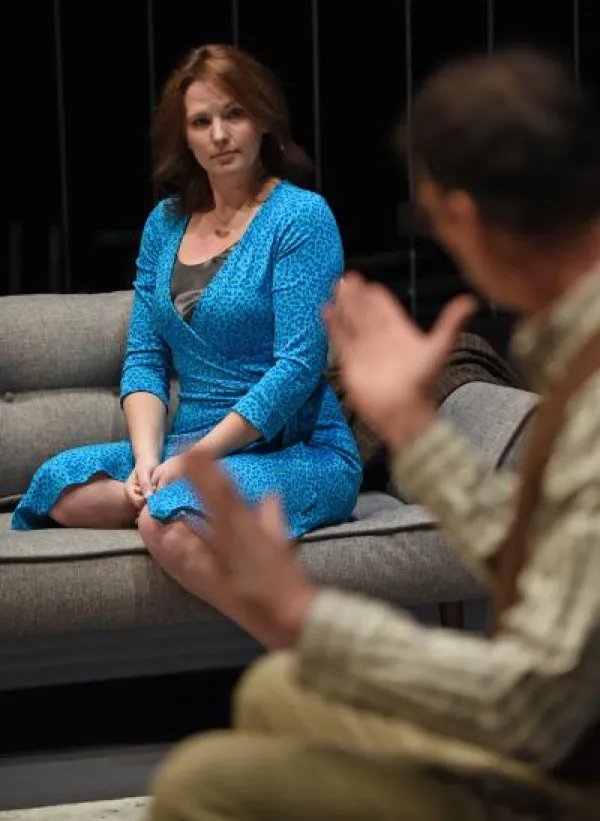
In 1968 Simon and Garfunkel sang: “Someone told me it’s all happening at the zoo. I do believe it, I do believe it’s true.” And after witnessing Deaf West Theatre’s production of Edward Albee’s At Home at the Zoo I’ve become a true believer. Serious theatergoers shouldn’t monkey around - head down ASAP to the Wallis Annenberg Center for the Performing Arts to catch this run, which is short on number of days but long on profundity, leavened by Albee’s wicked wit about the human (or lack of) condition.
This is a very unique live stage experience delivered in a singular way on the boards of the Wallis’ 150-seat Lovelace Studio Theater. In both acts two hearing impaired thesps perform onstage, using facial expressions, body language and American Sign Language. Offstage, or on the side of the set, a pair of actors literally give voice to what the onstage pair of protagonists are communicating via ASL.
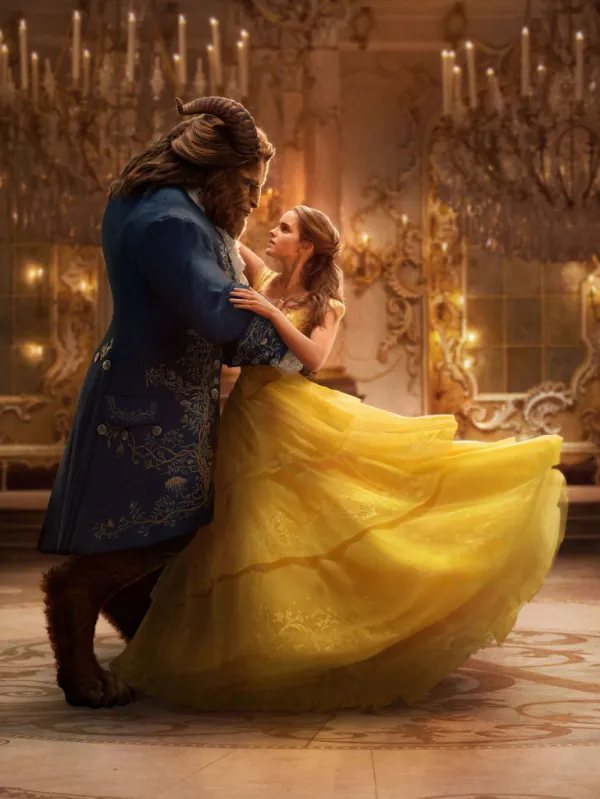
Because I’m attracted to tales of romance or redemption, it’s not surprising that I love Beauty and the Beast. It is, after all, a fairy tale that combines both romance and redemption.
But that doesn’t mean I love every version of Beauty and the Beast equally.
Who wouldn’t be won over by Disney’s 1991 animated flick, which retold the charming French tale with the help of beautiful songs by Howard Ashman and Alan Menken? On the other hand, the first time I saw Disney’s stage adaptation of the musical, I was disappointed to find it diluted the original’s power by adding tot-pleasing slapstick. It wasn’t until I saw a toned-down reboot in 2012 that the stage show claimed a place in my heart.
Now comes Disney’s live-action film version, and I find myself of two minds. The meat of the story—the growing affection between the beautiful Belle (Emma Watson) and the monstrous Beast (Dan Stevens)—is as touching as ever. But director Bill Condon (Gods and Monsters) and his writers weigh it down with embellishments designed to answer questions that really didn’t need to be answered.
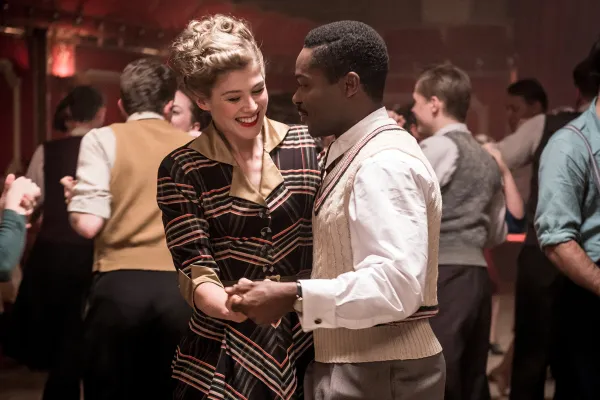
Even though its subject matter is completely different, I can’t help comparing A United Kingdom to 2016’s Hidden Figures.
Both films uncover an obscure chapter in the history of racial injustice. And both films are fascinating and enlightening despite the fact that neither is quite as good as it could be.
A United Kingdom is directed by Amma Assante, who also helmed 2013’s Belle, the story of a mixed-race woman who struggled to find love and gain equality after being raised among the aristocracy in 18th-century England. In Assante’s new film, romance also plays a role, but it’s only one part of a complex tale involving political intrigue, colonial exploitation and the early days of South African apartheid.
When young Londoner Ruth Williams (Rosamund Pike) meets an English-educated African named Seretse Khama (David Oyelowo) in 1947, it’s clearly love at first sight. Ruth literally can’t take her eyes off this handsome stranger, and he becomes equally entranced. The two know their respective families won’t approve of an interracial romance, but they immediately make arrangements to meet again.
Do you prefer to have your cinematic guilt and grief delivered with a Boston accent? If so, you might enjoy the Oscar-nominated Manchester by the Sea. (Well, maybe “enjoy” is the wrong verb, since Jimmy Fallon accurately described it as “the only thing from 2016 that was more depressing than 2016.”)
If, on the other hand, you prefer to have your guilt and grief delivered in Spanish—and leavened with a faint ray of hope—you might try Pedro Almodovar’s Julieta. It’s not a great film, and it’s certainly not the director’s best, but it does have its charms.
Fans of Almodovar (Women on the Verge of a Nervous Breakdown) won’t be surprised to learn that the central character is a woman going through a very rough time. They also won’t be shocked to discover that the film shows the influence of an earlier filmmaker—in this case, Alfred Hitchcock. Many scenes are tinged with a feeling of ominousness that’s reinforced by Alberto Iglesias’s relentlessly Hitchcockian score.
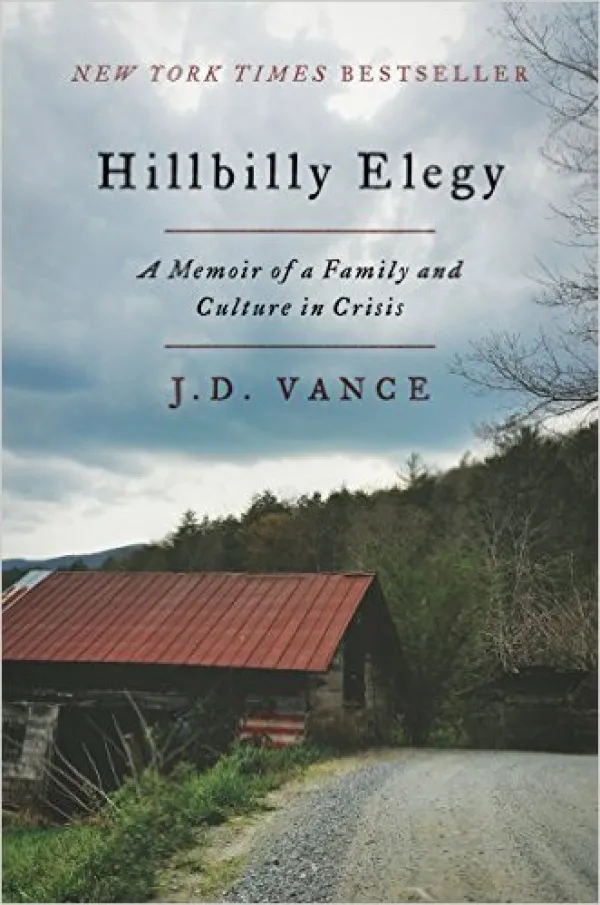
I constantly remind the students in my African American history classes that if you are poor and white in America, especially if you are rural or southern, the only difference is that you are not black. We have long known that poor whites and blacks live very similar lives, and the socioeconomic indicators we use to measure well-being–level of education, family life, employment, home ownership, involvement in the criminal justice system–are also remarkably similar.