
Arts
Most Americans never learned that there was slavery in the northern United States. Half of all slave voyages docked in tiny Rhode Island, and slave owner James DeWolf of Bristol, Rhode Island was said to be the second richest person in the U. S. at the time he died in1837. He was a merchant, founded a bank and an insurance company, and owned a rum distillery; all of these profited from his status as a slave trader. Several branches of the DeWolf family were also heavily involved in the slave trade. The DeWolfs were said to have transported twelve thousand slaves from the middle of the seventeenth century through the early 1800s. This alone made them the most successful slave trading family in the country. However, in spite of a small number of wealthy and influential slave owners, and for various other reasons, slavery never became as entrenched in the north as it did in the south. This made it easier for northerners to divorce themselves from the peculiar institute.
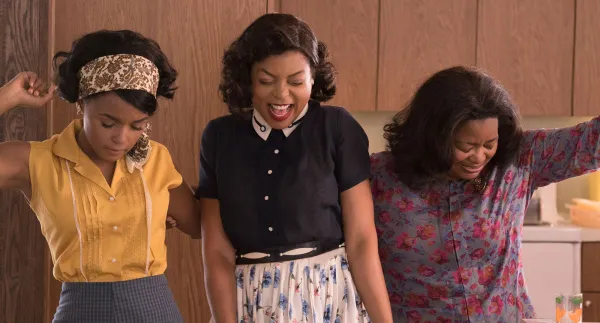
Hidden Figures tells a fact-based story so fascinating that you wonder why it hasn’t been told until now. Of course, if it had been, they would have had to change the title.
“Hidden Figures” refers to complex mathematical equations that had to be solved before the U.S. could send men into space in the early 1960s. But it also refers to the people who helped to solve those equations.
Specifically, it refers to a group of black women who—because of their race and gender—labored under trying conditions. Directed and co-written by Theodore Melfi (St. Vincent) and based on a book by Margot Lee Shetterly, the film focuses on three of these women who worked as human “computers” at NASA’s Virginia headquarters in the midst of America’s frantic “space race” with the Soviet Union.
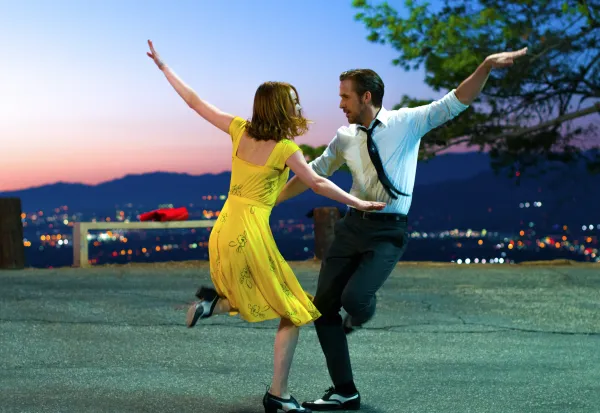
La La Land is the most exhilarating film of the year. That becomes obvious before the title credit even appears.
Opening on the scene of a backed-up Los Angeles freeway, the camera eventually settles on a woman who begins singing and dancing about her determination to make it in show business. Others join in the catchy song as the camera wanders along the line of cars in a giant production number that gives the impression of being shot in one long, intricately choreographed take.
By the time the words La La Land appear on the screen, we’ve been blown away by the sheer audaciousness of writer/director Damien Chazelle’s vision. All that’s left is to be charmed by the romance that slowly percolates between his charismatic leads.
Mia (Emma Stone) is a would-be actor who drags herself from one disappointing audition to the next in between shifts at a coffee shop located on the Warner Bros. movie lot. Sebastian (Ryan Gosling) is a pianist working at a nightclub where he’s forbidden to play the jazz that winds its way through his DNA.
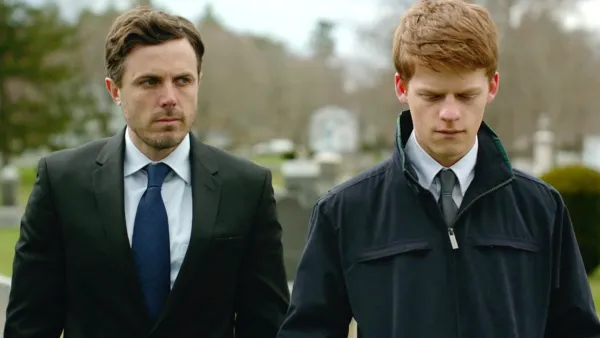
As a critic, I’ve always been amused when dissenting readers ask the clichéd question, “Did we even see the same movie?” So it’s ironic to realize I’m having the same response to reviews of Manchester by the Sea.
It’s not just that many critics seem to love the film more than I do. It’s that they seem to find meaning in the story that I don’t.
Written and directed by Kenneth Lonergan (You Can Count on Me), Manchester centers on Lee Chandler (Casey Affleck), a sullen loner whose life changes when he’s appointed to serve as guardian to his teenage nephew, Patrick (Lucas Hedges). It’s his reaction to this situation over which many critics and I part company.
Some feel he becomes transformed by his new responsibility. Frankly, though, I don’t see it. He does what he has to do, but in the end he’s the same person he was in the beginning.

If I told you Moonlight is about an African-American boy growing up in a world of drugs and poverty, you’d probably begin to form an image of the film in your mind. And that image probably would be wrong.
Director/screenwriter Barry Jenkins has put together a movie so sensitive, so lyrical and so different from anything we’ve seen that there’s no way to avoid being taken by surprise.
Moonlight tells the sad tale of Chiron, a boy growing up in a scruffy neighborhood of Miami. Divided into three chapters, the film follows him into high school and finally into adulthood. At all three stages of his life, he struggles with loneliness brought on by his own—and other people’s—inability to accept him for who he is.
As a boy, Chiron (Alex R. Hibbert) is nicknamed Little due to his small size and is constantly bullied for being somehow different from the other boys. A sympathetic classmate named Kevin (Jaden Piner) advises him to stick up for himself, but Chiron’s mother, Paula (Naomie Harris), is too consumed by her drug habit to pay attention to his needs.
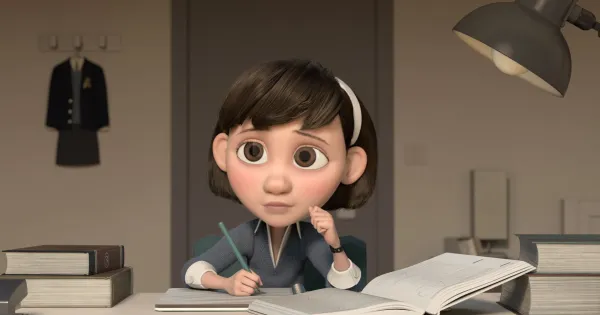
What happens when you want to turn a popular work of literature into cinema but it’s not long enough to serve your purposes?
In the case of Tolkien’s The Hobbit, director Peter Jackson simply padded the story out so much that he was able to stretch the novel into not one, not two, but three super-sized films.
Director Mark Osborne (Kung Fu Panda) has taken a different approach with Antoine de Saint-Exupery’s classic children’s book, The Little Prince. The beloved tale is so simple and concise that there wasn’t enough content to stretch into even one feature-length film. Osborne’s solution: Embed the original story into another story set in contemporary times.
First appearing in French in 1943, The Little Prince is the illustrated tale of an aviator who crash-lands in the desert with only eight days’ worth of water. He’s feverishly working to fix his plane when he meets a young boy who claims to be a visitor from another planet—or, actually, an asteroid. The boy has left his tiny home after a tiff with his true love: a beautiful, but vain, rose.

Going to Shadowbox Live can be a humbling experience. The troupe’s so-called “metaperformers” are so busy, ambitious and talented that you can’t help feeling like a lesser species in their presence.
For a prime example of what they’re capable of, see Broken Whispers, an adaptation of F. Scott Fitzgerald’s The Great Gatsby that transforms the title character into a lesbian and tells her story through a combination of narration, dance and song. Radically changing a literary classic sounds like a dangerous endeavor, but the production is put together with such skill and ingenuity that it’s a wonder to behold.
And that’s just one of the shows currently being staged at Shadowbox. When you consider that the average troupe member juggles multiple productions with behind-the-scenes duties and even waiting tables, it’s hard not to conclude we’re dealing with a higher order of being here.
Fortunately for our egos, every once in a while the Shadowboxers put on a show that proves they’re only human after all. Such an animal is Shadow Zone, the troupe’s annual Halloween-season production.

Due to its unusual choice of subject matter, Next to Normal is a very brave show. Sure, there have been stage and screen works galore about insanity and other mental disorders. Shakespeare dealt with related themes, such as depression, notably in Hamlet (although there is, as the Melancholy Dane remarks, “A method to [his] madness”). Just about every Bond villain has been certifiable, John Malkovich perfected the onscreen lunatic and some movies have made light of psychological disorders, from 1966’s Morgan: A Suitable Case for Treatment to 1970’s Where’s Poppa?, which found much humor in dementia.
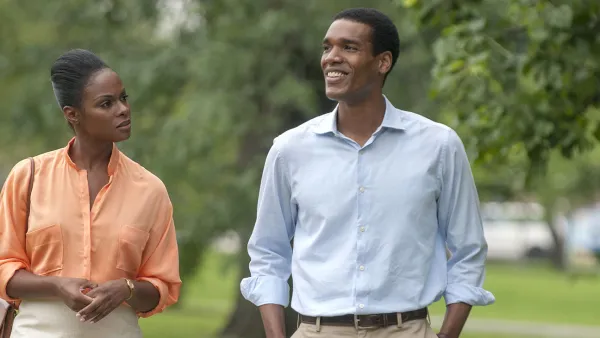
The average rom-com loves couples who “meet cute.”
The new flickSouthside With You is not exactly a rom-com, and it’s definitely not average. Its subject, after all, is the first date of Barack Obama and future first lady Michelle Robinson.
Nevertheless, it must be said that the two meet kind of cute. But that’s just part of the charm of writer-director Richard Tanne’s depiction of a momentous day they spend together in 1989.
They walk, talk and get acquainted, but first of all they argue—primarily about whether they’re actually on a date. As a young associate in the Chicago law firm where Barack is serving as a summer intern, Michelle insists it’s inappropriate for them to socialize. She’s agreed to see him outside the office only because he invited her to attend a community meeting in his South Side neighborhood.
It’s not until after he’s picked her up in his rusted-out hatchback that he admits the meeting is still hours away. In the meantime, he suggests they take in an African-American art exhibit and get a bite to eat.
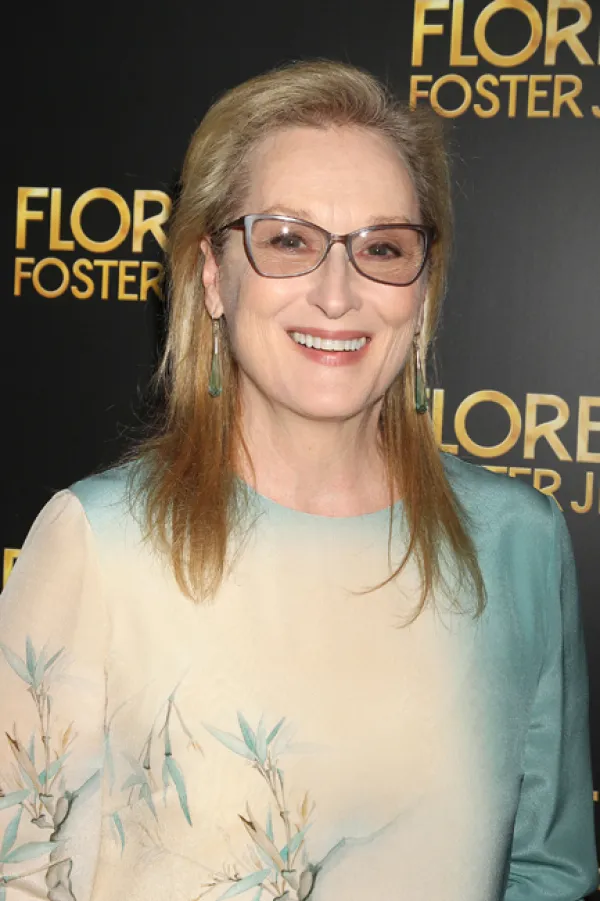
British director Stephen Frears’ latest biopic, about wannabe chanteuse Florence Foster Jenkins (the much Oscar-ed and “much-er” Oscar-nommed Meryl Streep), is a winning motion picture on many levels. Florence Foster Jenkins is at all times highly entertaining and occasionally downright hilarious. Based on the real life, eponymous Jenkins, it is a saga about a woman with limited (if any) vocal talent who somehow managed to pursue a career singing classical music. Let’s take a look at some of the dimensions Florence Foster Jenkins explores.
The stylish-looking film shot by London-born director of photography Danny Cohen (who was Academy Award-nominated for 2010’s The King’s Speech) has a “veddy” English sense of class. Florence makes it abundantly clear that Jenkins was a member of the 1% whose wealth enabled her, through a variety of ruses ranging from audience padding to influence peddling - of critics, elite figures in the rarified world of classical music, such as vocal coaches, music hall impresarios and the renowned conductor Arturo Toscanini (John Kavanagh), etc. - to buy her way onstage.