
Arts
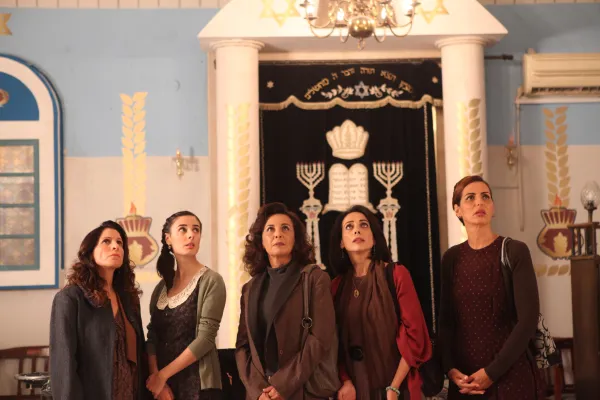
A balcony collapses in a synagogue and sparks a women’s uprising in the first offering of the 2017 Columbus Jewish Film Festival. Despite venturing into the hazardous intersection of religion and gender politics, The Women’s Balcony has been described as a “feel-good comedy” that you don’t have to be Jewish to love.
Then again, you don’t have to be Jewish to enjoy the majority of films in this year’s lineup, said festival co-chair Sandy Meizlish. Though some deal with the aftermath of the Holocaust and likely have the most resonance for Jewish audiences, he said, others have more universal appeal.
Meizlish cited Mr. Gaga, a documentary about Israeli choreographer Ohad Naharin, who pioneered a groundbreaking dance style called Gaga. The screening will be presented in conjunction with BalletMet, which recently performed one of Naharin’s works. “It was a compelling performance,” Meizlish said.
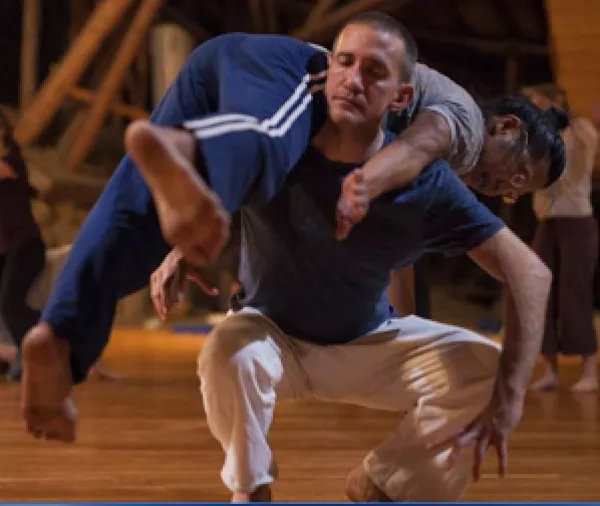
SeaBus Dance Company is excited to announce our upcoming project LOOM, an improvisational dance piece that will bring distant dancers and Columbus communities together. LOOM will premiere Friday, October 27th at Art of Yoga and will continue through the weekend with a October 28th show at MadLab Theater and a October 29th show at Flux + Flow Dance and Movement Center. Wherever you reside, we didn’t want you to miss it, which is why we included performances all across the city: in Franklinton, Downtown Columbus AND Clintonville! Just as LOOM aims to weave distal Columbus communities together with dance, its goal is also to gather dancers from across the country and present the converging of ideas, movement and narrative.
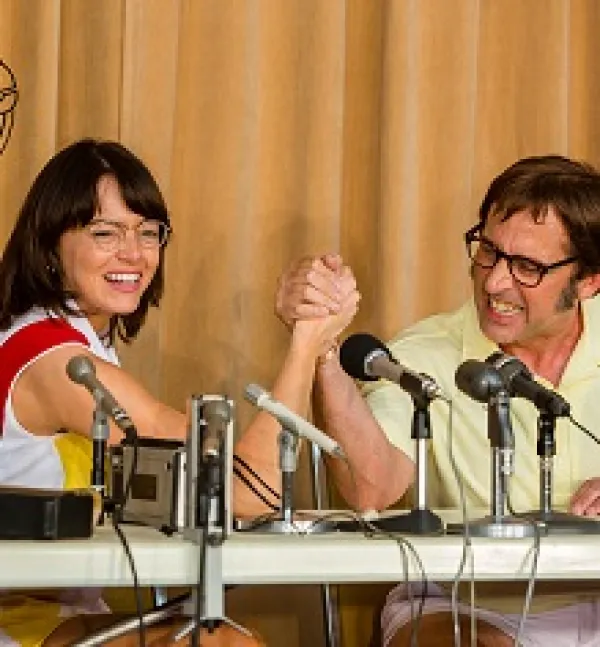
The superiority of the male sex was on the line when Bobby Riggs took on Billie Jean King in the 1973 tennis match known as the “Battle of the Sexes.” At least, that’s what organizers of the overblown spectacle claimed, and a sizable portion of the population actually believed it.
I was traveling out West at the time, and I happened to drop by a local restaurant in time to hear some macho types at the next table grouse about Riggs’s ignominious loss. It meant nothing, they insisted, except that the 55-year-old, out-of-shape Riggs was no match for the 29-year-old, top-of-her-game King.
Well, of course it meant nothing. Then again, it meant quite a lot in an age when women athletes—and women in general—were struggling to claim their rightful place in a society that had long been defined by male privilege. What makes the new comedy Battle of the Sexes so enjoyable is that it simultaneously treats the match as a ridiculous publicity stunt and as a historic milestone in the fight for gender equality.
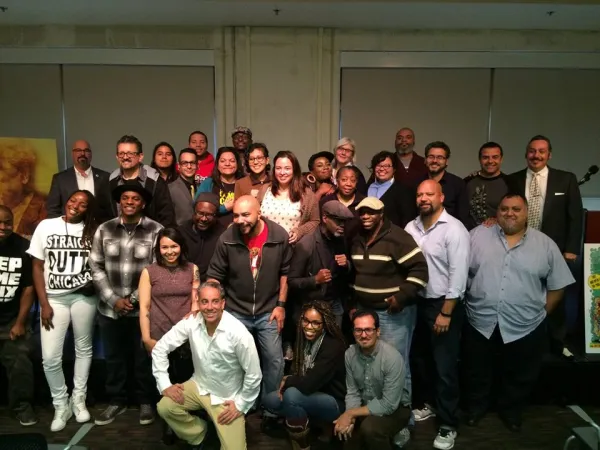
Friday, Sept. 29, 9a,-4:30pm
Frank Hale Cultural Center, 153 W 12th Ave, Columbus, Ohio 43210
Facebook Event
SÕL-CON: Brown & Black Comics Expo that offers a venue every year at OSU Campus's Hale Hall for Latinx and African American comic book creators to come together to change the lives of K-12 youth of color in Columbus. Panels. K-12 Comics and Zine Workshops. Talk-Backs. Expo.
Free.
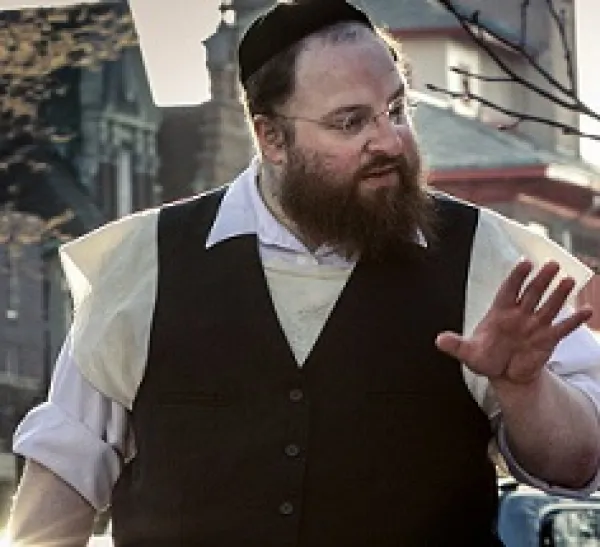
Losing your wife is tough enough. Imagine losing your wife and subsequently being told you’re no longer fit to raise your son.
That’s the situation the title character faces in Menashe, an intimate story set in a Hasidic Jewish community in Brooklyn. Directed and co-written (in Yiddish) by Joshua Z. Weinstein, the film is said to be inspired by the real-life experiences of its star, Menashe Lustig.
We first meet Menashe, a clerk in a Hasidic grocery, nearly a year after his wife’s death. We learn he’s been forced to give up his adolescent son to his married brother-in-law, Eizik (Yoel Weisshaus). Why? Because according to his rabbi’s reading of the Torah, the boy is better off being raised in a two-parent household.
Menashe chafes against the order because he loves his son, Rieven (Ruben Niborski), and is lonely living on his own. However, there’s little he can do about it short of remarrying, which he seems unprepared to do. If Menashe tries to take Rieven back, he’s warned, the boy will be expelled from the local Hasidic school.

Dr. Bob Fitrakis reviews the film; Detroit (2017); Amidst the chaos of the Detroit Rebellion, with the city under curfew and as the Michigan National Guard patrolling the streets, three young African American men were murdered at the Algiers Motel.
Bob shares his personal experiences growing up in the middle of that conflict, and what he saw during the riots depicted in the film.

Not since President Lyndon Johnson’s War on Poverty have we seen so much attention paid to poor white people. The iconic Life magazine photo of Johnson sitting on the front porch of a poor white Appalachian family was in part to ensure them that they, too, would be included in his War on Poverty.
The sub-title of Isenberg’s book is The 400-Year Untold History of Class in America. Yet it is hardly untold, especially here of late. In the last several years we’ve seen a number of books about working class and poor whites: Hillbilly Elegy by J. D. Vance, Angry White Men by Michael Kimmel, Weapons of Math Destruction by Cathy O’Neil and Masterless Men: Poor Whites and Slavery in the Antebellum South by Keri Leigh Merritt immediately come to mind. (Why is there a book about slavery on this list? Because regardless of what the majority of whites think, everything in this country is connected to slavery.)
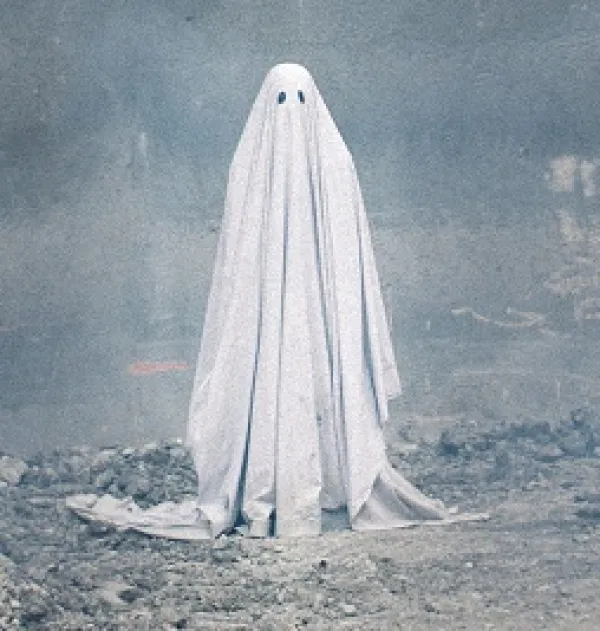
I wasn’t bowled over by last year’s Ghostbusters remake, which seemed like a waste of a good cast. Even some of its fans seemed to like it mainly because it broke new cinematic ground by portraying women as competent professionals rather than man-obsessed flakes. This helped to make up for the fact that it wasn’t a great comedy.
That said, I wouldn’t have minded seeing the Ghostbusters team regroup long enough to interrupt the chief spirit’s reign of terror in A Ghost Story. Frankly, I don’t think the spirit himself would have minded, as he leads a pretty dreary existence. In fact, “reign of terror” is a misnomer—it’s more like a reign of tedium.
In the version of the spectral world created by writer/director David Lowery (Pete’s Dragon), ghosts have the ability to travel backward or forward through time, but they’re confined to one geographical location. Thus, the unnamed spirit in question (Casey Affleck) spends his days hanging around the ranch-style home he inhabited with his equally unnamed partner (Rooney Mara) before being killed in a traffic accident.

In 1926, W.E.B. Du Bois said “The Plays of a real Negro theatre must be…About us…By us…For us…Near us.”
This is the philosophy that is behind the 5th Annual Columbus Black Theatre Festival (CBTF). The CBTF event is organized to support, encourage and recognize Black Theatre playwrights who tell the stories of being Black, living Black, working Black, raising Black, dying Black and loving Black people.
The CBTF is an opportunity to celebrate the production of plays about the Black experience written by new and seasoned playwrights.
When asked “what is the most important aspect of having a Black Theatre Festival to you?” returning playwright, Charlay Marie (The Bet), states “With Black on Black crime, police brutality and all other aspects of violence at an all-time high, Columbus, Ohio needs a comic relief in the form of entertainment and enlightenment. Theater gives playwrights a chance to fix what’s wrong in the community by tackling tough subjects and introducing our audience to a better way of thinking. Black theatre brings the community together to celebrate our differences, understand our strengths, and grow as a unit.”
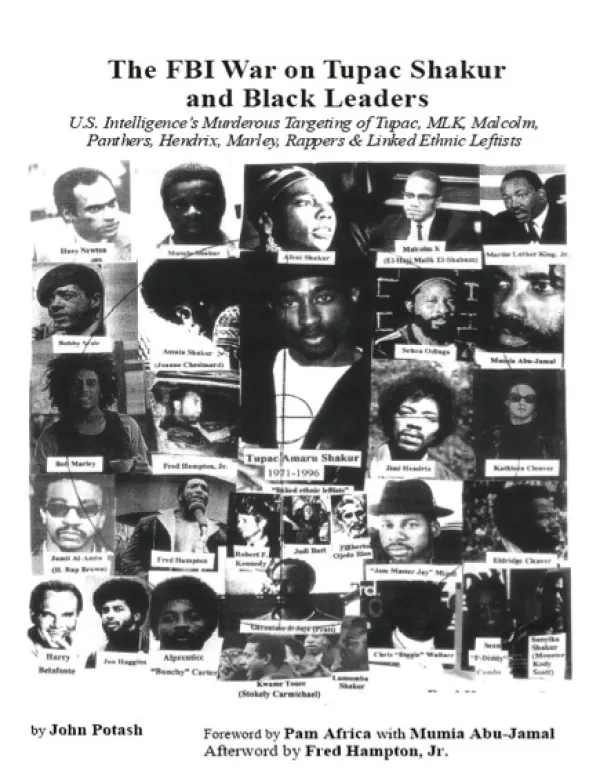
Leftist black activists don’t get represented in Hollywood productions much, unless they represent the more mainstream Civil Rights movement. All Eyez On Me gives the radical leftist angle on rap icon Tupac Shakur’s family, upbringing, and his little-known political activism. Despite some of the movie’s small departures from eyewitness accounts, it surprisingly creates a pretty close approximation of Tupac, and the U.S. intelligence apparatus that murderously targeted him and his Black Panther family.
The movie opens with a filmed interview that Vibe magazine conducted with Tupac in prison. This interview frames the first two thirds of the film, until it reaches the point when Tupac is recalling the reason he ended up there.