
Arts
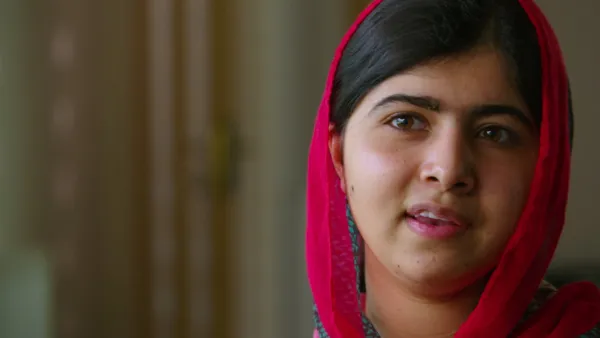
When Malala Yousafzai took a bullet after standing up for the cause of girls’ education, she became a feminist hero. It seems a little odd, then, that a new documentary about the Pakistani teen is titled He Named Me Malala.
Just who is this “he,” and why is he sharing top billing?
Turns out he’s her father, and the meaning of the title soon becomes clear. In the first of several animated segments sprinkled throughout the film, we learn that Ziauddin Yousafzai named his daughter after a legendary Afghan woman who was killed in battle while encouraging her country’s troops to repel a foreign invader.
This raises a question that director Davis Guggenheim and his subjects address: Did Malala’s name predestine her to suffer for a heroic cause?
In case you’ve forgotten the details of Malala’s rise to international fame, she was shot by a Taliban gunman in 2012 because she’d spoken up against the group’s attempt to prevent girls from being educated. Though she miraculously survived, the wound left permanent damage to her face and hearing.
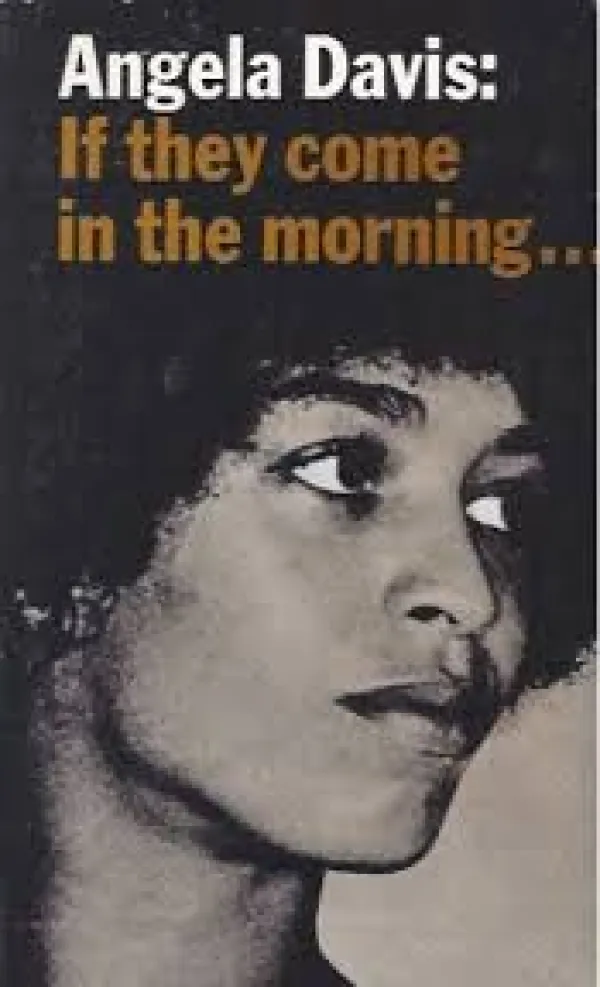
As the book editor for the Columbus Free Press, I am currently reading Jimmie Lee & James: Two Lives, Two Deaths and the Movement That Changed America, by Steve Fiffer & Adar Cohen. The book shines a light on two neglected deaths that occurred during the campaign for voting rights in the South. Jimmie Lee Jackson was a young African American man, a father, a deacon at his church and determined to be free in his lifetime. James Reeb, a white minister in the Unitarian Universalist Church, was a husband and father of four.
Reeb was one of the many ministers who had answered a call from the Southern Christian Leadership Conference (SCLC) to come to Selma and work in the campaign for African Americans’ voting rights. Their deaths, especially that of Reverend Reeb – white outrage trumps black lives every time – were the catalyst that moved President Lyndon B. Johnson to send a voting rights bill to Congress. Outside of the movement their deaths are little known, especially that of Jimmie Lee Jackson. Keep your eye on The Free Press for the review.
A diary is a book in which one keeps a daily record of events and experiences. Generally if read by someone other than the writer they would come away with an idea of who the person really is in their own words. They would learn the writers likes and dislikes, how and where they live and other personal information.
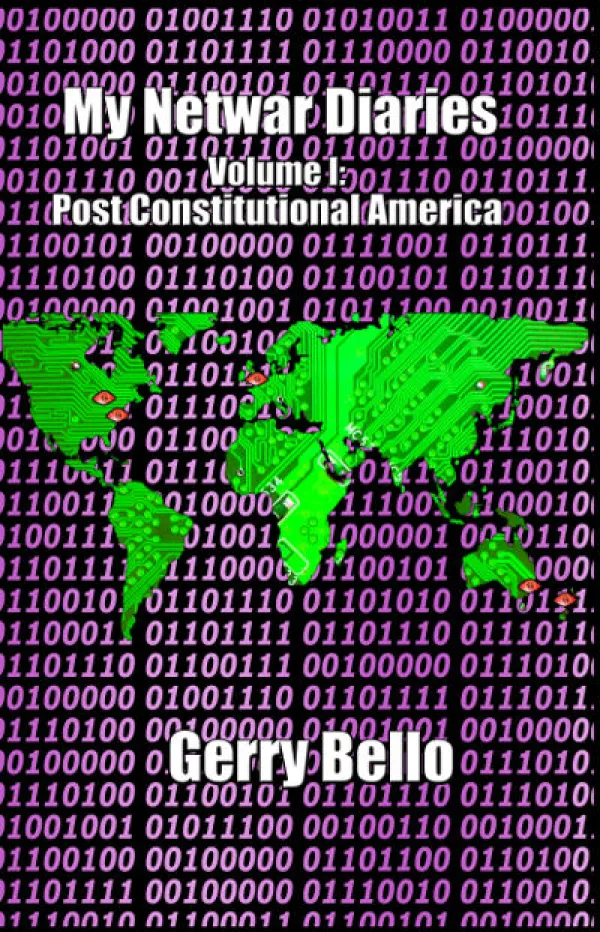
Gerry Bello gives you all of that and more in his recent book “My Netwar Diaries Volume 1: Post Constitutional America.” Bello starts off like all other diaries by telling the reader how he came to start writing his diary, or rather how he came to piece together in chronological order articles that have been written by him and other creditable journalist that deal with the very real threat of Netwar to American citizens, and people everywhere. The diary dates start from May 31, 2013 to May 27, 2014.
On Aug. 7, 1974, a Frenchman named Philippe Petit put on a show that was at once beautiful, dangerous and completely illegal.
With the help of collaborators, he sneaked up to the top of the yet-unfinished World Trade Center and strung a cable between the Twin Towers. Then, as dawn broke, he proceeded to put on a high-wire act a quarter-mile above the streets of New York.
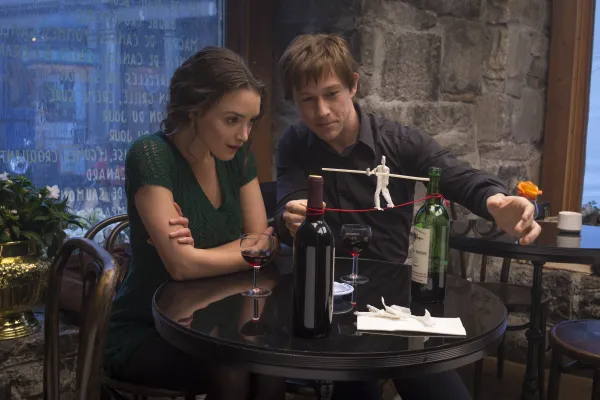
Petit’s stunt was previously examined in a 2008 documentary called Man on Wire. Even if you’re lucky enough to have seen that fascinating flick, you won’t be disappointed by The Walk. Directed and co-written by Robert Zemeckis (Back to the Future, Forrest Gump), it explains just who Petit was and why he was so obsessed with conquering what were then the world’s tallest buildings.
Inevitably, Petit’s biography turns into a thriller of the first order. If you have the slightest fear of heights (and who doesn’t?), your palms will start sweating as soon as the ballsy Frenchman arrives on the South Tower’s 110th floor.
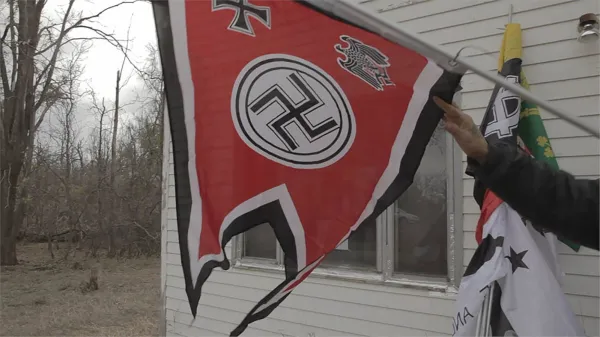
Welcome to Leith is like an updated version of The War of the Worlds. The main difference is that the invaders are modern-day Nazis rather than Martians.
Also, this time it’s for real.
Directed by Michael Beach Nichols and Christopher K. Walker, the documentary shows what happens when a group of anti-Semitic racists attempts to take over a tiny North Dakota town.
In 2012, a true believer named Craig Cobb sets the stage for the invasion by buying up several pieces of local property. He then invites members of the National Socialist Movement to come to Leith, with the hope that they’ll soon outnumber the town’s 24 residents and can start running things their own way.
Needless to say, the sudden appearance of strangers toting guns and flying Aryan banners alarms the residents and turns the community into an emotional tinder box.
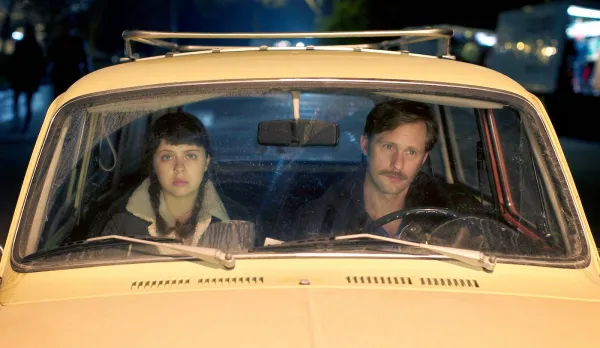
Minnie desperately wants to be loved. But like 15-year-old girls the world over, she feels unlovable.
This leads her into the desperate acts that are the subject of The Diary of a Teenage Girl, a provocative first film from writer/director Marielle Heller. Based on Phoebe Gloeckner’s semi-autobiographical graphic novel, it forces us to watch as Minnie embarks on a creepy journey of self-discovery.
How creepy? Read on.
Living in San Francisco in the 1970s, Minnie (Bel Powley) confesses to the tape recorder that serves as her diary that she was an “ugly child” and hasn’t improved since then. Adding more baggage to her inferiority complex, she lives in the shadow of Charlotte (Kristen Wiig), a beautiful but distant single mom who has no trouble winning men’s admiration.
So when Charlotte’s boyfriend, Monroe (Alexander Skarsgard), shows an interest in Minnie, the girl eagerly coaxes him into a full-blown affair. Who knows, she asks herself, whether she’ll ever have another opportunity.
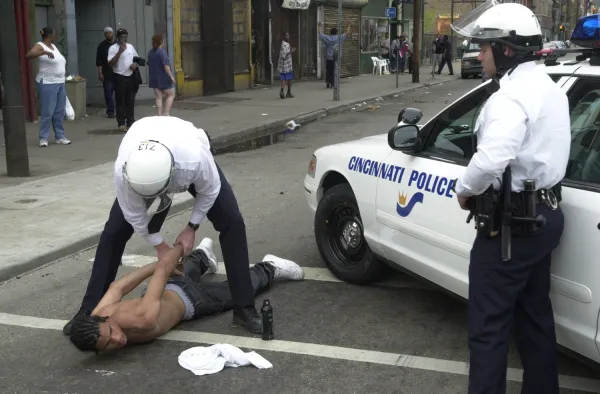
Cincinnati Goddamn is a documentary which focuses on two of the 15 black men who were killed by the Cincinnati Police from 1995-2001, the Cincinnati Riots and the reforms that eventually transpired. The reforms included an opening of dialogue between the CPD, ALCU, Black United Front and the community called the Collaborative. It also led to to Community Problem Oriented Policing which is a process that aims to be proactive in problem-solving vs. having the police exist as a hostile entity.
Police were instructed to use less lethal weapons. A Civilian Review board was established.
Obviously, the past couple of years have seen deaths involving the police which has led to both protests and riots throughout our country so the relevancy of Cincinnati Goddamn is obvious.
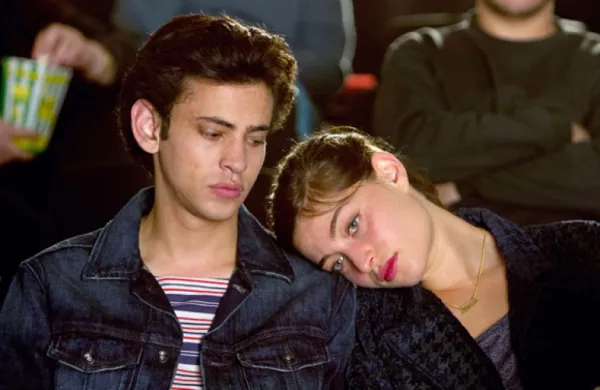
Teen flick tackles Israel’s cultural divide
If politicians were replaced by filmmakers, the hostility between Arabs and Israelis would soon evaporate. That’s the impression you get after watching any number of imported flicks that treat people on both sides of the issue with respect and understanding.
Often the stories focus on a friendship or romance between a Jew and a Muslim. Sometimes, as in the case of A Borrowed Identity, they focus on both.
Eyad (Tawfeek Barhom) is the proud son of Salah (Ali Suliman), a Palestinian Israeli who was forced to drop out of college after being implicated in a long-ago bombing. Salah wants his brainy son to have the opportunity he lost and is elated when Eyad is accepted into a prestigious school in Jerusalem.
As one of the school’s few Arabs, Eyad at first feels isolated. It’s not long, however, before he’s made his first two Jewish friends: Naomi (Danielle Kitzis), a flirtatious young woman, and Yonatan (Michael Moshonov), a fellow student who has muscular dystrophy.
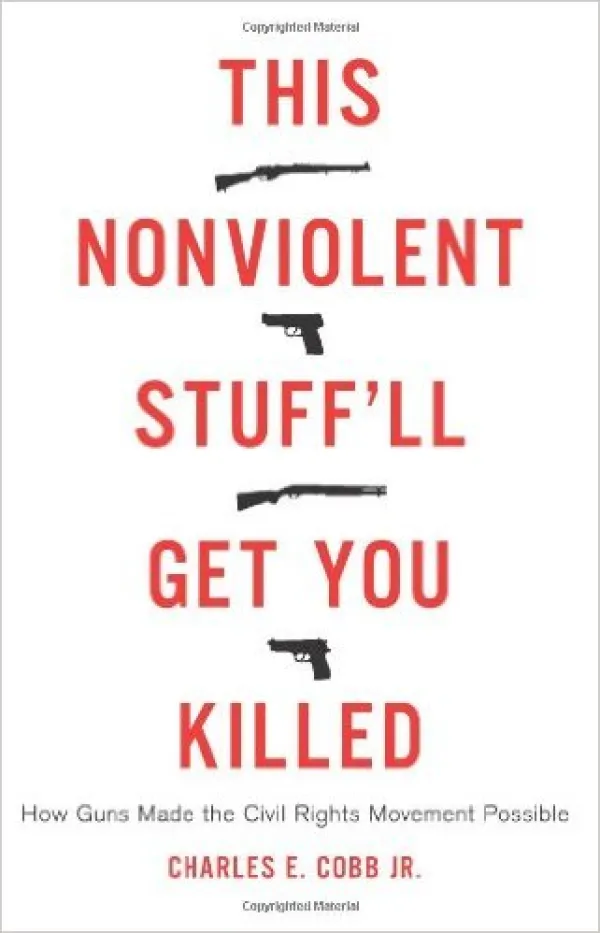
Book Review: This Non-Violent Stuff’ll Get You Killed: How Guns Made The Civil Rights Movement Possible
By Charles E. Cobb, Jr.
Have you seen the dash-cam video of Sandra Bland’s arrest? Beyond the unknown role that racism may have played in the incident, it displays the dangers that arise when a cop abuses his authority.
After basically tricking Bland into breaking the law—she clearly changed lanes without signaling because she saw a squad car racing up behind her and was anxious to get out of its way—the patrolman then goaded her until her temper boiled over. Bland should have gotten away with a ticket or even a warning, but instead she was threatened with a Taser, thrown to the ground and tossed into a jail cell from which she never emerged alive.
Why do some cops treat their badge as a license to abuse? It almost becomes a chicken-or-egg question. Do professions such as policing attract people with a penchant for abuse, or do they take ordinary people and turn them into abusers?
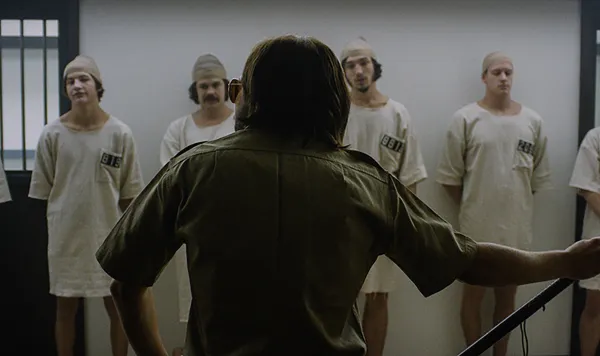
That’s a key question that arises in The Stanford Prison Experiment. Though it doesn’t deal specifically with policing, it does focus on the ways a position of authority can be a corrupting influence.