Arts
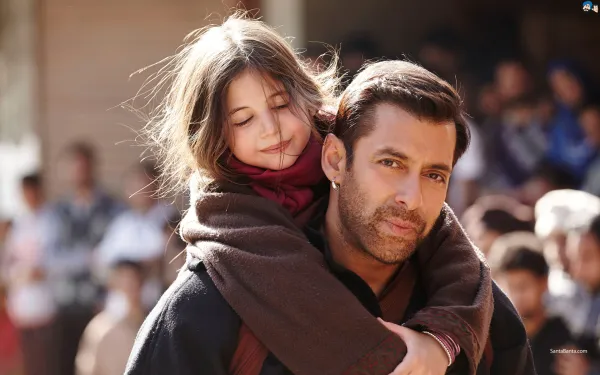
“Bajrangi Bhaijaan,” showing at AMC Village 18 in Dublin, is still sold out even after a week of its release. This speaks volumes about two things. The first is the power that Salman Khan, the lead male actor, still holds – even after his conviction in the trial courts of India for drinking and driving and killing one person and injuring three others. The second one is its unique message – humanity above all.
The film is a story of a mute Pakistani girl played by Harshaali Malhotra. Shaahida, or Munni as she is fondly called by the other characters in the film, gets left behind while visiting a famous religious place in India. She is helped by Pawan Chaturvedi, aka Bajrangi Bhaijaan, played by Salman Khan. The story revolves around the efforts taken by Bhaijaan to reunite Munni safely back with her parents in Pakistan. The various hardships that Bhaijaan faces while taking Munni back to Pakistan and how he finally manages to do it is the film’s plot.
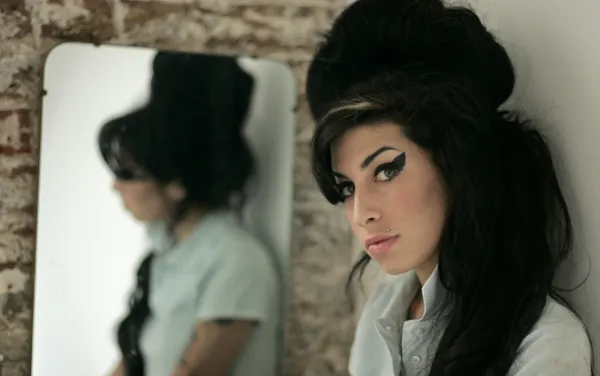
If you ever doubt the importance of good fathering, see Amy.
The documentary is about the sad life of Amy Winehouse (1983-2011), a British singer-songwriter whose name was almost synonymous with “self-destructive genius.” By her own account, she blamed some of her worst tendencies on her father’s failure to be there for her—or her mother, to whom he was unfaithful—when Amy was growing up. Her parents separated when she was only 9.
Of course, good mothering can make up for a father’s absence, but Amy clearly didn’t get that, either. Late in the film, her mother reveals that she learned Amy was bulimic when the girl was 15. So how did Mom respond? Apparently, she didn’t.
Back to the father: As if to make up for his earlier absence, Mitch Winehouse did play a role in Amy’s adult life, but it’s debatable whether he played a good role. At one point, he argued against getting his alcohol- and drug-addicted daughter the rehab treatment she so obviously needed. Later, he seemed more interested in benefiting from her celebrity than in doing what was good for her health and well-being.
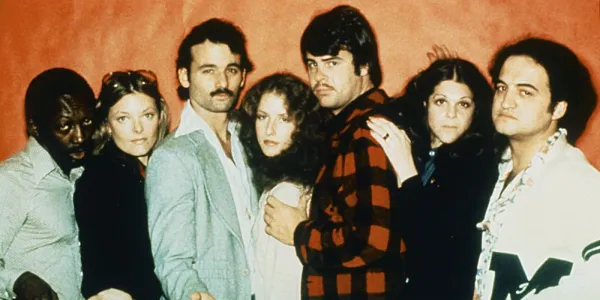
Did Saturday Night Live help to put George W. Bush in the White House? That’s one of the more interesting questions raised by a new documentary about the show’s 40-year history, Live From New York!
SNL has spoofed politicians ever since Chevy Chase stumbled around the stage as an accident-prone President Gerald Ford. But it’s always avoided taking sides. Nevertheless, some people connected with the show wonder whether it helped to influence the 2000 presidential election, in which Bush squeaked to victory despite losing the popular vote to Al Gore.
You may recall that SNL’s versions of the 2000 presidential debates featured Will Ferrell as a dimwitted Bush and Darrell Hammond as a pompous, patronizing Gore. Looking back on the skits for the documentary, Ferrell and others theorize that they gave Bush an advantage by making him seem more just-folks likable than his opponent.
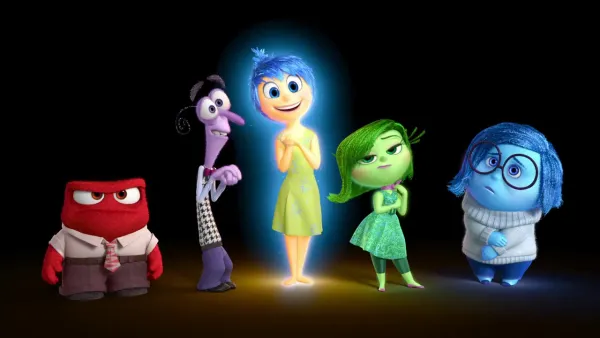
The movies have taken us to some fascinating places over the years, including the past, the future and a galaxy far, far away. With Inside Out, Disney and Pixar take us to the most unexpected place of all: an adolescent girl’s brain.
It’s an ingenious concept, and one that Pixar attacks with its usual blend of laughter, tears and glorious animation.
Riley (voiced by Kaitlyn Dias) is a cheerful girl living in Minnesota. We know she’s happy because we experience her childhood from the viewpoint of the five emotions who live inside her head and influence her every thought and action. Of the five, Joy (Amy Poehler) is the most dominant, easily keeping Sadness, Fear, Anger and Disgust at bay while Riley grows into a fun-loving, hockey-playing 11-year-old.
Then Dad (Kyle MacLachlan) uproots the family to take a job in San Francisco, and the girl’s contented existence starts to unravel. Not only is her new home dirty and run-down, but she misses her friends, and the neighborhood pizza joint serves only pies topped with her least-favorite vegetable: broccoli.
One may wonder what there is new to say about the civil rights movement. In the immediate aftermath of Barack Obama’s first election it seemed to some as though the entire movement completed its mission and could be summed up like the ubiquitous tee shirt seen after the votes were counted: Rosa sat so Martin could walk so Jesse could stand so Barack could win so our children can fly. Oh yeah, and as Julian Bond, long time freedom fighter and a founding member of the Student Non-Violent Coordinating Committee (SNCC), would add “and the white kids came down and saved the day.” The truth of the matter is, however, that the many, many books about the 1960s freedom movement have barely scratched the surface. Arguably there are as many stories as there were participants.
Police misbehavior has been a trending topic for months now. In case after case, officers have been accused of using excessive force, especially against black males.
It’s in this atmosphere that director Tiller Russell has released The Seven Five, fresh evidence that bad cops were around long before cellphone cameras were available to catch them at their worst.
And “worst” is the appropriate adjective here.
The subject of Russell’s documentary is such a blatant example of police corruption that it’s a wonder he got away with it for as long as he did. The best explanation is that his fellow officers either supported his actions or looked the other way due to a misguided sense of loyalty.
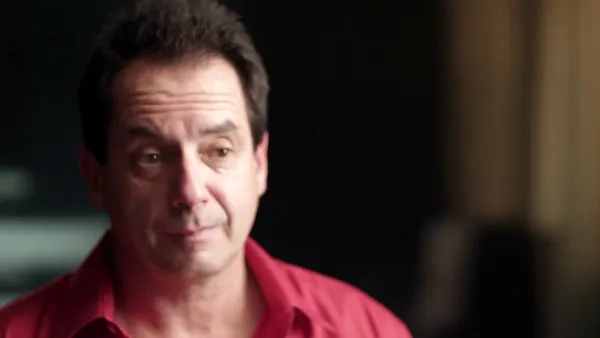
As former New York police officer Michael Dowd explained it, a “good cop” was someone who backed his fellow cops, even when they were breaking the law they were sworn to uphold.
The film’s title refers to Brooklyn’s 75th Precinct, a reputed hothouse of crooked cops in the 1980s and early ’90s. And Dowd was the crookedest.

Ralph Walters was once a normal guy. But then something bizarre happened. A retired elementary school Spanish teacher bit him on the arm, giving him the simple power of speaking really bad introductory Spanish. He also gained a new name: “El Derango.”
Walters is actually the manager of the Artist’s Wrestling League (AWL). It is a painting match taking place this month at the Vanderelli Room in Franklinton, during Columbus’ June Arts Festival. He is also a wrestler in the match. The wrestlers do not really wrestle; they are local painters who publicly paint against one another.
Each wrestler has a pseudonym, complete with a self-created back story, such as “Machete Page.” She is a lush and the bastard granddaughter of Betty Page. “KatTaztrophy” is a drummer, who thinks she is a cat and only paints with her paw prints. “Jimmy ‘Wildman’ Folk” paints with an axe, and “Sister Sangre” is a nun, who only paints Jesus.
“Most of the wrestlers are really into their characters,” Walters said. “We have a lot of fun together.”
Book Review: A Chosen Exile: A History of Racial Passing in American Life By Allyson Hobbs
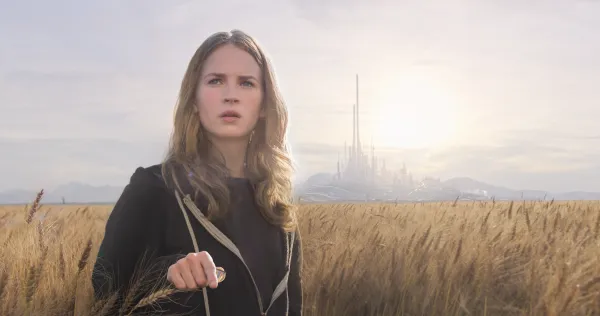
If you watch the trailers for Tomorrowland—or if you just consider the fact that it’s a Disney film named after a Disney theme-park attraction—you have a pretty good idea what to expect: It’s going to offer an optimistic view of a future in which technology is used to cure the world’s ills.
Surprisingly, it’s not like that at all. Even more surprisingly, it might have been more satisfying if it had been.
There’s a part near the beginning when it briefly lives up to expectations. A young boy named Frank Walker (Thomas Robinson) visits the 1964 New York World’s Fair to show off the flawed jet pack he built from an old vacuum cleaner.
There he meets a girl named Athena (Raffey Cassidy) who gives him a strange pin that turns out to be the key to a magic kingdom of sorts. It allows him access to a hidden world filled with gleaming structures and giant robots. One of the robots even fixes his jet pack, allowing him to soar above the exotic landscape.
After seeing this glorious scene, you might be fooled into thinking this Disney-fied view of the future is what the story is about.