
Arts
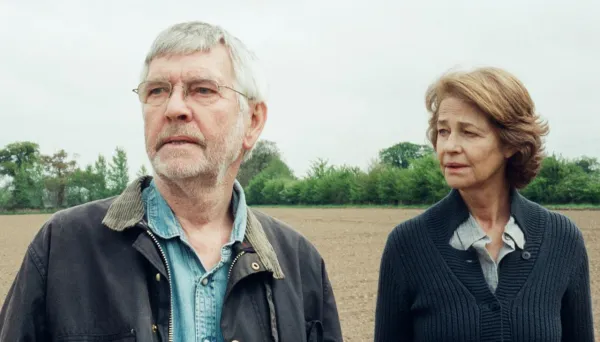
I don’t know if it’s a good thing or a bad thing that the Academy Awards’ nominations for “best actress” haven’t raised as much controversy as nominations in other categories.
It’s a good thing that there haven’t been any obvious snubs—nothing on a par with Will Smith (Concussion) or Michael B. Jordan (Creed) in the “best actor” category. But it’s a bad thing that the likely reason there are no obvious snubs is that minority women were given few opportunities to tackle attention-getting roles in 2015.
If there’s one silver lining to this dark cloud, it’s that the “best actress” nominees are as generationally diverse as they are racially homogenous. Though Jennifer Lawrence (Joy), Brie Larson (Room) and Saoirse Ronan (Brooklyn) are all 20-somethings, Cate Blanchett (Carol) is 46. And Charlotte Rampling will turn 70 on Friday (Feb. 5), which, coincidentally, is the same day 45 Years opens in Columbus.
Witness is an eclectic, five-night series exploring the African American independent filmmaking scenes in New York, Los Angeles, and beyond. Witness offers a much-needed focus on the pioneers who created landmark, often radical films with meager resources: from classics by Charles Burnett, Kathleen Collins, Spike Lee, Spencer Williams, and Billy Woodberry, to more recent works by Arthur Jafa and Khalik Allah. Spanning more than 70 years, the series explores a wide range of subject matter—poverty, faith, civil rights, and cultural identity—as told through a variety of distinctive directorial perspectives. Made at a time before African American directors received Hollywood support, the films featured here are not just major works of cinema, but vital acts of honesty, defiance, and in some cases, creative revolt.
http://wexarts.org/series/witness-black-independent-film
Thursday, January 21
7 pm: She’s Gotta Have It, Spike Lee, 1986
8:35 pm: Field Niggas, Khalik Allah, 2014
Nominations for the Academy Awards are due out this week, but a couple of the prime Oscar candidates are just now making it to Central Ohio.
As of last weekend, we can bask in the angst and atmosphere of Carol, a lush period drama directed by Todd Haynes (Far From Heaven). Set in New York in 1952, it stars Cate Blanchett as Carol, a divorced mother, and Rooney Mara as Therese, a young store clerk who catches her eye.
Carol is attracted to women, and Therese apparently is too, judging by the fascinated gaze she directs at this glamorous individual who shows up in her store’s toy department. Nevertheless, Carol proceeds cautiously, not only because this was a more conservative era but because she wants to remain on good terms with Harge (Kyle Chandler), the jealous ex who still supports her and her young daughter.
The film also proceeds cautiously, to the extent that viewers may grow tired of waiting to see just where it’s headed.

Centuries ago in the epic Indian literature of ‘Mahabharat,” there is a story of a boy named Eklavya who passionately wants to learn archery from a teacher named Drona. When he approaches Drona, the teacher refuses to teach him. Eklavya makes a statue of Drona, teaches himself archery and becomes the best archer that ever existed. When Drona finds this out, he asks for his tuition fees from his student. Eklavya readily agrees to give whatever his teacher wants. The teacher Drona asks Eklavya to cut his right thumb and give it to him. Eklavya, bound by his promise and love for his teacher, cuts his thumb and offers it as his fees.
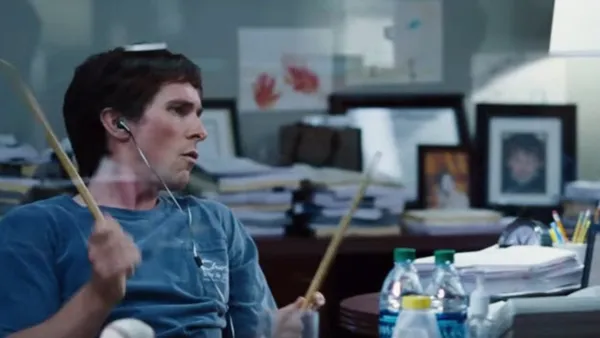
Christmas is traditionally a popular time to open a film, so it’s no surprise that a slew of new releases are hitting the multiplex this week.
Will any of them be able to gain a foothold following last week’s record-breaking debut of Star Wars: The Force Awakens? Let’s hope so, because one of them is among the year’s best: a serious comedy that takes on a complex and controversial topic with the help of big-name stars working at the top of their game.
The Big Short, directed and co-written by Adam McKay (Anchorman), is a based-on-reality examination of the banking and housing “bubble” that triggered 2008’s Great Recession.
This sounds like the kind of dry, complicated subject that’s best handled by a well-documented book—and indeed, the source material is Michael Lewis’s book of the same name. In McKay’s hands, the subject is still complicated, but it’s anything but dry.
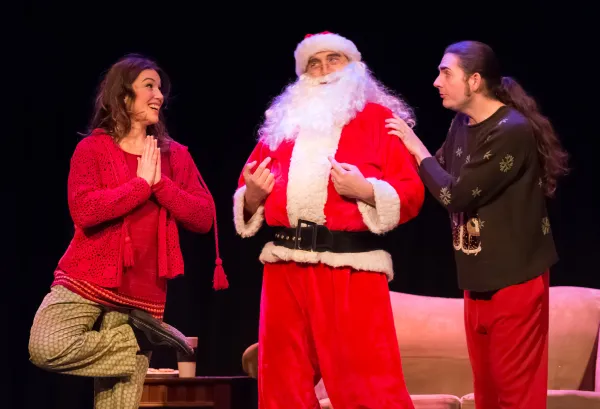
It’s almost Christmas. If you haven’t figured that out by from the ads for Black Friday and Cyber Monday sales, you can see it in all the holiday-oriented fare on local stages.
BalletMet’s The Nutcracker. A couple of takes on A Christmas Carol. Heck, even the Jewish Community Center-based Gallery Players has a show with “Christmas” in the title, though it boasts an appropriately Jewish theme. (See complete list below.)
In Columbus, the granddaddy of all holiday shows is Shadowbox Live’s Holiday Hoopla. This decades-old tradition occasionally comes off as just that: a tradition. Some years, it has a same-old, same-old quality that is as comfortable as an old slipper—and about as exciting.
This, thankfully, is not one of those years. For 2015, Shadowbox has added new songs and freshened up old ones. Best of all, its skits are a deft combination of sly humor and bittersweet sentiment.
Is there such a thing as too much sex?
In the very first scene of Love, director/screenwriter Gaspar Noe lets us know he’s leaving nothing to the imagination. Lovers Murphy (Karl Glusman) and Electra (Aomi Muyock) are shown in bed manually pleasuring each other.
The scene is filmed both beautifully and graphically. Everything—and I do mean everything—is out in the open.
For the next two hours and 14 minutes, Noe keeps everything out in the open with one sex scene after another, some of them even more explicit than the first. As if to remind us that we’re seeing all of this in 3-D, he even includes a close-up of a penis just as it ejaculates right into our expectant faces.
Would you believe me if I said the main product of all these adult-rated escapades is utter boredom?
The first problem is that we don’t care a fig about the characters whose most private moments are playing out in front of us. How could we, when we see almost nothing but their most private moments?
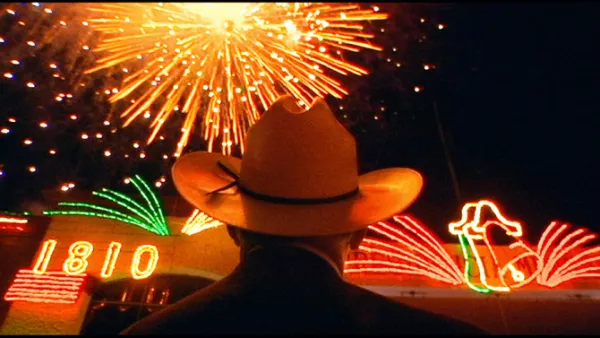
Are you kicking yourself for missing this year’s Telluride Film Festival? Not to mention Sundance, Tribeca and Cannes?
Have no fear. You can still catch a film festival—in fact, two of them. And you don’t even have to leave town to do it.
Every November, a pair of festivals vie for local film lovers’ attention. True, you aren’t likely to see Hollywood celebs at either of them, but if you happen to like non-mainstream films—especially those with a Jewish, LGBT and/or Ohio connection—you’re in luck.
First up is the Columbus Jewish Film Festival, running Nov. 1-15 at various venues. Just how Jewish is it?
“We don’t really have strict criteria,” said festival director Emily Schuss, explaining that a film might be chosen simply because it has a Jewish director or touches on Jewish themes.
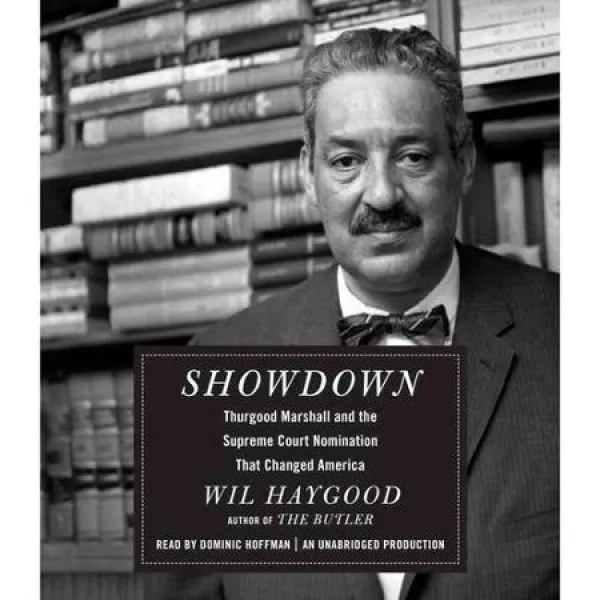
Thurgood Marshall is one of the most overlooked and underappreciated freedom fighters of the twentieth century. For more than two decades he was the preeminent lawyer for the National Association for the Advancement of Colored People (NAACP); it was Marshall who founded and directed the organization’s Legal and Educational Defense Fund.
The subject matter in which he dealt was broad: segregated schools, the rights of the accused, voting discrimination, questions on federal jurisdiction. (Not all of his legal acumen was directed at such weighty matters. A series of stern letters from Marshall to the Whitman candy company convinced them to cease selling a candy they called Chocolate Covered Pickaninny Peppermints that came in a box festooned with racist caricatures of black children.)