Arts
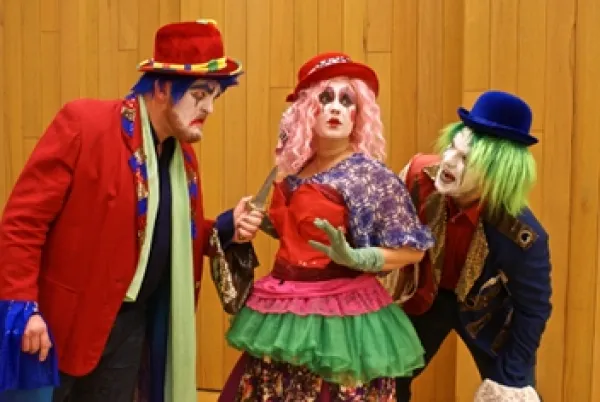
I’ve never had a phobia about clowns, but I have to admit that a jealous clown with a knife gave me a few tense moments during the premiere of Pagliacci.
The “Opera on the Edge” production is staged in Shadowbox Live’s Backstage Bistro. Because much of the action takes place in the midst of the restaurant’s tables, I found myself just inches away from the skirmish that erupts when Canio (Clay Hilley) learns his wife, Nedda (Emily Brand), is having an affair.
Even though I assured myself that the actors were pros and that Canio’s knife was merely a stage prop (at least, I hoped it was), the scene was still a little scary.
But think about it: How often does opera offer such a visceral thrill to casual fans like myself? The experience illustrates the appeal of these co-productions of Shadowbox and Opera Columbus.
Just as they did with earlier productions of La Boheme and The Merry Widow, the troupes have shortened the opera, translated it into English and presented it in an informal setting, thus making it more understandable and accessible.
Many journalists probably got into the field for the same reason I did: because they were inspired by Washington Post reporters Bob Woodward and Carl Bernstein and their courageous work to unravel the Nixon era’s Watergate scandal.
A 1976 film based on their efforts, All the President’s Men, was likely the strongest recruiting tool the journalistic profession ever had.
In contrast, Kill the Messenger may be journalism’s weakest recruiter. It may even persuade some would-be reporters to forge a new career path.
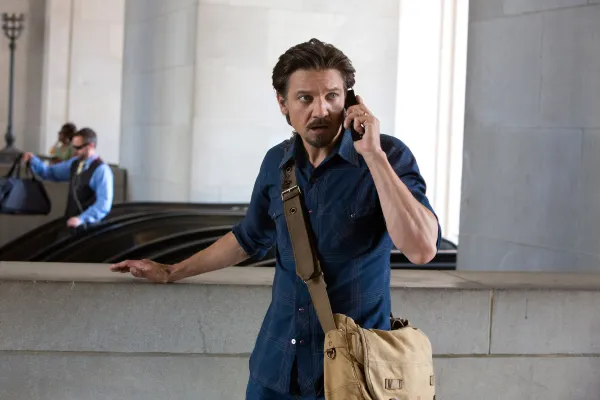
True, the film shows journalism at its best in the form of Gary Webb (Jeremy Renner), a reporter who fights to reveal an alleged connection between the CIA and inner-city drug sales. But it also shows modern journalism at its worst in the form of major media outlets (including The Washington Post) that seem more eager to leap to the CIA’s defense than they are to give Webb’s findings a fair hearing.
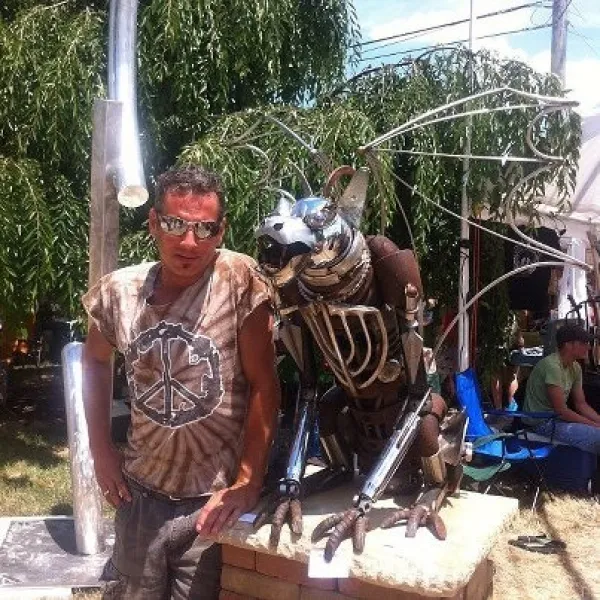
Jaiymie Kiggins was born and raised in Columbus Ohio. He graduated from Antioch College in 1994.
In addition to being a sculpture and union stagehand he has applied his metal working skills to race cars and boats. He is a Comfest regular where many many people have seen his work, which also adorns libraries, schools and hospitals throughout Central Ohio. He currently resides on a farm outside Lancaster Ohio and his work can be seen at http://www.kiggins-sculpture.com/
FP: Describe for our readers the most compelling art piece you have made
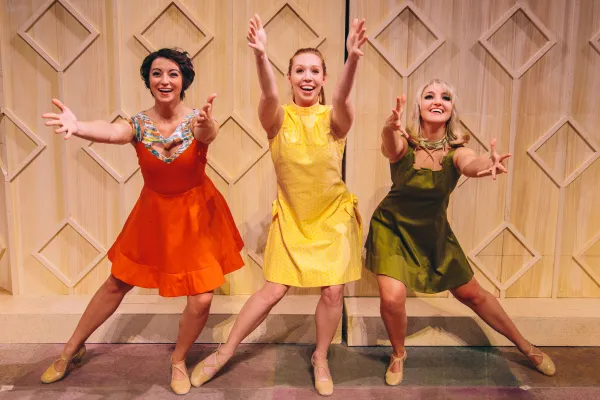
If you’re in the mood for a big, flashy musical but can’t afford a trip to Broadway, why not head for Westerville? Otterbein University’s theater department turns out a steady stream of singing and dancing thespians, and putting on major musicals is an important part of their education.
To be sure, several local theater troupes also tackle musicals from time to time, but none of them can match the size and spectacle of an Otterbein production.
Take the current show, Sweet Charity. Even before the familiar first strains of the overture fill the air, you know it’s going to be big because the orchestra pit is so crowded. Conductor Lori Kay Harvey leads an ensemble of 22 that includes strings, reeds, brass, a keyboard and two percussionists.
Once the show gets under way, the romantic travails of Charity Hope Valentine (Madison Tinder) are intermixed with production numbers that fill the huge Cowan Hall stage with singers and dancers.

The Columbus International Film & Video Festival (CIF&VF) is bigger and better than ever this year.
Progressive educators at Ohio State University started the longest running film festival in the U.S. back when 16mm film was a new and exciting format. Now in its 62nd year, the Festival kicks off with a series of Early Bird Films in October and early November that lead up to the official start of the now 12 day Festival November 13-25.
This year the Festival teams up with Stonewall Columbus, VSA Ohio – The State Organization on Arts and Disability and the Niagara Foundation to bring films not seen anywhere else in Columbus.
The main Festival in November starts off with a film about sex and disability from Australia. Scarlet Road follows the extraordinary work of Australian sex worker, Rachel Wotton. Impassioned about freedom of sexual expression and the rights of sex workers, she specializes in a long over-looked clientele – people with disability. Director and Star Rachel Wotton will speak about the film and do a Q&A immediately after the film via Skype.
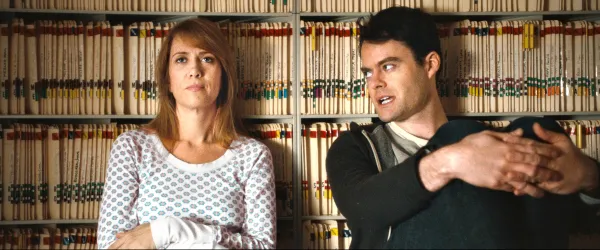
Take two of Saturday Night Live’s funniest alumni and cast them in a drama. And no ordinary drama, but one permeated with so much despair that each of their characters attempts suicide within the first few minutes.
That’s not exactly a formula for box-office success, which helps to explain why The Skeleton Twins is opening at only two Columbus theaters this weekend. Nor is it a surefire formula for artistic success, but that’s where the flick fools us.
This second feature by director Craig Johnson (True Adolescents) is astoundingly good. So are stars Kristen Wiig and Bill Hader, who play siblings Maggie and Milo.
The troubled offspring of a father who killed himself and a mother who’s never there for them, the two been separated for the past 10 years due to an old grudge. They’ve spent that decade trying to build fulfilling lives—Milo as an aspiring actor in Los Angeles, Maggie as a dental technician and wife in their New York hometown—but both have failed to find happiness.
Are you in the mood for a sensitive, thoughtful and beautifully acted film about sibling relationships? Well, you’ll have to wait. The Skeleton Twins doesn’t open till next week.
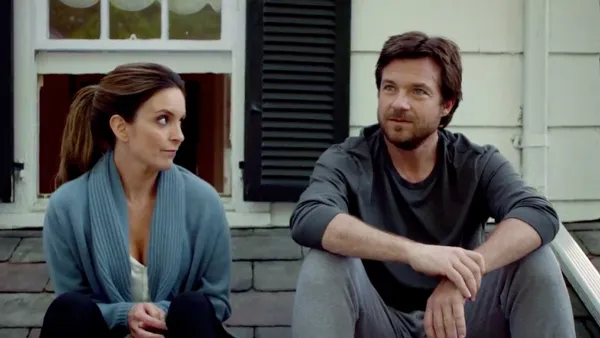
Meanwhile, we have This Is Where I Leave You, which addresses the same topic with an adolescent sensibility. Unfortunately, the siblings in question are all adults.
The comedy is based on a novel by Jonathan Tropper, who also wrote the screenplay—and that’s part of the problem. A friend of mine refused to see the film because she’d read the book and found it totally lacking in merit.
This helps to explain why director Shawn Levy (A Night at the Museum) fails to mine the tale for familial gold despite being blessed with a top-shelf cast.
Justin Bateman (Arrested Development) plays Judd Altman, who leaves his wife (Abigail Spencer) after finding her in bed with his boss. As luck would have it, he then learns his father has died, and he has to face his extended family while attempting to hide his marital problems.
The first question you have to ask about The Last of Robin Hood is: Why is it called The Last of Robin Hood?
OK, it’s about the final two years of film star Errol Flynn’s life, and Robin Hood was one of Flynn’s most popular roles. But couldn’t they have come up with a title that’s a bit less awkward?
The only good thing you can say about the name is that it fits in with the rest of the film, which addresses an uncomfortable situation in such an awkward manner that it leaves us feeling even more uncomfortable.
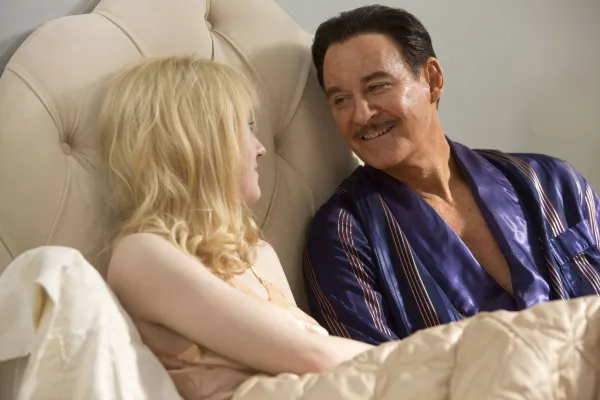
The situation is the real-life affair between Flynn (Kevin Kline) and Beverly Aadland (Dakota Fanning), an aspiring actor who is only 15 when they meet in 1957. Flynn, who’s in his late 40s, obviously knows Beverly is less than half his age, but he doesn’t know she’s underage until after he’s seduced her. That’s because Beverly’s mother, Florence (Susan Sarandon), is so eager to push her daughter toward stardom that she lies about the girl’s age.
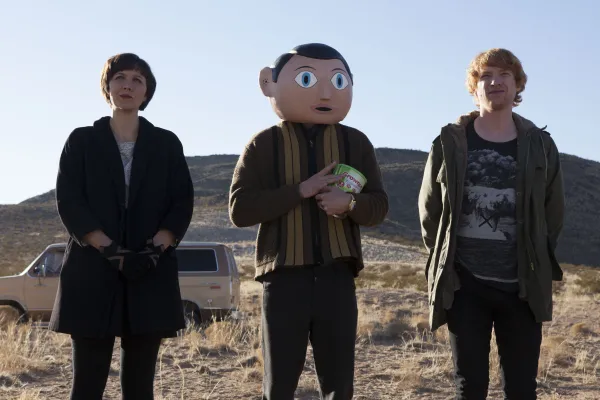
Jon wants to get into music in the worst way. And that’s pretty much how he does it.
The young Brit (Domhnall Gleeson) is sitting on a seaside bench when he sees EMS workers pull a man out of the surf. “Our keyboardist is trying to drown himself,” another onlooker tells him matter-of-factly. The stranger goes on to say that he’s worried the suicide attempt will endanger the gig their band has that very night.
Sensing an opportunity, Jon blurts out that he plays the keyboard, and he’s immediately invited to sit in on the club date. Then, even though the gig goes disastrously, he quickly becomes a regular member of the band with an unpronounceable name and a frontman who wears a big, cartoonlike head.
Thus begins Frank, a droll tale based, if ever so slightly, on a fictitious character who once appeared on British television.
Directed by Lenny Abrahamson (What Richard Did), Frank is inspired by Frank Sidebottom, a satirical, fake-head-wearing character portrayed by comedian and musician Chris Sievey. In fact, the script was co-written by Jon Ronson, who layed in the late Sievey’s rock band.