
Human Rights

Take Action. From Amnesty International: Take Action for Human Rights. End Apartheid Against Palestinians by the Government of Israel. Take action: Send your letter directly to Israeli Prime Minister Naftali Bennett now.

Evictions in Franklin County were a huge problem before the pandemic, and because the cost of rent is rising by the month in Central Ohio, the entire community is facing an affordable housing crisis – a crisis high-end apartment developers obviously couldn’t care less about.
In 2021 the US Census Bureau reported one in three Ohio renters have little or no confidence in their ability to pay next month’s rent.
Yet also in 2021, there were 15,185 evictions in Franklin County compared to 18,219 in 2019. The numbers are down significantly, even with the pandemic and landlords renting thin-walled three-bedroom apartments for $1,400 a month,
Indeed, many local longtime owners of 1,500 to 2,000-square foot homes are paying hundreds less for their mortgage than local renters of newer apartments, and certainly another canary in the coal mine regarding affordable housing in Columbus and its suburbs.
But here’s the good news regarding affordable housing and homelessness, says Carlie J. Boos, executive director for the Affordable Housing Alliance of Central Ohio.
And the reason why evictions were 3,000 less in 2021 compared to 2019.

Homeowners who live in homeowner associations and condo associations could soon have the right to install solar panels on their roofs. With a 32 to 1 vote, the Ohio Senate earlier this week passed Senate Bill 61, a bill making it easier to install rooftop solar. The bill moves to the House of Representatives for further consideration.
The single ‘no’ in the Ohio Senate came from Republican Niraj Antani (R-Miamisburg). Antani, who previously served three terms as an Ohio House of Representative. Antani made national headlines in 2018 suggesting students over the age of 18 should be able to bring rifles to school.
Antani also in 2018 accepted $7,000 from the Friends of Larry Householder PAC, which has since 2015 received $120,000 in donations from FirstEnergy Political Action Committee ($38,708), the Ohio Coal PAC ($18,700), and the American Electric Power Committee for Responsible Government ($17,500).
Even so, the nonprofit Solar United Neighbors, with a mission to further rooftop solar and advocate for solar policies, told the Free Press that fossil fuel and utility lobbies have not weighed in on the bill.

They decided their life’s work was going to be saving other peoples’ lives. But no other group of professionals has had a reckoning during the pandemic as nurses and doctors have. And while they are expected to work long hours in horrendous situations, hospital executives are awarding themselves generous bonuses.
The turnover and resignations of healthcare workers is not entirely due to the pandemic’s crush. But how their employer has treated them during the (seemingly) worst healthcare crisis ever.
“Every hospital system in Ohio is standing on the back of all the staff demanding they work harder,” wrote a nurse.
At the start of the pandemic the Free Press wrote about the mind-boggling situation The Ohio State University Wexner Medical Center was in when they set up an outdoor donation triage asking the community for extra masks and other PPE.
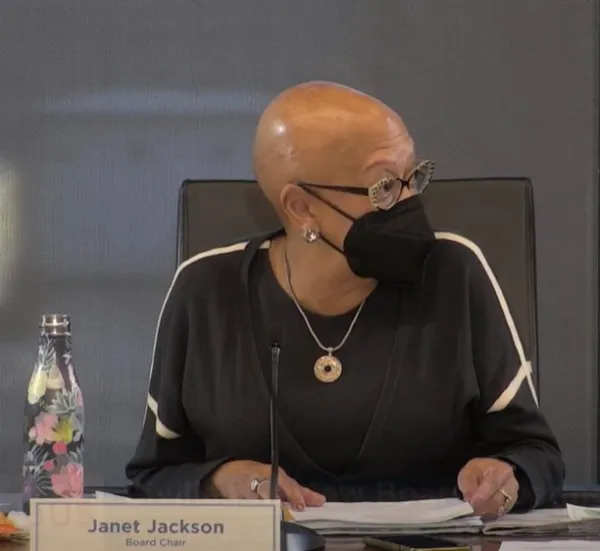
Six months in, the Civilian Police Review Board has not yet begun their work.
Over twenty years after citizens of Columbus began asking for a civilian board to monitor the actions of the Columbus Division of Police, they overwhelmingly voted in favor of creating this body in November 2020. The first 11-member board was appointed by Mayor Andrew Ginther and approved by Columbus City Council in July of 2021.
The Civilian Police Review Board or CPRB has two jobs: to hire and supervise an Inspector General (IG), and to serve as a standing administrative jury hearing cases investigated by the Inspector General.
Neither has happened yet.
At the first meeting of the CPRB in August 2021, Chair Janet Jackson expressed a hope that they would hire the IG by December. But during this month’s meeting (January 4, 2022) the topic was not on the agenda. Jackson, who was appointed Chair by Mayor Ginther, brought it up at the very end of the three-hour meeting, seemingly as an afterthought.

The biggest news story over the past few weeks has been the continued exposing of the Israeli military’s use of dirty tech to surveil Palestinians, and the extent to which Israeli-made spyware is used globally by oppressive governments. As JVP Executive Director Stefanie Fox points out in her latest newsletter Every Single Phone Call: What Israeli Spyware Reveals about the US-Israel Alliance: “Right after the Israeli Defense Ministry criminalized six of the leading Palestinian human rights and civil groups by designating them “terrorist organizations,” news broke that the phones of multiple Palestinian human rights defenders were infected with Pegasus, the military-grade spyware created by the Israeli company NSO Group.
On the very same day, another investigation revealed the Blue Wolf and White Wolf Initiatives, an extensive network of technology used by both Israeli soldiers and settlers to collect and record photos of Palestinians that are fed into a massive facial recognition database.

Below this introduction is the obituary for Sarah Michelle Burris, who passed from a drug overdose in October. The obituary was written by her mother who wrote it “early one morning after not sleeping very much. The words are straight from my heart.”
“The love I have for my daughter never changed throughout the addiction,” Rhonda Burris told the Free Press. “I loved her every day the same as the day she was born. I miss her so very much, we all do. She was a beautiful soul.”
Sarah’s obituary first appeared in a London, Ohio, weekly paper, where Sarah was born and raised. We reprint it here because it reflects what we are learning from the “Saint of Sullivant Avenue” – Esther Flores.
Flores works tirelessly at her drop-in safehouse to take care of the “Street Sisters” who travel up and down Sullivant. Esther knew Sarah and used some of the exact same words to describe Sarah as her mother did. “She was a beautiful soul. Kind and polite.”
Sarah’s mother confirmed that her daughter’s battle against addiction was mostly fought on Sullivant Avenue, a long-time hotspot for trap houses.

Some are calling it the beginning of a “Gen Z uprising” while others are even suggesting American unions could rise out of the ashes as leverage for service sector workers continues to grow.
Starbucks baristas are beginning to organize in two cities and a representative from Workers United – an arm of the Service Employees International Union (SEIU) – told the Free Press Starbucks workers in Columbus have reached out to them.
“Absolutely some have, we are getting calls from every major urban center in the Midwest,” said Pete DeMay, organizing director for Workers United in the Midwest. “I can’t confirm or deny that there are active campaigns in Columbus, because if I say there is there will be a management onslaught. But if and when we go public, I will let you know.”
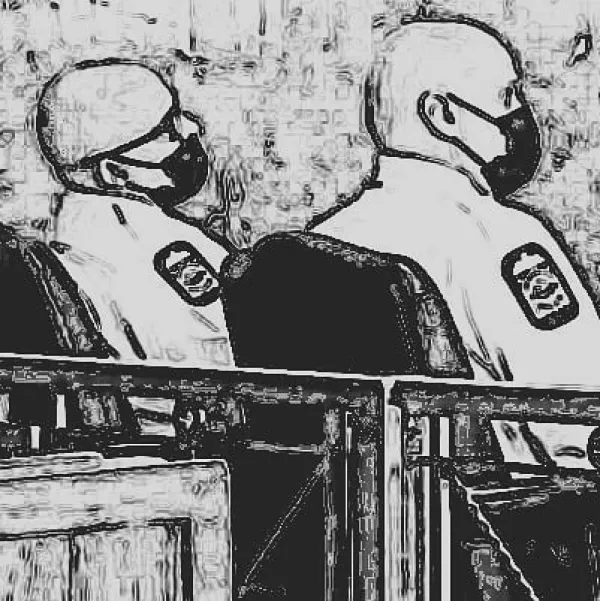
Retired Army and Air Force Reserve Sergeant Adrienne Hood waited five years and five months to prove to a jury that Columbus Division of Police officers Zachary Rosen and Jason Bare used excessive force causing the death of her son, Henry Green V, during the summer of 2016.
After the first full day of deliberation on Tuesday at the federal courthouse in Columbus, the three men and five women on the jury claimed they could not reach a consensus. US District Judge Edmond A. Sargus, Jr., instructed them to return the next day and try again. Two jurors left the courtroom in tears.
The following morning the only Black juror explained to the judge that she and other jurors felt pressured by some of the jurors. She insisted that she was not going to change her vote. Sargus sent her back to the jury room to work toward a consensus one more time.

The tall, grey-haired, 60-year-old attorney Steven Donziger gave a final hug to his son last Wednesday, Oct. 27, 2021. Donziger had spent over two years confined in his Manhattan apartment, restricted by a judge-ordered GPS ankle bracelet. And now his first destination would be the nearest jail, to which Steven, a supposed flight risk, drove himself.
After the years spent on house arrest throughout an intimidation lawsuit and facing an $800,000 bail bond – the highest in U.S. history for a misdemeanor – Donziger will now spend the maximum sentence of six months in a federal prison. The alleged crime was contempt of court, but the real crime was Donziger’s successful lawsuit against Chevron, which resulted in $9.5 billion in damages being allocated to Ecuadorians affected by their deadly pollution in the country.
Not a penny of that $9.5 billion, however, ever made it to the people of Ecuador. Instead, Chevron weaseled their way out of the damages and launched a billion-dollar show trial against the attorney that stuck up for the indigenous people of Ecuador.
Corporate cancer