
News
In 1986 – one year after the state of Ohio sanctioned oil & gas waste “brine” spreading on roads – it was discovered that brine contains high levels of benzene. State protection agencies were alarmed and lobbied for a ban of brine spreading, but the practice continued. In 2017, tests by the Ohio Department of Natural Resources (ODNR) confirmed that brine also contains high levels of radioactive radium, but still no ban. After 36 years of spreading toxic and radioactive oil well brine on Ohio roads with the silent acquiescence of state officials, the people are clamoring to end this poisonous practice.
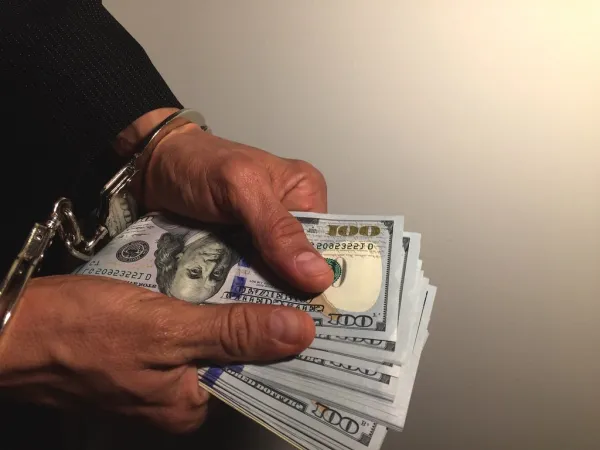
Six out of ten people in jail have not been convicted of a crime. They simply cannot afford to pay their cash bail and are awaiting their court trials. The financial implications for taxpayers include an estimated quarter of a billion dollars spent each year to incarcerate these folks.
For the accused who can’t afford to pay cash bail, the financial ramifications of sitting in jail compound each other. They could suffer the loss of their job, an eviction, loss of custody of their children, additional health concerns, or a long-term impact on their credit rating.
Cash bail is paid to the court by the accused to get out of jail and returned when they appear for trial. Bail bondsmen, essentially loan companies, are often used to come up with the amount, but they charge on average a 10% nonrefundable fee.
Workers at the 88 E. Broad St. Starbucks store will be striking Thursday, November 17 from 5 am until 5 pm in solidarity with their fellow workers across the country.
They join a total of over 100 stores taking part in the Red Cup Rebellion, a nationwide Unfair Labor Practice (ULP) strike demanding Starbucks fully staff all union stores and begin bargaining in good faith.
According to LaborNotes.org, a ULP strike is different than an economic strike, which seeks higher wages, because a “union hits the bricks to protest an employer violation of the National Labor Relations Act.” And under National Labor Relations Board (NLRB) law, a ULP offers greater protections than an economic strike because “an employer can never permanently replace workers striking to protest an unfair labor practice.”
NORML Appalachia of Ohio and Sensible Movement Coalition added Corning, Kent, Laurelville, Rushville & Shawnee to the list of Sensible Cities in Ohio. This makes a total of 36 communities including Toledo, Dayton, Cincinnati, Columbus, and Cleveland. With these communities no longer tied to archaic Marijuana Laws, local law enforcement can now concentrate on legitimate criminal concerns.
Don Keeney, Executive Director from NORML Appalachia of Ohio stated, “another election cycle, where Ohioians exercise their right to Home Rule. It’s a great feeling to guide them on a true path of democracy, the way it was intended. We’re seven years into the process and close to three million citizens, in 36 cities, towns & villages have been freed from Ohio’s oppressive laws. We will continue with our goals, one community at a time.”
Any citizen of Ohio can initiate the process of placing the Sensible Marihuana Initiative on the Ballot, in their community, by simply contacting NORML Appalachia of Ohio.
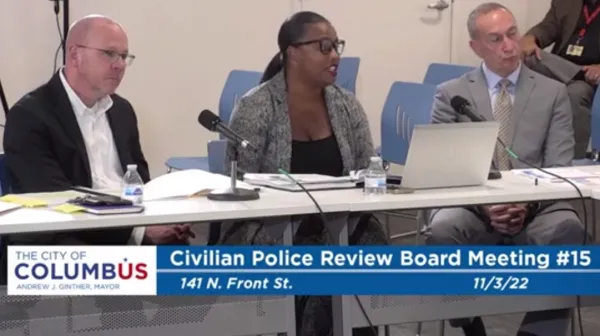
The Columbus Civilian Police Review Board (CPRB) met on November 3, 2022, for the 15th time, admitting they are confused about key aspects of their power to discipline sworn officers of the Columbus Division of Police (CPD).
Willard McIntosh, the only member of the board previously sworn to serve as a Columbus police officer, summed up their concerns well:
“My family, my friends, say, ‘What can you guys do?’
And when I explain it, to be honest, they say, ‘Oh so, nothin’?’
Really.”
Janet Jackson, the chair of the board, had invited several Assistant City Attorneys to the meeting to help the board prepare to review the first thirty investigations completed by Inspector General Jacqueline Hendricks, in attendance.
Jackson began the meeting by thanking City Attorney Zach Klein, who was sitting at the table with the board members, and his staff for doing a wonderful job responding to the needs of the CPRB, acknowledging that she is not his only client and that his office is very busy.

JD Vance is on the precipice of becoming the next US Senator from Ohio, and how this came to pass has Ohio Dems facing another nightmarish defeat.
Whether it was Trump’s endorsement, an injection of campaign cash from gay-libertarian billionaire Peter Thiel, or Tim Ryan’s late campaign blunders, the bottom line is: Vance has become MAGA’s most visible representation in Ohio.
Who would have guessed the kid from Middletown, saved by that community’s Children Services, would be drinking from Trump’s (cool aide) strategy? Power and fame are powerful drugs, too apparently.
Note: This essay in based completely on public records.
Part One
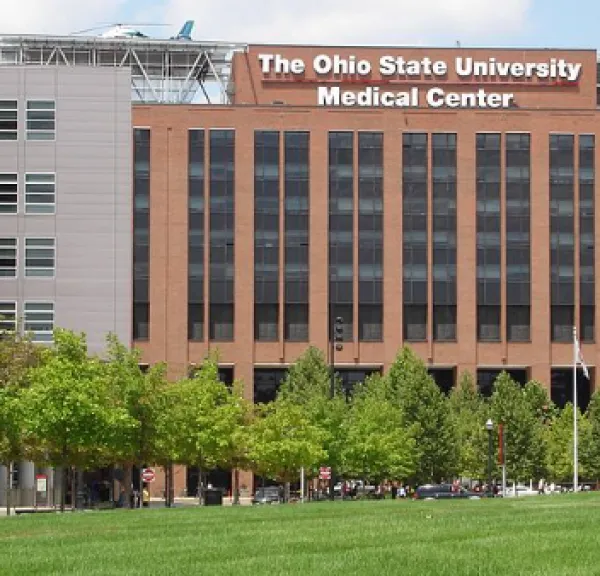
Scientific misconduct charges at Ohio State University (OSU) expose systemic misconduct, indeed institutional malpractice, of the institution itself.
In 2011, Purdue University medical researcher David A Sanders, PhD, informed the Ohio State University Medical Center (OSUMC) and the US Office of Research Integrity (ORI) that he was accusing Dr. Carlo Croce’s lab of scientific misconduct. OSU’s ORI closed the investigation in 2015 and concluded there was no misconduct. The charges were re-opened in 2017 after an article about Dr Carlo Croce in the New York Times accused him of misconduct, again with many quotes by David A Sanders.
OSU referred the accusations to a committee known as COMIC that focused their investigation on two female researchers in the Croce lab: Drs. Garofalo and Pichiorri. They had left OSUMC in 2014 and 2016 for positions in England and Los Angeles, respectively.
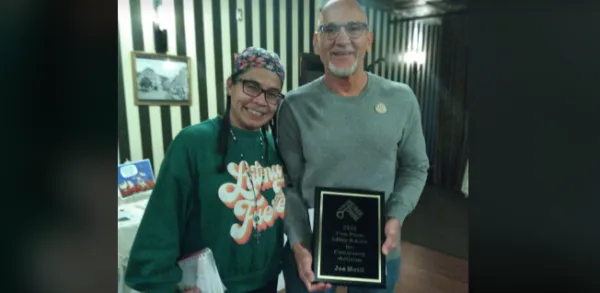
The Free Press community gathered Saturday, October 8 for the Second Saturday Salon. But it was a special salon event, as it doubled as the annual awards ceremony. This year, the Free Press honored Joe Motil with the 2022 "Libby" award for Lifetime Achievement in Community Activism.
The Free Press is published by the nonprofit Columbus Institute for Contemporary Journalism (CICJ). Mark Stansbery, board member, emceed the event, held in the lovely party room at Mozart's Cafe in Clintonville.
Mark introduced Esther Flores, the 2021 Free Press Libby award honoree, spoke about Libby Gregory, former Free Press editor and namesake of the annual award. Libby was a tireless activist and advocate for human rights, as is Esther, who manages 1DivineLine2Health, a local nonprofit that works with "street sisters."
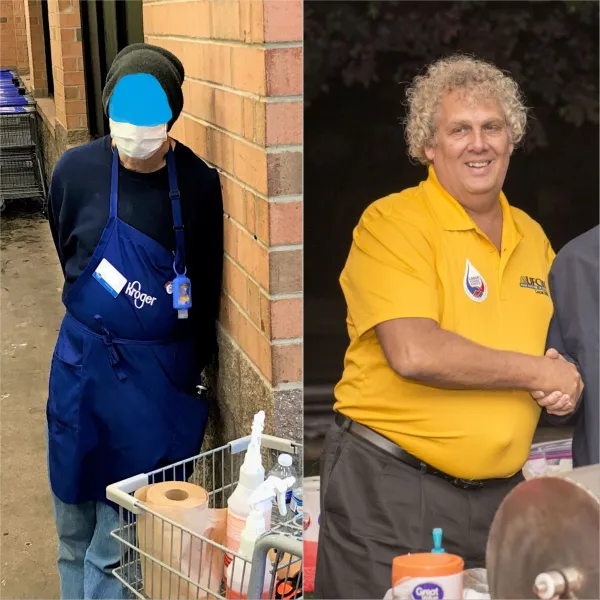
After voting over the previous three days Kroger members of UFCW 1059 approved and ratified their 4th contract offer with 3,546 “Yes” votes to 3,193 “No” votes.
Kroger 1059 members had previously rejected their new three-year deal three times as negotiations between UFCW 1059 and Kroger corporate have been on-and-off since late July.
Even if they had rejected their contract a fourth straight time the union would only have authorized a strike if 66 percent of members voted ‘No’ this fourth time, this according to Kroger workers to the Free Press.
For the 3rd vote, 55 percent voted “No” and 44 percent “Yes,” which would have made the 66 percent threshold an uphill battle for the 12,000-plus Kroger members of UFCW 1059.
Worse, say Kroger workers, is how they previously voted to authorize a strike in the 3rd vote, but the union instead went back to the bargaining table.
As word spread last night that the contract had passed, stunned Kroger workers turned to social media to express their frustration.
“Why now and not the other times?” wrote one worker on a Kroger online forum. “It was the same contract!! Let the job search begin.”
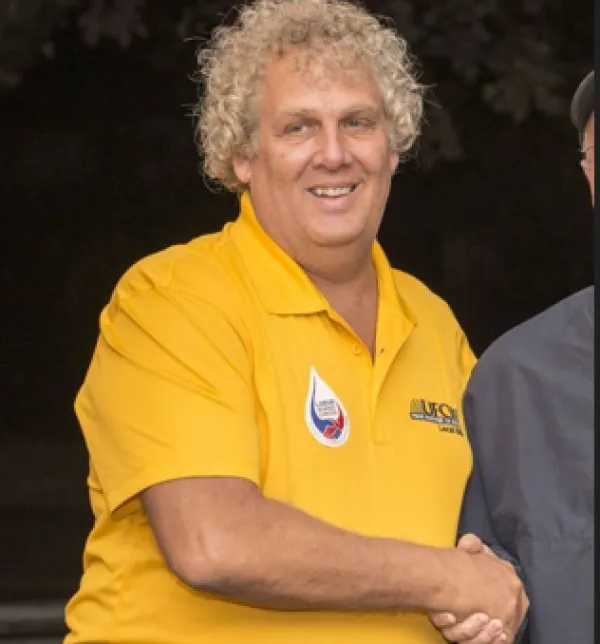
Kroger members of United Food and Commercial Workers (UFCW) 1059 have rejected three contracts and the 1059’s negotiating team is returning to the bargaining table with Kroger corporate today (Tuesday, September 27).
UFCW 1059 members also voted to strike if the union leadership would authorize it, but so far 1059 President Randy Quickel – who’s salary is over $222,000 – has sent mixed signals to the 12,500-plus Kroger members of 1059.
For example, word was spreading through local stores that if a strike were to be authorized, 1059 would pay $250 for 20 hours of picketing but only for the first week. But because 1059 leadership does not take questions from the media, and just offers statements, the Free Press could not confirm this.
Nonetheless, Kroger corporate is also preparing for a strike.