
News

Victoria Sadowski is a 26-year-old grad student at OSU who pays $975 in rent and fees for a single bedroom at Heritage Apartments in Grandview, an aging complex where hundreds live.
In comparison to some of the luxury apartments going up around town, Sadowski’s single bedroom is just about average, as long as you ignore the water damage and holes in the wall.
Sadowski’s part-time job barely covers her monthly expenses – and now this, the pandemic’s grim fallout staring an entire generation of young renters (and many others) in the face.
Sadowski was hoping Heritage Apartments might be #InThisTogether and offer tenants a break. She inquired how they may help loyal tenants. Take several hundred off rent for the next several months, perhaps.
Afterall, Heritage Apartments is owned by Village Green Management Company, which has become one of the nation’s largest privately held apartment companies over its 100-year history.

On May 8th, a seemingly innocuous document showed up on social media entitled “CSI – BIA – Medical Marijuana (Comments Due 5.25.20).” As an “Active Rule Package” submitted by the Pharmacy Board, it referred to “Executive Order 2011-01K and Senate Bill 2 of the 129th General Assembly, which require state agencies, including the State of Ohio Board of Pharmacy, to draft rules in collaboration with stakeholders, assess and justify an adverse impact on the business community (as defined by S.B. 2), and provide an opportunity for the affected public to provide input on the following rules.” OK, sounds meritorious.
The official sounding doc listed eight sections of the Ohio Administrative code to be amended. It made a few semantic modifications, added legal guardians, deleted THC tiers and revised the notorious “90-day supply.” OK, fair enough.
But the devil, as they say, is in the details. Given no more than cursory mention is Section 3796:8-2-03 (Forms and form variations considered attractive to children) where four little words – “cookie, or other confection” – could change everything.

Ohio #HB242 - a bill to ban local communities from banning single-use plastic) today at #OhioStatehouse.
Testimony by Carolyn Harding:
To Chair Manning, Vice Chair Brenner, Ranking Minority Leader Maharath, and all members of the Local Government, Public Safety and Veterans Affairs Committee.
I’m Carolyn Harding, artist/activist, concerned citizen.
Once again state law makers, you, some of you, are sponsoring law to preempt communities from protecting the health and welfare of their people and environment.
I am aghast that you use Ohioans’ tax money to take away communities’ rights to protect their people and environment, by copying and pasting template preemptive law to ban towns, villages, communities from banning plastic bags and single-use plastic containers.
We all know oil and gas lobbyists are at your doors daily, making sure the Korean and Thai funded #PTTGlobalCracker #PetroChemicalHub and the #AppalachianStorageHub have no local municipalities hindering their potential profits by making #Plastics from #FrackedGas.
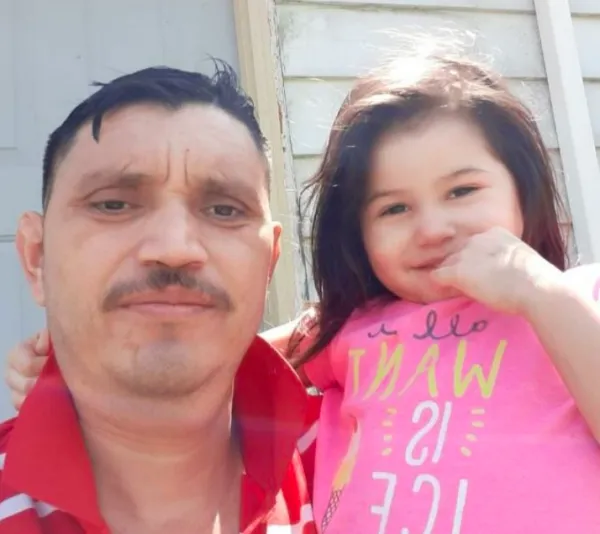
Ohio’s first Immigration and Customs Enforcement (ICE) detainee died earlier this week from COVID-19 after being detained at the Morrow County Correctional Facility.
Last week the Free Press reported how the jail – an ICE contracted county jail where many of their Columbus detainees are sent – is besieged by the virus, yet by all accounts the jail was woefully unprepared and its officers acted far too late to mitigate the spread.
Oscar Lopez Acosta, an early 40-something from suburban Dayton, was provisionally released from the jail on April 24th for being high-risk due to his diabetes, but was soon diagnosed with COVID-19, this according to immigration activist Anna Babel, who picked up Acosta after his release and returned him to his family.
After a week in a Dayton-area hospital Acosta was released but died on May 10th, Mother’s Day. The Montgomery County Coroner’s Office in Dayton confirmed with the Free Press that Acosta died from COVID-19.

Did you miss the Free Press Second Saturday Cyber-Salon ?
If so, here's a run-down of what happened and how you can be involved next time!

The ideological and cultural split between rural and urban Ohio – and the entire United States for that matter – has seemingly never been greater in our lifetime.
You can thank Trump for stoking rural America’s anger – arguably this disturbing resentment was set ablaze back in 2008 when the first African American became President.
Sneering at Columbus, a left-leaning sanctuary city, is one thing.
But letting any undocumented immigrant imprisoned in a rural Ohio prison to be treated as if their life didn’t matter and left to die from the coronavirus is akin to murder.
There are four U.S. Immigration and Customs Enforcement (ICE) contracted detention facilities in Ohio. And when ICE makes an arrest in Columbus, their detainee is likely to be transferred to its contracted jail in Mount Gilead, the Morrow County Correctional Facility, which is roughly an hour north of Columbus.
There are an estimated 80 inmates in total detained there as of early May, and about 60 are believed to be ICE detainees. On May 6th, the Morrow County Health District stated 50 of the 80 inmates have become infected with the coronavirus.
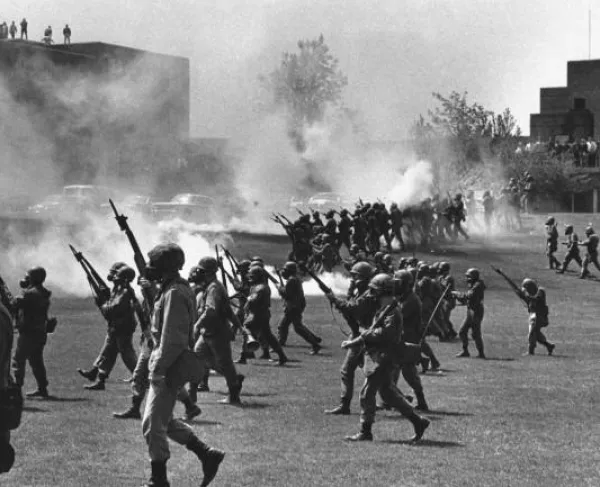
Ten days after Governor James A. Rhodes assumed office on January 14, 1963, a Cincinnati FBI agent wrote Director J. Edgar Hoover a memo stating: "At this moment he [Rhodes] is busier than a one-armed paper hanger . . . . Consequently, I do not plan to establish contact with him for a few months. We will have no problem with him whatsoever. He is completely controlled by an SAC [Special Agent in Charge] contact, and we have full assurances that anything we need will be made available promptly. Our experience proves this assertion."
Why would the FBI assert that the newly-inaugurated governor of Ohio is "completely controlled"? Media sources like Life magazine noted the governor’s alleged ties to organized crime and the Mafia in specific. Gov. Rhodes’ FBI file, obtained through a Freedom of Information Act request, suggests that it may be because of the FBI’s extensive knowledge of Rhodes’ involvement in the numbers rackets in the late 1930’s that the Bureau could count on his cooperation.

Back in March when The Ohio State University Wexner Medical Center set up a makeshift Personal Protective Equipment (PPE) donation center to supply its frontline healthcare workers, fear swept through the hospital’s staff. Would they have enough PPE to protect themselves from the coronavirus?
“It definitely sent a shock through the hospital,” says Rick Lucas, president of the Ohio State University Nurses Organization (OSUNO), the union that represents 4,000 OSU nurses. “Things were tightening up. We were having issues getting cleaning supplies and personal protective equipment to the front-line staff.”
Lucas says management began telling staff, “we are in a really good spot and we have all these supplies on hand.”
“Then they put out the donation request,” says Lucas, also a registered nurse at the hospital.
He says long before the pandemic, management at the Wexner Medical Center was growing “very tall” – they kept adding upper level positions, layer after layer.
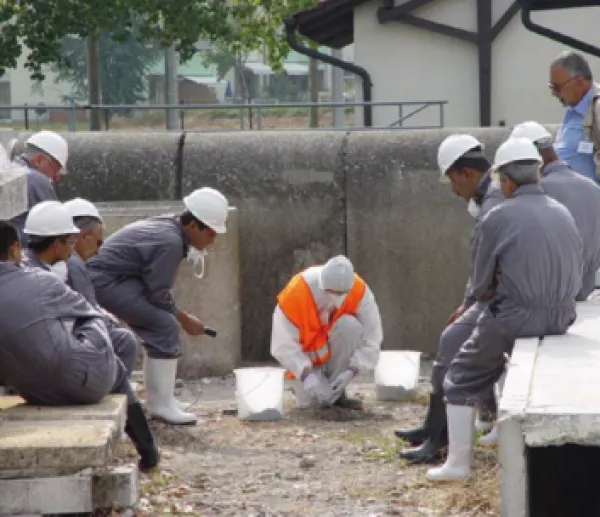
On January 23, 2020, the U.S. Department of Energy (DOE) announced they were approving a “fourth line of production” at the Mid America Conversion facility. Mid America is located on the 4,000-acre Portsmouth Nuclear Site at Piketon, Ohio. The new fourth line would make Depleted Uranium Hexafluoride (DUF4.)
Translate that to English, you say? There is no use for DUF4 other than to make depleted uranium munitions, explosive devices, and armored vehicles. The Defense Department wants a more refined form of depleted uranium to make heavy nosecones for the B-61 bomb, a surprisingly small “earth-penetrating” thermonuclear weapon. And what would be the target? Iran has its uranium enrichment facilities underground. This would be illegal under international law. And the DUF4 process will cause more radioactive contamination in and around the Portsmouth site.

With eviction filings for Franklin County spiking in late March and early April, local housing advocates agree a “tsunami” of evictions will hit Columbus and the rest of the state if Governor DeWine and the Ohio congressional delegation do not act.
A wave of evictions for Franklin County this summer could be a foregone conclusion.
Even before the pandemic, the county’s eviction court was one of the busiest in the state, averaging 75 hearings or cases a day and around 17,000 per year, according to the Legal Aid Society of Columbus.
City Council member Shayla Favor has been tasked with the looming housing crisis. She told the Free Press her top priority is making sure Columbus residents are able to stay in their homes.