
News
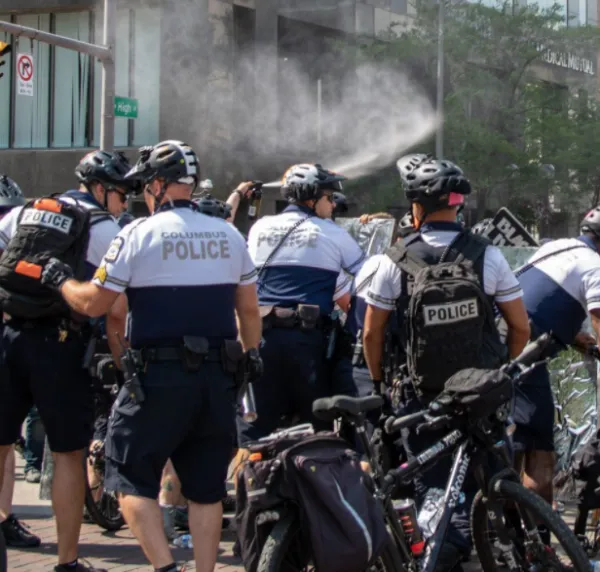
Joe Motil, former Columbus City Council candidate and longtime outspoken critic of the Columbus Police Department states, “Sunday’s use of tear gas and pepper spray on peaceful protesters in downtown Columbus should not have surprised anyone. Even with the mayor’s new directive on prohibiting the use of tear gas by Columbus Police on peaceful protesters just five days ago, Columbus cops continue to ignore any such orders.”
“And why on earth were members of the CPD dressed in riot gear? Putting on riot gear also puts officers in the mindset of preparing themselves to perform combat. The sight of this riot gear only escalated matters. It would appear that Chief Quinlan has lost control of his department,” he said.
Motil states that, an AP wire story in the June 22 Columbus Dispatch titled, “Injuries at protests draw review of weapons” claims that, “Rubber bullets and similar projectiles have damaged eyes or blinded at least 20 individuals from ages 16 to 59, according to the American Academy of Ophthalmology, since protests began over the death of George Floyd in Minneapolis.”
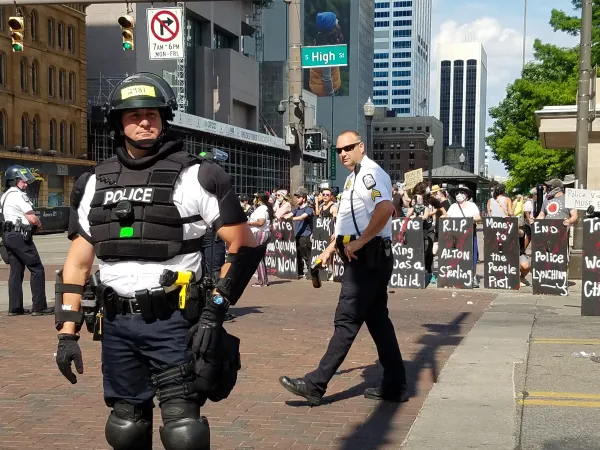
After a day including an LGBTQ-Black Lives Matter march at noon and other anti-police brutality gatherings at the Statehouse this evening, the Columbus Police and SWAT seemed to anticipate trouble with an unprecedented and unnecessry show of force around 5pm, witnesses report. Bike cops rammed into protestors without provocation. On Facebook videos, police are seen running on the sidewalk and one wrestling with and punching a young black man. It is unclear what prompted this proactive violence on behalf of the police.
But a look at a June 19 Dispatch article might give a clue. The police union president Keith Ferrell complained that he was stymied by not being able to use tear gas -- it had beeen banned by Mayor Ginther -- to disperse a crowd. Perhaps starting a new riot after weeks of peaceful protests is what Ferrell needs to make his point.
A timeline from our Free Press photographer match with photos below:
5 pm: State police guarding the Ohio Statehouse during protests Sunday evening. Note red paint on stone facade, remnants of "bloody" handprints applied by protesters on Friday.
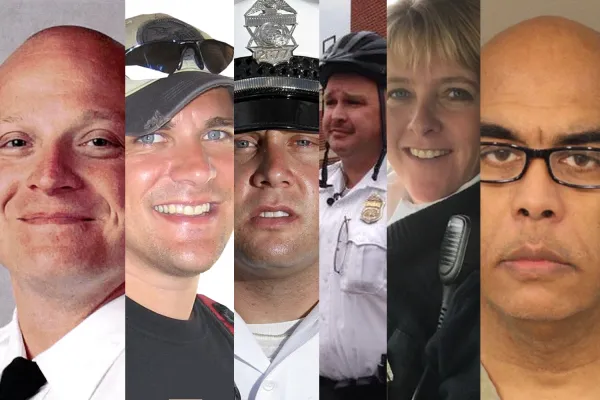
Mayor Ginther has taken action on a few fronts: Ginther signed an executive order last week that would require all police killings and uses of lethal force to be investigated by Ohio’s Bureau of Criminal Investigations working under the Ohio Attorney General, ordering tear gas and mace to no longer be used against peaceful protestors, announcing that Columbus will join the ‘8 can’t wait’ campaign, and establishing a panel to advise Chief Thomas Quinlan.
But what about the CDP officers who have killed Columbus residents yet still work for CDP and facing no indictments? It is often said there are only a few “bad apples” tarnishing the entire force.
Although Ginther didn’t specify whether these independent investigations on CDP would include reopening ones from the past, perhaps it would be beneficial to set a new precedent by seeking out justice for the unheard victims of CDP.
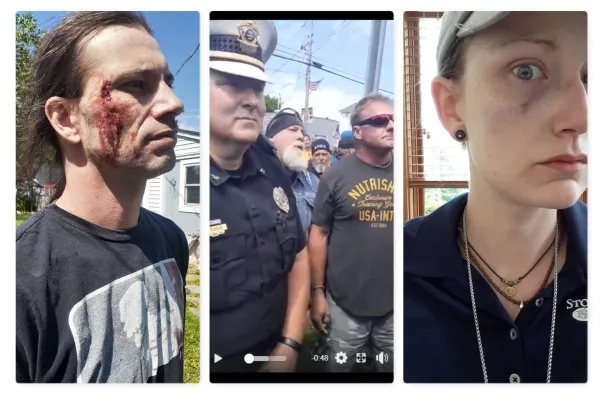
“There was nothing that I can tell was improper from that incident,” said Clermont County (Bethel) prosecutor Vince Farris about the sucker punch to the back of the head of a peaceful protester.
Since Sunday, June 14, the small town of Bethel, Ohio, became a dangerous place for peaceful anti-racist protesters after four different biker clubs arrived on the scene to confront the protesters, some of whom were physically assaulted.
The Free Pressspoke to several of the protesters who easily identified four different sets of biker vests among those throwing sucker punches and spewing the n-word. Also disconcerting is that bikers and Bethel police in several videos appear to be standing shoulder-to-shoulder facing down protesters.
“At times the police seemed too chummy with the bikers,” said one peaceful protester, a Bethel resident who was sucker punched several times in the face. “I saw police pat them on the back.”
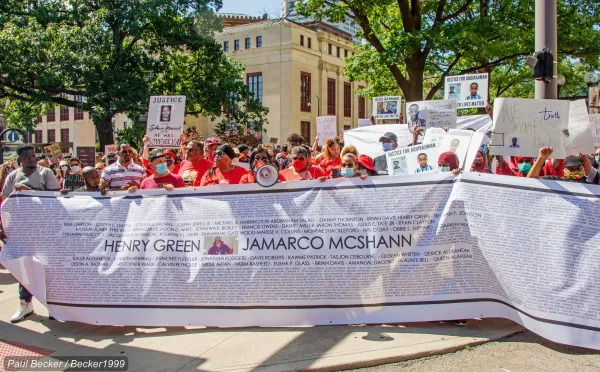
Mayor Ginther and many others are calling for a civilian review board to investigate and rule on police misconduct, but recent history from other cities has shown many civilian review boards to be mostly ineffective.
Take Minneapolis, which has had several civilian review boards come and go over this century. Since 2012, over 2,600 complaints were filed against police, but only 12 resulted in discipline, the most severe punishment being a 40-hour suspension, this according to the Communities United Against Police Brutality, a twin-city advocacy group.
The fundamental problem is, almost all civilian review boards in the US can only recommend how police should be punished. Out of the 200 civilian review boards in our major cities, only a handful have the authority to make final decisions on punishment.
Final say on punishment is instead delivered by a department’s chief of police or a city’s safety director.
If Minneapolis had a civilian review board with the final authority on how police should be disciplined – such as removing an officer from duty – would George Floyd be alive today?
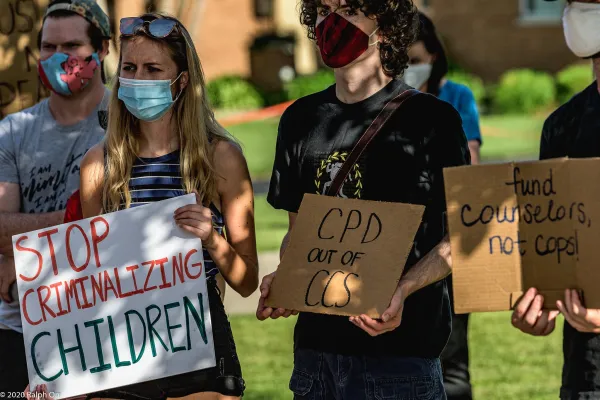
“It is a basic right to learn in a building that is not 95 degrees. I never had that all four of my years in high school, but I did have an armed officer every single day of the year.”
The 72-hour deadline given by numerous students, alumni, parents, teachers, activist groups and OSU academic departments to Columbus City Schools (CCS) to end its partnership with Columbus Police passed over the weekend, but CCS leadership has not offered an exact answer yet.
Unlike the quick decision the Minneapolis Public School board took in removing police or School Resource Officers (SROs) from its city schools, a definitive response from CCS may not be forthcoming anytime soon, as suggested in a joint statement given by Superintendent/CEO Dr. Talisa Dixon and CCS Board President Jennifer Adair.
“We hear you, and we are listening. We agree it’s an appropriate issue for discussion. We are committed to working tirelessly for change in our schools and in our community,” stated Dixon and Adair’s statement.
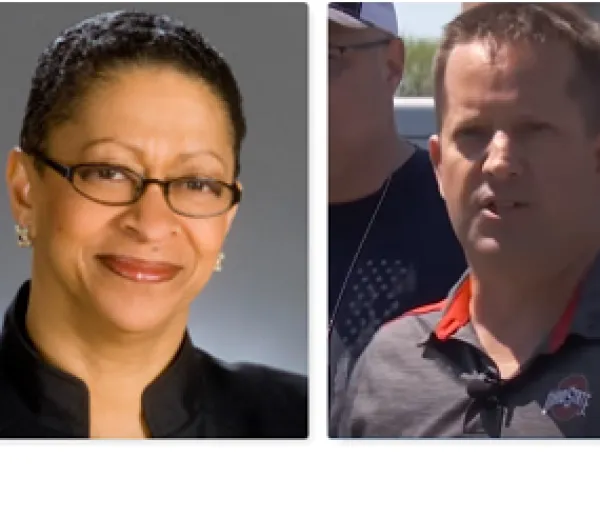
The union representing the Columbus Division of Police (CPD) told the Free Press they are willing to negotiate for a civilian review board when negotiations for the next police union contract begin at the end of this year. However Janet Jackson, Chair of the Mayor's Community Safety Advisory Commission, told the Free Press she is concerned about how much opposition the Fraternal Order of Police (FOP) brings to table when they negotiate what authority the civilian review board will have.
What the FOP Capital City Lodge #9 President Keith Farrell to this day is still shaking his head over, however, is the city had a chance to negotiate for a civilian review board three years ago.
“The city and the mayor had a chance three years ago to bring this to the table, but for whatever reason they did not,” Ferrell said. “We wanted to talk about it. We wanted them to bring this to the table. I was saying, ‘Let’s talk about it.’ The city had that opportunity. I honestly do not know why they didn’t.”
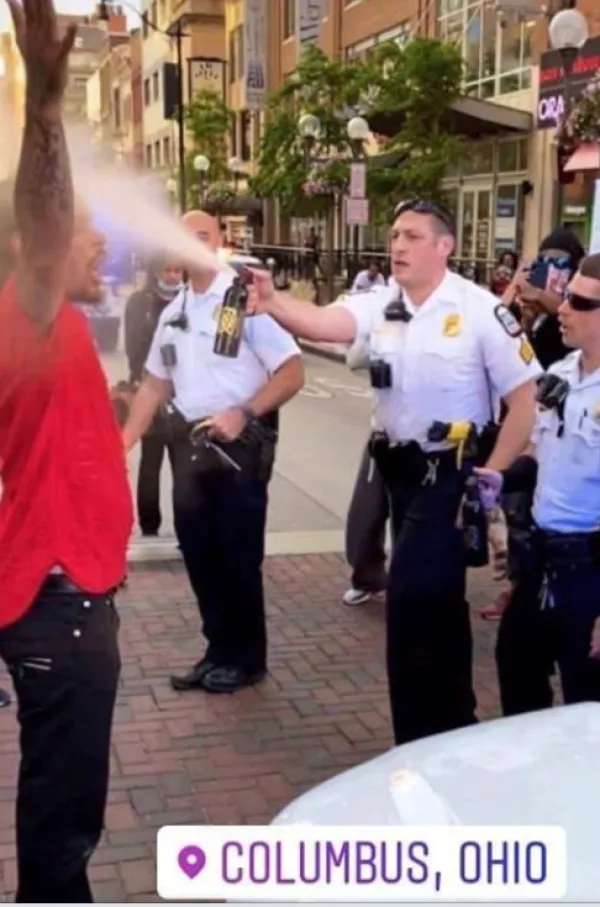
The Columbus Division of Police (CPD) was told last year by the Matrix Consulting Group that its directive allowing officers to use pepper spray against non-violent protesters should be “reviewed” because it allows “use of force without an aggressive act.”
“This directive and the subsequent use of force continuum, allow the use of a chemical agent on non-violent or ‘dead weight’ protestors. The use of force without an aggressive act is a low threshold for the use of chemical agents and contrary to practices in many large agencies (in Cincinnati, for example),” stated the Matrix Consulting Group in the early pages of its 300-plus page report, which was completed last summer.
The CPD directive in question states: “Sworn personnel may use their Division-issued chemical spray to disperse a non-violent congregation of violators who are not moving. Prior to deployment of the chemical spray, at least two notifications should be made to the participants in the crowd advising them that they are committing a violation of law and are to disperse, and that chemical spray will be used if they fail to comply with the order.”
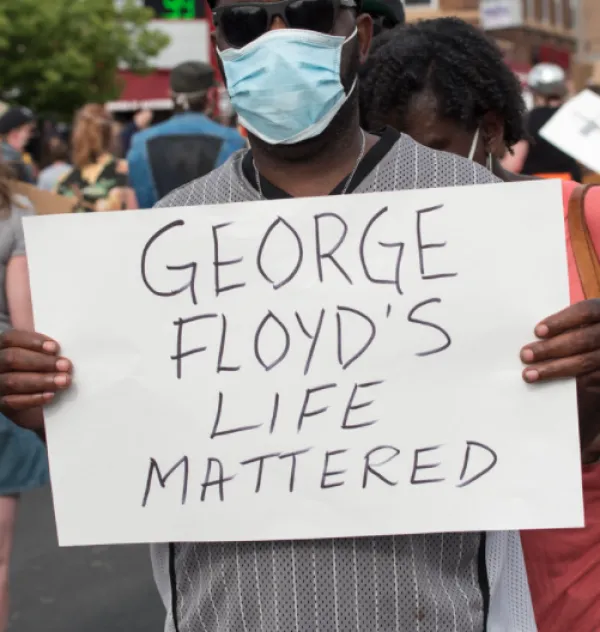
President Michael V. Drake, Senior Vice President Jay Kasey, Vice President Dr. Melissa Shivers, Chief Kimberley Spears-McNatt, and Director of Public Safety Monica Moll,
June 1, 2020
Today, we write to you with extreme pain, disappointment, and anger. On May 25, 2020, an unarmed Black man by the name of George Floyd was violently killed under police custody in Minneapolis, Minnesota. His death, along with those of Ahmaud Arbery, Breonna Taylor, and Tony McDade to name only a few, sparked nationwide protests in solidarity with the calls for justice on behalf of Black deaths in the hands of law enforcement. We, first and foremost, extend our solidarity to the people of Minneapolis and the communities mourning and fighting for justice across the nation. As student leaders, we also extend this solidarity to the students of the University of Minnesota and to their student body president, Jael Kerandi, for her leadership1 in her community during this time.
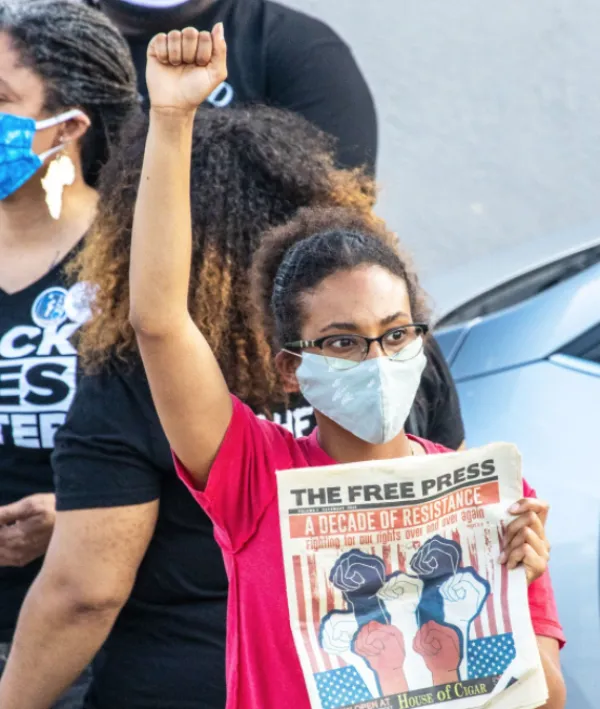
Video obtained by the Free Press from a Thursday, May 28 Columbus protest against the murder of Geroge Floyd in Minneapolis, depicts peaceful demonstrators sitting down facing a phalanx of bicycle cops as officers suddenly begin spraying them in the face without warning.
WATCH VIDEO HERE: https://youtu.be/AB6LmkmLnUI
The video circulated briefly on Facebook but has been removed by Facebook least four times.
Mainstream news account of the incidents blame the demonstrators for starting a "riot" but witnesses tell the Free Press a different story. The old adage remains true - put police in riot gear, and there will be a riot.