
News
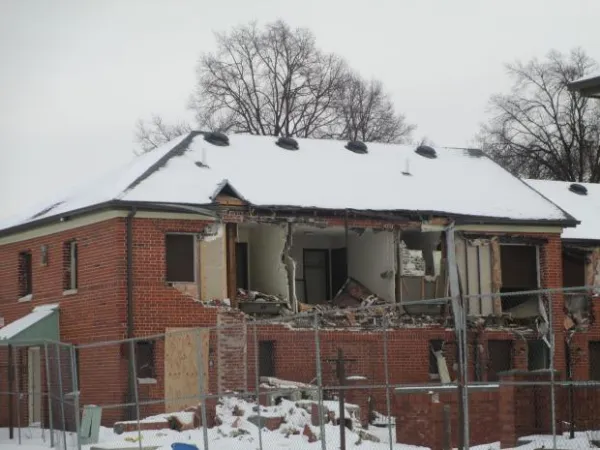
The East Side of Columbus – where the Columbus we know now was essentially born – has been much maligned during this modern era. No doubt calls for improvement have been echoing for some time.
The city has done plenty to facilitate the Short North. More recently attention and infrastructure funding have turned to Franklinton and South Linden.
East Side residents from the Near East to Eastmoor and out to Eastland Mall are saying, once again, don’t leave us behind.
“The city when it comes to the East Side, the plan is all very piecemeal, and frankly, half-assed. That is the only way to put it,” says Michelle Santuomo, former president of the Eastmoor Civic Association, representing the neighborhood between Bexley and Whitehall. “There’s so much that needs to get done. The city has ignored us. And I have gone down to City Council and made fools of them whenever they do their budgets. I say, ‘Where’s the money for the East Side?’
The first law in the United States to recognize the rights of a specific ecosystem will appear in federal court tomorrow. The Lake Erie Bill of Rights (LEBOR) was adopted nearly one year ago by Toledo, Ohio, residents, as they faced continued threats to their drinking water and no remedy from state government. The historic law was immediately challenged by an organization claiming to be an agribusiness farm.
Tomorrow, corporate attorneys from Voyrs, Sater, Seymour and Pease will argue that their corporate client has the power to get the court to veto LEBOR. The State of Ohio will also argue that the municipal law (adopted by 61% of Toledoans who voted) violates the state’s authority as the “sole protector of Ohio waterways.”

Statement put out by the Columbus Freedom Coalition:
Today is Martin Luther King Jr. Day, a day meant to honor the legacy of one of the most influential freedom fighters in history. Martin Luther King dreamed of a world where Black children were not judged by the color of their skin. But today, two protestors were arrested during Columbus’ MLK day brunch, solely for asking the city to acknowledge the execution of Julius Tate, Jr. While the city puts on celebratory airs, there is an ongoing targeted assault and war against Black communities in this country.

A few months ago a Facebook advertisement piqued my interest about how the company was leveraging my user data to target ads in my feed. What began as a passing curiosity about how the company targets advertising, turned into a deep dive at big tech's hidden and unregulated practices. The research led me to construct an experiment that exposed not only a deep level of corporate surveillance into our everyday lives, but also a cross-platform and cross-company effort to integrate our personal data, and use it to manipulate user behavior.
"Information is the oil of the 21st century, and analytics is the combustion engine," Peter Sondergaard of Research at Gartner, Inc, said back in 2011. By 2017 this was true, as data surpassed oil as the world's top commodity. https://www.economist.com/leaders/2017/05/06/the-worlds-most-valuable-r…

The assassination of General Qasem Soleimani
On Friday, 3 January, 2020, progressives in the United States and all peace-loving people throughout the world were horrified to learn that Donald Tromp had added to his long list of crimes and imbecilities by ordering the assassination of General Qasem Soleimani, who is a hero in his own country, Iran. The murder, which was carried out by means of a drone strike on Friday, immediately and drastically increased the probability of a new large-scale war in the Middle East and elsewhere. Against this background, I would like to review the history of oil-motivated attacks on Iran.
The desire to control Iran's oil
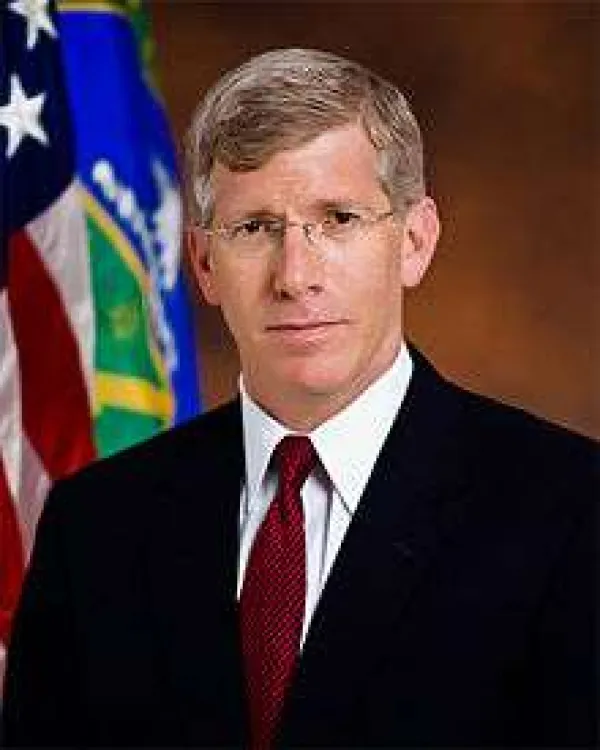
As readers of The Free Press may know, the Portsmouth Nuclear Site at Piketon, Ohio, is heavily contaminated with radioactivity from 50 years of operations that enriched uranium to make nuclear bombs, and later to fuel nuclear power.
This process used as much electricity as New York City and includes some of the largest buildings in the world. Less than 1% of natural uranium is the type of isotope (uranium-235) that will fission, or explode. Enrichment is the name of the process that removes much of the uranium-238 that cannot be fissioned.
New no-bid enrichment contract at Piketon: In November, 2019, the uranium enrichment company Centrus announced the finalizing of a three-year contract to demonstrate what is being called High Assay Low Enriched Uranium (HALEU) production at Piketon. The $115-million no-bid contract with the Department of Energy (DOE) is for centrifuge technology that would enrich uranium up to 19.75% of its U-235. The contract calls for a pilot plant of 16 centrifuges.

President Donald Trump will hold his first 2020 presidential campaign rally in Ohio on January 9 at a “Keep America Great” event in Toledo. On December 16, 2019, Trump filed to be on the ballot in Ohio, unopposed by any other Republican candidates.
Pundits mid-year were skeptical that Ohio would be a battleground state in 2020, but a CNN article recently proclaimed that: “To win reelection, Trump needs Ohio.”
Ohio voted for Trump in 2016, winning by eight points. Believing his populist rhetoric slamming “the swamp” in D.C. and declarations that he’d fight for the working guy, scores of voters rejected Hilary Clinton and so-called “liberalism.” In 2016, Trump won 80 out of 88 Ohio counties, including nine that voted for Obama in 2012.
Now these voters have the opportunity to re-elect their leader – but will they buy the hype again?
Some voters reported that they liked Trump in 2016 because “Finally, somebody thinks like me,” according to the Washington Post.
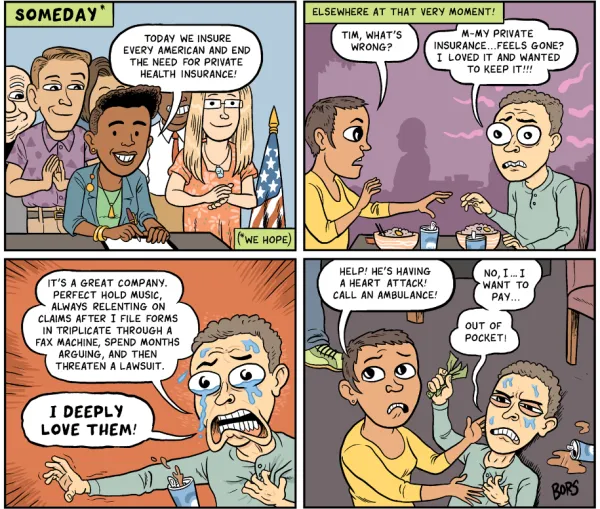
In a world where advanced healthcare has not only been plausible, but widely available for decades, one would think that with time, healthcare would become better, easier to access, and if not free, very close to free. Certainly, one would think this to be true of all resources that we need to survive. Life should be getting easier with time, not harder.
We all know, however, that this is fundamentally not what has happened. Instead, the United States, the wealthiest country in the world, has proven itself unable to provide its citizens dignified livelihoods, even when it comes to the most basic necessities.
This has become abundantly clear with the country’s healthcare system.
The statistics speak for themselves:
‘Tis the season to be jolly in Columbus with all its folly. A love addict with a love tribe from the community organization “1DivineLine2Health” is paying forward their serendipity to several families with children living in poverty on the West Side.
1DivineLine2Health holiday season gifts for the community
Thanks to Muslim Family Services, Executive Director Nicol Kwait Ghazi received a pallet of Christmas trees and chose to donate five instead of the three requested. The trees have been delivered and there are some excited kids on the Hilltop. Several of the homes only had old trees that made Charlie Brown’s Christmas tree look spectacular.
Santa is coming to town with two elves in our Red Love Bug that will be converted to mobile sleigh ride with lights and antlers delivering toys, zoo tickets and coats to our Hilltop kids.

For luxury condo or apartment developers, we have heard it’s feast or famine. So it’s no surprise they want density in our coolest neighborhoods, which is bad enough. Worse is how they are building boorish and Easton-like monsters without any empathy for current residents or historical preservation.
Nothing is sacred to them. Not even German Village, the city’s most historical and aesthetic neighborhood.
Indeed, three conceptional development proposals have stalked German Village over the previous year to two years. They are faceless and unimaginative. You know the kind: a square beehive of glass and concrete.
“We are now at a place where all of a sudden this group of developers have turned and looked South and said, ‘There’s some opportunity there. We can take advantage of the destination, the charm, the identity of German Village for our projects. And we are here to make money. This is the game we play and we are not here to make your life good,’” says Katharine Moore who served as Executive Director of the German Village Society for over a decade. “They are taking advantage of what we’ve spent years creating with care, blood, sweat and tears.”