News
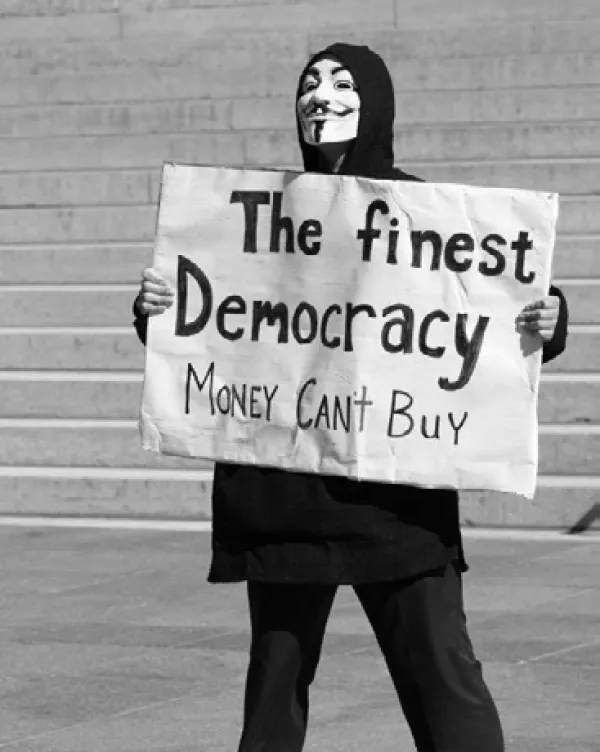
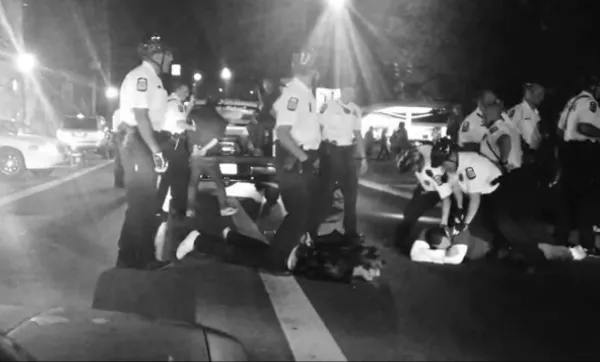
The tent in front of the Ohio Statehouse is gone. The populist ferment of ordinary people out to fight the rich and powerful in the streets has vanished. It appears that the 1% remain incredibly wealthy and unaccountable. Amid the current political calm resides the collective memory surrounding the Occupy movement, one of the great uprisings against the robber barons in American history.
On this two-year anniversary of Occupy’s birth, and a year after Occupy Columbus ended their Ohio Statehouse encampment, the Free Press wondered what happened to the controversial Occupy Columbus movement. Was it assassinated by the power elite that control the city of Columbus and the politicians that do their bidding? Did it die of natural causes?
Occupy’s Origin
When the nationwide Occupy crackdown began in late 2011, this author found himself in California. Increasingly I was drawn to Occupy Oakland, where I had lived previously, and where a police raid on the occupy encampment had nearly killed a protester, Marine Corps Iraq veteran Scott Olson, by shooting him in the face with a tear gas grenade at short range.
Let me first stipulate that I’m not an attorney, but I have an opinion. I didn’t know that you had to be one in order to have one. My opinion concerns the recent guidance issued by the U.S. Department of Justice (DOJ) with regard to marijuana enforcement under the Controlled Substances Act (CSA). Call mine an educated opinion. Let the Letters to the Editor debate me.
On August 29, 2013, James M. Cole, the Deputy Attorney General at the DOJ issued a memo to all United States Attorneys entitled, “Guidance Regarding Marijuana Enforcement.” This is the same James M. Cole who issued similar guidance in June 29, 2011, updating guidance that was issued by Deputy Attorney General David W. Ogden on October 19, 2009.
In those memos, the DOJ seems intent on clarifying its clarifications. The most recent memo claimed that the agency has focused its efforts on these enforcement priorities, among others:
- Preventing the distribution of marijuana to minors;
Over the last few weeks you’ve seen the ads start to roll in.
In one, Mayor Michael Coleman talks about it being time for Columbus City Schools to match the rest of the city’s greatness. There is a commercial with a teacher and one with a parent. And just this past week mailers, replete with images of smiling children, began to arrive at homes in the district.
The district's levy campaign – Coleman’s education commission-cum-levy commission known as Reimagine Columbus Education – has begun in earnest to “sell” issues 50 and 51 ahead of the Nov. 5 election.
The 9.01 mil levy will bring approximately $76 million into the system for each of the next four years. One-third is for district operations and five of the other six mils deal with teacher training and retention, technology and expanding pre-kindergarten. It represents a 23.5 percent tax increase, or $315 additional every year for every $100,000 of home value.
I-71 really doesn't seem like a green line. Even with the new sound barriers, it's as pastoral a tank-moving thoroughfare as there could be in a major metropolitan city. I certainly don't ever remember going through any checkpoints as a kid, though I do remember never being able to play with my friends because they lived on the “other” side.
The particular nature of Columbus's segregation is something that I had always intuited but never consciously realized, until I saw the census map released by a research center from the University of Virginia a couple of weeks ago. The map shows a few things, such as how much more densely populated the “W” side of the Mississippi is as opposed to the “K” side, but its main goal is to graphically illustrate the nature of American segregation, blue dots for white people, red dots for Asians, orange dots for Hispanic, gray dots for “other” and green dots for black.
(see the map at: http://demographics.coopercenter.org/DotMap/index.html)
The United States is not now bombing Syria.
Let’s savor that again: for the moment at least, the United States is not now bombing Syria.
That alone qualifies as an epic, unprecedented victory for the SuperPower of Peace, the global movement to end war, win social justice and somehow salvage our ecological survival.
Will it mark a permanent turning point?
That a treaty has been signed to rid the Assad regime of its chemical weapons is icing on the cake, however thin it proves to be. We don’t know if it will work. We don’t know if the restraint from bombing will hold.
But in a world that bristles with atomic weapons, where the rich get ever richer at the expense of the rest of us, and where stricken Japanese reactors along with 400 more worldwide threaten the survival of our global ecology, we must count any victory for peace---even if potentially fleeting---as a huge one.
Let’s do some history.

In last week’s cover story, Bob Fitrakis described the “command and control” nature of Columbus’s all At-Large City Council structure that came from the great industrialists of America in the 1890s – 1920’s. (“We want to make car, you screw bolt.”)
The article stated that Columbus and Seattle are the only two remaining At Large councils of the 50 largest American cities: three years ago, Detroit voters went to Districts, last year Austin voters went to Districts, and this year, even Seattle voters have initiated a reform effort to move toward Districts and which – if passed – will leave us all in our lonely backwater selves among major cities in America.