
Politics

The recent reshuffling of candidates around the Ohio Republican Party’s statewide slate isn’t just the usual face-saving, self-serving game of political musical chairs that we’ve grown accustomed to from our state’s longtime ruling party. It’s another clear signal from the Buckeye contingent of the GOP that they intend to protect their power at all costs and procure more of what they’ve given us for over twenty years -- the same.

Engagement with the 2018 Women’s March was strong in Washington, Las Vegas, and about 250 other U.S. cities. On January 20 about 3,000 marched from the Greater Columbus Convention Center to the Ohio Statehouse. With this year’s Power to the Polls theme, organizers sought to channel energy from the #MeToo revelations and President Trump’s low approval rating among women into electoral gains for women and progressive candidates in the midterm elections.
“Last year was a historical moment,” said Rhiannon Childs, Executive Director of Women’s March Ohio. “This year we’ve turned that moment into a movement. We wanted to take our collective power, unleashing our ability to organize and mobilize, and take that same energy to the polls to get more women and progressive candidates into office.”
As often happens with mass social movements, debate has erupted among groups and individuals engaged in it. In Ohio there is controversy over the narrow focus on electoral politics, and claims that the voices of women of color and other marginalized groups have been excluded from the Women’s March since its inception last year.
Brett R. Joseph, LL.M., Ph.D.today announced his decision to run in the Ohio 2018 mid-term election as the Green Party's candidate for Lieutenant Governor, joining on the ticket with Columbus attorney and social justice activist Constance Gadell-Newton, who announced her candidacy for Governor of Ohio in late May, 2017.
Dr. Joseph (or Brett as he prefers to be called) is an organizational systems design consultant, attorney, community action researcher, and environmental educator. He serves his native northeast Ohio as a sustainable agriculture program coordinator and permaculture instructor at the Lorain County Community College.

On January 17, former U.S. Congressman and former Mayor of Cleveland, Dennis Kucinich (D) announced his candidacy for governor of Ohio. He outlined a campaign strategy entitled "Power to We The People." He noted that he is "not owned by anybody and not beholden to 'wealthy interest groups.'''
The former presidential candidate has a 30-point agenda that will rebuild Ohio's infrastructure, bolster the public school system, dismantle "the prison-industrial complex," and promote clean air, water and energy in the state.
See video of his speech:
Twenty years ago, the Columbus Free Press came back into print backed by donations from the pro-hemp/medical marijuana movement. Our underground anti-war publication originated on the Ohio State University campus as an as a reaction to the Kent State killings in October 1970, and after 25 years we went strictly online. Through donations from hemp festivals at Rainbow Farm, arranged by legendary local activist Cannabis Kenny Schweickart, the Free Press was resurrected in 1998.
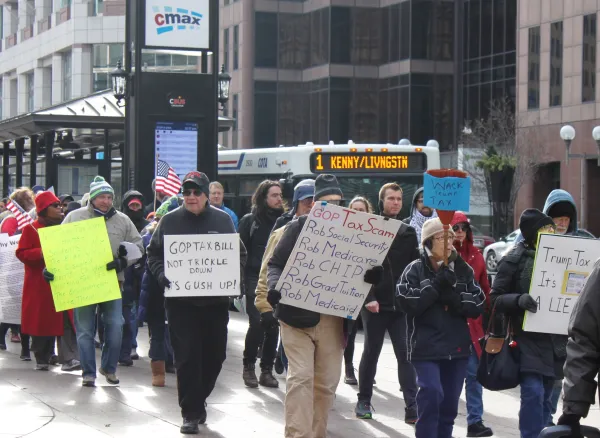
The Tax Cuts and Jobs Act has inspired a wave of corporate largesse. When Congress passed the tax bill on December 20, AT&T announced that it would give $1,000 bonuses over the holidays to 200,000 of its U.S. employees. The largest telecommunications company in the world by revenue, AT&T was a vocal supporter of the tax bill, which lowers the corporate tax rate from 35% to 21%.
Other companies were quick to jump on the PR bandwagon. Comcast gave $1,000 bonuses to over 100,000 employees. Fifth Third announced a $15 minimum hourly wage across the company and gave out $1,000 bonuses to more than 13,500 of its employees.

Columbus City Council members opened up their emails on November 20 to find a letter from Leah Aden, Senior Counsel for the NAACP Legal Defense Fund (the “LDF”) calling for their attention. The LDF, which President Obama once called “simply the best civil rights law firm in American history,” sent a heavily footnoted letter to outgoing City Council President and future City Attorney Zach Klein announcing the “LDF is conducting a review of Columbus’ at-large electoral method for members of its city council. We have substantial concerns that this electoral method may violate Section 2 of the Voting Rights Act of 1965 … by denying voters of color in Columbus of the equal opportunity to elect their preferred candidates to this important local body.” In requesting a written response by December 18, Aden wrote “We write to provide the city council with this information so that this body can pursue an inclusive, fair course of action and avoid potentially costly and lengthy litigation that may be required to ensure compliance with Section 2 and other applicable laws.”

The Japanese hedge fund-owned Columbus Dispatch is trying very hard to get back in touch with its old family-owned crazy. The experiment with being even-handed and rational in its news and editorial page policies is apparently at an end.
Case No. 1. The Dispatch unleashed a vicious attack on Ohio Treasurer Josh Mandel for spending $2 million of tax money to run public service advertisements touting a savings plans for the physically challenged on Ohio television stations. It featured Mandel, OSU head football coach Urban Meyer – who should have known better – and a sweet young girl. "Lying, hiding or just plain reckless" was the headline of the editorial that took down Mandel.
I only wish that the newspaper cared as much about the alleged $2 million that Gov. John Kasich cost the state's taxpayers to pay for travel, food and protection by State Troopers while he traipsed across the country in 2015 and 2016 running for president. The Dispatch never challenged the state law that permitted the secrecy and hardly lifted a reportorial finger to unearth and publicize the records.

In a primary race chock full of corporate-sponsored “establishment” candidates this past May, 5 candidates of the grassroots organization Yes We Can Columbuswon enough votes to run in the general elections for City Council and School Board this November.
In a city where the Democratic Party Machine holds a tight grip over local electioneering, this is a considerable achievement that is no doubt a reflection of growing dissatisfaction with the status quo in Columbus politics and part of the ongoingradicalization of sections of the Columbus community since Trump’s inauguration.
The International Socialist Organization shares the overarching goal of Yes We Can: to change the miserable conditions plaguing Columbus, and to shift power definitely out of the hands of the wealthy few into the hands of everyday people. We stand in solidarity with anyone working to achieve this aim and hope to continue to build a united front with Yes We Can and its supporters in the ongoing struggle toward this vision.
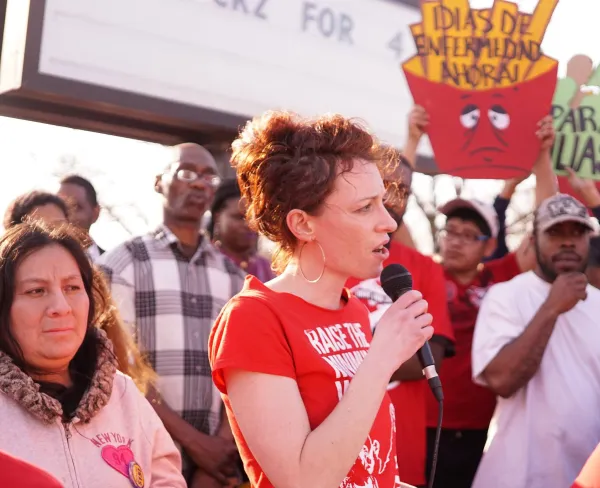
The City Council race in Columbus is shaping up to be an interesting one. Yes We Can candidates Jasmine Ayres and Will Petrik are running on progressive platforms that include affordable housing, policing reform, renewable energy, and a living wage. Beyond a few token initiatives, the current City Council only pays lip service to these concerns. As Berniecrats, Petrik and Ayres intend to push hard for real reforms.
It remains to be seen whether Left Democrats will be able to win seats on City Council without the corporate campaign backing enjoyed by the three candidates endorsed by the Franklin County Democratic Party. If Ayres and Petrik do manage to get elected in November, it remains to be seen whether they will be able to reform the local political machine from the inside. The FCDP establishment holds the levers of power in the party, and they have made it clear that they like things as they are. They will resist to the death any changes that displease their corporate sponsors.