
Politics
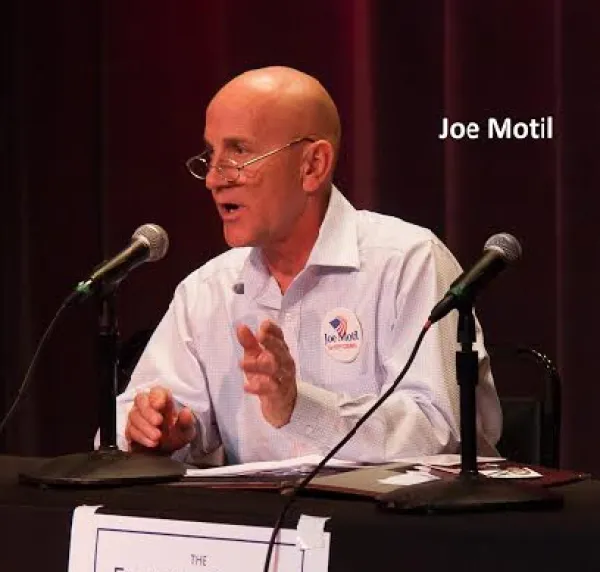
COLUMBUS, OHIO – Joe Motil, 32 year community activist and Write-In candidate for Columbus City Council is continuing to push forward on his development of city legislation requiring all new apartment projects to provide upwards of 20% of new units to be set aside for low-moderate income individuals and families. Motil first announced this idea during his 2015 Columbus City Council election campaign.
Motil says, “In 2015 83% of all apartments built in Columbus were on the high end. With almost 17,000 apartments newly opened, under construction or on the drawing board since then, we have already missed out on an opportunity to create 3,400 affordable housing units to those in need.” To help offset the costs for developers, Motil proposes slightly lessening the square footage of these units and allowing for less extravagant amenities such as counter tops, flooring, light fixtures, kitchen appliances and bathroom features but not displacing them with substandard appliances and components.
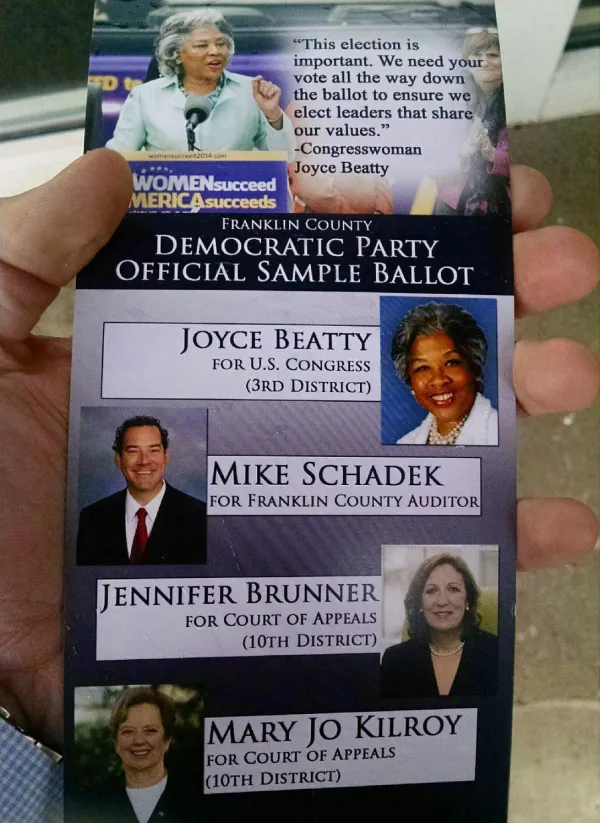
When you arrive at the polls this November 7, will you go in empty-handed? Or will you bring a list of candidates you prefer? As usual, the Franklin County Democratic Party will distribute partisan sample ballots – postcard-size fliers listing all the endorsed Democratic candidates – for its members to consult when voting this fall. Many who use the cards know only the candidates' professed political affiliation and nothing else about them.
The cards are distributed recommending the Democratic candidates for Columbus City Council and other city offices, despite the Columbus City Charter providing for “nonpartisan” elections. In placing this provision in the charter, Columbus citizens evidently subscribed to the position that political affiliation is irrelevant to which persons can best provide city services. And they apparently believed that cooperation between persons of different parties is more likely if elections are nonpartisan. According to the National League of Cities, those considerations are the reasons for nonpartisan municipal elections.

DirecTV and AT&T U-Verse may be dealing a death blow to local ownership of WBNS-TV.
The satellite and cable television conglomerate has blacked out Channel 10 in a dispute over carriage fees. This had cut access to CBS-TV programs and local news to approximately 20 percent of the 920,000 television households in the Columbus TV market for three weeks by late September with no end in sight as The Columbus Free Press went to press.
Yes, it is possible to view Channel 10 with a digital antenna and some of its programs through the internet, but most viewers will not bother and will watch other channels. This puts Channel 10's No. 1 news rating in jeopardy and may vault Channels 4 or 6 to the top.
Advertisers tend to pay a premium to be on the No. 1 news station in a market. TV ads are sold based on audience size. When audiences are reduced significantly, stations must give either rebates or provide makeup spots. Both remedies are costly to the station.
DirecTV and U-Verse were paying Channel 10 a fee for the privilege of carrying its signal. The blackout puts those payments in jeopardy.
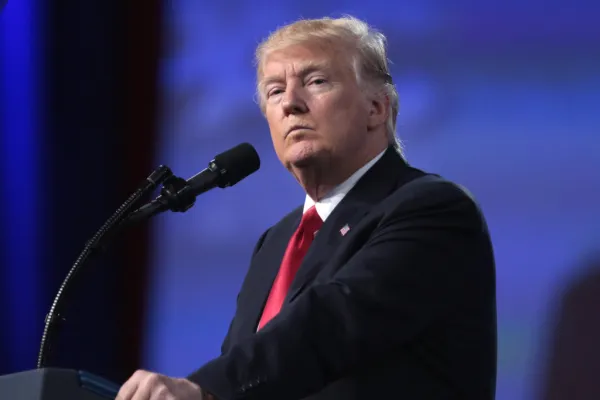
A national business news website, Benzinga.com, recently asked my views on Presidential attempts to muzzle the press. Here is what I told them: “(President) Trump has found that his core supporters, now dwindling but still representing a third of the electorate, dislike the mainstream media and respond favorably whenever Trump criticizes the media. That results in more and sharper edged investigative reporting.”
“All recent presidents have battled with the news media and have, at times, treated journalists as mortal enemies and, at times, tried to pressure the news media into covering things the presidents' way.”
“President Richard Nixon allegedly threatened to take away the Washington Post's lucrative TV licenses after repeated negative coverage.”
“President George W. Bush's people allegedly threatened to charge the New York Times editor with sedition in a coverage dispute.”
(I also noted that President Barack Obama had frosty relations with the press at times.)

In several “news” articles posted over the past few weeks, oil and gas industry and their allies argue that a local Community Bill of Rights ballot initiative submitted by Youngstown voters is “too expensive” for the community. Inside Sources (http://www.insidesources.com/activists-costing-youngstown-anti-fracking-bill-of-rights/), WKBN News (http://wkbn.com/2017/07/27/keeping-fracking-issue-on-ballot-costly-for-youngstown/) and The DailyDigger (http://www.thedailydigger.com/) present facts and figures provided by the industry (note: Inside Sources and The Daily Digger are the industry), leaving out the full story.
The Bigger Picture

You have news organizations that represent, even protect the public, and you have ones that buddy up to powerful institutions.
The Columbus Dispatch showed just how far in the buddy-up tank it is with Ohio State University July 12 in the way it reported the 5.5 percent tuition and 6 percent housing increase that will drive the total cost of attending OSU to over $26,000 annually.
The Dispatch downplayed the fact that incoming OSU students and their parents were told they must pony up an extra $1,500 just six weeks before classes start.
The newspaper adopted the university's spin that a big tuition increase held steady for four years was a good deal. It sounds like it until you factor in the hundreds of students who will play the inflated rate for a year or two and then drop out. Not to mention that hundreds of other students take 5-6 years to graduate. They will pay an even higher rate for the fifth and sixth years.
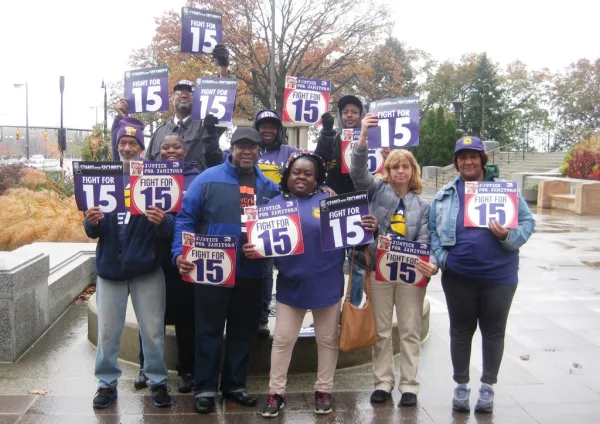
After a major setback, the struggle for a living wage in Ohio has been re-energized thanks to a ruling by a Franklin County judge. In June Common Pleas Judge Richard Frye blocked portions of Senate Bill 331, passed in December of last year by the Ohio General Assembly and signed into law by Gov. Kasich.
Part of SB 331 prohibited Ohio cities from setting a local minimum wage higher than the state minimum wage. Judge Frey tossed out this and another portion of the law, citing the one-subject rule in the Ohio Constitution, which prohibits “Christmas tree” bills: legislation with unrelated riders tacked on that benefit special interests.
In other words, the Ohio legislature is not allowed to sneak minimum wage rules into a bill that has nothing to do with labor. SB 331 was about regulating dog breeders and pet stores. This was an underhanded maneuver to pre-empt cities from setting their own minimum wage without any opportunity for public debate.

The lieutenant governor is the afterthought of Ohio politics. Little attention is paid to the No. Two in state government. Candidates for the post are usually selected in order to balance the ticket rather than on issues. The usual white male nominee for governor needs a woman or better yet a Black woman.
I am stepping forward to break the mold by offering to be a candidate for lieutenant governor based on my stands on issues important to Ohioans.
This month I will offer the Hartman Platform on education issues. In future columns I will detail my stands on other issues.
The first plank in my platform changes the taxpayer subsidies for state-assisted colleges and universities. It could save hundreds of millions annually. I would change the system to provide tuition subsidies based on the normal time is takes to earn a degree. For instance, a student seeking an associate degree will receive subsidized tuition for two years. After that, the rate without the subsidy will be charged. Similarly, bachelor's degree students will receive a subsidized rate for four years. After that, full price will be paid.

Josh Mandel and John Kasich appear to have spent upwards of $5 million of taxpayers' money on their vain pursuits of a U.S. Senate seat.
Ohio Treasurer Mandel spent nearly $2 million on TV ads pushing him off as a nice guy who supports charity.
Governor Kasich is nearing the $3 million mark in secret spending of taxpayer money on security, travel and lodging while he runs for president, peddles his book and maybe runs for the Senate.
Do the math. Kasich has spent 300 days of the last 2 years out of state and not doing his job at an estimated $10,000 a day. That adds up to $3 million down the drain.
Imagine what the combined $5 million could do to fight the opioid epidemic that Kasich purports to care about.
Speaking of Kasich's latest "book," Two Paths, it limped into the 13th spot on the New York Times best-seller list three weeks ago only to drop out of the list the following week.
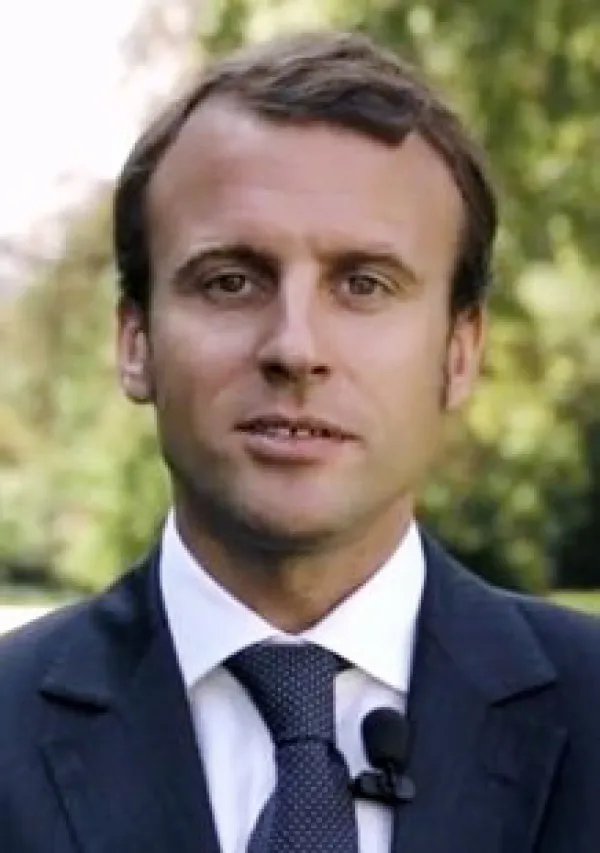
I could begin by stating that the world, despite small and justified protests, is celebrating Emmanuel Macron’s recent victory in the French presidential election. On the surface, it would be an accurate statement. People across the world from Western Europe to the United States are writing and posting about Macron and his saving the continent. But the excitement is really over Marine Le Pen’s loss. The French, overall, didn’t want to be seen as racist and isolationist. The rest of the world didn’t want another Donald Trump in power. Amidst all the hubbub since the election, it would be easy to think Macron is a progressive warrior who ended racism and nationalism in one fell swoop. That description isn’t even remotely close to who he really is, and it is a shining example of the problem with people thinking about politics in relative, rather than absolute, terms.