
The Free Press is bringing back a Reviews section after some absence. We hope to review plenty of events around town. Check back frequently and if what\'s going on is any good.
Arts & Culture
Image

This summer the Fountain Theatre has been presenting – as it has annually done since 2003 – Forever Flamenco on its Outdoor Stage. In July, August and ending Sept. 24-26, the three-night weekend events have offered lucky Angelenos a rare taste of this unique Andalusian art form. The dance, music and singing are derived from its 18th century “originators, the gypsies… [who] sang songs of oppression, lament, and bitter romance, a kind of blues that by the 19th century began to catch on among all the other downtrodden inhabitants of Andalucia,” according to Cadogan Guides’ Southern Spain, Andalucia & Gibraltar by Dana Facaros and Michael Pauls. (NOTE: The term “gypsy” is now regarded as pejorative and the word “Roma” is considered to be culturally sensitive.)
The guidebook authors add that “the half-tonal notes and lyrics of futility of the cante jondo, or deep song, the purest flamenco seem to go straight back to the Arab troubadours [not to be confused with those other Troubies currently rocking that other open-air theater at Malibu in Lizastrata at the Getty Villa] of al-Andalus.”
Image

The Troubadour Theater Company’s uproarious mounting of Lizastrata at the Getty Villa’s amphitheater is the latest of countless versions of Aristophanes’ Greek classic Lysistrata, first performed in Athens in 411 BC. Centered on a sex strike instigated by Athenian women to force their menfolk to stop warring with the Spartans, this ancient gender-themed risqué play has continued to capture the imagination of storytellers and audiences for 2400 years.
Image

This article is posted from its original publication in Washington Monthly, Sept 4, 2021.
In August 10, Senator Tom Cotton of Arkansas proposed an inappropriate amendment to the $3.5 billion infrastructure bill currently being considered by Congress. The provision bans federal funds from going to K–12 schools that teach critical race theory. It passed 50–49.
Cotton and his Republican peers—as well as Democrat Joe Manchin of West Virginia—followed the direction of Tucker Carlson and his peers at Fox News and other right-wing media, who have been mounting a scare campaign to convince white America that radical educators nationwide are blaming their children and grandchildren for the sins of our nation’s past.
Image

As its popularity soars, socialism’s secret sauce is explored in this never pedantic, feel-good movie manifesto that will make you want to own the means of production.
Director/producer Yael Bridge’s stand up and cheer The Big Scary “S” Word is one of 2020’s do-not-miss films and deserves a Best Documentary Academy Award nomination. As a producer, Bridge was Emmy co-nominated for the 2017 nonfiction film Saving Capitalism featuring former U.S. Labor Secretary Robert Reich. Bridge’s latest work moves further left, asserting that instead of rescuing the capitalist system, it should be replaced by – as Warren Beatty put it in the 1998 movie Bulworth – “that dirty word… socialism!”
Image

On this day – August 25, 1984 – Truman Capote died and a new documentary sheds light on his life and writing.
In Cold Blood author Truman Capote is one of the most storied American writers of the second half of the 20th century. Capote’s greatest talent may have been off-page, when he was onstage and center stage, promoting his image, endlessly appearing on TV talk shows hosted by Dick Cavett, David Frost, Johnny Carson, etc., cleverly, calculatingly cultivating what his contemporary, Norman Mailer, called “advertisements for myself.”
As he well knew, Truman’s unusual appearance made him instantly stand out in a crowd: This fish out of water was more or less openly gay when it was strictly taboo; diminutive if dapper; a Southerner amidst Manhattanites; possessor of a unique speaking voice; and wielder of a wry wicked wit. Later in life substance abuse, alas, made the author even more of a spectacle.
Image
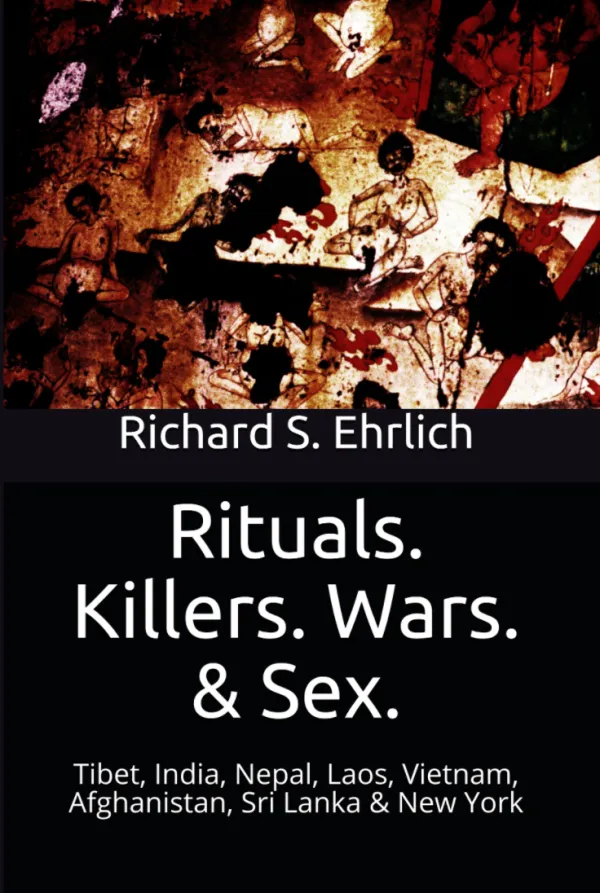
Book Review: Rituals. Killers. Wars. & Sex.
By Pete Johnson
Richard S. Ehrlich's book, "Rituals. Killers. Wars. & Sex. -- Tibet,
India, Nepal, Laos, Vietnam, Afghanistan, Sri Lanka & New York," is a
compilation of his experiences as an American foreign correspondent
based in Asia.
Ehrlich's introduction says his "news stories portray fragments of
people and their distant voices."
As a result the book is fragmented.
Although it is divided into four chapters, the chapters are not
related to each other, so it is really four stories.
The four stories -- the title of the book, "Rituals. Killers. Wars. &
Sex" -- are related to each other geographically, as they are stories
originated in Asia.
The four stories are interesting, they are a window into the dark
underbelly of Asia.
Chapter 1 "Rituals" describes four specific bizarre Asian rituals
involving death.
This reader was completely unaware of all four of these practices,
which are driven by geography and, of course, religion.
They include the practice of giving up dead human bodies to vultures
Image
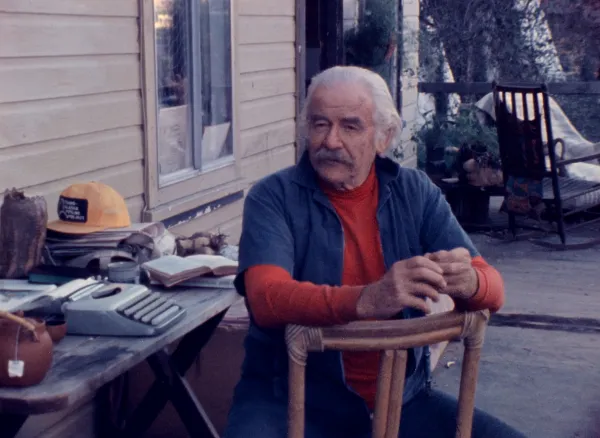
In The Last, Best Small Town playwright John Guerra has adapted Thornton Wilder’s 1938 Pulitzer Prize-winning drama Our Town, resetting the turn-of-the-last-century Grover’s Corner, New Hampshire at turn-of-the-21st-century Fillmore, California, which is located a bit north of Six Flags Magic Mountain, in Ventura County. In doing so, Guerra has injected contemporary ethnic, as well as economic and wartime concerns into Wilder’s Americana classic, which – along with gems like Romeo and Juliet – is one of those perennial favorites performed by junior high and high school theater departments across the USA.
Image

Hard on the heels of recent reports revealing the shocking existence of 1,000-plus unmarked graves of First Nations children at church-run schools in Canada (see: Canada: 751 unmarked graves found at residential school - BBC News), the new movie Cousins – written, directed and starring Maori females – deals with the trauma of family separation of New Zealand’s indigenous children.
The 98-minute feature is an adaptation of the 1992 novel of the same name by Maori author Patricia Grace (who I met in the 1990s at a literary symposium of Pacific Islander authors in Honolulu) and co-directed by Maoris Ainsley Gardiner and Briar Grace Smith (who also wrote the screenplay). Cousins tells the story of three Maori cousins, Mata, Missy and Makareta, who are portrayed by different actors at different points in their lives as children, teens/young adults and middle aged.
Image

Friends! Angelenos! Theatergoers! Send me your rears – to fill the seats at that Roman-style amphitheater known as Will Geer’s Theatricum Botanicum. After an interregnum due to the you-know-what, WGTB is back, launching its new season with a do-not-dare-miss Julius Caesar. William Shakespeare’s immortal drama about intrigue and political liquidation opened with impeccable timing, coming hard on the heels of the assassination of Haiti’s president and premiering on the precise anniversary of French DGSE saboteurs blowing up the Rainbow Warrior on July 10, 1985 at Auckland Harbor, in order to prevent Greenpeace’s ship from protesting nuclear testing near Tahiti.
Image

By trade, I’m a full-time film historian/critic who has authored/co-authored four movie history books. I say this because at one point in the new play Taming the Lion Joan Crawford (as depicted by Marie Broderick) tells William Haines (Landon Beatty) he’s the top box office movie star on Earth. Yet until I was invited to cover Taming the Lion this reviewer had never even heard of Haines, who also is not listed in David Thomson’s The New Biographical Dictionary of Film. The world premiere of playwright Jack Rushen’s two-act dramatization of real-life Hollywood history and personalities explains why.
Throughout the 1920s and until the mid-1930s Haines was a leading man in Tinseltown, appearing in about 50 flicks. In 1929 he starred in the ironically entitled A Man’s Man, which Greta Garbo and John Gilbert are also in, and played the title character in 1931’s Just a Gigolo. A number of Haines’ pictures were military-themed, such as 1926’s Tell It to the Marines, 1929’s Navy Blues, 1934’s The Marines are Coming.