
The Free Press is bringing back a Reviews section after some absence. We hope to review plenty of events around town. Check back frequently and if what\'s going on is any good.
Arts & Culture
Image
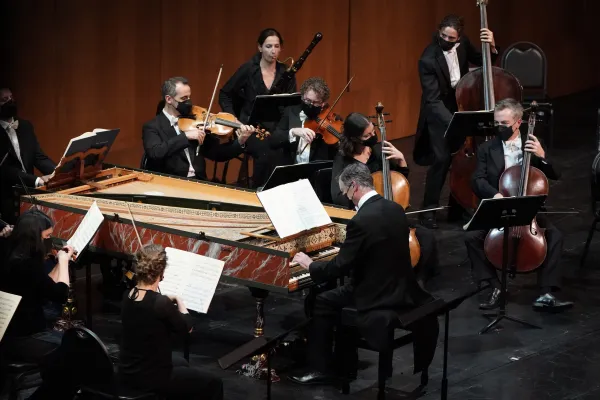
Best known for his 1742 oratorio the Messiah, with its immortal, glorious “Hallelujah Chorus,” George Frederick Handel was also a prolific composer of operas. Earlier this month, Angelenos had a special treat, an opportunity to enjoy a concert performance of Handel’s 1735 opera Alcina, presented by London-based The English Concert. The plot and theme of this delightful 18th century work would be familiar to devotees of Woody Allen movies – infidelity and shifting romantic partnerships, a sort of sexual musical chairs.
The story, which Handel adapted from Riccardo Broschi’s 1728 Rome-set libretto of L'isola di Alcina, takes place at an enchanted isle presided over by the eponymous enchantress Alcina. Spells are cast, identities are mistaken, there are some gender bender twists and shapeshifting, as star-crossed lovers have their faithfulness (or lack of) challenged. An interesting plot point is the introduction of “The Ring of Truth,” a sort of ancient lie detector enabling the bearer to determine whether one’s beau or belle is being honest or, as the libretto puts it, “a cruel deceiver.” Ahh, the fickle finger of fidelity!
Image
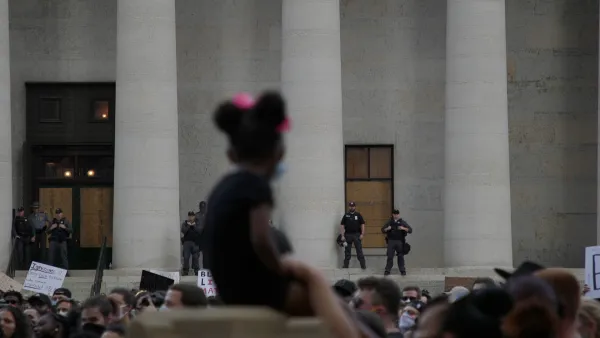
The AFI Fest has returned to Hollywood for live, in-person screenings and events, although there is also a virtual component for watching many of the feature, documentary, short, indie, studio, and foreign productions that Los Angeles’ largest annual film festival is presenting in 2021. Some of the screenings are accompanied by talent who introduce and/or speak about their films when they are shown at the TCL Chinese Theatres. Here are reviews of some of the films I have seen so far:
MEET THE PRESS FILM FESTIVAL AT AFI FEST
According to the AFI’s website: “In partnership with NBC’s Meet the Press, these short documentaries spotlight compelling stories about pressing issues facing our society with conversations moderated by NBC News journalists.” Meet the Press, of course, is the long running TV program where newsmakers are questioned by a moderator and a panel of journalists hold forth on topics of the day. Accordingly, all of the nonfiction films screened at AFI Fest in collaboration with Meet the Press are topical in nature – and many of them deal with the pressing topic of race, as America undergoes a long overdue racial reckoning.
Image
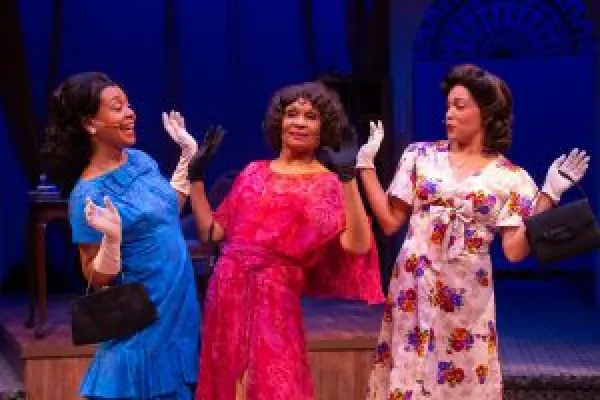
No, Blues in the Night is not the new theme song that the post-Election Day Democrats are singing. Rather, it is a show starring that distinctly African American art form, the Blues, directed by Ebony Repertory Theatre’s Wren T. Brown and conceived by Sheldon Epps. In the Tony and Olivier award nominated Night four singers croon and belt out 26 songs, many of them created by luminaries of the genre such as Duke Ellington (“I’m Just A Lucky So-And-So”), Bessie Smith (“Blues Blues”), Benny Goodman (“Stompin at the Savoy”) and the eponymous “Blues in the Night” by Harold Arlen and Johnny Mercer. Happily, none of the music was lip synched and all the numbers were performed by a live quintet.
Image
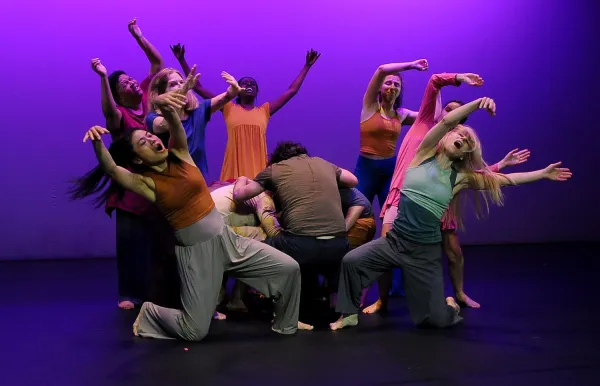
On October 26 I saw Tom Stoppard interviewed on PBS’ Amanpour & Company and the British playwright stated that “theater is a storytelling art form.” While I hold the bard who wrote 1966’s Rosencrantz and Guildenstern Are Dead in high esteem (see my review of A Noise Within’s 2016 production of Arcadia: “Arcadia”: Tom Stoppard’s complex Byronic drama to the manor born – People's World (peoplesworld.org)), there are some intrepid souls in the realm of the stage who’d beg to differ with Stoppard’s definition/description of theater.
Image
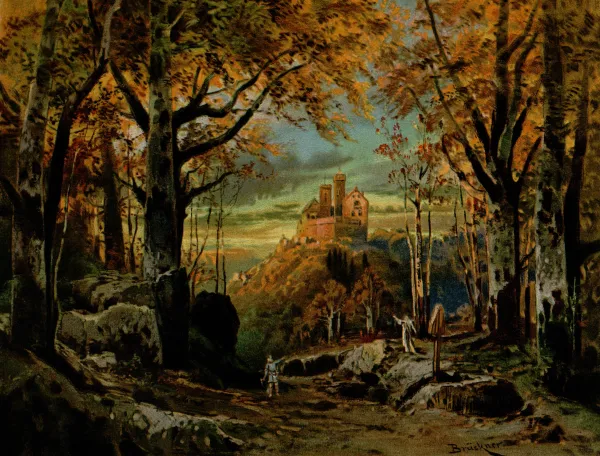
As Tannhäuser’s lovely, rolling overture is unveiled, the stage of the Dorothy Chandler Pavilion becomes visible, as if being revealed in a cinematic fade in. The set is bathed in ethereal scarlet and blue lights designed by Connecticut’s Marcus Doshi, as about six dancers cavort onstage in what composer and librettist Richard Wagner described as “the whirlings of a fearsomely voluptuous dance.” A bacchanalian orgy is taking place, with nymphs performing Kama Sutra-like positions and moves choreographed by Canadian Aszure Barton. In Opera 101 author Fred Plotkin notes “some modern productions have included nude dancers” in Tannhäuser’s stunning curtain lifter, but although nudity has appeared in other LA Opera offerings, alas, this less adventurous show’s sexy sprites are appareled in flimsy androgynous outfits.
Image

Like Gloria Swanson at the end of 1950’s Sunset Blvd., the Academy Museum of Motion Pictures is finally ready for its close up. Years in the making, the Academy Museum’s world premiere is Sept. 30. According to Bill Kramer, President of the Academy of Motion Picture Arts and Sciences – you know, those fine folks who give the annual Academy Awards – this cinematic sanctuary “is a new home for the art of film in Los Angeles, the world capital of moviemaking.”
At the same Sept. 21 press event Kramer addressed, architect Renzo Piano whimsically likened the edifice’s futuristic spheric design to “a soap bubble. Don’t call it the ‘Death Star.’ Call it a zeppelin or a spaceship.” This 250,000-plus square foot repository of cinema is adjacent to what had been the May Company (now the Saban) Building, famed for its gold-tiled cylindrical section that resembled a lipstick tube, located at the “Miracle Mile” in Mid-City L.A. Inside visitors can experience movie magic and see some of the screen’s most iconic artifacts.
Image
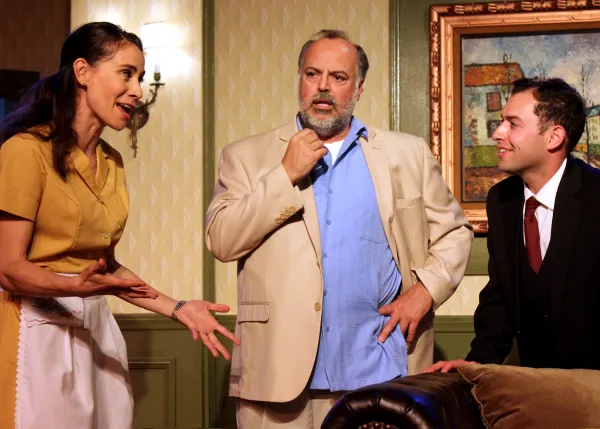
This is the world premiere of Our Man in Santiago – well, almost. According to director Charlie Mount, there were actually two performances of Santiago in March 2020, when the you-know-what shut Theatre West (along with just about everything else) down. Playwright Mark Wilding’s wild take on the 1973 coup in Chile finally debuted Sept. 24 and this critic is delighted to say that Wilding’s satire about the downfall of socialist President Salvador Allende is even timelier now than it would have been about 18 months.
This is because the recent resounding total defeat and humiliation of Washington in Afghanistan is shining a light on the sheer, utter imbecility of US imperialism and lunacy of its foreign policy. The CIA played a devastating covert role in Afghanistan starting in 1979 – only six years after the Agency helped topple Chile’s democratically elected government, as Wilding cleverly exposes (see: American Amnesia: USA’s Afghan Original Sin Began 1979 – Not 9/11 - LA Progressive).
Image
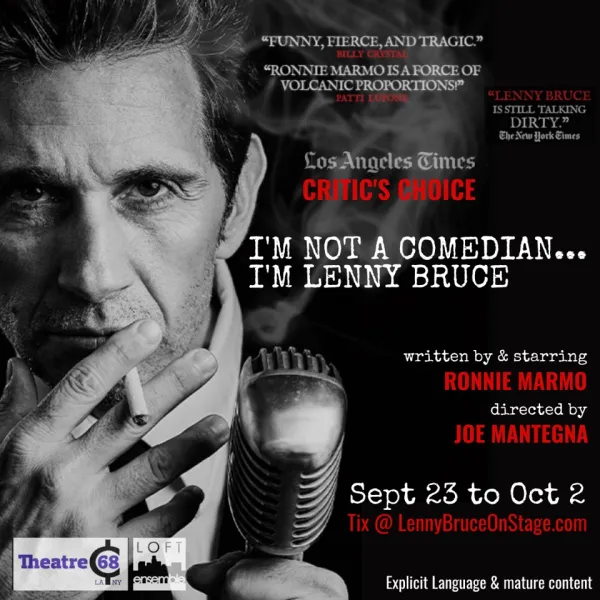
In what’s the most ironic venue twist I’ve stumbled across in my reviewing misadventures, the one-man bioplay about the iconoclastic comic whose routines (in)famously included a bit called “Religion Incorporated” is actually being presented inside of an L.A. church. Ronnie Marmo plays the title role in I’m Not a Comedian… I’m Lenny Bruce, which is actually being staged in the intimate theater located in St. Matthew’s Lutheran Church, where the Loft Ensemble theater company is based in the NoHo Arts District.
Marmo also wrote this Theatre 68 guest production at Loft Ensemble, directed by actor Joe Mantegna, whose stage and screen credits include David Mamet’s Glengarry Glen Ross (for which Mantegna won the Tony Award), CBS’ Criminal Minds series and The Godfather III.
Image
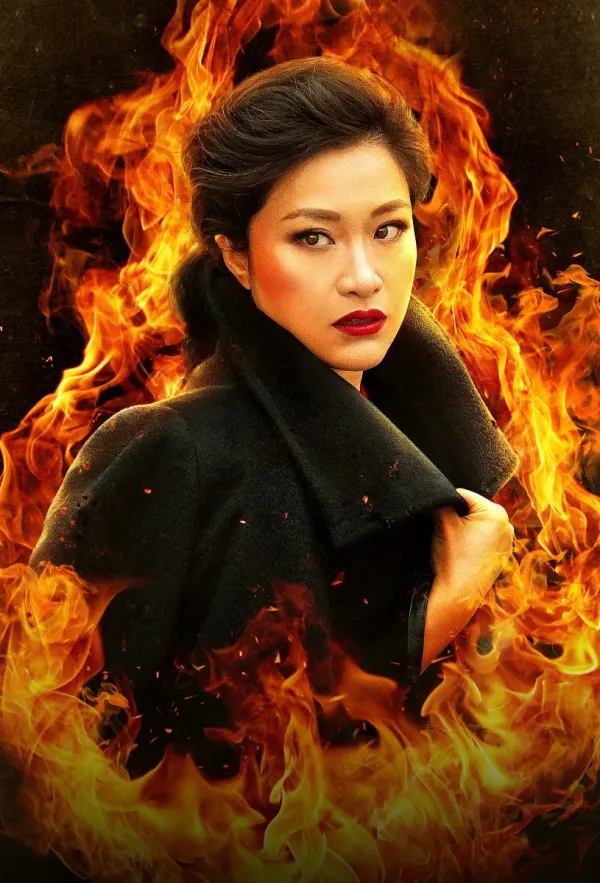
After more than a year offstage due to the you-know-what, LA Opera is back as Giuseppe Verdi’s 1853 Il Trovatore launches the 2021/22 Season for long-suffering Angeleno opera aficionados. But what a “cheerful” choice!
As the lead sentence of Naomi Andre’s article in LA Opera’s Performances Magazine puts it: “There is something kind of odd about Il Trovatore.” “Kind of?” Verdi’s turgid tragedy, with a nightmarish libretto mostly by Salvatore Cammarano, adapted Antonio Garcia Gutierrez’s play featuring witchcraft, burning at the stake, civil war, duels, mistaken or confused identities, thwarted love, “gypsies,” grim reapers straight out of Ingmar Bergman’s The Seventh Seal, imprisonment and other cheery plot points and bagatelles.
Image
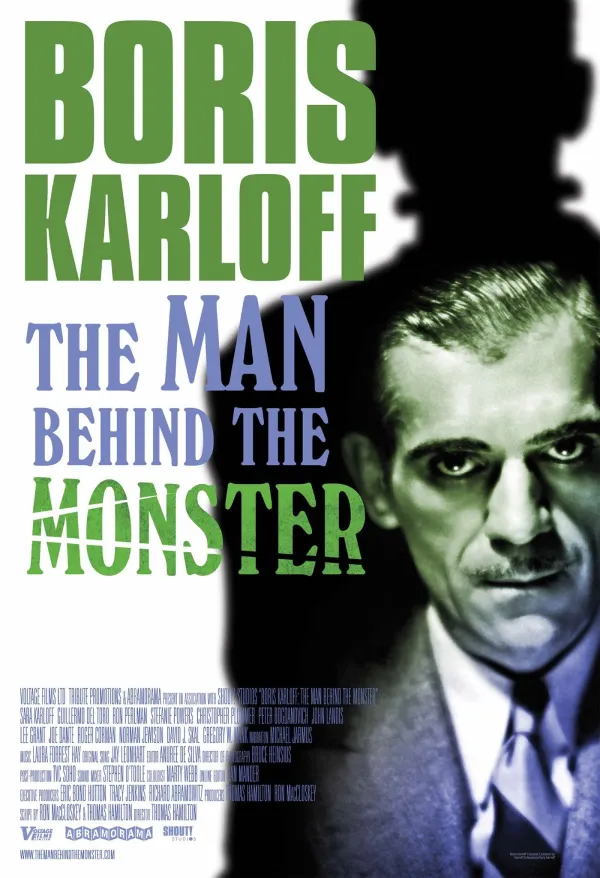
You don’t have to be a horror fan to enjoy Thomas Hamilton’s documentary Boris Karloff: The Man Behind the Monster (I’m not and I did). The 90-minute nonfiction biopic has all of the conventional hallmarks of a well-made movie history doc. Of course, there are copious clips ranging from Karloff’s classics, including in the role the British actor was best known for, as Frankenstein’s monster in various versions of the film franchise adapting the character from Mary Wollstonecraft Shelley’s chilling 1818 novel, starting in 1931. There are scenes from Karloff’s other famous films, including 1932’s The Mummy, The Old Dark House and The Mask of Fu Manchu, plus glimpses from more obscure flicks, including from his silent screen days. His subsequent many TV outings – wherein he often good-naturedly mocked his monstrous persona – are also covered.