
The Free Press is bringing back a Reviews section after some absence. We hope to review plenty of events around town. Check back frequently and if what\'s going on is any good.
Arts & Culture
Image
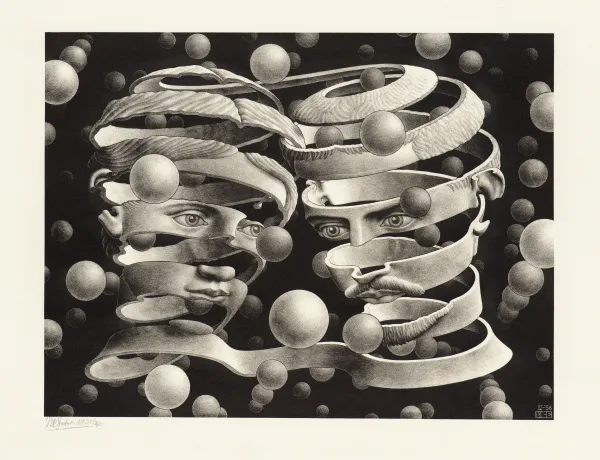
Robin Lutz’s visually compelling, inventive M.C. Escher: Journey to Infinity strikes just the right note of whimsy in exploring the graphic art of a talent known for his sense of the whimsical. Just as his compatriots Bosch, Rembrandt, Vermeer and Van Gogh, created new ways of seeing with, respectively, surrealistic symbolism, chiaroscuro, photorealist style and Post-Impressionism, the Dutch Escher expanded the sense of perception on the flat “limited plane” of paper he imprinted with his unique “visualization of infinity.”
Escher called this sensibility “expressing endlessness” and stated: “I’m not an artist… I’m a mathematician.” The Dutchman’s thoughts and theories have been culled from his letters, diaries and notes. They are read aloud with panache by the English actor Stephen Fry (he has appeared in many mostly British films, such as 1992’s Peter’s Friends), who provides playful, lively, witty narration that sounds, in a good sense, like a performance.
Image
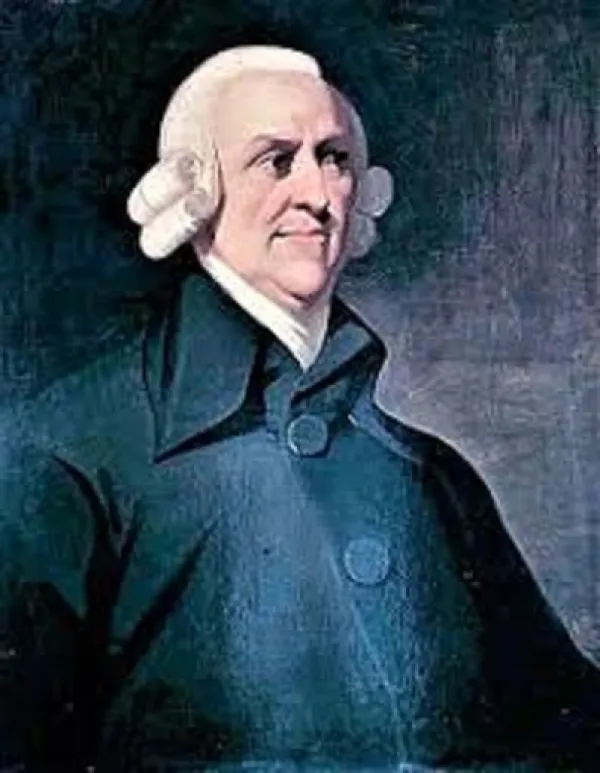
The invisible hand
As everyone knows, Adam Smith invented the theory that individual self-interest is, and ought to be, the main motivating force of human economic activity, and that this, in effect, serves the wider social interest. He put forward a detailed description of this concept in an immense book, “The Wealth of Nations” (1776).
Image

When I was a student revolutionary, I attended a debate between a communist and liberal in Manhattan circa 1972. When the latter complained that workers didn’t strike in the socialist states one of the reds in the audience shouted out that this was because “The workers own them!”
In Dear Comrades! seasoned Soviet/Russian director Andrei Konchalovsky poses the question: What does happen when the workers go out on strike in a (purportedly) workers’ state? Russia’s official entry for 2020’s Best International Feature Film Academy Award is based on an actual labor action in June 1962 by the industrial proletariat at the city of Novocherkassk, back in the USSR.
Image

Many families and workplaces are celebrating holiday gatherings through videoconference as COVID-19 shelter-in-place orders continue—including finding ways to share festive dinners, or passing the time drinking with friends online.
As suggested by the MuseumHack blog, many companies will be hosting virtual Christmas parties online reimbursing employees for a meal of their choosing, or sending credits for services like GrubHub, or DoorDash that provide delivery of takeaway meals, or more synchronized meals from HelloFresh, BlueApron, or Cratejoy.
Also, we could see more companies like Hire Space, based in the United Kingdom, which offer packaged experiences including a digital platform with themed break out rooms that guests can move in and out of complete with pre-ordered meals, drinks and deserts.
But many families may prefer videoconferencing with home cooked meals. With less family members eating together in one home, each meal prepared will likely be less extravagant than traditional meals.
Image
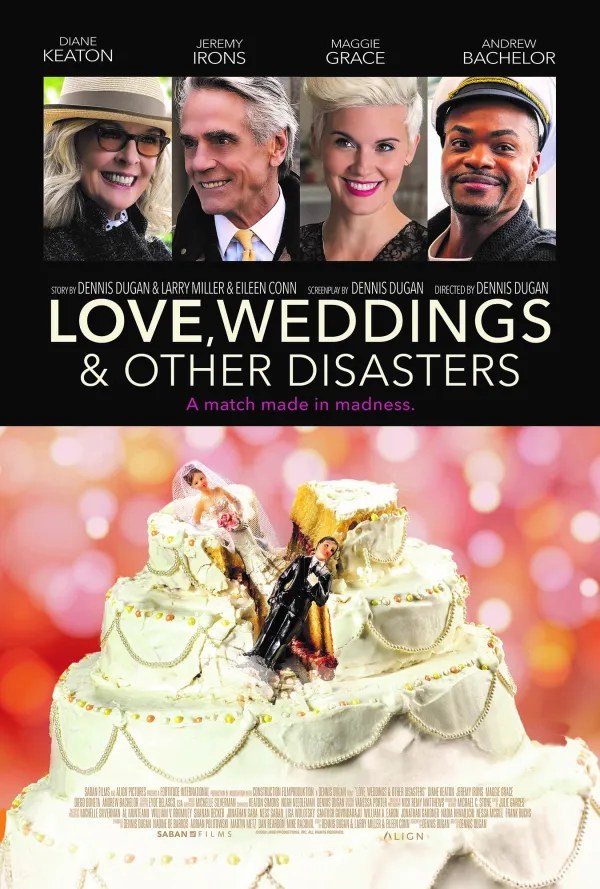
Director/co-writer/co-star Dennis Dugan’s Love, Weddings & Other Disasters is a mildly amusing romcom mainly distinguished by the presence of two superb thespians: Oscar winners Diane Keaton (she was awarded the Best Actress Academy Award for 1977’s Annie Hall and of course starred in many other Woody Allen classic comedies) and Jeremy Irons (1990’s Reversal of Fortune, for which he scored that coveted golden statuette for Best Actor). The proverbial curtain lifts on Disasters with an eye-grabbing, death defying opening reminiscent of James Bond films, as well as with a knowing wink to the movie’s title. However, the aptly named Disasters rapidly descends downhill from there, literally (if you watch this flick you’ll see what I mean, but I don’t want to commit that critical capital offense of plot spoiling).
Image

I’ve been a movie fan since childhood and by the time I got to Manhattan’s Hunter College, I’d already seen countless pictures. Majoring in cinema there I devoured copious amounts of cinematic offerings, and then as a professional critic and film historian I’ve gone on to watch an incalculable number of movies. I mention this because there are scenes in writer/ director Sergei Loznitsa’s Donbass – for which he was awarded the Cannes Film Festival’s “Un Certain Regard” accolade – that in all likelihood I’ve never ever seen before on the silver screen.
Image

Stand!, a new movie musical about a general strike that took place a century ago, may be more timely than ever, as American unions consider staging industrial actions to oppose any attempt by Trump to seize power. (See: https://inthesetimes.com/article/labor-unions-general-strike-trump-2020?link_id=3&can_id=253721911aaf5ea03cd942a989a6a0c5&source=email-we-wont-let-him-unions-nationwide-are-planning-a-general-strike-if-trump-tries-to-steal-the-election&email_referrer=email_988903&email_subject=we-wont-let-him-unions-nationwide-are-planning-a-general-strike-if-trump-tries-to-steal-the-election.)
Image
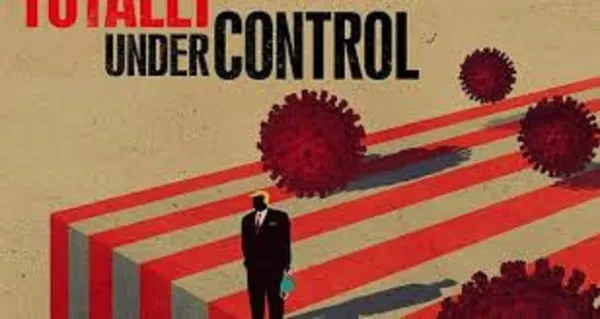
NEON is making Totally Under Control available for free today through election, and hosting various watch parties including one with Judd Apatow and the filmmakers tomorrow.
You can also download a brand new poster here: https://we.tl/t-eJHFRsanJH
NEON’s Documentary About the White House’s Failed Response to the Pandemic Was Just Nominated for 4 Critic’s Choice Documentary Awards
Image
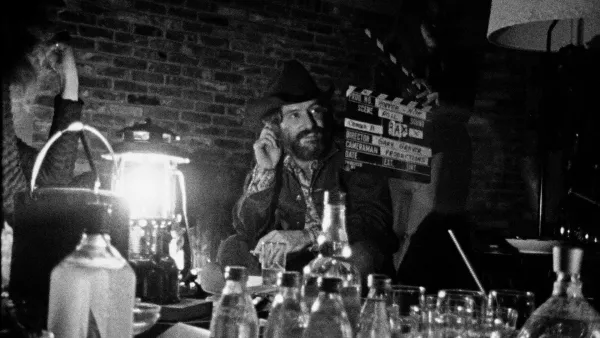
The documentary Hopper/Welles, which screened at the 34th annual AFI Fest (https://fest.afi.com/), is to film history what 1989’s When Harry Met Sally… is to romcoms. It consists of a conversation/interview between two renegade actor/directors who made touchstone movies but were nevertheless Hollywood outcasts. Following a stunning career as a radio and Broadway wunderkind, Orson Welles starred in, co-wrote and directed his first Hollywood feature when he was only 25. That 1941 masterpiece Citizen Kane scored the Best Writing, Original Screenplay Oscar for Welles and Herman Mankiewicz and received eight more nominations, including in the Best Picture, Best Director and Best Actor Academy Award categories. But as far as the Tinseltown studio system went, it was all downhill from there in terms of directing for RKO, et al, for poor Orson.
Image

I would like to announce the publication of a new book, which discusses the question of how oligarchs maintain their grasp on an excessive share of wealth and power when, as Shelley pointed out, the have-nots are many, while the power-holders are few.
http://eacpe.org/app/wp-content/uploads/2020/10/Ye-are-Many-They-are-Few-by-John-Scales-Avery.pdf
The Peterloo Massacre
Rise, like lions after slumber
In unvanquishable number!
Shake your chains to earth like dew
Which in sleep had fallen on you:
Ye are many, they are few!