
The Free Press is bringing back a Reviews section after some absence. We hope to review plenty of events around town. Check back frequently and if what\'s going on is any good.
Arts & Culture
Image

The 35th Los Angeles Asian Pacific Film Festival, which runs from May 2-10 mostly at Downtown L.A. venues, focuses on features, shorts and documentaries from and about Asia and the Pacific Islands. LAAPFF is presented by Visual Communications, which, according to VC’s mission statement “is the first non-profit organization in the nation dedicated to the honest and accurate portrayals of the Asian Pacific American peoples, communities, and heritage through the media arts… Our mission is to develop and support the voices of Asian American and Pacific Islander filmmakers and media artists who empower communities and challenge perspectives. ” (See: https://vcmedia.org/.)
Since I specialize in the screen image of Polynesians, Micronesians and Melanesians and have co-authored three movie history books about Pacific Islanders in the cinema and on TV, my LAAPFF coverage zooms in productions made by and/or about Oceania and its people.
Image
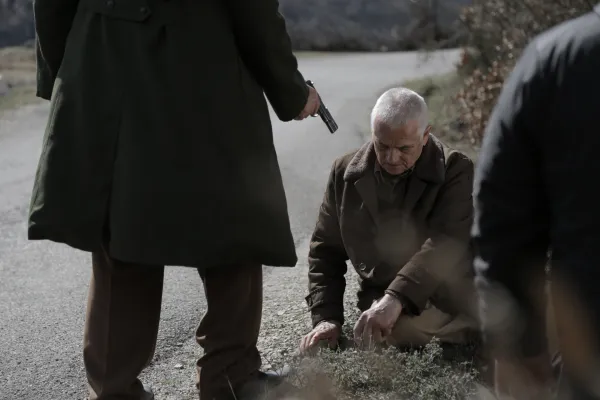
Bujar Alimani’s award-winning The Delegation is set in 1990 Albania.
The 77-minute feature opens at a Gulag-like camp for political prisoners. Televised propagandistic news watched by the inmates reveals that this is a time of great change for the hard-line Stalinist nation. The following morning bearded dissident professor Leo (Viktor Zhusti), who has been serving a 16 or so year sentence as a supposed enemy of the people and has never met his teen aged daughter, is awakened by guards, shaved and transported to the capital. The true purpose of Leo’s summoning via an arduous jeep journey through the mountainous nation to Tirana eventually unfolds - and turns out to be of international significance.
Like most of the other countries participating in the South East European Film Festival Albania was located behind what we Yankee Doodle Dandies blithely called “the Iron Curtain.” However, unlike, say Romania, Bulgaria, Hungary or Poland, Albania was a lapsed member of the Warsaw Pact (Tirana withdrew from that military alliance in 1968), while former Yugoslavia never joined this East Bloc treaty largely designed to counter NATO.
Image
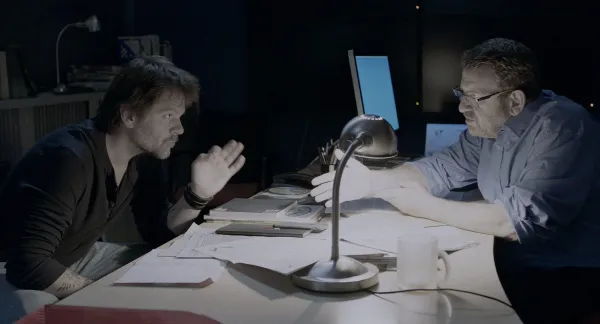
Most film festivals are categorically determined - by the type of production (Toronto’s Hot Docs only showcases nonfiction films); genre (TCM Classic Film Festival screens vintage pictures); time
(LA Shorts International Film Festival won’t show feature-length movies); and perhaps most importantly, by subject matter (the Pan African Film Festival highlights Black-themed works). The South East European Film Festival mainly focuses on those countries that were formerly part of the so-called “Iron Curtain,” as well as former Yugoslavia.
Image

May Day seems like an auspicious time to release director/co-writer/ co-producer/co-cinematographer Rachel Lears’ Sundance award-winning documentary Knock Down the House, which focuses on the primary challenges of four left-leaning women taking on establishment politicians in 2018’s Democratic primaries. Lears selected so-called “insurgents” who were backed by the liberal groups Justice Democrats and Brand New Congress, Political Action Committees that supported candidates who refused corporate and lobbyist funding.
Image

NASHVILLE: PLOT SPOILER ALERT!!!
After viewing Father Goose at the TCM Classic Film Festival I decided to watch Nashville, which was also being screened in the Chinese Multiplex #1 and was filled with theatergoers. I hadn’t seen Robert Altman’s magnum opus again since its 1975 release. I stumbled upon Jeff Goldblum and other cast members as they entered the roomy theater and upon recognizing Keith Carradine, I declared: “Preacher Casy rules!” Of course, this referred to Keith’s father, the great character actor John Carradine, who perfectly depicted the clergyman-turned-union-organizer in John Ford’s 1940 classic adaptation of John Steinbeck’s Dustbowl and beyond masterpiece, The Grapes of Wrath.
Image
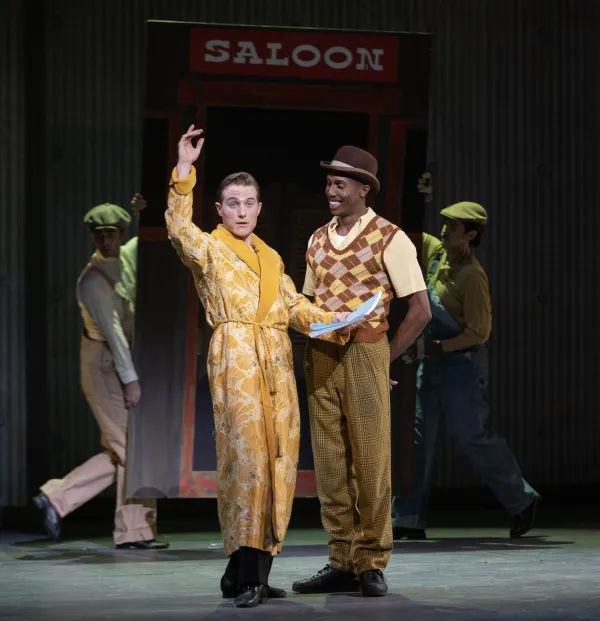
Premiering as it did hard on the heels of the annual TCM Classic Film Festival, the must-see musical Singin’ in the Rain live onstage now at the La Mirada Theatre for the Performing Arts is like a delicious dessert conjured up by a three-Michelin star chef following an exquisite five course meal. This theatrical production is adapted by Betty Comden and Adolph Green from the book of their 1952 screen masterpiece starring Gene Kelly, Debbie Reynolds and Donald O’Connor, also with music by Nacio Herb Brown and lyrics by Arthur Freed (the theatre iteration opened in the 1980s on West End and Broadway stages).
Image

Monty Python collaborator Terry Gilliam’s The Man Who Killed Don Quixote falls into an interesting motion picture category. Cinematic lore includes a sort of subgenre of “difficult” films often made by powerful directors seeking to impose their exacting, iconic, auteurish visions on studios, audiences, critics, etc. During the silent screen era the original uncut versions of D.W. Griffith’s 1916 Intolerance and Erich von Stroheim’s 1924 Greed reportedly unspooled with hours of endless footage. Sometimes these demanding directors’ dreamt-of masterpieces went unfulfilled - von Stroheim never completed his 1932 Queen Kelly starring Gloria Swanson (although, strangely, scenes from it are glimpsed in Billy Wilder’s 1950 Sunset Boulevard, where a washed up von Stroheim portrays the chauffeur Max, ex-star Swanson’s onetime helmer).
Image
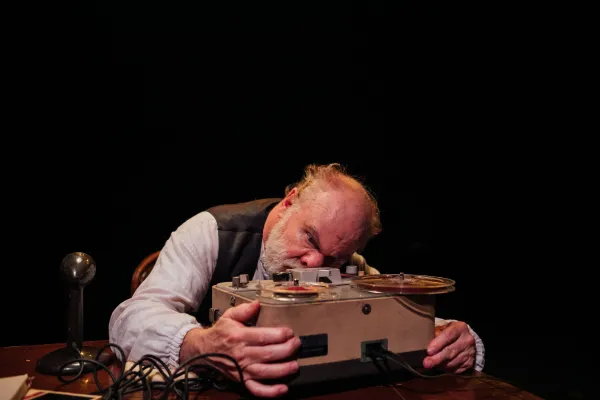
The Actors’ Gang’s One Act Festival includes a show featuring two one-act plays by 20th century maestros of the avant-garde stage. Irish bard Samuel Beckett was a pioneer of the Theatre of the Absurd and best known for his late 1940s masterpiece Waiting for Godot. Written and performed about a decade later, Krapp’s Last Tape is a one-hander starring the ineffable Steven M. Porter, a 30-year stalwart of The Gang.
[NOTE: This review may contain plot spoilers.]
As the United Kingdom is embroiled in the Brexit imbroglio about Britain leaving the European Union, two Brits living on the Continent ponder returning to not-so-Merry-Olde-England. Alice (Miranda Wynne) and Fiona (Ashley Romans) are expats who have been living in the Dutch titular port city, Rotterdam, and as the rest of the U.K. struggles with the Brexit divorce from the EU (which goes completely unmentioned in Jon Brittain’s two act play - perhaps because the characters are too obsessed by their own personal problems to give a tinker’s damn about what’s happening in, like, you know, Earth?), they are contemplating the return of the “natives.”
Image

Disclaimer: I am not a dance critic nor do I play one on TV (I usually appear as a film historian and critic, which is what I am). So minus this training, you can take my two cents worth for what it’s worth. My personal main interest is that the Malpaso Dance Company is from Cuba, that little country that can, and my long standing interest in that island nation.
As limited private enterprise comes to what is no longer “Castro’s Cuba” (per se), the Malpaso Dance Company moved away from state subsidies and independently formed in 2012 (hence the name “Malpaso”, which means “misstep”). According to press notes, the contemporary dance troupe of 11 hoofers is among the Caribbean country’s “hottest,” combining various dancing styles, including modern, ballet, jazz and urban.
The dancers presented four numbers in a short program of only about 90 minutes, including intermission, at the Wallis Annenberg. The music was presumably taped and the set bare - I suppose 60 years of imperialist embargo and little or no state funding will do that to your budget.