
The Free Press is bringing back a Reviews section after some absence. We hope to review plenty of events around town. Check back frequently and if what\'s going on is any good.
Arts & Culture
Image
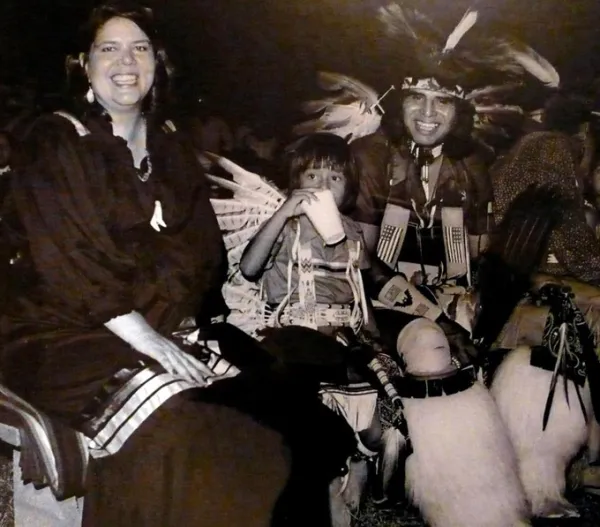
Native director Valerie Red-Horse Mohl’s well-made Mankiller was my favorite film at LAFF this year. Standing Rock has propelled American Indian issues to the forefront - for instance, Paiute/Shoshone helmer Myron Dewey co-directed Awake, A Dream From Standing Rock with Oscar nominee Josh Fox. Mankiller is a new documentary about the first female Principal Chief of the Cherokee Nation (ironically, the liberal Democrat reached that pinnacle due to Pres. Reagan’s appointment of her running mate to the Interior Department).
The Oklahoma-born Wilma Mankiller cut her political teeth at the famous Alcatraz Occupation that began in 1969 and Jane Fonda participated in. As the Cherokees’ elected leader Mankiller achieved many reforms, including spurring tribally-owned businesses, various self-development projects and indigenous self-government initiatives. The doc also considers the highly contentious casino issue. In 1998 Pres. Clinton awarded Mankiller the Medal of Freedom and when she passed away in 2010 Pres. Obama issued a moving statement.
Image

It’s June in L.A., so that can mean only one thing (besides “June gloom,” that is): Hollywood Fringe Festival is taking place through June 25! This year, 2,000 performances and 375 (count ’em!) different shows are being staged - and dare I say, upstaged - in various venues across Hollywood and West Hollywood. As Hamlet (who but of course presented his own unauthorized play) put it: “There are more things in heaven and earth, Horatio, Than are dreamt of in your philosophy.”
According to the Fringe’s ambitious, 226 page program: “The Hollywood Fringe Festival is an annual, open-access, community-derived event celebrating freedom of expression and collaboration in the performing arts community… Participation in the Hollywood Fringe is completely open and uncensored. This free-for-all approach underlines the festival’s mission to be a platform for artists without the barrier of a curative body. By opening the gates to anyone with a vision, the festival is able to exhibit the most diverse and cutting-edge points-of-view the world has to offer.”
Los Angeles, June 15, 2017 – The Los Angeles Workers Center and Hollywood Progressive co-present the revolutionary classic Arsenal.
Image

Like many black people, I grew up knowing families in which the color of everyone’s skin was different, sometimes dramatically so. I also have people in my own family on both sides who at first glance, appear to be white, but who identify and were reared as black. There are six interracial marriages in my generation–I’m a Baby Boomer–and five of the couples have children and grandchildren, so clearly this will be our reality for some time to come.
As I was growing up I also learned the color descriptors—high yellow, cinnamon, red bone, coffee colored, blue black—the jump rope ditties, and was aware of the advantages light skin and “good” hair can present for black people. I didn’t dwell on it, though, and except for the occasional jokes about “must have been the milk man,” no one I knew did either.
Image
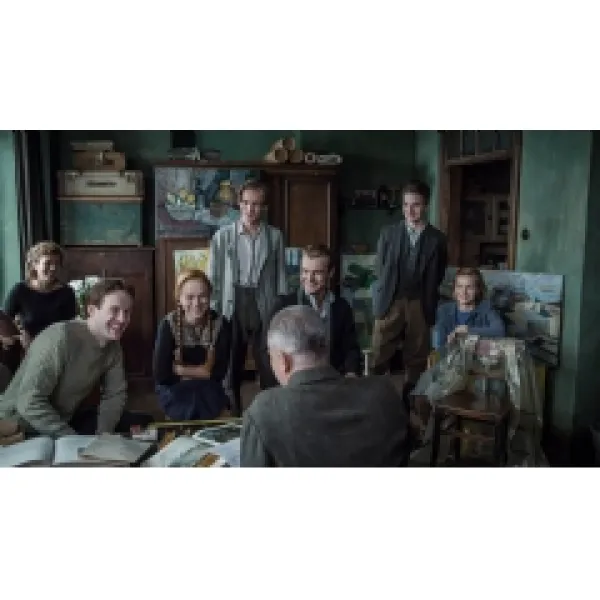
Filmmaker Andrzej Wajda was to Poland what Sergei Eisenstein was to the USSR - and, arguably, what Carl Yastrzemski was to the Boston Red Sox. Along with Roman Polanski’s early work, Wajda’s famed 1950s World War II-era trilogy about Polish partisans battling the Nazis - A Generation, Kanal, Ashes and Diamonds - put Poland on the world cinema map. He won an Honorary Oscar in 2000 and died last October at age 90 after making movies for more than 60 years.
Like “Yaz,” Afterimage hits a homerun. Poland’s official entry for the Best Foreign Language Film to the 89th Academy Awards is a biopic about that Eastern European nation’s greatest 20th century painter Władysław Strzemiński (Boguslaw Linda), a constructivist contemporary of Malevich, Kandinsky and Chagall. With this talent, Wajda found a subject through which he could express his credo as an artiste - and criticism of Stalinism.
Image
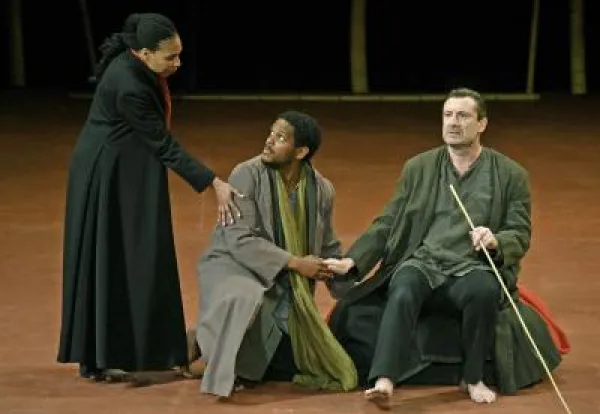
Peter Brook directed the 1960s stage and screen versions of Peter Weiss’ Marat/Sade, which is arguably the 20th century’s best post-Brecht political play. Marat/Sade left an indelible impression on me - I can still remember some of the drama’s searing dialogue and its depiction of French Revolutionary Jean-Paul Marat as the totally devoted “friend of the people” remains very moving. Around the same time I saw Marat/ Sade I also viewed and was greatly influenced by Spanish surrealist director Luis Bunuel’s Belle de Jour, written by his frequent collaborator Jean-Claude Carrière. (The fact that this recipient of 2014’s Lifetime Achievement Academy Award does not receive a blurb in Battlefield’s program is a woefully grievous omission.)
Image
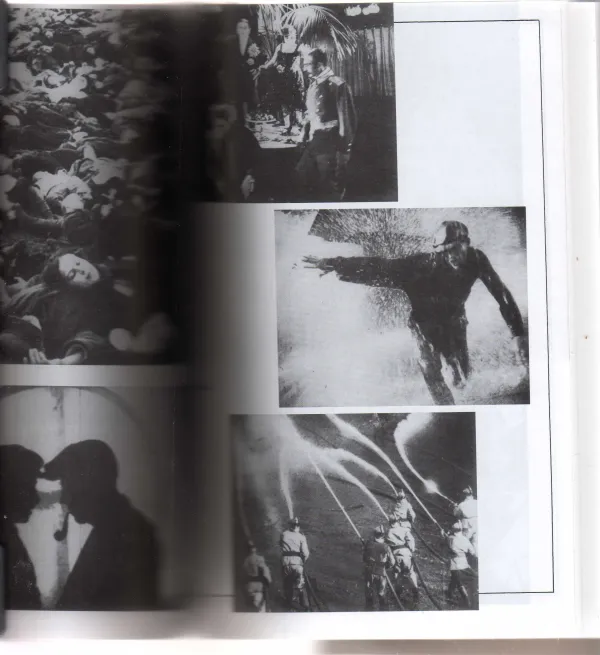
TEN FILMS THAT SHOOK THE WORLD,
A Cinematic Centennial Celebration of the Russian Revolution Presents
Sergei Eisenstein’s Debut Film: STRIKE / STACHKA
Los Angeles, March 13, 2017 – The Los Angeles Workers Center and Hollywood Progressive co-present the revolutionary classic Strike.
Image

I recently reviewed Rajko Grlić’s The Constitution, the gala screening that launched the 12th annual South East European Film Festival, writing that the Croatia-set movie “reminded me of the joy of discovering those ‘foreign’ films by Luis Bunuel, Francois Truffaut, Ingmar Bergman, Jean-Luc Godard, et al, at an arthouse that transported us beyond Hollywood glitz and glamour to a more ‘sophisticated’ cinematic view of the world beyond our shores.” I also felt this way after seeing Danish director/co-writer Thomas Vinterberg’s Copenhagen-set The Commune (Kollektivet) - although it’s not nearly as good or as much fun as the all-too-human The Constitution.
Scandinavian cinema is a sub-set of the foreign film phenomenon. On the one hand, you have the philosophical introspection into the human condition of Bergman, his fellow Swede Victor Sjöström and Denmark-born Carl Theodor Dreyer, who confront the void and ask: “What’s it all about, anyway?”
Image
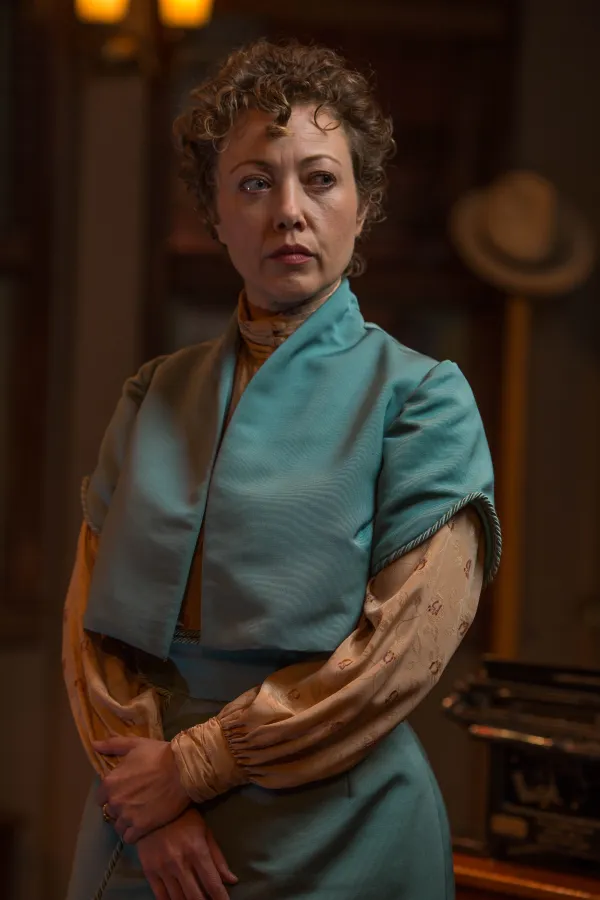
One of the wonderful things about the page, stage and screen is how they can introduce us to historical figures and eras, often long ago and far away. This week is your last chance to spend an evening with W.E.B. Du Bois (Ben Guillory) - or as close as one can get to meeting this Civil Rights giant more than a half century after his death (Roy Wilkens announced Du Bois’ demise during 1963’s famed “March on Washington”). And at its best, witnessing the West Coast premiere of Dr. Du Bois and Miss Ovington in the intimate setting of the Los Angeles Theatre Centre complex’s Theatre 4 is like being in the presence and company of the brilliant (he was the first Black to earn a Ph.D. from Harvard) anti-racist leader (circa 1900 Du Bois and Booker T. Washington were the most prominent African Americans) and author of the 1903 classic The Souls of Black Folk and the pacifist, suffragette and socialist Mary White Ovington (Melanie Cruz, who appeared in productions such as the HBO series Big Love).
Image

Set against the backdrop of the United Farm Workers’ struggle, the best thing about playwright/director Diane Rodriquez’s The Sweetheart Deal is its dramatization of how being a part of a movement affects a couple. Mari (Ruth Livier) and Will (Geoffrey Rivas) are middle-aged married Chicanos originally from California’s agricultural region who long ago moved to the big city of San Jose. Using the G.I. Bill, Will parlayed his service as a lackey of U.S. imperialism during the Korean War into earning a B.A. This enabled the college grad to get a decent job editing a mediocre newspaper and raise his family with a comfortable middle class lifestyle. (Of course, for many university graduates drowning in student loan debt today, the notion of getting a well paying job upon earning one’s diploma is a quaint fairy tale.)