The Free Press is bringing back a Reviews section after some absence. We hope to review plenty of events around town. Check back frequently and if what\'s going on is any good.
Arts & Culture
Image

Dr. Bob Fitrakis reviews the film; Detroit (2017); Amidst the chaos of the Detroit Rebellion, with the city under curfew and as the Michigan National Guard patrolling the streets, three young African American men were murdered at the Algiers Motel.
Bob shares his personal experiences growing up in the middle of that conflict, and what he saw during the riots depicted in the film.
Image

This week marks the third anniversary of the 2014 police shooting of unarmed African American teenager Michael Brown in Ferguson, Missouri. Whose Streets? the new documentary about that killing and the resulting civil unrest, is being released Aug. 11 in St. Louis, New York and Los Angeles. The young co-directors Sabaah Folayan of L.A. and Damon Davis of St. Louis are both Black and provide an insider, African American perspective in this hard-hitting nonfiction film with its “you are there,” street-level cinematography.
Image

Yes, I’m going to tell you what’s missing from this film without watching the film. Trump has, as promised, made me so sick of winning that I really could enjoy watching a defeat film, but I think I’ll pass. If I’m wrong about what’s missing from it (I mean one of the many things that are, no doubt, missing from it), I promise that I will eat an entire plan for victory in Afghanistan annually for the next decade.
One of the oddest things about World War II is how it has been marketed as a humanitarian war since the moment it ended.
One reason this is odd is that several times the number of people killed in German concentration camps were killed outside of them in the war (at least 50 million worldwide vs. 9 million killed in the camps). And the majority of those people were civilians. So a war against killing people in camps would be a very strange way to understand World War II, unless killing many more people can be made an acceptable means of opposing killing people. The scale of the killing, wounding, and destroying made WWII the single worst thing humanity has ever done to itself in any short space of time.
Image
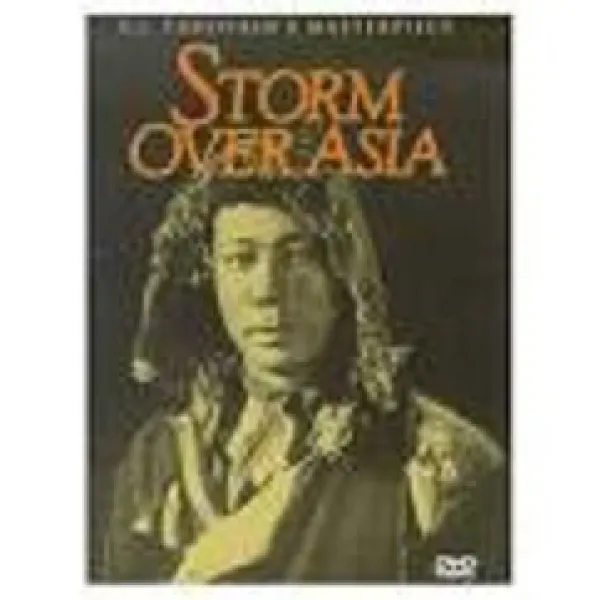
Los Angeles, July 16, 2017 – The Los Angeles Workers Center and Hollywood Progressive co-present the revolutionary classic Storm Over Asia.
Unlike most Bolshevik silent movies that take place in the European parts of the Soviet Union, V.I. Pudovkin’s 1928 Storm Over Asia is set in Mongolia, where it was shot on location, along with filming in Siberia. The sprawling saga occurs during the Russian Civil War and depicts a forerunner of Third World liberation movements, as Asians fight Western imperialists. This far out Far East classic has the epic sweep of future big screen extravaganzas with casts of thousands, and is arguably a Soviet Spartacus or Braveheart.
Image

Eric Blau and Mort Shuman’s 1968 Off-Broadway hit Jacques Brel is Alive and Well and Living in Paris is now alive and kicking in L.A. at the Odyssey Theatre. The current show consists of four gifted singers/ dancers/actors -Miyuki Miyagi, Susan Kohler, Marc Francoeur and Michael Yapujian - performing on a bare set about two dozen numbers originally created by Belgian singer/songwriter par excellence, Jacques Brel. The quartet is backed by musicians playing bass, percussion, keyboard and guitar.
Brel composed the music and wrote the lyrics for his chansons, most of which he also performed live in cafes, cabarets, concert halls, on albums, films and TV, although other top talents also covered his oeuvre - Ray Charles, Judy Collins, John Denver, Nina Simone, David Bowie, Andy Williams, Johnny Mathis, Leonard Cohen and Ol’ Blue Eyes himself, Frank Sinatra. Chanson is a lyric driven type of French song that has its origins in the Middle Ages, although the 1929 Brussels-born Brel gave this musical genre his own unique twist.
Image
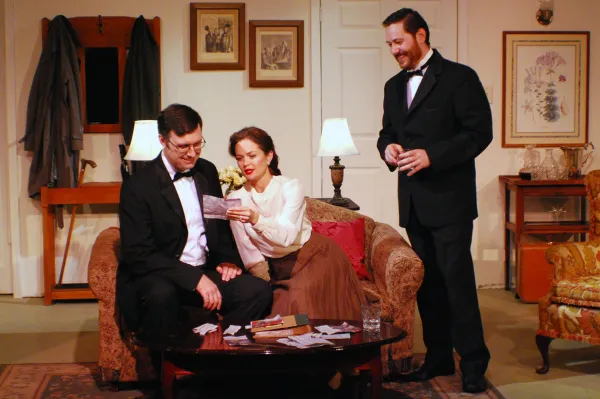
Group Rep’s production of Frederick Knott’s Dial ‘M’ for Murder is an old-fashioned, veddy British mystery. Many theatergoers will consider this murder most foul play to be deliciously enjoyable. But in a day and age of androids and iPhones, et al, which are not dialed, other viewers may find this two hour-long three act play with two intermissions to be outdated and that the actors trod very creaky boards indeed at North Hollywood’s Lonny Chapman Theatre.
[PLOT SPOILER ALERTS!] The complex story unspools in the living room of the London apartment of retired tennis pro Tony Wendice (British actor Adam Jonas Segaller who is appropriately snide and snarky) and his adulterous wife Margot (Australian actress Carrie Schroeder). They are visited by American crime writer Max Halliday (Justin Waggle), with whom posh Margot had an affair. Unbeknownst to the secretive lovers, Tony has found out all about their sordid sextracurricular activities, and he hires a sketchy former classmate, Captain Lesgate (Michael Robb), to liquidate unsuspecting Margot.
Image
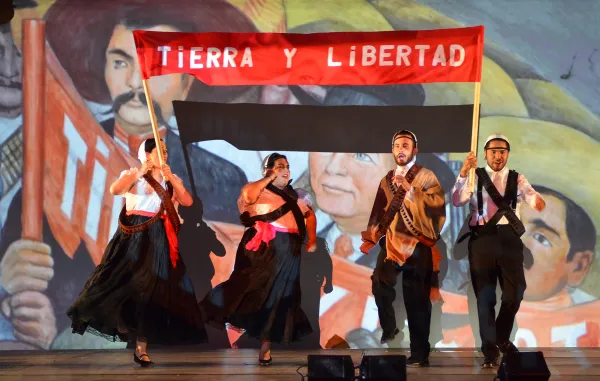
With Robert Xavier Rodríguez’s Frida Long Beach Opera has presented its second socially conscious, 21st century bio-op premiere of the season, solidifying its stature as a cutting edge operatic force to be reckoned with. LBO’s first biographical opera was composer Philip Glass and librettist Rudolph Wurlitzer’s highly critical look at the beloved Walt Disney (baritone Justin Ryan), The Perfect American - who as the scathing opera showed, with flaws and all, was anything but. While the latter enjoyed its U.S. debut at LBO, Frida had its SoCal premiere courtesy of LBO. Interestingly, both of these real life historical figures - animator and theme park innovator “Uncle Walt” and Mexican painter Frida Kahlo (Puerto Rican mezzo-soprano Laura Virella) - are icons in Southern California.
In keeping with its concern for cinema’s and society’s underdogs, LAFF presented a series of “Diversity Speaks” discussions to “shine the spotlight on underrepresented voices” at the Kirk “I’m Spartacus!” Douglas Theatre in Culver City, June 17-18. According to LAFF program notes, they included:
Filmfest’s often include a stinkeroo, and Opuntia is arguably LAFF 2017’s most-must-miss movie. In his defense, writer/director David Fenster’s 60 minute pseudo-doc does have some interesting things about it. Opuntia (which translates as “prickly pear”) is a movie meditation on 16th century Spanish explorer Álvar Núñez Cabeza de Vaca and his peregrinations across much of what whitey now calls America. So viewers can learn a bit of history and particularly, in keeping with LAFF’s multi-culti leanings, about this European’s early contact with our continent’s indigenous people.
Fenster’s film form is also interesting as he attempts to combine the documentary with the poetic in an effort to create what LAFF’s program guide dubs a “visual essay.” But in doing so, Fenster fails to create either a doc per se (although he does use actuality footage) or a motion picture poem. Many of his interview subjects are inherently incredible airy fairy New Age types - to give you an idea of Fenster’s fringe fixations, he previously helmed cinema about Sasquatch called Bigfoot Museum (methinks the name says it all).