
The Free Press is bringing back a Reviews section after some absence. We hope to review plenty of events around town. Check back frequently and if what\'s going on is any good.
Arts & Culture
Image
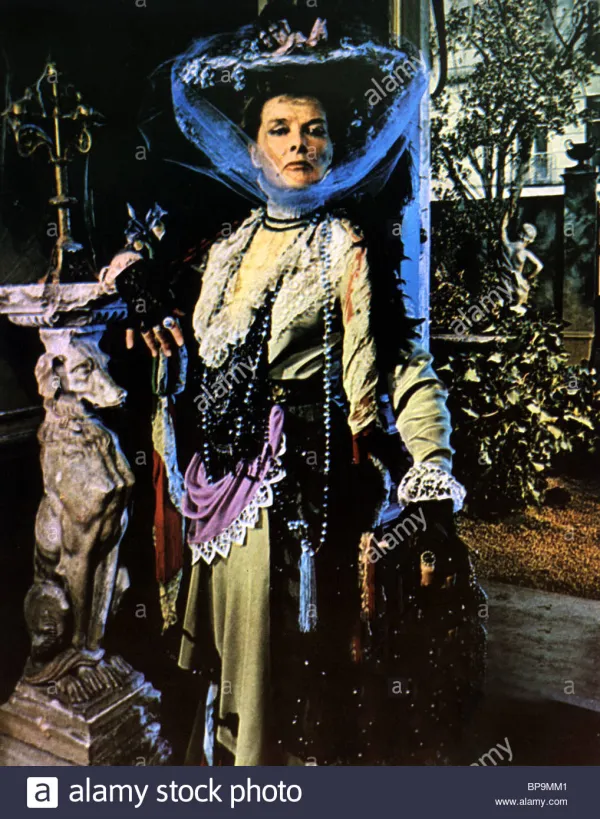
In The Last Tycoon F. Scott Fitzgerald rather famously quipped, “There are no second acts in American lives.” But I’m glad this isn’t true about drama, because I started drifting off during the first act of A Noise Within’s production of Jean Giradoux’s 1943 The Madwoman of Chaillot. I found Act I, which takes place at Angela Balogh Calin’s rather airy set for Café Chez Francis, to be too talky. But I decided to stay for the duration - and ended up being very happy I did, because the second act was quite gloriously delirious.
Image
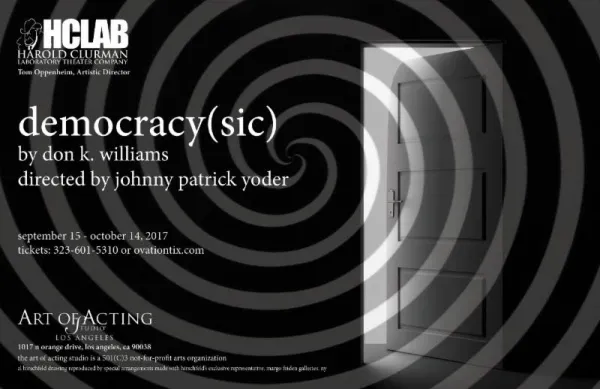
DEMOCRACY (SIC) Theater Review
The Democracy Zone: Theater of the People, By the People, For the People
By Ed Rampell
Don Williams’ com-dram democracy (sic) opens with a movie-like montage, accompanied by a throbbing recorded rock soundtrack and flashing lights designed by the aptly name RAY Jones. (Look closely and you’ll glimpse a red flag with a hammer and sickle in the background.) The rest of this world premiere production presented by the Harold Clurman Laboratory Theater Company at the Art of Acting Studio Los Angeles is also quite cinematic, a fast moving, often comic pastiche with seven filmic vignettes commenting on America’s contemporary political scene (and what a scene the players make!).
Riffing on TV’s famous Twilight Zone anthology supernatural series that debuted on the tube in 1959, hosted and co-written by Rod Serling, Alex Best plays an ersatz Serling who welcomes spectators to a “dimension of imagination” called “the Democracy Zone” - a demented domain that I must say is truly “demo-crazy.”
Image
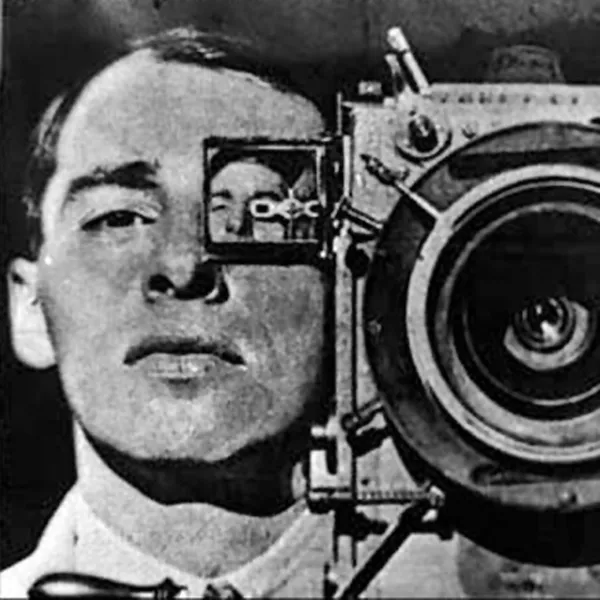
Dziga Vertov’s The Man with the Movie Camera
V.I. Pudovkin’s short Chess Fever
Sergei Eisenstein’s first film Glumov's Diary
Los Angeles, Sept. 15, 2017 – The Los Angeles Workers Center and Hollywood Progressive co-present a triple feature of films by three of Soviet cinema’s greats. These movies show that the Bolsheviks had a sense of humor.
Image
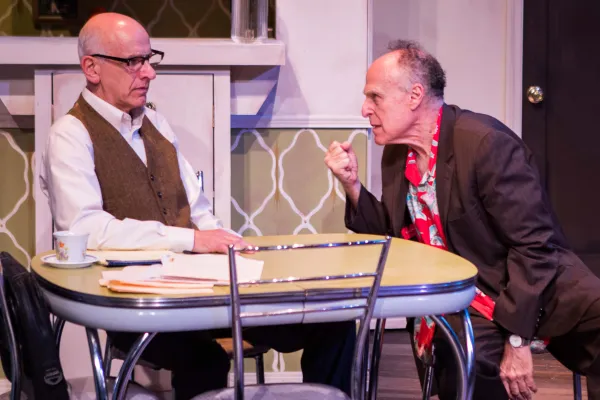
As the Nazis ride again, British playwright Oliver Cotton’s brilliant play Daytona is about how fascism impacts and haunts survivors throughout their lives (and those are the “lucky” ones!) and what may be the first postwar “Antifa” in America. The two-acter opens mundanely enough, with an old married couple practicing for a dance competition in their rather routine, drab Brooklyn apartment, expertly designed with her usual deftness and eye for detail by Hillary Bauman.
But what is about to befall the seventy-something Elli (Sharron Shayne) and Joe (George Wyner) is anything but typical, as out of the blue, the long lost Billy (the peerless Richard Fancy) shows up to upset the proverbial applecart. Billy’s arrival from out of nowhere reminds first Joe and then, in Act II, Elli about who and what they really are and their deep dark past, as long buried secrets are excavated and revealed.
Image
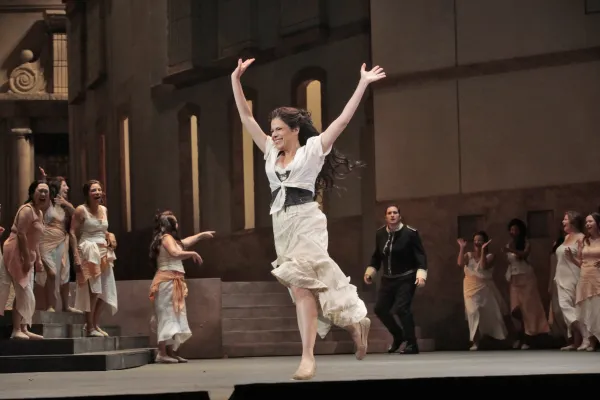
How blessed we Angelenos are: LA Opera’s Carmen is opera at its grandest, right here on Grand Avenue. I was immediately swept away by the opening strains of the “Prelude,” with Georges Bizet’s ebullient sounds as frothy as wave rolling ashore at Malibu or Makapuu in Oahu. When James Conlon strode up to conduct the 61-piece LA Opera Orchestra to launch his 10th year wielding the baton at the Dorothy Chandler Pavilion and LA Opera’s glorious new season, the sold out crowd erupted in applause, chanting: “Connie! Connie! Connie!” (Okay, so that’s a total lie about the shouts - but not the clapping, although I imagine many of us did indeed feel like calling out the maestro’s moniker in acclaim.)
Image
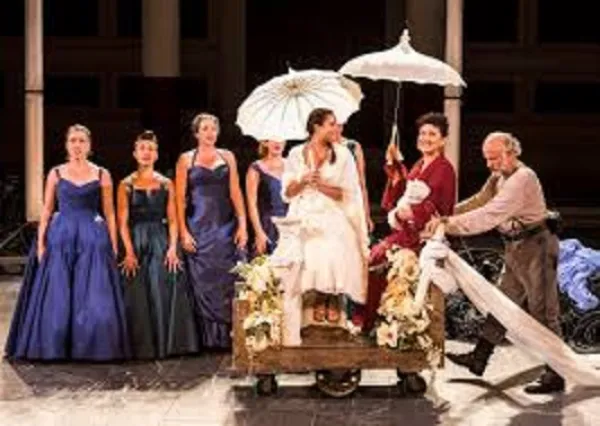
The Greek tragedian Euripides’ rumination on war, Iphigenia in Aulis, is the Getty Villa’s annual outdoor classical theater production reviving a Greek classic at the Malibu amphitheater. Iphigenia was first performed posthumously in 405 BC at an Athens amphitheater with 20,000 seats. Iphigenia won ancient Greece’s equivalent of the Tony or Ovation Award at the city state’s Dionysia festival.
Unfortunately, the Iphigenia production at the 500-ish seat outdoor Barbara and Lawrence Fleischman Theater at the Getty Villa remains startlingly relevant. Iphigenia is set against the background of the Trojan War, which according to legend was triggered by Paris running off with the beautiful Helen, wife of the Spartan king Menelaus (Michael Huftile). His brother Agamemnon (Mark Montgomery) is the leader of the Greek forces that have assembled at Aulis to set sail with a formidable fleet to recapture Helen of Troy. However, the Greek god Artemis has conspired to prevent this from happening - unless Agamemnon commits an unspeakable act as a sacrifice to the gods.
Image

As her hometown is devastated by Hurricane Harvey, A Night With Janis Joplin, featuring Port Arthur’s most famous “native” daughter, has blown into the Laguna Playhouse. This isn’t a bioplay, as Kelly McIntyre belts out the raspy-voiced Texan’s tunes, accompanied by a rocking eight piece band performing many of Joplin’s greatest hits. Instead of a plot on Brian Prather’s nightclub-like set McIntyre delivers a series of rambling ruminations on fame, fortune, life, etc., in between songs.
I saw Janis perform live twice and McIntyre does a creditable job incarnating the singer - her swagger, swigs, twang and tonality. Like Joplin, the lead performer is not a conventional beauty, although both certainly had/have their own appeal. Costume designer Amy Clark cloaks McIntyre and the other singers with the period panache of sixties’ psychedelic spectacle. Most importantly, McIntyre holds her own with her vocals, which range from angsty to poignancy.
Image
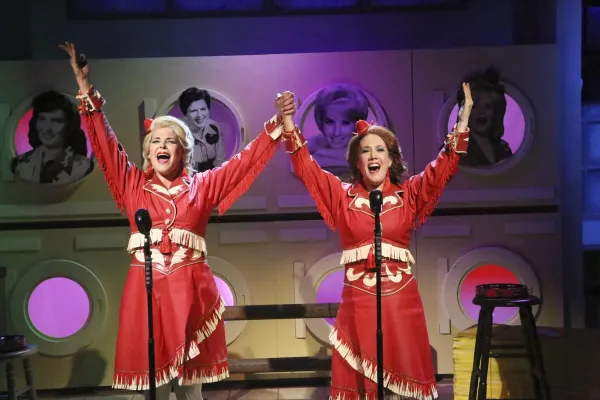
Playwright/director Roger Bean’s Honky Tonk Laundry is like a dramatization of a Country Western song: A hard luck tuneful tale featuring brokenhearted Southerners who are no longer (if they ever were) the belles of the ball, brought to the live stage. Unfortunately all of the music is canned, and most if not all of the songs are CW or perhaps pop standards, such as Tammy Wynette’s “Stand By Your Man.” However, to be fair, the singing that accompanies the plus-one soundtrack warbled by Bets Malone (as Lana Mae Hopkins, owner of the Wishy Washy Washateria) and Misty Cotton (as employee/co-singer Katie Lane Murphy) and their hoofing choreo-ed by James Vasquez is often enjoyable.
Image
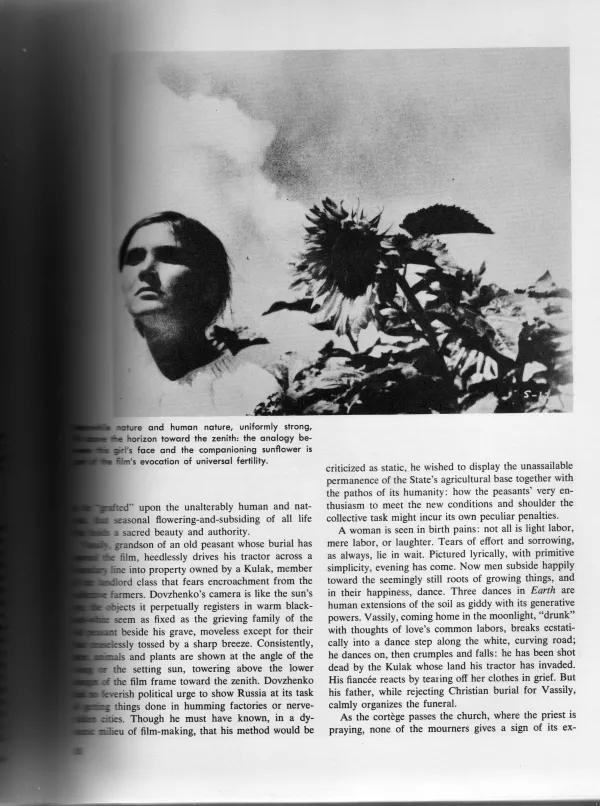
Los Angeles, Aug. 19, 2017 – The Los Angeles Workers Center and Hollywood Progressive co-present the Ukrainian revolutionary classic Earth (Zemlya).
Aleksandr Dovzhenko’s revolutionary masterpiece Earth is about class struggle in a rural Ukrainian village, pitting poor peasants against “kulaks” (rich landowners). Class conflict erupts after the Bolsheviks make a tractor available to the underdeveloped farmers as a harbinger of the socialist future.
Under Dovzhenko’s lyrical direction, Danylo Demutsky’s stunning cinematography captures on celluloid indelible images and scenes. The poetic pictures pairing peasants with sunflowers are simply unforgettable, expressing the oneness of the farmer with the land which the Revolution is giving those who till ownership of. Earth’s sequence where the tractor needs water and how the menfolk solve the problem is amusing and - well - earthy.
Image
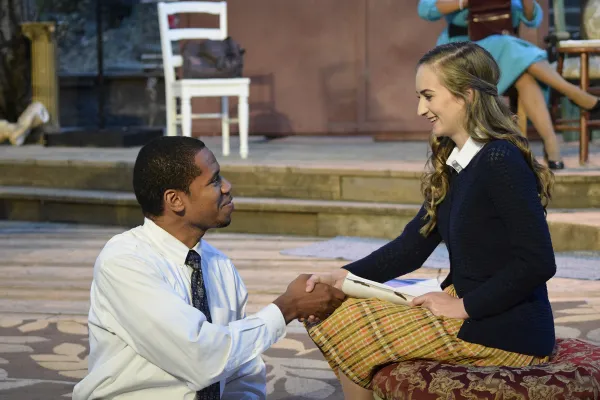
The Will Geer’s Theatricum Botanicum production of Alice Childress’ Trouble in Mind came to me as a theatrical revelation. It is a classic “the worm turns” tale: Manners (Mark Lewis) is a big shot white liberal Hollywood producer who is making his Broadway stage debut in order to make “serious art” with a play-within-the-play (likewise written by a Caucasian). Manners sincerely believes it’s a powerful, searing social statement about and indictment of racism. Trouble, which is set in the 1950s, also hints that Manners may have fled Tinseltown to escape what is euphemistically called “the investigation”: the Hollywood Blacklist and House Un-American Activities Committees’ purging of so-called subversives (like WGTB founder Will Geer, who was blacklisted).
Willetta (the venerable Earnestine Phillips) plays an African American actress who, in scene one, Act I, seems to pooh-pooh the notion of theater as high art with a mission, as advocated by enthusiastic Broadway newcomer John (Max Lawrence who also does a superlative job portraying the workaholic steed Boxer in WGTB’s Animal Farm).