
The Free Press is bringing back a Reviews section after some absence. We hope to review plenty of events around town. Check back frequently and if what\'s going on is any good.
Arts & Culture
Image

Britain’s Kneehigh theatre company is back for its third Beverly Hills foray at the Wallis Annenberg Center for the Performing Arts, presenting an impressionistic bio-play about Russian Jewish painter Marc Chagall (Marc Antolin) and writer Bella Rosenfeld (Daisy Maywood). They are the eponymous couple depicted in playwright Daniel Jamieson’s two-character The Flying Lovers of Vitebsk. Unlike director Emma Rice’s two previous Kneehigh Productions at the Wallis, Noël Coward’s Brief Encounter and 946: The Amazing Story of Adolphus Tips, Lovers is much less full-throated and ambitious.
Image

The Feb. 8-19 Pan African Film Festival’s 26th annual extravaganza of Black-themed fiction, documentary, animated and short productions, workshops, panels and art expo was arguably one of its best fetes. Once again, PAFF presented Angelenos and aficionados with the opportunity to see on the big screen at Cinemark Baldwin Hills Crenshaw Plaza movies that most film fans may otherwise not get a chance to watch. At the same time, filmmakers from around the world had the opportunity for their films to be shown in L.A., arguably the capital of world cinema.
Here’s a wrap up of the other works I saw at PAFF 2018:
Image
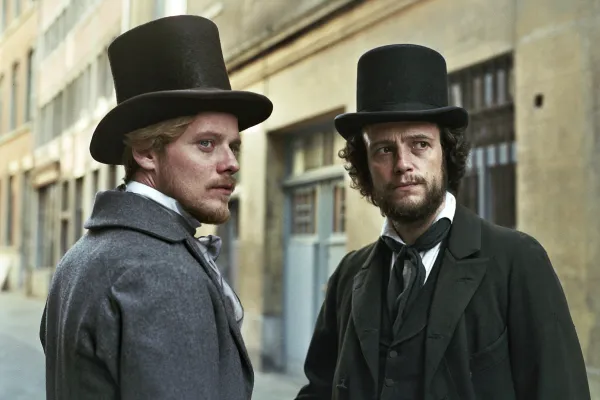
Haitian director/co-writer Raoul Peck’s well-made The Young Karl Marx is one of the most significant biopics in cinema history and arguably among the genre’s best. As the 200th anniversary of the birth of communism’s co-founder approaches, Peck has beautifully dramatized Marx’s life during the 1840s as a 20-something lover, writer, husband, philosopher, father, journalist, friend and above all, revolutionary. Berlin-born actor August Diehl (Quentin Tarantino’s 2009 Inglourious Basterds) delivers a moving, truthful performance as the thinker whom - as this movie reveals - was also a man of action.
Image
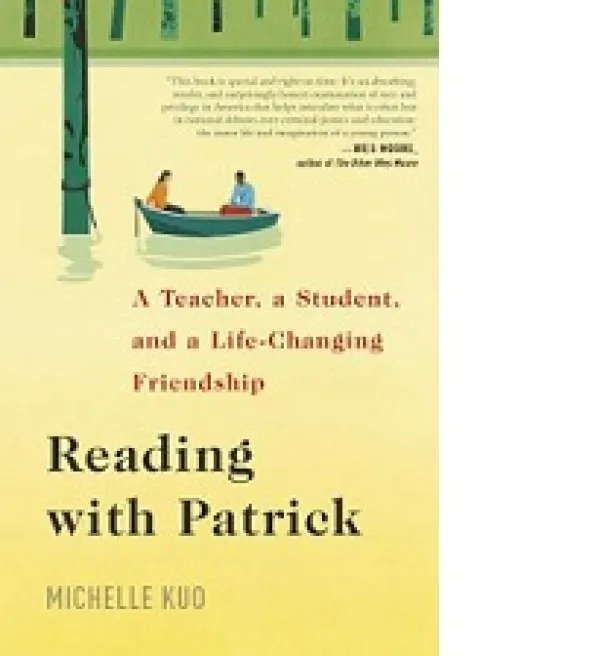
I loved school from the minute I set foot in kindergarten. Blessed with two older sisters who brought home their schoolwork and parents who read, I was an apt and eager pupil when my older sister, Marva, taught me to read when I was four. (Since she is five years older, I’m sure it was under the guise of her babysitting and bossing me around, but who knew?) As someone who has earned a doctorate, is a professor, and a writer, I am convinced that teaching someone to read is the most valuable of gifts. I’ll always be grateful to Marva for it.
I attended Highland Avenue Elementary School here in Columbus, and had the most wonderful third-grade teacher in Carolyn Brunk Keller. The thing I liked most about her is that she loved to read, noticed that I did, too, and gave me every opportunity to do so. After that year, nothing would do but that I had to become a teacher. While I did a number of things before that, I finally landed in my chosen profession, albeit teaching at the college level rather than third grade as I assumed I would. When I saw Reading with Patrick in the book store, I was immediately intrigued.
Image

Mainly due to Warren Beatty’s classic 1967 movie, most film fans know who the “Barrow Gang” was - Bonnie and Clyde Barrow’s band of bank robbing desperadoes who roamed the Midwest during the 1930s. But thanks to the Pan African Film Festival, now I know who Errol Walton Barrow was - the independence leader who became Barbados’ first prime minister. I had never heard of him until I was lucky enough to catch Marcia Weekes’ docu-drama Barrow - Freedom Fighter at a PAFF screening, narrated on and off camera by America’s first Black Attorney General, Eric Holder (who has Barbadian heritage).
Image

Anna Baltzer’s amazing book Witness in Palestine: A Jewish American Woman in the Occupied Territories has been updated over the years, and I’ve just read it for the first time. Rather unfairly, and — as it turns out — wrongly, my first response upon turning the initial pages was: Do we really need another one of these? Jewish person believes pile of myths. Jewish person confronts reality. Jewish person tries to open the eyes of others. It’s become as familiar as “Dog Bites Man.” Couldn’t we all just share one book around instead of everyone writing his or her own, and then pool our money until we can afford a television station so that people can be made to wake up in large numbers?
Image

Those who have been lucky enough to visit the Pacific Islands and to even be blessed by the opportunity to live there (as this “Native” New Yorker was for 23 years) continue to frequently feel the lure of the isles. I still regularly dream of Tahiti, Samoa, Hawaii and Micronesia and am constantly patting myself on the back for having had the foresight at the tender age of 21 to move to Oceania. One way transplanted indigenous and local people, former tourists and residents have for replenishing their roots and love of those far away islands is by attending Pacific-oriented cultural events when they are available.
Image

With the persona of a maniacal Bond villain hell-bent on world domination who’s so unbelievable he’d be more at home in Austin Powers spy spoofs than in the 007 film franchise, Trump is a big, tempting, easy target. He’s a blowhard with perpetual bad hair days who can dish it out but can’t take it, the man you love to hate. Bashing Trump is big business, fodder for hosts of late night shows and comedy clubs, endless cable “news” programs, and along with Alec Baldwin’s impersonations on SNL, he has even spawned entire TV series: Comedy Central’s The President Show (the fate of Anthony Atamanuik’s hilarious send-up currently seems unclear) and Our Cartoon President, exec produced by Stephen Colbert, premiering Feb. 11 on
Showtime. Detractors are also taking shots at the tweeter-in-chief onstage, on the page and in workout videos. Here’s a few recent examples.
Onstage: The Final Frontier: Trump In Space
Image
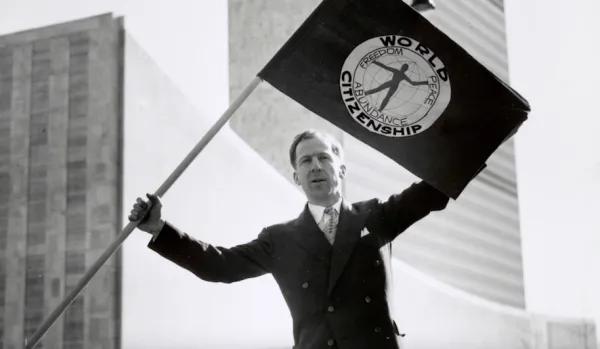
Garry Davis was a young Broadway actor in 1941, an eager understudy for Danny Kaye in a Cole Porter musical called “Let’s Face It” about US Army inductees, when America entered World War Two and he found himself heading for Europe in an actual soldier’s uniform. This war would change his life. Davis’s older brother, also now fighting in Europe, was killed in a naval attack. Garry Davis was flying bombing missions over Brandenberg, Germany, but he could not bear the realization that he was helping to kill other people just as his beloved brother had just been killed. “I felt humiliated that I was part of it,” he later said.
Image
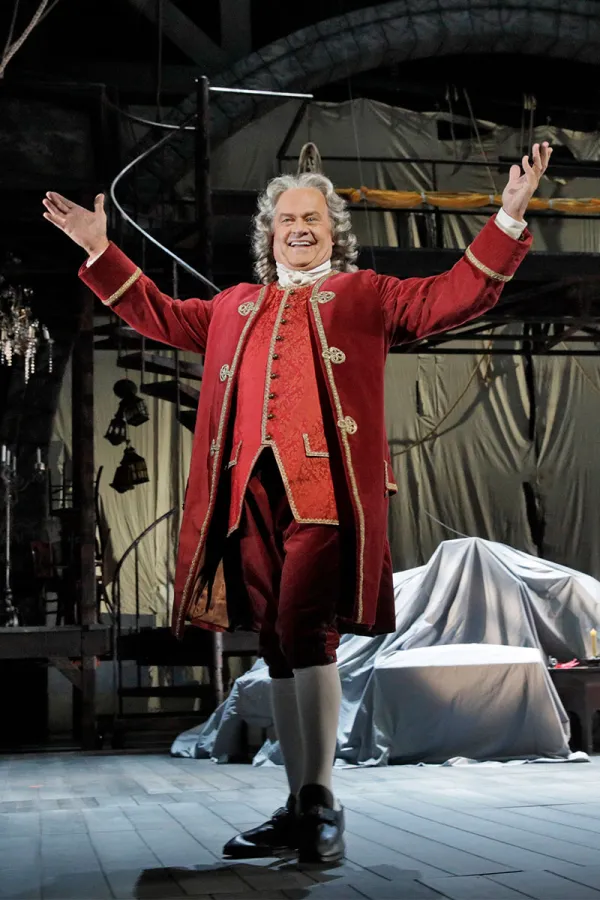
In the history of Western storytelling, along with Homer’s The Odyssey, Frank Baum’s The Wizard of Oz and Jack Kerouac’s On the Road, Voltaire’s 1759 Candide ranks as one of the greatest saga’s ever told about protagonists embarking upon great travels. This is what mythologist Joseph Campbell called The Hero’s Journey, and the 18th century title character Candide’s (Minnesota tenor Jack Swanson) epic gallivanting takes him from Westphalia, in what is now Germany, around much of Europe to the New World, where he experiences Uruguay and the legendary golden realm of El Dorado, and beyond.