
The Free Press is bringing back a Reviews section after some absence. We hope to review plenty of events around town. Check back frequently and if what\'s going on is any good.
Arts & Culture
Image
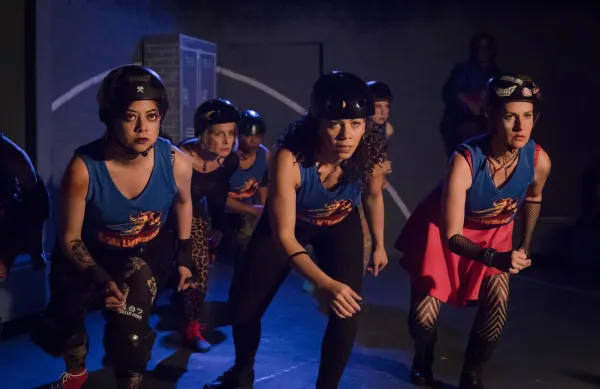
While there have been some roller derby movies, notably in the 1970s with Raquel Welch’s 1972 Kansas City Bomber and the 1975 sci fi pic Rollerball, and more recently with Ellen Page, Drew Barrymore and Juliette Lewis in 2009’s Whip It, this fast moving sport on wheels is a unique, daunting setting for a live stage show. Somehow director and choreographer Rhonda Kohl and her gifted cast manage to pull it off with some imaginative “roll playing”, bringing Gina Femia’s For the Love Of frenetically and fully alive on the Theatre of NOTE’s boards.
Image
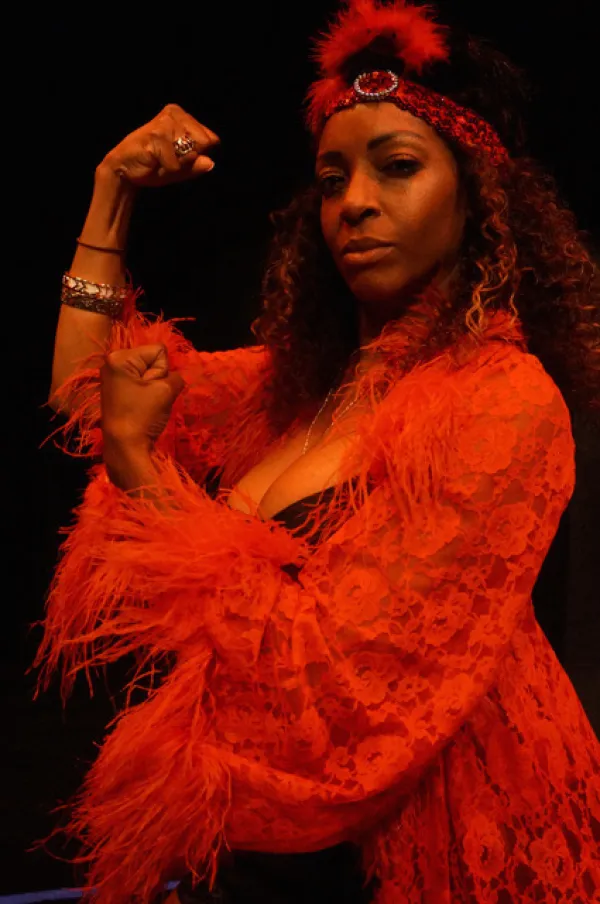
Around 90 years before Stormy Daniels burst onto the scene, Mae West shook vaudeville, Broadway, Hollywood and then Las Vegas. Buzzworks Theater Company’s Sex is a buzzworthy revival of West’s play. After Sex’s 1926 Broadway premiere, the comedy’s playwright/star “was arrested, fined $500, and sentenced to ten days in prison,” according to Gregory D. Black, author of Hollywood Censored, which features a picture of West from her 1933 movie She Done Him Wrong on the book’s cover.
A faux radio news bulletin about West’s bust (no pun intended - the actress was so well-endowed she gave her name to life preserver jackets) cleverly opens Buzzworks’ production of Sex. While the two-acter’s dialogue may have seemed cutting edge during the Roaring Twenties, to 21st century ears used to a discourse continuously coarsened, from pop culture to the presidency, many of the lines today sound corny and campy.
Image
Note: This review contains plot spoilers.]
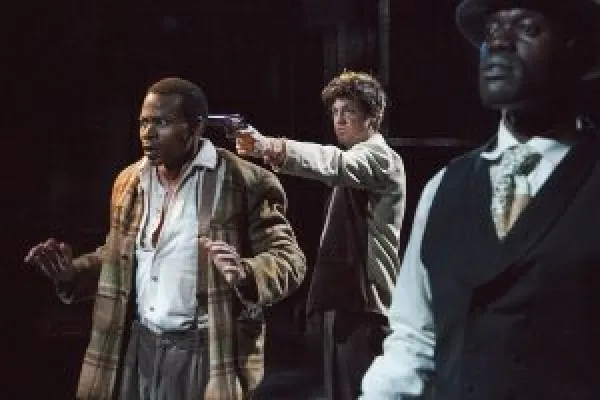
I “celebrated” Karl Marx’s 200th birthday by attending a theatrical version of the 1940 novel Native Son by onetime Communist Party USA member Richard Wright. As adapted by playwright/screenwriter Nambi E. Kelley, Antaeus Theatre Company’s SoCal premiere of Nambi’s play is anything but namby-pamby. Indeed, viewer beware: this is a very disturbing, upsetting one-acter and those who prefer for their stage outings to be innocuous entertainments might want to skip this relentlessly hard hitting drama. After all, as dramatist Bertolt Brecht noted in The Threepenny Opera: “Though the rich of this earth find no difficulty in creating misery, they can't bear to see it.”
Image
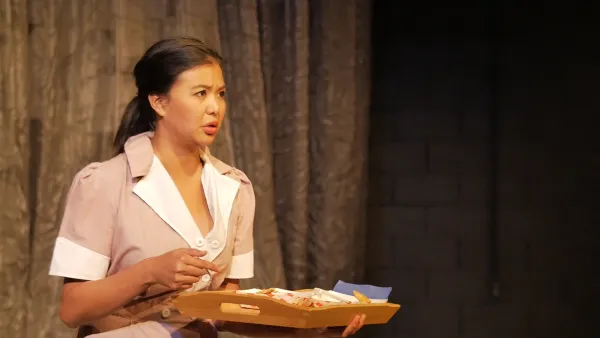
American Spring, the fourth live stage show by Artists Rise Up Los Angeles since the Trump regime took power, rocked Atwater Village Theatre with a moving matinee on April 14 meant to raise consciousness and funds. Largely using spoken word, in a series of one-person presentations, a dozen mostly female and/or nonwhite thesps gave a voice to those whom the Trump-sters seek to render voiceless and Ralph Ellison-like invisible, thereby shining the spotlight on the so-called “least” of these among us during ARULA’s 90 minute production, co-directed by Mapuana Makia and Jose Restrepo. Here are some highlights:
African American women led the way, as some observe Black females are doing offstage, too, in terms of activism. FreXinet freely floated from one female character to another a la Anna Deavere Smith to answer the probing question she posed: “What does it take to be Black in America?” The braided-hair actress wrote and acted out the various dramatic personae, demonstrating her range and talent.
Image
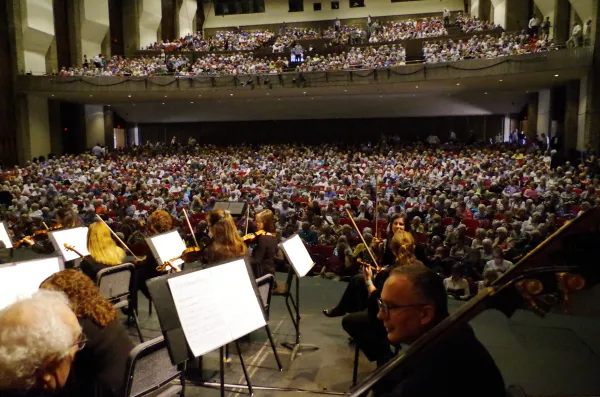
Ludwig van Beethoven’s “Symphony No. 9 in D Minor, Opus 125”, aka the “Ode to Joy” or “Choral”, has long been my favorite piece of music. But oddly enough, your itinerant critic had never actually heard it performed live in his entire life - that is, not until fate corralled me and I attended Tucson Symphony Orchestra’s season finale on April 8. But after I heard Ludwig van’s final symphony performed live way down yonder at Tucson Music Hall, would I feel the same way about the fabled “Ninth”?
Before the TSO performed Beethoven’s immortal masterwork, which had premiered in 1824 at Vienna, the Arizona orchestra opened the matinee with another thought-provoking, powerful work by a different musical giant. If Ludwig van’s piece de resistance is a homage to happiness, John Adams’ elegiac “On the Transmigration of Souls” is a paean to pity, tragedy and grief. One of the 20th and 21st centuries’ greatest classical composers, the 1947-born Adams is one of contemporary classical music’s top composers - and no stranger to controversy, often creating operas and other works about touchy topical topics.
Image
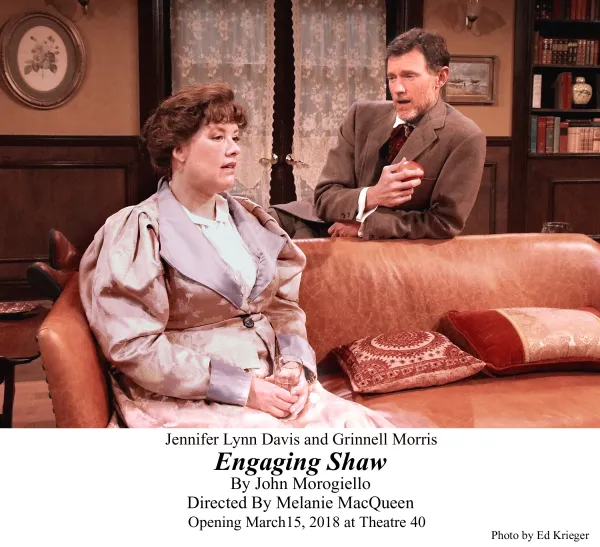
In Friedrich Engels’ 1880 book Socialism: Utopian and Scientific the co-founder of communism wrote about the difference between an idealistic conception of socialism and one rooted in historical, material reality. Raoul Peck’s new movie biopic The Young Karl Marx deals with this disparity and shows how during the 1840s Marx and Engels rooted the emerging notion of socialism in the real world and class struggle. In John Morogiello’s play Engaging Shaw the dramatis personae all belong to the former decidedly fanciful, airy-fairy trend of socialistic thought - and they sure act like it.
Image
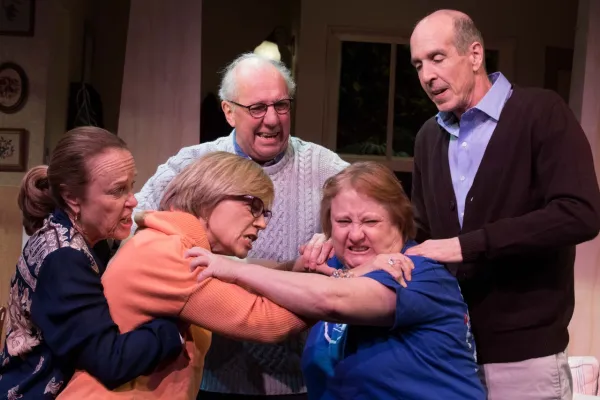
Hard on the heels of Rogue Machine’s winning the Best Season Ovation Awards El Niño - the indie theatre company’s first offering of 2018 - has blown into The Met. Playwright Justin Tanner’s dramedy takes place inside a Highland Park home, where 48-year-old daughter Colleen (Emmy winner Maile Flanagan) has taken up residence on her parents’ living room couch. As her mom June (stage and big and little screen actress Danielle Kennedy) and dad Harvey (theatre thesp Nick Ullett, who has performed on Broadway) try to show her the door, Colleen comes across as a Minnie quality moocher worthy of a Cab Calloway croon.
Image
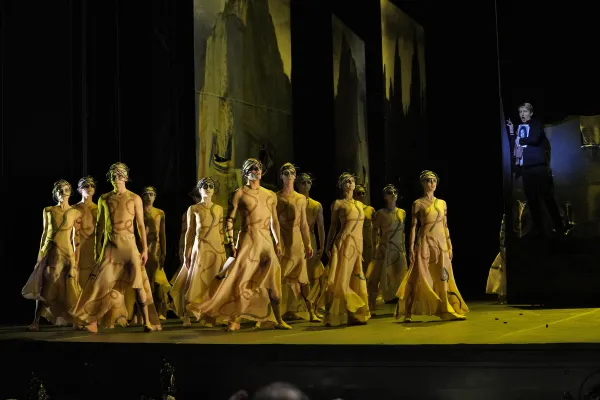
How ironic that Orpheus and Eurydice, an opera about hell, has one of the most exquisite expressions of paradise ever to grace the stage. According to The Victor Book of Operas by Louis Biancolli and Robert Bagar, O&E has “the classic, serene beauty that one associates with Grecian art.” That’s largely because composer Christoph Willibald von Gluck and librettist Pierre-Louis Moline derived the storyline for their 1774 opera from the ancient Greek myth of Orpheus’ (Russian tenor Maxim Mironov) descent into the Underworld to rescue his deceased beloved, Eurydice (Louisianan soprano Lisette Oropesa) and attempt to bring her back to life. Orpheus, but of course, was the son of Apollo and Calliope, the gods of music and poetry, and a chip off the ol’ Olympian block, he was antiquity’s peerless musician.
Image
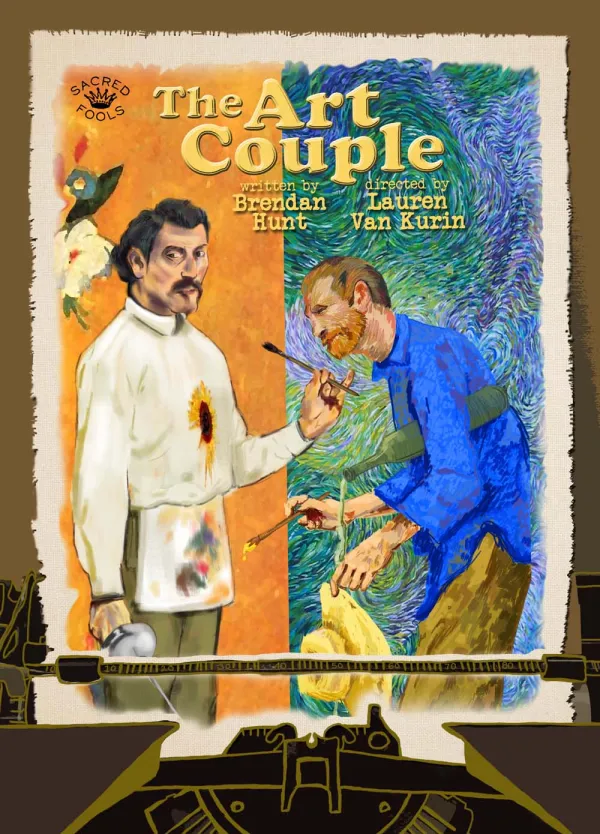
When I found out Sacred Fools was mounting a play about Vincent Van Gogh and Paul Gauguin I immediately set out to review The Art Couple. Not only had I read about those Post-Impressionist painters and their cohabitation together in the so-called “Studio of the South”, I’d seen this depicted in films such as Vicente Minnelli’s 1956 Lust for Life starring Kirk Douglas as Van Gogh and Anthony Quinn as Gauguin. In 2017 AFI Fest screened Robert Altman’s 1990 Vincent & Theo, with Tim Roth as Vincent and Wladimir Yordanoff playing Gauguin. (BTW, Quinn won the Best Supporting Actor Academy Award for portraying Gauguin - up to that point it was the briefest onscreen appearance to strike Oscar gold.)
Image
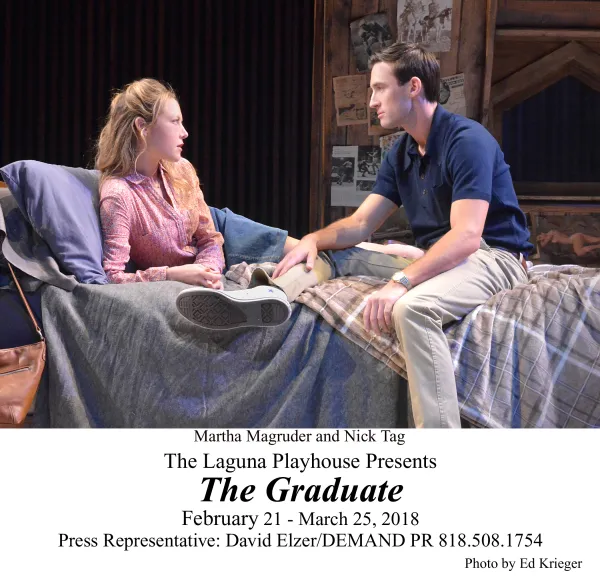
The week before British playwright Terry Johnson’s stage version of Charles Webb’s 1963 novella The Graduate and Buck Henry and Calder Willingham’s 1967 screenplay premiered at Laguna Playhouse, I happened to re-watch the classic movie on the IFC or Sundance Channel. I was struck by a number of things and wondered how could one translate its cinematic language to the medium of theatre, with real life movie star Melanie Griffith stepping into the role Anne Bancroft immortalized, that lecherous lush Mrs. Robinson?
After all, its helmer, Mike Nichols - who actually had previously been a theatre director whose movie debut was the 1966 adaptation of Edward Albee's Who’s Afraid of Virginia Woolf? - won the Best Director Oscar for The Graduate, which was only his second movie. And it was lensed by legendary director of photography Robert Surtees, who won three Best Cinematography Oscars, including for 1959’s Ben-Hur, and was Oscar-nommed another dozen times, including for The Graduate.