
The Free Press is bringing back a Reviews section after some absence. We hope to review plenty of events around town. Check back frequently and if what\'s going on is any good.
Arts & Culture
Image
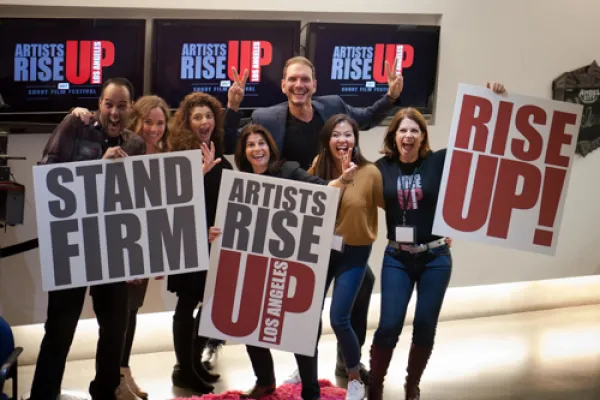
On Wednesday night, Nov. 8, 2017, the exact one year anniversary of Trump's Electoral College theft of the presidency, Artists Rise Up Los Angeles held its third event. ARULA was co-created by director Sue Hamilton the day after Trump’s ascension to the throne in order to rally artists to fight the pig who lost the popular vote by 3 million-plus ballots and his regime.
Image
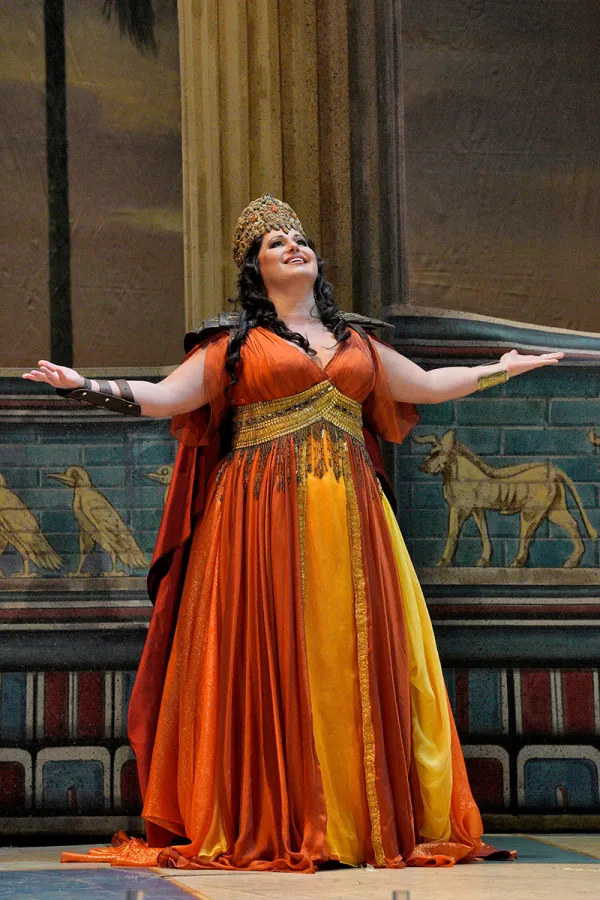
With its third production of the season at the Dorothy Chandler Pavilion LA Opera remains on a roll. Giuseppe Verdi’s Nabucco is another eye-popping extravaganza, with director and designer Thaddeus Strassberger’s optically opulent sets that not only recreate and evoke ancient Jerusalem and Babylon during biblical times (like D.W. Griffith did for his 1916 masterpiece about man’s inhumanity to man, Intolerance), as well as simultaneously suggesting 19th century Italy. In particular, Milano’s famed Teatro alla Scala, where Nabucco premiered in 1842.
Congress Members Jones and Garamendi are going to screen and discuss a hilarious movie mockery of militarism. They’re going to do it in the U.S. Capitol. They’re going to go right on funding the war madness, sanctioning possible new enemies, and risking all of our lives. But for a moment, they’re going to open a window and let a bit of sanity in.
Image
French filmmakers Thibout Bertrand, Guillaume Lebeau and Benjamin Clavel have flown from Paris to L.A. to present the American debut of their just released documentary Red In Blue at the Left Coast Forum. The 57 minute film is especially timely as the 100th anniversary of the Russian Revolution is this Nov. 7.
Red In Blue includes clips from American movies about the Bolshevik uprising going back to silent movies and includes scenes from David Lean’s Dr. Zhivago, Warren Beatty’s Reds, the animated feature Anastasia and more. The documentary also features archival footage and original interviews with Warren Beatty, a U.S. Red plus French and American film historians, including Ed Rampell, co-founder of Hollywood Progressive, author of Progressive Hollywood, A People’s Film History of the United States.
Image
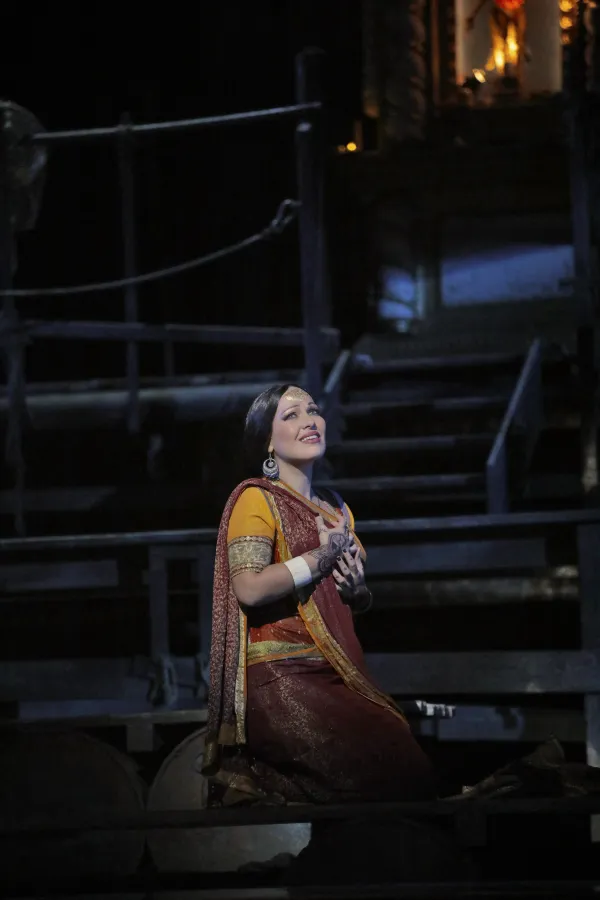
Bing Crosby crooned about “Sweet Leilani,” that Hawaiian “heavenly flower” in Harry Owens’ Academy Award-winning hapa haole ditty. Eric Clapton sang that “Layla” “got me on my knees.” In Michael Connelly’s crime novel Trunk Music, LAPD Detective Harry Bosch scours Las Vegas, searching for the missing stripper also named Layla. And in The Pearl Fishers Georges Bizet features the enticing high priestess Leila (beguiling Tblisi, Georgia soprano Nino Machaidze, last seen gracing the Dorothy Chandler Pavilion as Mimi in 2016’s La Boheme).
Originally set in Ceylon (now Sri Lanka), this stunning production is simply eye-popping, with sublime music, even if Michel Carre and Eugene Cormon’s turgid libretto is fraught with Freudian symbolism about sexual repression and religious zealotry (funny how those two things often go hand in hand). LA Opera gives Bizet the Hollywood treatment, opening with a scrim that makes it seem as if the stage is underwater, as real life “swimmers” (or “scrim-mers”?) cavort about.
Image
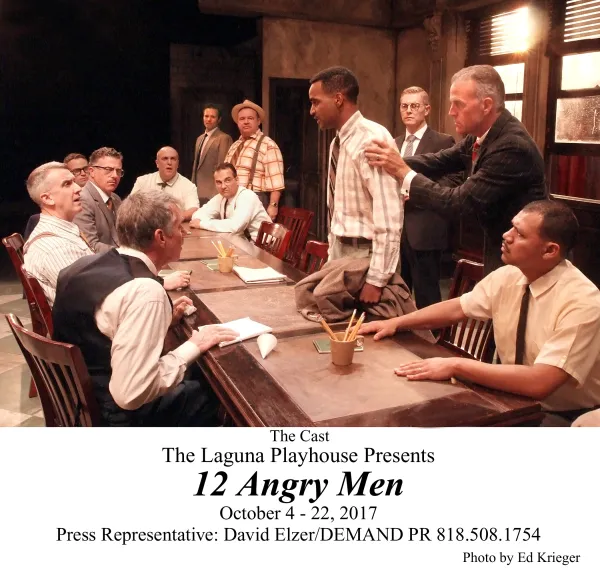
The jury is not out and the verdict is in: Laguna Playhouse’s production of Reginald Rose’s Twelve Angry Men is “guilty” as charged of being an excellent, tautly written, directed and acted drama. Suggested by Rose’s own stint serving on a jury, Twelve goes behind the scenes to watch the jury deliberations of a dozen men over what appears to be an open and shut homicide case in New Yawk City. They are in a rush to leave the sweltering jury room - as in Spike Lee’s Do the Right Thing, also about racial injustice, it is literally the hottest day of the year - and the weary men want to leave the courthouse, go home, to a Dodger game (in Brooklyn, not Chavez Ravine - this is a 1950s period piece), etc.
But with the death sentence hanging over the teenaged defendant - a minority (unspecified which ethnic group he belongs to in this production) - Juror # 8 (Seamus Dever) proves to be the lone holdout. An architect, the sole dissenting vote on the first ballot, steps up and bravely holds forth in this gripping one-acter, as he strives to sway the other mostly eager-to-leave 11 jurors to consider that there may be reasonable doubt. Will he prevail?
Image
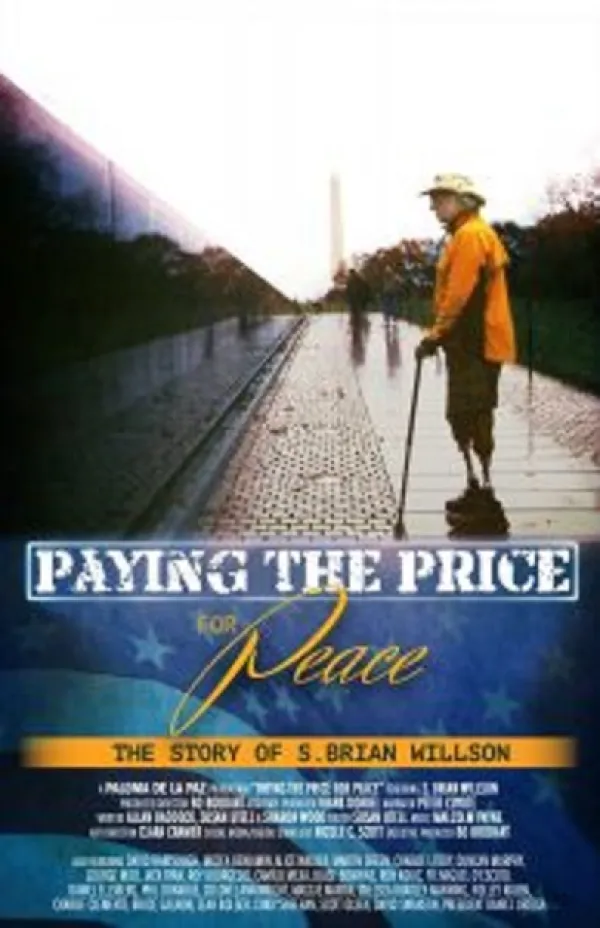
“In America, if you say ‘Brian Wilson,’ people think the Beach Boys, but in Nicaragua if you say ‘Brian Willson,’ people think of the peace activist,” said Frank Dorrel, Associate Producer of Paying The Price For Peace: The Story of S. Brian Willson & Voices From The Peace Movement. Dorrel made his comments at a Q&A following a screening of the 97 minute documentary, which was screened at the LA Live Regal Cinema 14 as part of the 8th annual Awareness Film Festival, which took place Oct. 5-15.
As Bo Boudart’s award-winning nonfiction film recounts, what made the other Brian Willson so prominent is the Vietnam vet’s commitment to the cause of peace, culminating in an enormous sacrifice, which this plot spoiler adverse critic won’t ruin for you. (Let’s just say he was railroaded…) Yes, as the title indicates, Willson paid an unimaginable price for peace, but this documentary is also about the antiwar movement. Although Boudart’s sprawling film focuses on Willson, it is also a compendium of the struggle for peace from the Vietnam War to the bloody U.S. intervention in Central America up to the ongoing armed conflicts in Iraq, Afghanistan and beyond.
Image
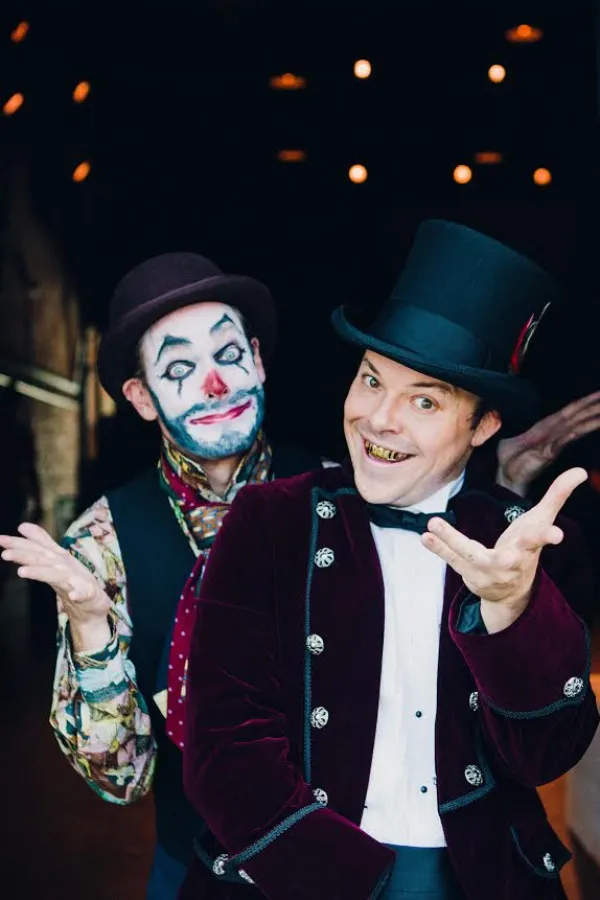
Gordon Gekko may have articulated the Reagan era’s ethos when he proclaimed “Greed is good” in Oliver Stone’s 1987 Wall Street, but in terms of ethics Captain Greedy is not good - although when it comes to sheer showmanship and moral musings, The Actors’ Gang grabs the brass ring and hits a bull’s eye with Captain Greedy’s Carnival.
The first act of Captain Greedy’s Carnival, with its book and lyrics by Jack Pinter and music by Roger Eno, is an exceedingly clever concoction combining the free market philosophy of economists such as Smith, Hayek and Friedman with the format of a carnival. Capitalism is insightfully compared to a carnival’s games of chance. Through this circus-like atmosphere the co-creators, their cast of about 20 performers (The Gang’s all here!) plus a live band lampoon laissez faire economics with a humorous harpoon, its razor sharp tip dipped in acid.
Image
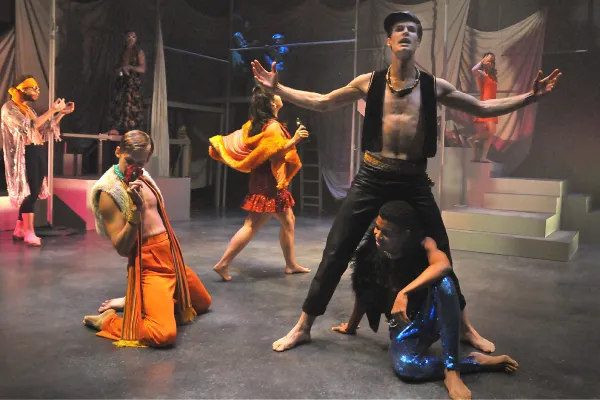
This co-production launching a collaboration between the Fountain Theatre and Los Angeles City College’s Theatre Academy tells the story of real life dancer Freddy Herko (Marty Dew) largely through choreography (by Cate Caplin) and a recorded soundtrack of music ranging from Vivaldi and Mozart to sixties music by Blind Faith and Donovan plus other rock/pop musicians. Various stage effects are used, too, including a sort of mist that this hour-ish-long one acter opens with, perhaps symbolizing the mists of memory.
To be sure, in addition to this impressionistic collage, there is a storyline that threads this needle, as the older Shelley (professional actress Susan Wilder) goes back in time to relate her experiences with Freddy, when she was young and foolish. Devoted to dance, younger Shelley (professional actress Katie McConaughy) leaves her husband Pete (LACC sixth semester actor Lamont Oakley) to pursue the mercurial Freddy.