
The Free Press is bringing back a Reviews section after some absence. We hope to review plenty of events around town. Check back frequently and if what\'s going on is any good.
Arts & Culture
Image
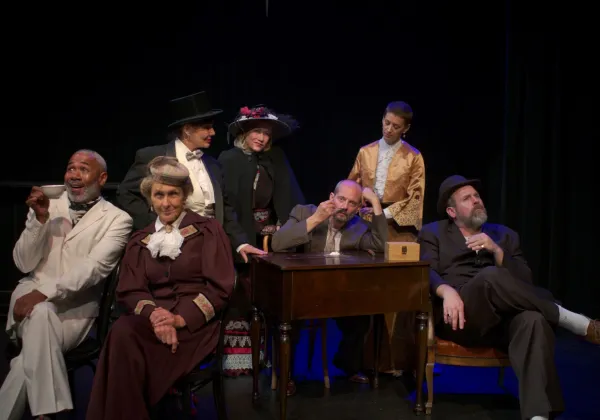
According to writer/director Howard Skora’s Freud on Cocaine, during the early days of his career Sigmund Freud was an avid user of and experimenter with coke – if, but of course, for mainly professional purposes. Indeed, there is substantial evidence to support Skora’s contention, notably Dr. Freud’s own writings, such as his 1884 The Cocaine Papers. This subject has previously been dramatized, especially in the wonderful 1976 feature The Seven-Percent-Solution, starring Alan Arkin as a rather compassionate founder of psychoanalysis, who helps Sherlock Holmes (Nicol Williamson) overcome his addiction to cocaine (see the trailer at: https://www.imdb.com/title/tt0075194/?ref_=nv_sr_srsg_0_tt_1_nm_0_q_The%2520Seven%2520Percent%2520Solution).
Image

Harold Pinter was a prolific playwright and screenwriter. I enjoyed the 1960s films he’d written the screenplays for, The Servant and Accident, which were directed by that refugee from the Hollywood Blacklist, Joseph Losey. After being awarded the Nobel Prize in Literature, Pinter’s rather heroic, 2005 noble Nobel Lecture dared to challenge the prevailing pro-war propaganda, excoriating the Iraq War. Although he was too sick to travel to Scandinavia, the hospitalized 75-year-old British man of letters videotaped his 46-minute frontal assault on U.S. foreign policy that was screened at the Swedish Academy. (See: https://www.nobelprize.org/prizes/literature/2005/pinter/lecture/.) Pinter did the best thing one can do with status, using it as a platform to be a scourge of the status quo, an implacable enemy of social injustice.
Image

Since the start of the Russia-Ukraine war, a global cold war has also kicked in.
As a strong ally of Washington and the home of a massive constituency of Russian,
Ukrainian and East European Jews, it was only natural that Tel Aviv would be at the heart
of the global conflict.
When the war began, Israel was then ruled by an odd coalition, bringing together right,
center and left political parties.
These parties were aware of the electoral importance of Israeli Russian Jews, who mostly
arrived in Israel following the collapse of the former Soviet Union in the late 1980s and
early 90s.
The sizable and rapidly growing constituency is largely anti-Moscow, as opinion public
polls have demonstrated.
These demographics, in addition to Israel's loyalty to Washington, complicated the Israeli
position.
On the one hand, Israel voted in favor of a United Nations resolution in March 2022
which condemned Russia. In response, Moscow expressed complete “disappointment” in
Israel.
Additionally, Israel opened its doors to Ukrainians and also Russian Jews who wanted to
Image

Backstage at Carnegie Hall during the mid-1980s I found myself standing next to a tall, older gentleman. Looking up, I gasped, realizing I was in the presence of arguably the world’s greatest living playwright. I blurted out: “God bless you, Mr. Miller!”
Arthur Miller, author of the immortal masterpiece Death of a Salesman, is high up on my list of must-see bards. Whenever I get word that one of his plays is being mounted on L.A.’s boards, for me “It’s Miller time!” and I make a beeline to that stage to bask in the brilliance of his Arthurian dramatics and wordplay. (See: https://hollywoodprogressive.com/stage/all-my-sons; https://www.peoplesworld.org/article/broken-glass-what-it-means-to-be-a-jew-in-america/.) And so it was with the Ruskin Group Theatre’s stellar, gut-punching production of A View from the Bridge (which I’d never had the opportunity to see before on stage or screen) way down yonder at Santa Monica – and I wasn’t disappointed.
Image
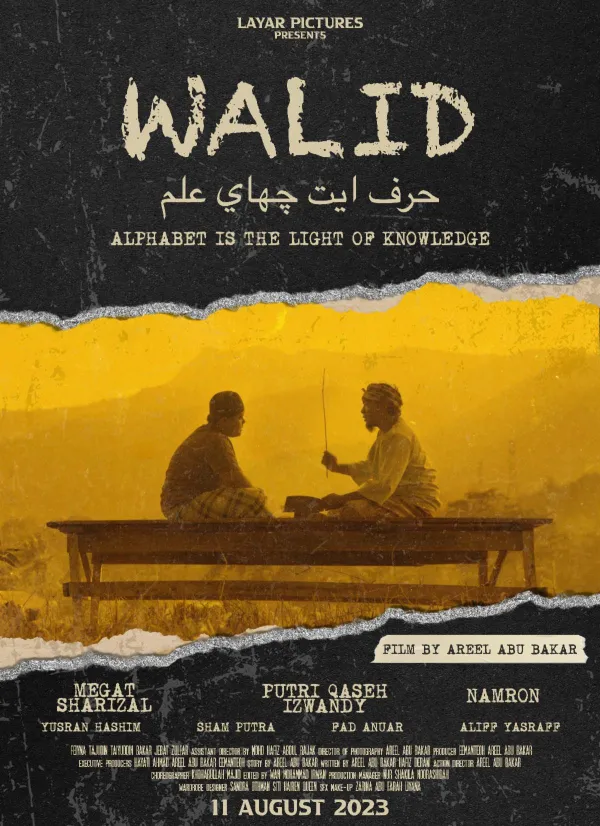
Movie Against Child Abductions
Movie mogul Samuel Goldwyn reputedly once snarked: “If you want to send a message, use Western Union!” But one way socially conscious filmmakers can cleverly “sneak” messages into movies is by sandwiching their ideas into popular genres that audiences are familiar with. Film Noir and murder mysteries are good examples: Author Dashiell Hammett was a Communist Party member who put anti-capitalist notions about greed and obsession with money into works such as The Maltese Falcon. While the content of leftist filmmaker Costa-Gavras’ 1969 Oscar-winning Z depicts political assassination and the colonels’ coup in Greece, it is in form a whodunit: Who killed the Greek peace candidate?
Image

Hard on the heels of the Debbie Allen-directed Fetch Clay, Make Man (see: https://hollywoodprogressive.com/stage/champ-and-the-chump), which depicted Stepin Fetchit, the star who personified the silver screen’s shuffling, lazy, buffoonish caricature of Blacks during the 1930s/40s, another play about motion picture racial tropes is being revived. As AmeriKKKa undergoes a spate of anti-Asian hate crimes, writer/actor/ director J. Elijah Cho’s terrific Mr. Yunioshi is an acerbic, sly skewering of stage and celluloid stereotypes of so-called “Orientals.”
In his one man show, Cho incarnates 1920-born Mickey Rooney, who started out as a child performer, became a sensation at MGM where he starred in musicals, the 16-picture Andy Hardy “all-American boy” series, et al, and was the world’s top box-office draw from 1939-1941. The oft-married Rooney’s career spanned nine decades, from vaudeville to the silent screen to technicolor, television and beyond.
Image

In what passes for “political discourse” in our benighted country, some contend there were “benefits” to slavery, from the antebellum South’s plantations to Nazi concentration camps. How to convince these apologists for slavery – from the crafty crafters of Florida’s school curriculum and its “woke” addled governor, to Fox “News’” smug smarmy smirking chimp Greg Gutless – otherwise? Here are two suggestions:
The first is to subject them to forms of modern-day slavery, which BTW didn’t end with Lincoln’s 1863 Emancipation Proclamation. According to https://www.voices4freedom.org/: “At this present moment, there are more people suffering under slavery than at any other time in history. The Global Slavery Index (GSI) estimates that more than 50 million people are currently trapped in modern day slavery.”
Image
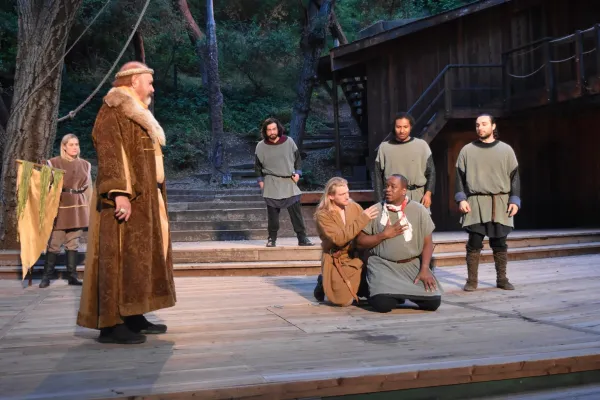
Will Geer’s Theatricum Botanicum’s rendition of William Shakespeare’s immortal masterpiece Macbeth is a bone-chilling excursion into ambition unbound, bloodlust and madness. As the title character (portrayed by the estimable Max Lawrence) quite literally slashes his way to the top of the heap in 11th century Scotland to seize and keep the crown, the astute theatergoer can’t help but reflect on power struggles in today’s America as our quadrennial presidential contest unfolds.
Image
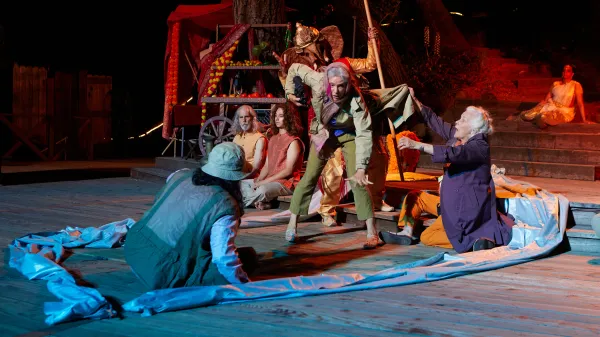
Will Geer’s Theatricum Botanicum goes Bollywood, with Terrence McNally’s India-set A Perfect Ganesh, which opens with a barefoot Apsara (Shivani Thakkar) or celestial nymph in Hindu mythology, traditionally dancing onstage in age-old Indian radiant raiment. The dancer is followed by Ganesha (Mueen Jahan), the narrator wearing an elephant mask, denoting the Hindu god Ganesh, the remover of obstacles, bearer of good luck and patron of arts.
Image
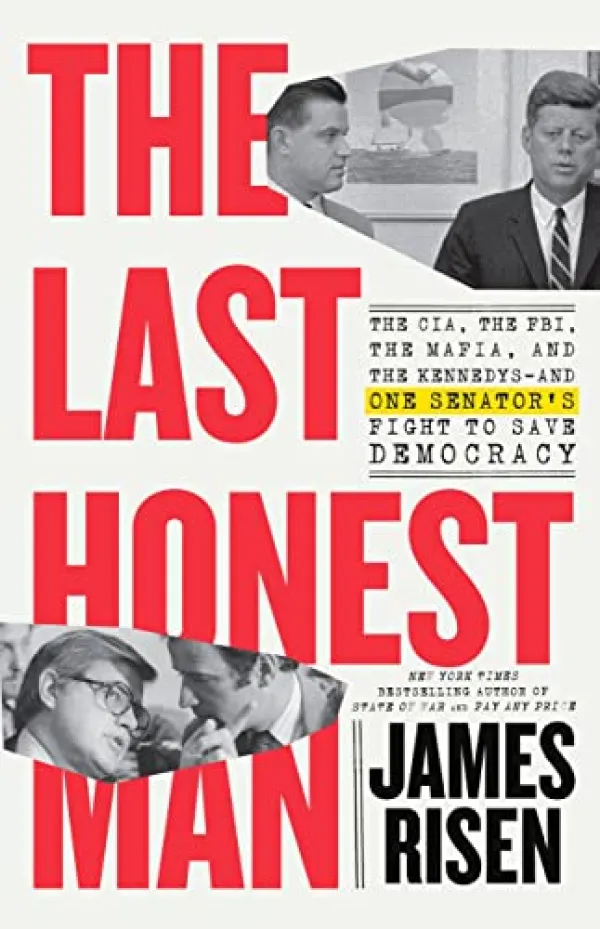
Although the Church Committee's investigation into abuses of the CIA, FBI and NSA was a watershed moment in American history, few books have been written with a focus on Frank Church. James Risen has added to this story by writing “The Last Honest Man: The CIA, the FBI, the Mafia, and the Kennedys—and One Senator's Fight to Save Democracy”, which is essentially a biography of Church, and is an important contribution to understanding the workings of the Church Committee.