
Human Rights
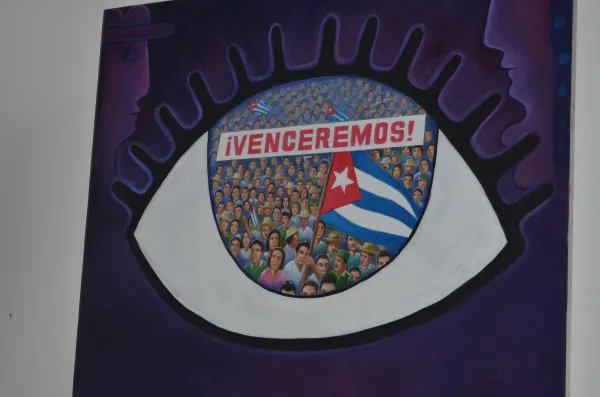
In advance of President Barack Obama’s historic visit to Cuba on March 20, there is speculation about whether he can pressure Cuba to improve its human rights. But a comparison of Cuba’s human rights record with that of the United States shows that the US should be taking lessons from Cuba.
The Universal Declaration of Human Rights contains two different categories of human rights – civil and political rights on the one hand; and economic, social and cultural rights on the other.
Civil and political rights include the rights to life, free expression, freedom of religion, fair trial, self-determination; and to be free from torture, cruel treatment, and arbitrary detention.
Economic, social and cultural rights comprise the rights to education, healthcare, social security, unemployment insurance, paid maternity leave, equal pay for equal work, reduction of infant mortality; prevention, treatment and control of diseases; and to form and join unions and strike.
Robert Bowdrie “Bowe” Bergdahl was held as a POW by the Taliban for 5 years and now for over a year by the U.S. Army at Fort Sam Houston in San Antonio. He has received constant treatment from an Army psychiatrist but he has not been returned to his family and home in Hailey, Idaho. Thus in my opinion his recovery and reintegration process has probably done more harm than good by continuing his isolation from the world. But his treatment after repatriation is more about politics than his service or U.S. Army procedures. Consequently, after what he has gone through and endured, he should be freed with an honorable discharge and all of his pay and benefits. Anything less would be an injustice.
BANGKOK, Thailand -- Bangkok's coup-installed military regime has
agreed to give legal immunity to some of Thailand's Islamist
insurgents and allow them to travel internationally during peace talks
in the south where more than 6,000 people have died on all sides
during the past 12 years.
The immunity and travel protection for the rebels increases the
likelihood that the talks can grapple with more serious issues in one
of Southeast Asia's long-running insurgencies, such as the denial of
justice and local participation for Muslims in the economically
depressed area.
"The military will never defeat the guerrilla tactics of the
insurgents," said a Bangkok Post editorial on March 3.
"The obvious stalemate cries for a political solution."
The current peace talks however do not allow discussion of the
insurgents' demands for autonomy within Buddhist-majority Thailand or
an independent nation ruled by Islamic law.
Meanwhile two rubber tree plantation workers -- a Muslim and a
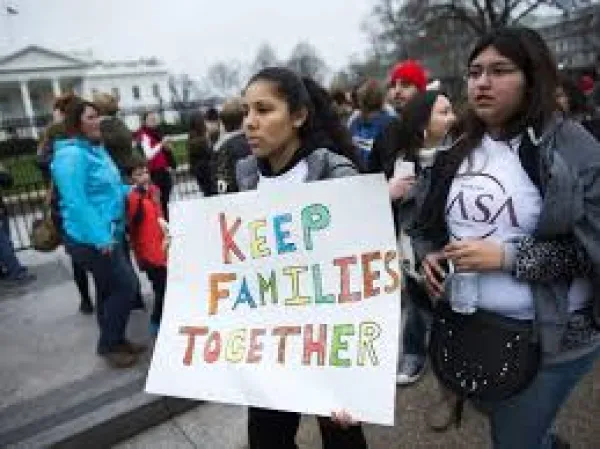
The millions of people in the United States who are denied equal rights because they are immigrants have vast stockpiles of wisdom and rich culture to share; they engage in more strategic and courageous activism than do non-immigrants; and without any doubt they would vote better than do the "legal" people of South Carolina if only they were permitted to vote. The mistreatment of these people shortchanges every U.S. enterprise and reduces civil rights, paychecks, public safety, sense of community, and basic levels of morality for everyone.
Wa wa wa wa.
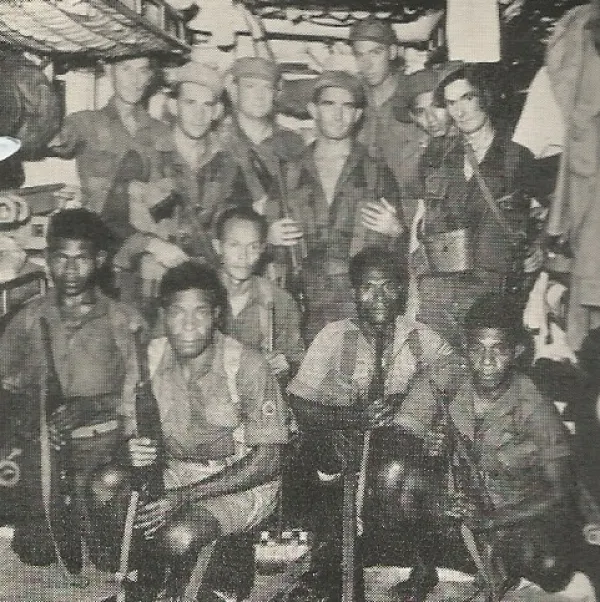
We have recently been discussing your ongoing courageous struggle to liberate yourselves from more than 100 years of occupation, first by the Netherlands, briefly and brutally by Japan during World War II, and now by Indonesia. In that regard, we would each like to share a brief message with you, our friends from West Papua.
From James: I have been very impressed with the information gleaned from my son Robert Burrowes after his recent meeting in Brisbane with your leaders Octovianus Mote, Benny Wenda, Jacob Rumbiak and Rex Rumakiek of the United Liberation Movement for West Papua.
The work and dedication you have been devoting to the cause of freedom for West Papua has inspired me to recall my own experience with some of your ancestors during my 4 years with the Australian Imperial Force (AIF) during World War II, which included 2½ years as a coastwatcher. Ten months of this time was spent in enemy-held territory as a signaller.
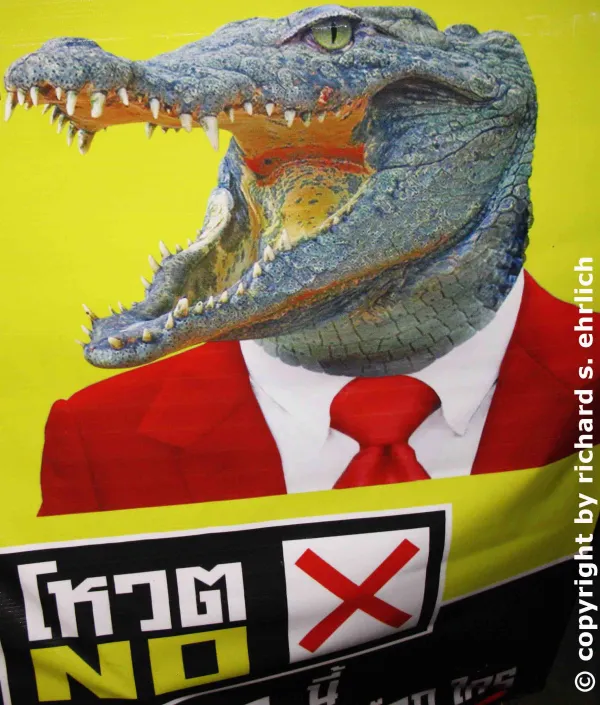
writing a new constitution which appears to extend its dominating
policies by ensuring an unelected prime minister can rule, boosted by
a Senate stacked with pro-junta appointees.
Only then, after popular anti-coup politicians and parties are
rendered weaker, will nationwide Parliamentary elections be allowed in
2017 or 2018 -- or perhaps later.
Not everyone is thrilled.
"The draft charter has already been branded by opponents of the
military government as a 'dictator's charter' or the constitution that
'cheats and steals the power of the people'," the Bangkok Post said in
a February 12 editorial.
The finalized constitution may allow a National Strategic Reform and
Reconciliation Committee --nicknamed "a crisis panel" -- to seize all
executive and legislative power from the government and Parliament.
"The committee will get involved only after the country is at a dead
end," Defense Minister Prawit Wongsuwon warned last year.
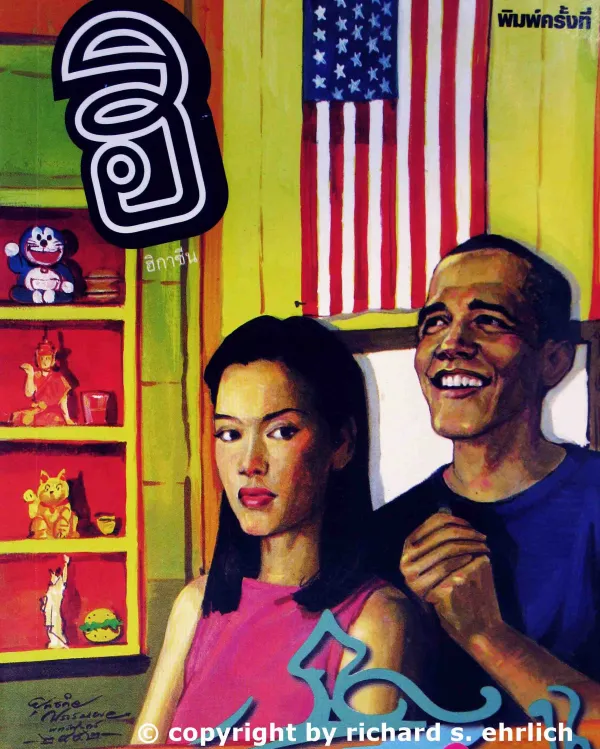
BANGKOK, Thailand -- Human Rights Watch, political analysts and others
are criticizing President Obama for inviting Bangkok's coup leader to
an ASEAN summit in California on February 15 amid expectations the
junta will display it as U.S. endorsement of the military regime.
Indicative of that support, the Pentagon will simultaneously train the
junta's troops for 11 days here in Thailand during February to ensure
"stability within the region."
All 10 leaders of the Association of Southeast Asian Nations -- which
includes Brunei, Cambodia, Indonesia, Laos, Malaysia, Myanmar, the
Philippines, Singapore, Thailand and Vietnam -- received invitations
to the February 15-16 U.S.-ASEAN Summit at Sunnylands in Rancho
Mirage, California.
Most of the leaders arrived alongside Prime Minister Prayuth
Chan-ocha, who seized power in a bloodless May 2014 coup.
"We advised the White House to rescind invitations to Prime Minister
Prayuth and [Cambodian] Prime Minister Hun Sen," said Human Rights
Watch's Washington-based Asia Policy Director John Sifton.
The Saudi mass beheadings on January 2 proved nothing new to a world that well knows Saudi Arabia is still a tribal police state with a moral code of medieval barbarity. Saudi Arabia is a Sunni-Muslim country that executes people for witchcraft, adultery, apostasy, and homosexuality (among other things). And the Saudi regime is perfectly willing to torture and kill a Shi’a-Muslim cleric for the crime of speaking truth to power, knowing that that judicial murder will inflame his followers and drive the region toward wider war. The Saudi provocation is as transparent as it is despicable, and yet the Saudis are held to no account, as usual.
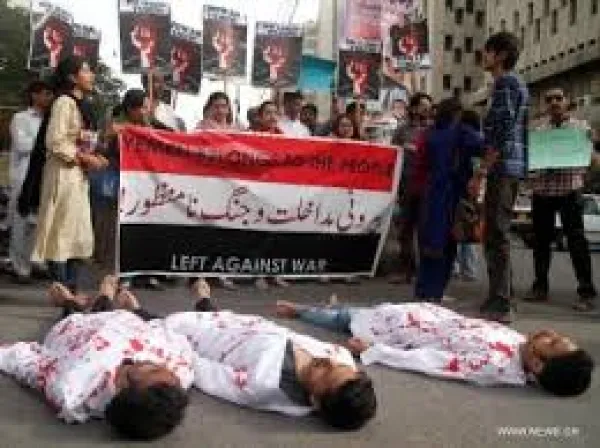

The more extreme the crimes of state, the more the state seeks to shroud them in secrecy. The greater the secrecy and the accompanying lies, the more vital becomes the role of whistleblowers – and the more vindictive becomes the state in its pursuit of them.
Whistleblowers are people who start out as loyal servants of the state. Their illusions about the state’s supposed moral agenda – and the wholeheartedness of their own patriotic commitment – make them all the more shocked when they discover evidence of the state’s wrongdoing.
Given the extreme concentration of weaponry (as well as surveillance capabilities) in the hands of the state, and given the disposition of the state to apply such resources even against nonviolent mass movements, the type of defection practiced by whistleblowers – an option available to military and intelligence operatives at all levels – is crucial to any eventual triumph of popular forces over the ruling class.