
THE G-20 IN PITTSBURGH
by Tom Over 9-23-09
<br><br>
On Tuesday, Sept 22, activists from Philadelphia, New York City, Pittsburgh and other cities held a mock funeral procession to demand better policies for addressing the AIDS pandemic, a day ahead of the arrival of delegates for the G-20.
<br><br>
The approximately 50 participants in the New Orleans-style funeral march drew a mix of interest, irritation, and amusement from onlookers in the business district of downtown Pittsburgh.
<br><br>
At the head of the funeral march where pallbearers carried a cardboard coffin, a man shouted into a microphone while someone else carried a portable amplifier, “when people with AIDS are under attack, what do we do ?” and marchers shouted in unison, “fight back!”
<br><br>
Amidst the early afternoon bustle of an weekday, the demonstrators repeated this call-and-answer and similar chants as the funeral march made its way around the perimeter of the David L. Lawrence Convention Center, the site of the G-20 Summit later this week.
<br><br>
Erica Goldberg works with ACT UP Philadelphia. She said global health is not on the agenda of the G-20 Summit.
“One of the things that some of the G-20 nations have promised us is funding for the global fund to fight, TB, malaria, and HIV/AIDS. This is all really important, especially if we want to meet the United Nations’ Millennium goal of eradicating these diseases by 2015. As of right now, this won’t be met. We have to hold our leaders accountable. They are the ones making decisions for the poorer countries,” Goldberg said.
<br><br>
She commented on the timing of the demonstration. “We wanted this to be the first thing they (the G-20 delegates) see. They’re coming here tomorrow. We’re holding them accountable. This needs to be on the agenda.”
<br><br>
She said AIDS activists chose Sept 22, two days before the official start of the G-20 Summit, and one day before the arrival of the delegates, so as to not have to compete with other protests. Also, she said the AIDS activists figured there would be less of a chance of conflict with police if they staged their protest earlier in the week.
<br><br>
“We hope that this will hit the papers tomorrow, that it’s the first thing they see when they walk in, that they have this on their conscience and know we’re not going away,” Goldberg said. She urges people to contact legislators about supporting the Global Fund to Fight AIDS, Tuberculosis, and Malaria.
“President Obama, as much as I love him, went back on his promise to fulfill the funding,” Goldberg said.
<br><br>
She commented on how drug companies factor into all of this. “ Medication does not need to be this expensive. They can definitely lower their prices. We have big drug interests lobbying to prevent AIDS medication from getting” to developing nations.
<br><br>
Goldberg said debt cancellation for developing nations is a factor that comes into play.
“When you don’t cancel debts of nations and they have to pay back loans to the IMF and the World Bank, they won’t have the funds necessary for getting AIDS medication, or they might get the medication but can’t pay the health professional because of their debt.
<br><br>
She said vested interested motivated by huge profits stand in the way of doing a better job of addressing tuberculosis, malaria, and HIV/AIDS. “We have the power, the ability, and the medication.”
World News
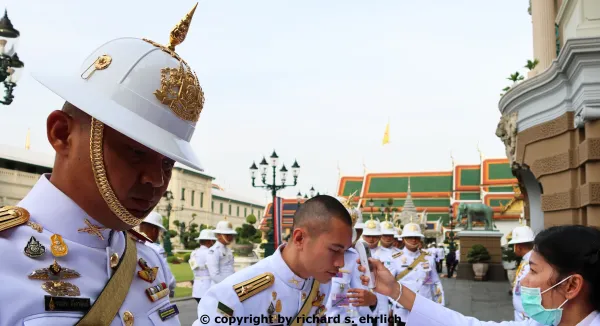
BANGKOK, Thailand -- Public anger is increasing against Thailand's
military-backed government for its handling of Wuhan's deadly
coronavirus, because Bangkok's toll is among the biggest number of
infected people outside China.
"The country is now in the stage of disease transmission," said
Disease Control Department director-general Dr. Tanarak Plipat in a
warning for tourists and others.
"Since they are staying in places full of foreign visitors, tourists
are likely to be in areas of disease transmission."
As for "the degree of risk concerning the disease in Thailand, chances
of contraction remain low in this country," Dr. Tanarak said.
Twenty-five people in Bangkok had confirmed virus infections as of
February 6, the Health Ministry said.
Twenty-one of them, including a Thai woman, arrived in Bangkok from
Wuhan, the city in China believed to be the source of the outbreak of
the mysterious disease.
No coronavirus deaths were reported in Thailand, and some quarantined
victims recovered and were released.
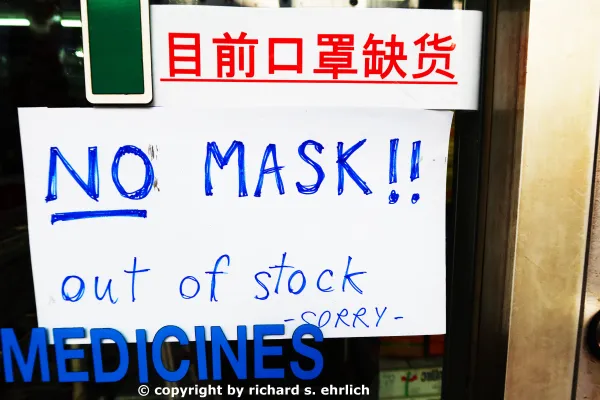
BANGKOK, Thailand -- International panic over the coronavirus is hyped
mostly by social media and news reports, but the actual death rate is
the same as the flu and less people will die as the virus mutates,
according to David Mabey, a professor of communicable diseases at the
London School of Hygiene and Tropical Medicine.
" I think the risk of acquiring it is pretty low," Mr. Mabey said in
an interview.
"I know there have been cases reported in Thailand, but Thailand is a
big country and there are not many cases. I think if I were in Wuhan,
I probably would be wearing a mask. But as it is, I think the risk of
getting infected is low.
"I think the infection is not particularly virulent, as far as we have
learned, about 1% mortality which is the same as flu. And I don't go
around wearing a mask all the time because I might get flu."
Mr. Mabey was visiting Thailand for a week to receive the kingdom's
Prince Mahidol Award for his career in public health.
Asked if foreign countries were correct to stop flights arriving from
China, he replied:

The coronavirus test ran on Oct. 18, 2019. The goal of a global health consortium was to see what it could learn from a computer model simulating an outbreak that rippled out of South America. Three weeks later, armed with data on 65 million virtual people killed, the group reconvened with world health experts to discuss “Event 201.”
The consortium, made up of John Hopkins University, the World Economic Forum, and the Bill and Melinda Gates Foundation, named the Event 201 as the next “big one” after the 200 epidemics the World Health Organization (WHO) monitors each year. What did they find in the analysis of the data?
Governments and health agencies are nowhere near prepared to slow down, let alone contain mass infections due to a novel coronavirus pandemic.
BANGKOK, Thailand -- In China, officials have cancelled air flights
and trains out of Wuhan, a city of 11 million people which is the
epicenter of a deadly coronavirus that has killed at least 17 people
and sickened 557.
All 17 deaths and most of the infections appeared in Hubei province,
including the capital Wuhan.
Other victims fell ill to the disease while visiting foreign
countries, including Thailand, Taiwan, South Korea, Japan and the
United States.
"We have it totally under control," President Trump told CNBC in
Davos, Switzerland, during the World Economic Forum.
"It’s one person coming in from China, and we have it under control.
It’s going to be just fine."
Elsewhere in China, cities with confirmed cases of people who have
fallen ill from the mysterious virus include Guangdong near Hong Kong,
the capital Beijing, Shanghai which is downriver from Wuhan, and a
handful of other places.
In Wuhan, all public transportation including taxis, buses, and subway
and ferry systems are also no longer operating, in an effort to limit
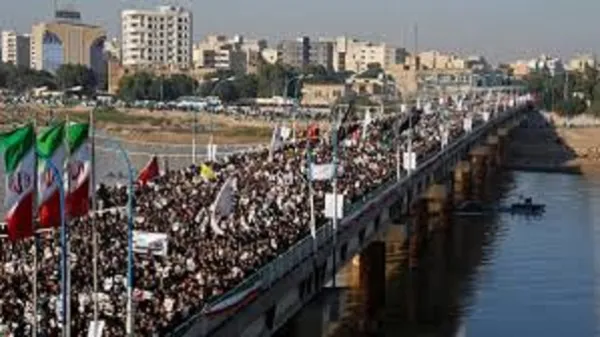
By killing top Iranian military commander, Qasem Soleimani, American and Israeli leaders demonstrated the idiom ‘out of the frying pan into the fire.’
US President Donald Trump and Israeli Prime Minister Benjamin Netanyahu are both politically and legally embattled – the former has just been impeached and the latter is dogged by an Attorney General indictment and investigation into major corruption cases.
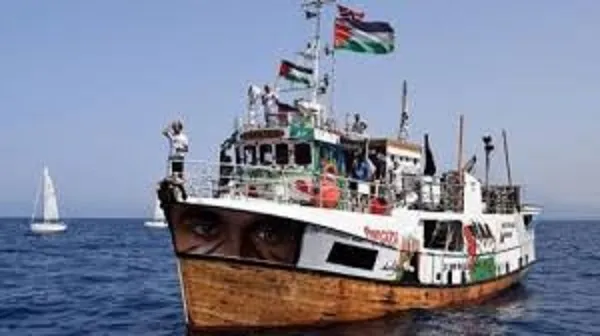
What is Gaza to us but an Israeli missile, a rudimentary rocket, a demolished home, an injured child being whisked away by his peers under a hail of bullets? On a daily basis, Gaza is conveyed to us as a bloody image or a dramatic video, none of which can truly capture the everyday reality of the Strip - its formidable steadfastness, the everyday acts of resistance, and the type of suffering that can never be really understood through a customary glance at a social media post.

Three years ago, the United Nations Security Council passed Resolution 2334. With fourteen members voting in favor and one abstention, the Resolution was the equivalent of a political earthquake. Indeed, it was the first time in many years that Israel was roundly condemned by the international body for its illegal settlement policies in the Occupied Palestinian Territories. Unlike previous attempts at holding Israel accountable, this time the Americans did nothing to protect its closest ally.

It is hardly surprising to see Middle Eastern countries at the bottom of the World Press Freedom Index, as the worst violators of freedom of the press. But equally alarming is the complete polarization of public opinion as a result of self-serving media and, bankrolled by rich Arab countries, whose only goal is to serve their specific, often sinister, agendas.
One does not need to highlight of how state-controlled media in the Middle East lacks the minimal required degree of partiality, let alone integrity. Only a deluded person would argue that governments that kill, torture and imprison journalists, intellectuals and social media activists have an iota of respect for the freedom of the press and expression - in fact, of any kind of freedom at all.

BANGKOK, Thailand -- Pope Francis' visit to Buddhist-majority Thailand
focused attention on Catholic hill tribes and sexual abuse against
women amid improving relations between the two religions quietly
influenced by the army's failure to defeat southern Muslim
separatists.
During Francis' November 20-23 visit, he also emphasized the need for
Catholics to strengthen links with Buddhists.
"General public opinion holds that Thai Catholics are relatively
'quiet and peaceful'," said Katewadee Kulabkaew, a scholar of Thai
Buddhism's contemporary politics.
"However, those inclined to Buddhist chauvinism argue that Catholicism
may still be a threat to Thai Buddhism," she wrote in an analysis of
Francis' visit published on November 21 by New Mandala, a website
hosted by the Australian National University.
"Nevertheless, the focus of those determined to 'protect' Buddhism is
now centered on Islam. The escalation of violence in Thailand's Deep
South, where Muslim secessionists have previously killed Buddhist
monks and burned down monasteries, sounds much more alarming to the
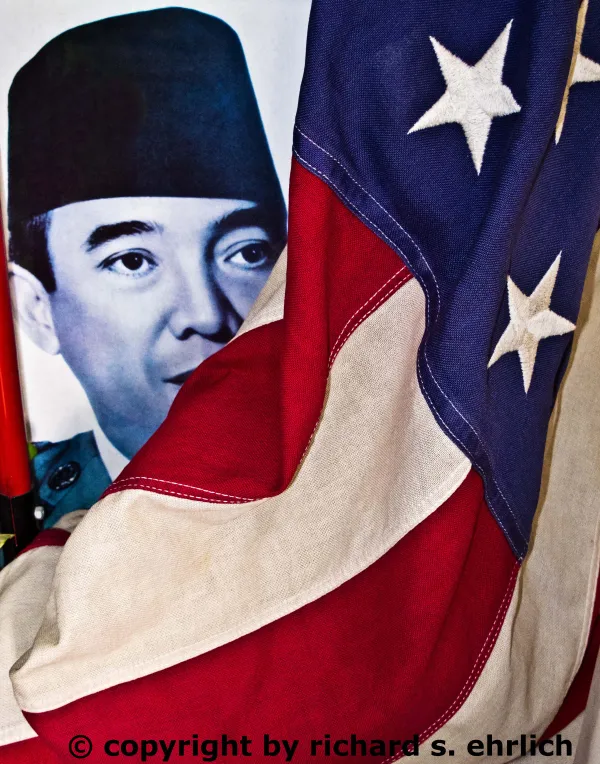
BANGKOK, Thailand -- One of Indonesia's worst death squad leaders,
78-year-old Anwar Congo, has died decades after executing at least
1,000 suspected communists and others during a U.S.-backed purge which
killed more than 50,000 people during the 1960s.
Mr. Congo died in a hospital on Oct. 25 of undisclosed causes.
As a young man, he was hired as a deadly enforcer for a newspaper
publisher and paramilitary gang boss in Medan city, in the north of
Sumatra island.
In a 2012 documentary titled, "The Act of Killing," Mr. Congo proudly
re-enacted his favorite execution method -- strangling victims with a
wire.
In the non-fiction film by dual American and British citizen Joshua
Oppenheimer, Mr. Congo enthusiastically described hanging, strangling,
decapitating and driving automobiles over victims.
Mr. Congo also acted as an execution victim and let a wire be gently
laced around his neck to demonstrate garroting.
He and other death squad members said they believed torturing and
murdering suspects helped Indonesia's U.S.-backed military defeat
communism.