
THE G-20 IN PITTSBURGH
by Tom Over 9-23-09
<br><br>
On Tuesday, Sept 22, activists from Philadelphia, New York City, Pittsburgh and other cities held a mock funeral procession to demand better policies for addressing the AIDS pandemic, a day ahead of the arrival of delegates for the G-20.
<br><br>
The approximately 50 participants in the New Orleans-style funeral march drew a mix of interest, irritation, and amusement from onlookers in the business district of downtown Pittsburgh.
<br><br>
At the head of the funeral march where pallbearers carried a cardboard coffin, a man shouted into a microphone while someone else carried a portable amplifier, “when people with AIDS are under attack, what do we do ?” and marchers shouted in unison, “fight back!”
<br><br>
Amidst the early afternoon bustle of an weekday, the demonstrators repeated this call-and-answer and similar chants as the funeral march made its way around the perimeter of the David L. Lawrence Convention Center, the site of the G-20 Summit later this week.
<br><br>
Erica Goldberg works with ACT UP Philadelphia. She said global health is not on the agenda of the G-20 Summit.
“One of the things that some of the G-20 nations have promised us is funding for the global fund to fight, TB, malaria, and HIV/AIDS. This is all really important, especially if we want to meet the United Nations’ Millennium goal of eradicating these diseases by 2015. As of right now, this won’t be met. We have to hold our leaders accountable. They are the ones making decisions for the poorer countries,” Goldberg said.
<br><br>
She commented on the timing of the demonstration. “We wanted this to be the first thing they (the G-20 delegates) see. They’re coming here tomorrow. We’re holding them accountable. This needs to be on the agenda.”
<br><br>
She said AIDS activists chose Sept 22, two days before the official start of the G-20 Summit, and one day before the arrival of the delegates, so as to not have to compete with other protests. Also, she said the AIDS activists figured there would be less of a chance of conflict with police if they staged their protest earlier in the week.
<br><br>
“We hope that this will hit the papers tomorrow, that it’s the first thing they see when they walk in, that they have this on their conscience and know we’re not going away,” Goldberg said. She urges people to contact legislators about supporting the Global Fund to Fight AIDS, Tuberculosis, and Malaria.
“President Obama, as much as I love him, went back on his promise to fulfill the funding,” Goldberg said.
<br><br>
She commented on how drug companies factor into all of this. “ Medication does not need to be this expensive. They can definitely lower their prices. We have big drug interests lobbying to prevent AIDS medication from getting” to developing nations.
<br><br>
Goldberg said debt cancellation for developing nations is a factor that comes into play.
“When you don’t cancel debts of nations and they have to pay back loans to the IMF and the World Bank, they won’t have the funds necessary for getting AIDS medication, or they might get the medication but can’t pay the health professional because of their debt.
<br><br>
She said vested interested motivated by huge profits stand in the way of doing a better job of addressing tuberculosis, malaria, and HIV/AIDS. “We have the power, the ability, and the medication.”
World News
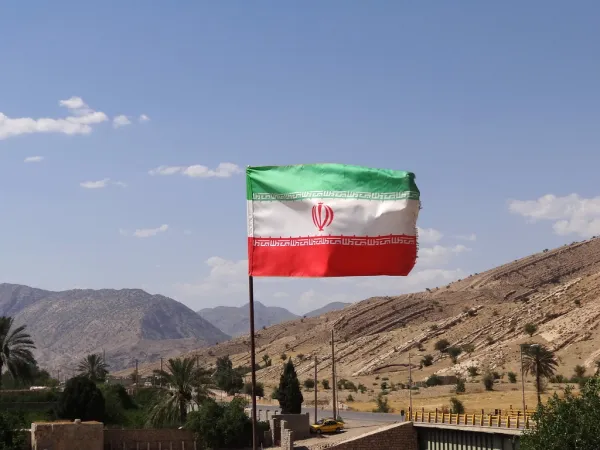
Despite their complicated and often uneasy relationship, Israeli Prime Minister Benjamin Netanyahu and his Defense Minister Yoav Gallant agree on one thing: Iran is behind Israel's security problem.
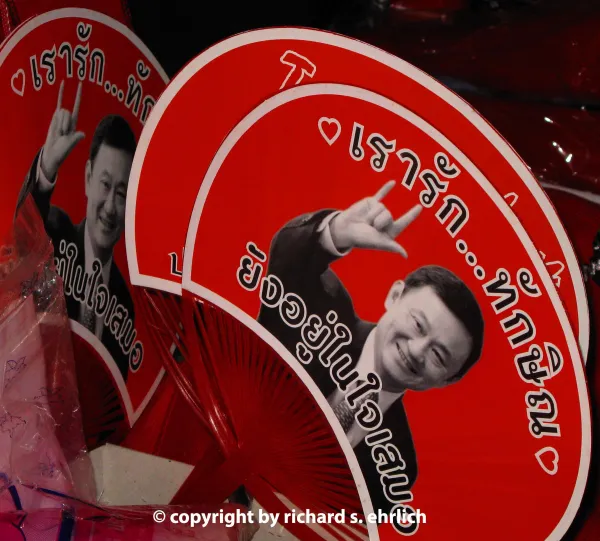
BANGKOK, Thailand -- After 15 years as an international fugitive ousted in a coup, homesick billionaire ex-prime minister Thaksin Shinawatra returned on August 22, allowing the Supreme Court to sentence him to eight years for corruption and send him under heavy security to Bangkok's grim Remand Prison.
Hours later, in a backroom choreographed arrangement which is still playing out, Parliament ended a three-month deadlock and elected the candidate of Mr. Thaksin's extended party to be prime minister, politically inexperienced real estate tycoon Srettha Thavisin, 60.
Mr. Thaksin's spectacular return may have been in expectation that Mr. Srettha will somehow grant him leniency.
Mr. Srettha, relatively unknown to the public, said he will "improve the living conditions of all Thai people."
The prime minister-elect's name needs the king's endorsement before he can take over.
Mr. Srettha secured the prime ministry only by including, in his 11-party coalition, two political parties -- the United Thai and Palang Pracharath -- linked to the most recent 2014 coup.

Racism goes beyond the use of certain words or the discriminatory practices of everyday life. It is also about political perceptions, intellectual depictions, and collective relationships.
Consider the way that Africa is currently portrayed in the news.
From a political viewpoint, Africa is seen as a totality, and not in a positive way, as in a united Africa.
For example, mainstream Western media coverage of the US-Africa Summit, held in Washington last December, presented all of Africa as poor and desperate. The continent, one can glean from headlines, was also willing to pawn its political position in the Russia-NATO conflict, in exchange for money and food.
"Biden tells African leaders US is 'all in' on the continent," an Associated Press headline announced on December 15.
The phrase 'all in' - a lingo used in Poker when someone is willing to risk it all - was cited many times in the US and Western media.
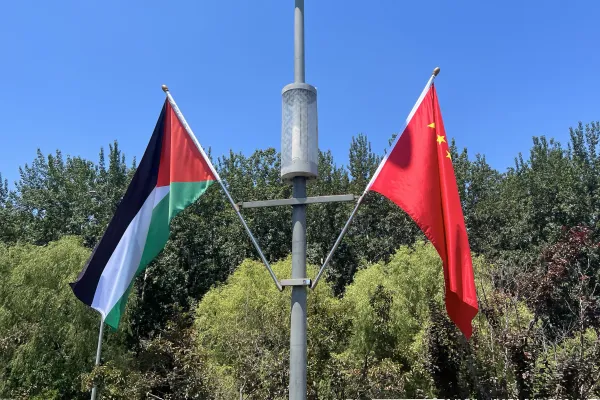
It is feasible for China to continue playing an important role in mediating Middle
East conflicts. In fact, it already has. In the case of the Israeli occupation of Palestine,
however, mediation is hardly the issue.
Even before Beijing successfully managed to achieve reconciliation between Saudi
Arabia and Iran last April, Chinese diplomacy has shown exceptional maturity.
For many years, China has been perceived to be an outsider to global affairs,
supposedly contending itself to economic expansion or to regional economic
integration.
Former US President Donald Trump forced, or rather, accelerated China’s global
outreach when, in 2018, he launched an unprecedented trade war on the powerful
Asian country.
Trump’s plan backfired. Not only did Washington fail to dissuade Beijing from
bowing to American diktats, it also inspired what became known as China’s wolf
diplomacy – a self-assertive Chinese approach to foreign policy.
From an American - or Western - viewpoint, the new tactic was perceived to be
hostile and aggressive.
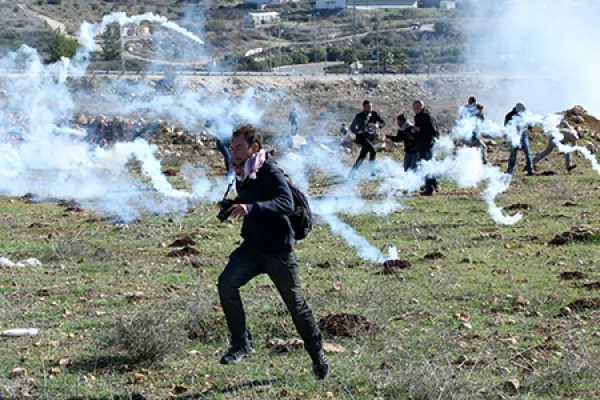
Ain Al-Hilweh is known as the "Capital of Palestinian Shatat."
The term might not stir many emotions among those who do not fully understand, let alone experience the harrowing existence of ethnic cleansing and perpetual exile - and the tremendous violence which followed.
'Shatat' is roughly translated into “exile” or “Diaspora”. However, the meaning is much more complex. It can only be understood through lived experience. Even then, it is still not easy to communicate. Perhaps, the Kafkaesque blocks of concrete, zinc and rubble, towered one on top of another and serving as ‘temporary shelters’ for tens of thousands of people, tell a small part of the story.
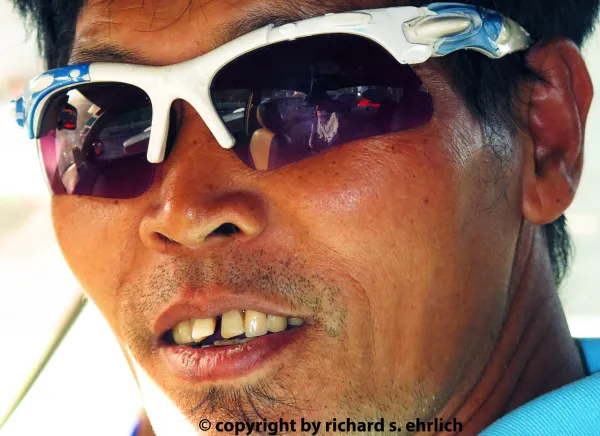
BANGKOK, Thailand -- The anti-establishment winner of May's national election lost support to become prime minister on August 2 when his coalition dumped him, clearing the way for a conservative real-estate tycoon's possible nomination.
Parliament's House election winner on May 14, Pita Limjaroenrat, was ousted because he had virtually no chance to become prime minister after the Senate rejected him in July for demanding the monarchy's lese majeste defamation protection -- Section 112 in the Criminal Code -- be weakened.
Many in his eight-party, 312-member coalition also feared being perceived as anti-112 which could open them to dangerous, expensive, time-consuming -- and potentially punishable -- allegations and lawsuits, real and dismissible, filed by litigious staunch royalists.
Mr. Pita's departure from his hurriedly regrouping coalition also banished him and his new Move Forward Party (MFP) to the opposition.
His dramatic and embarrassing downfall came after the idealistic, inexperienced, yuppie politician won 14 million votes -- 38 percent of the total -- and 151 seats in Parliament's 500-member elected House.

The late Israeli commentator, Uri Avnery, wrote, "I am increasingly worried that the Israeli-Palestinian struggle … is assuming a more and more religious character."
At first glance, the statement may seem baffling. If Israel is a 'Jewish State' that serves as a 'homeland' for all Jewish people, everywhere, does it not follow that the 'struggle', at least from an Israeli viewpoint, is essentially a religious one?
If only it was that simple.
Israel's dichotomy is that it was founded by an ideology, Zionism, which purposely conflated between religion and nationality.
In a recent speech, China's highest-ranking diplomat, Wang Yi, spoke of a 'united Asia' and its need to develop a “strategic autonomy”.
In principle, Wang was not wrong; after all, a stable and prosperous Asia would benefit the peoples of the region and would deny Western meddlers the chance to exploit historical fault lines and sow the seeds of political division.
Wang's language, although from the outside may seem simple and straightforward, is quite loaded with meaning. “No matter how blonde you dye your hair, how sharp you shape your nose, you can never become a European or American, you can never become a Westerner,” Wang said, as cited in Chinese state media.
In fact, common culture, beliefs and origins have historically served as starting points of regional cohesion, unity, and collective identity.
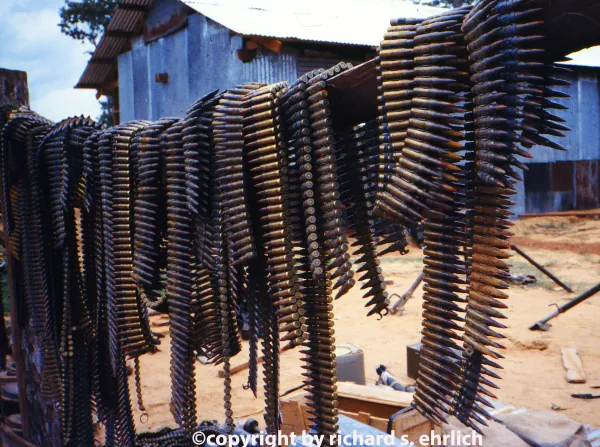
BANGKOK, Thailand -- Cambodian Prime Minister Hun Sen, who won reelection on July 23, announced on July 26 he would install his West Point-trained son next month as the country's leader and resign after monopolizing politics, jailing rivals, and silencing free speech during his 38 years in power.
“I will leave, and not hold the prime minister’s office anymore starting from August 22, 2023,” Mr. Hun Sen, 70, announced in a televised broadcast.
“If I continue to be prime minister for one or two years, and then resign from the position, the situation will become unstable, so it is necessary to have a new cabinet, most of whom are young people responding to their duty for the future,” Mr. Hun Sen said.
His long-time colleagues including Defense Minister Tea Banh, Interior Minister Sar Kheng, National Assembly President Heng Samrin, and Minister of National Assembly Men Sam On, are slated to also resign.
They would be named the king's supreme advisors.
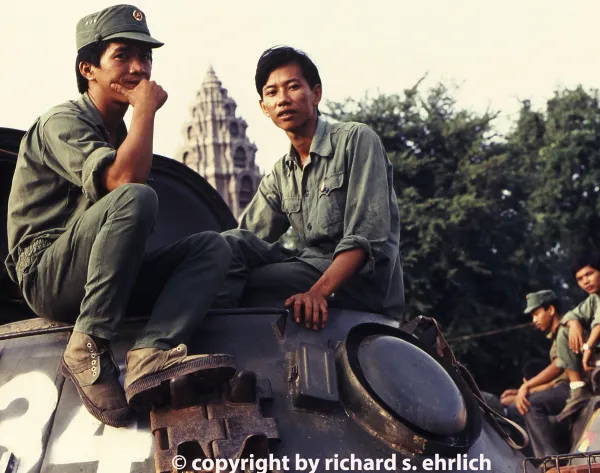
BANGKOK, Thailand -- Cambodian Prime Minister Hun Sen won reelection on July 23, as expected, extending his 38 years in power by monopolizing politics, jailing rivals, silencing free speech, and winning all 125 parliament seats.
"We've won a landslide," said Hun Sen's Cambodian People's Party (CPP) spokesperson Sok Eysan hours after the polls closed.
The only suspense after the election are cliff-hangers -- how quickly will Mr. Hun Sen install his West Point-trained son as next prime minister, and how deep will they expand Cambodia's already extensive diplomatic, economic, and military ties with China.
"Any improvement in (U.S.-Cambodian) relations depends in large part on whether Western governments are willing to accept a less democratic baseline for Cambodia," Prime Minister Hun Sen's son, four-star Gen. Hun Manet, said hours before the polls, according to Bloomberg.
Heir apparent Mr. Hun Manet, 45, was a first-time candidate in the July 23 election to the National Assembly, representing his father's ruling CPP in the capital Phnom Penh.