
THE G-20 IN PITTSBURGH
by Tom Over 9-23-09
<br><br>
On Tuesday, Sept 22, activists from Philadelphia, New York City, Pittsburgh and other cities held a mock funeral procession to demand better policies for addressing the AIDS pandemic, a day ahead of the arrival of delegates for the G-20.
<br><br>
The approximately 50 participants in the New Orleans-style funeral march drew a mix of interest, irritation, and amusement from onlookers in the business district of downtown Pittsburgh.
<br><br>
At the head of the funeral march where pallbearers carried a cardboard coffin, a man shouted into a microphone while someone else carried a portable amplifier, “when people with AIDS are under attack, what do we do ?” and marchers shouted in unison, “fight back!”
<br><br>
Amidst the early afternoon bustle of an weekday, the demonstrators repeated this call-and-answer and similar chants as the funeral march made its way around the perimeter of the David L. Lawrence Convention Center, the site of the G-20 Summit later this week.
<br><br>
Erica Goldberg works with ACT UP Philadelphia. She said global health is not on the agenda of the G-20 Summit.
“One of the things that some of the G-20 nations have promised us is funding for the global fund to fight, TB, malaria, and HIV/AIDS. This is all really important, especially if we want to meet the United Nations’ Millennium goal of eradicating these diseases by 2015. As of right now, this won’t be met. We have to hold our leaders accountable. They are the ones making decisions for the poorer countries,” Goldberg said.
<br><br>
She commented on the timing of the demonstration. “We wanted this to be the first thing they (the G-20 delegates) see. They’re coming here tomorrow. We’re holding them accountable. This needs to be on the agenda.”
<br><br>
She said AIDS activists chose Sept 22, two days before the official start of the G-20 Summit, and one day before the arrival of the delegates, so as to not have to compete with other protests. Also, she said the AIDS activists figured there would be less of a chance of conflict with police if they staged their protest earlier in the week.
<br><br>
“We hope that this will hit the papers tomorrow, that it’s the first thing they see when they walk in, that they have this on their conscience and know we’re not going away,” Goldberg said. She urges people to contact legislators about supporting the Global Fund to Fight AIDS, Tuberculosis, and Malaria.
“President Obama, as much as I love him, went back on his promise to fulfill the funding,” Goldberg said.
<br><br>
She commented on how drug companies factor into all of this. “ Medication does not need to be this expensive. They can definitely lower their prices. We have big drug interests lobbying to prevent AIDS medication from getting” to developing nations.
<br><br>
Goldberg said debt cancellation for developing nations is a factor that comes into play.
“When you don’t cancel debts of nations and they have to pay back loans to the IMF and the World Bank, they won’t have the funds necessary for getting AIDS medication, or they might get the medication but can’t pay the health professional because of their debt.
<br><br>
She said vested interested motivated by huge profits stand in the way of doing a better job of addressing tuberculosis, malaria, and HIV/AIDS. “We have the power, the ability, and the medication.”
World News
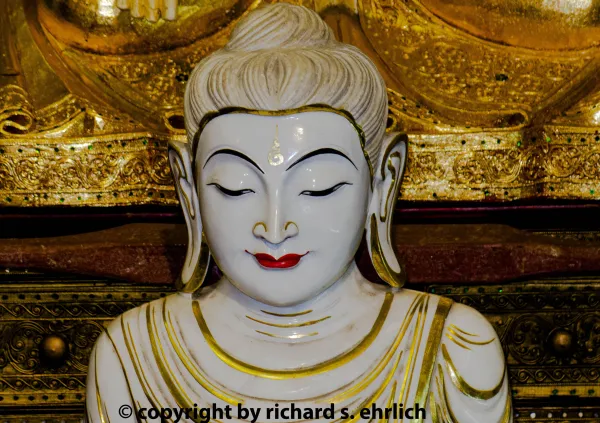
BANGKOK, Thailand -- Buddhist-majority Thailand gained the release of at least 23 Thai hostages from Hamas, the most foreigners freed as of November 30, after Bangkok boldly began direct negotiations with the Palestinian militant group's representatives in Iran nearly two months ago.
How did Thailand succeed while many of the other foreign hostages have still not been freed?
Thailand's quiet, bold, and direct diplomacy appeared to be a big key to their success.
This Southeast Asian nation had the most foreigners employed near the Israel-Gaza border, so the numbers were in their favor when Hamas decided to include foreign hostages in the releases.
Bangkok meanwhile also networked with United Arab Emirates, Egypt, Qatar, Israel and others for their freedom.
The October 7 assault into Israel by Hamas killed more than 1,400 Israelis and foreigners, including at least 33 impoverished Thai agricultural laborers contracted to desert zones along the Israel-Gaza border.
Additionally, Hamas seized about 250 hostages -- mostly Israelis -- and imprisoned them in Gaza at gunpoint including about 32 Thais.
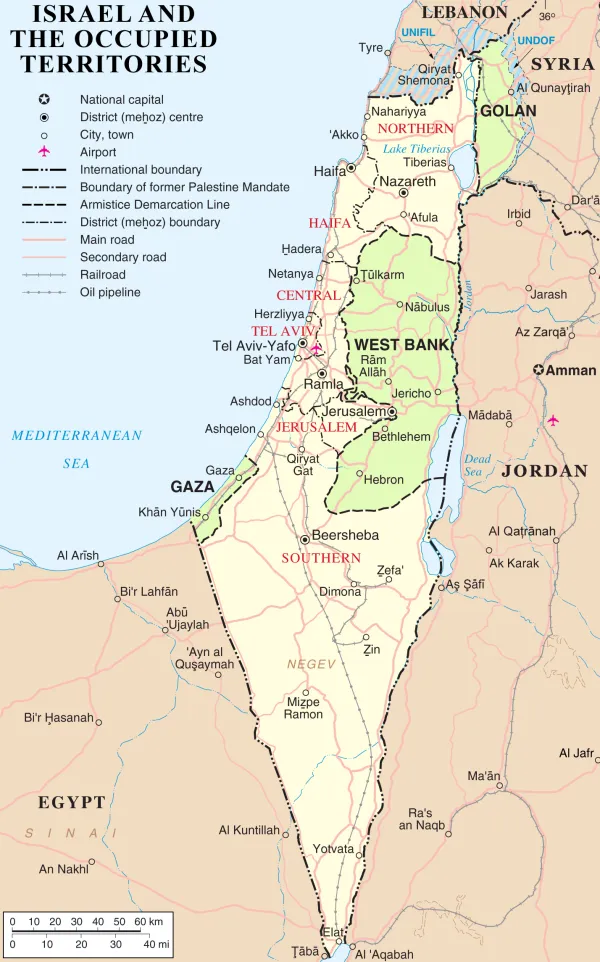
The ongoing discussions on the Israeli military objectives in Gaza are largely focused on whether Israel is planning a long or a short-term military reoccupation of the Strip.
Israelis themselves are fueling this conversation, with 41 percent of Israelis wanting to leave Gaza following the war and another 44 percent wanting the Gaza Strip to remain under Israeli control.
BANGKOK, Thailand -- Thailand has been negotiating directly with representatives of Hamas in Iran to release 23 Thai hostages from Gaza, the largest nationality among kidnapped foreigners.
Thailand also expressed "outrage" against Israel's U.N. ambassador for showing the General Assembly a "horrific" video of Hamas purportedly trying to decapitate a Thai laborer.
The 1,400 Israelis and foreigners killed by Hamas' Oct. 7 cross-border attack include at least 32 impoverished Thai agricultural workers slain near the Israel-Gaza frontier, officials said.
Thai Prime Minister Srettha Thaivisin talked by telephone with Israeli Prime Minister Benjamin Netanyahu about the 23 Thai hostages and said on November 1:
"If there there is any progress, he'll phone me. And if there are any demands involved he will also inform us," Mr. Srettha said, according to November 2's Bangkok Post.
In Iran's capital Tehran, meanwhile, representatives of Hamas held direct negotiations with Buddhist-majority Thailand's Muslim Sunni and Shia officials.
BANGKOK, Thailand -- Buddhist-majority Thailand's new prime minister flew to Palestinian-friendly Malaysia and reached out to other Muslim nations amid hopes for the release of 19 impoverished Thai laborers held by Hamas, who already slaughtered 30 Thais during the assault in Israel.
Weeping families in bleak rural Thai villages said their ill-fated relatives went to Israel to pay off family debts or upgrade their meager existence.
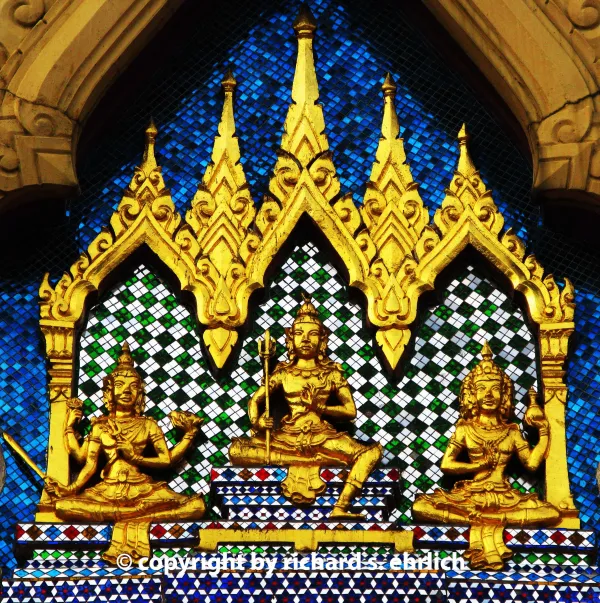
Relatives in Thailand went to local shrines and conducted ceremonies mixing Buddhist, Hindu, and animist beliefs, hoping for metaphysical help for their trapped loved ones and the deceased.
"We have a lot of debts, and working abroad pays better than in Thailand," said worried Kanyarat Suriyasri, after hearing her husband Owat Suriyasri, 40, was seized as a hostage.
Mr. Owat has labored in Israel since 2021, stacking shekels to build a house in Thailand for Ms. Kanyarat and their two kids.
"I would hug him and say: 'I've missed you, I won't let you anywhere far away again'," she told Agence-France Presse.
BANGKOK, Thailand -- China's navy quietly sailed into the shallow, energy-rich Gulf of Thailand earlier this month for Blue Strike 2023, a joint naval exercise to increase Beijing's influence with Thailand's newly elected, military-backed civilian government, which is also a strategic U.S. treaty ally.
Meanwhile, in his first political foray onto the international stage, Prime Minister Srettha Thavisin flew to New York and attended the UN General Assembly Sept. 18-24, where he met President Biden and other politicians along with Google, Microsoft, Tesla, the U.S. Chamber of Commerce, and the U.S.-ASEAN Business Council.
Chinese President Xi Jinping is also eager to scrutinize and charm Thailand's new prime minister, and invited Mr. Srettha to visit Beijing Oct. 8-10.
The U.S. and China are eyeing the new administration and its views on international investment, tourism, trade, and weapons purchases.
On Aug. 22, Parliament ended three months of bickering and agreed on a pliant civilian-led, 11-party coalition government fronted by Prime Minister Srettha, a real estate tycoon.

Jericho does not belong to the Palestinians alone. It belongs to the whole of humanity.
For Israel, however, the recognition by UNESCO of Jericho as a “World Heritage Site in Palestine” complicates its mission of erasing Palestine, physically and figuratively, from existence.
The decision was described by Israel’s foreign ministry as a “cynical” ploy by the Palestinians to politicize UNESCO.
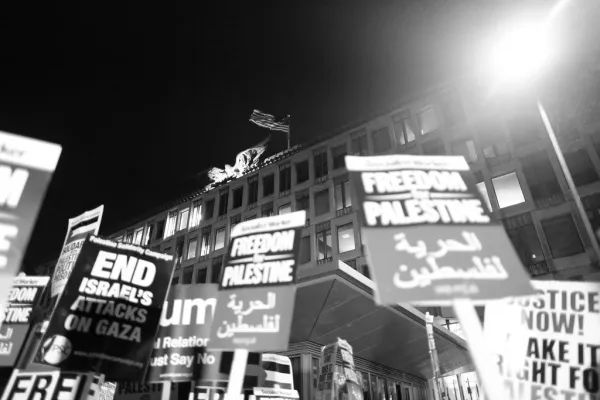
From its very onset, Israel has constructed a brand for itself, a powerful gimmick that was predicated on two main pillars: democracy and stability.
The main target audience for this brand has been powerful Western states that wielded disproportionate political, economic and military powers.
These Western governments, along with their influential mainstream corporate media, did their part, by polishing Israel's image - as most democratic and most stable - while tarnishing that of their Arab and Palestinian enemies - or anyone else who dared criticize Israel.
It mattered little whether Israel was truly a beacon of democracy and stability because these terms are often conjured up and used to conveniently fit the interest of those in power.
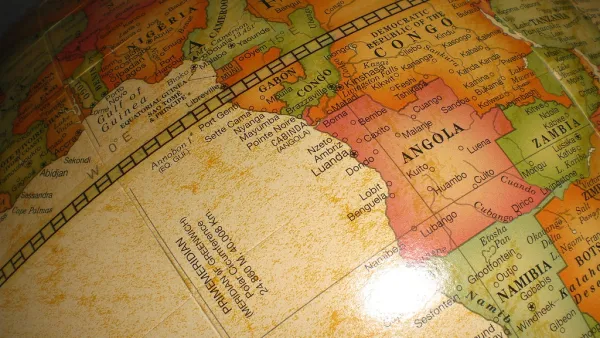
What if the "epidemic of coups" in West and Central Africa is not that at all, but a direct outcome of outright revolutionary movements, similar to the anti-colonial movements that liberated most African nations from the yoke of Western colonialism throughout the 20th century?
Whether this is the case or not, we are unlikely to find out anytime soon, simply because the voices of these African nations are largely and deliberately muted.
In order for us to understand the real motives behind the spate of military takeovers in West and Central Africa - eight since 2020 - we are, sadly, compelled to read about it in Western media.

BANGKOK, Thailand -- While visiting Bangkok in 2003, then-President George W. Bush designated Thailand a "non-NATO treaty ally" and congratulated Thaksin Shinawatra, the popular, elected, civilian prime minister.
Three years later, a desperate, panicking Mr. Thaksin secretively alerted Mr. Bush about "a threat to democracy in Thailand" by "extra-constitutional tactics" just before a 2006 military coup toppled him.
Today, Mr. Thaksin is a prisoner beginning a one-year sentence -- reduced by the king from eight years -- for financial corruption, ending 15 years as an international fugitive by voluntarily returning to Bangkok on August 22.
This is where so-called "Thai-style democracy" gets tricky, opaque, and imaginative.
Hours after Mr. Thaksin returned and was arrested, Parliament ended a three-month standoff and elected Mr. Thaksin's Pheu Thai Party colleague, a politically inexperienced real estate tycoon, Srettha Thavisin, 60, as prime minister.
Mr. Srettha, a billionaire relatively unknown to the public, said he will "improve the living conditions of all Thai people."
At the zenith of the mass protests in Egypt on January 25, 2011, Twitter, Facebook and other Western-based social media platforms appeared to be the most essential tools for the Egyptian Revolution.
Though some observers later contested the use of the terms ‘Twitter Revolution’ or ‘Social Media Revolution’, one cannot deny the centrality of these platforms in the discussion around the events which attempted to redefine the power structures of Egypt.
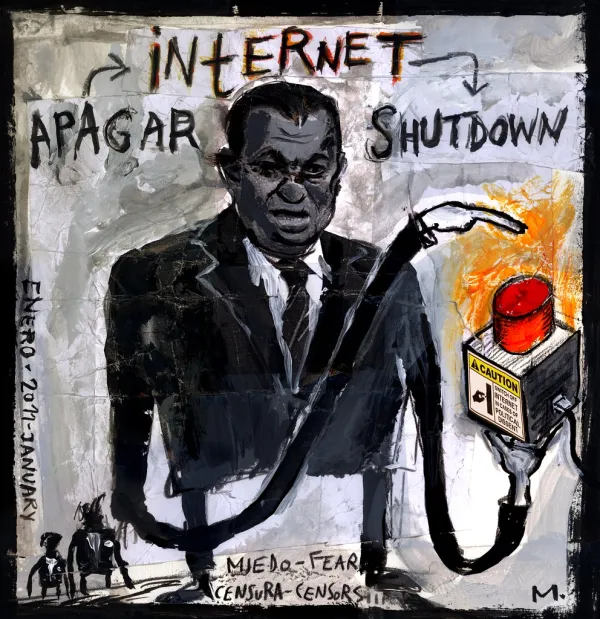
It was hardly a surprise that, on January 26, the Egyptian regime decided to block access to social media in a desperate attempt to prevent the spread of the protests.