
THE G-20 IN PITTSBURGH
by Tom Over 9-23-09
<br><br>
On Tuesday, Sept 22, activists from Philadelphia, New York City, Pittsburgh and other cities held a mock funeral procession to demand better policies for addressing the AIDS pandemic, a day ahead of the arrival of delegates for the G-20.
<br><br>
The approximately 50 participants in the New Orleans-style funeral march drew a mix of interest, irritation, and amusement from onlookers in the business district of downtown Pittsburgh.
<br><br>
At the head of the funeral march where pallbearers carried a cardboard coffin, a man shouted into a microphone while someone else carried a portable amplifier, “when people with AIDS are under attack, what do we do ?” and marchers shouted in unison, “fight back!”
<br><br>
Amidst the early afternoon bustle of an weekday, the demonstrators repeated this call-and-answer and similar chants as the funeral march made its way around the perimeter of the David L. Lawrence Convention Center, the site of the G-20 Summit later this week.
<br><br>
Erica Goldberg works with ACT UP Philadelphia. She said global health is not on the agenda of the G-20 Summit.
“One of the things that some of the G-20 nations have promised us is funding for the global fund to fight, TB, malaria, and HIV/AIDS. This is all really important, especially if we want to meet the United Nations’ Millennium goal of eradicating these diseases by 2015. As of right now, this won’t be met. We have to hold our leaders accountable. They are the ones making decisions for the poorer countries,” Goldberg said.
<br><br>
She commented on the timing of the demonstration. “We wanted this to be the first thing they (the G-20 delegates) see. They’re coming here tomorrow. We’re holding them accountable. This needs to be on the agenda.”
<br><br>
She said AIDS activists chose Sept 22, two days before the official start of the G-20 Summit, and one day before the arrival of the delegates, so as to not have to compete with other protests. Also, she said the AIDS activists figured there would be less of a chance of conflict with police if they staged their protest earlier in the week.
<br><br>
“We hope that this will hit the papers tomorrow, that it’s the first thing they see when they walk in, that they have this on their conscience and know we’re not going away,” Goldberg said. She urges people to contact legislators about supporting the Global Fund to Fight AIDS, Tuberculosis, and Malaria.
“President Obama, as much as I love him, went back on his promise to fulfill the funding,” Goldberg said.
<br><br>
She commented on how drug companies factor into all of this. “ Medication does not need to be this expensive. They can definitely lower their prices. We have big drug interests lobbying to prevent AIDS medication from getting” to developing nations.
<br><br>
Goldberg said debt cancellation for developing nations is a factor that comes into play.
“When you don’t cancel debts of nations and they have to pay back loans to the IMF and the World Bank, they won’t have the funds necessary for getting AIDS medication, or they might get the medication but can’t pay the health professional because of their debt.
<br><br>
She said vested interested motivated by huge profits stand in the way of doing a better job of addressing tuberculosis, malaria, and HIV/AIDS. “We have the power, the ability, and the medication.”
World News
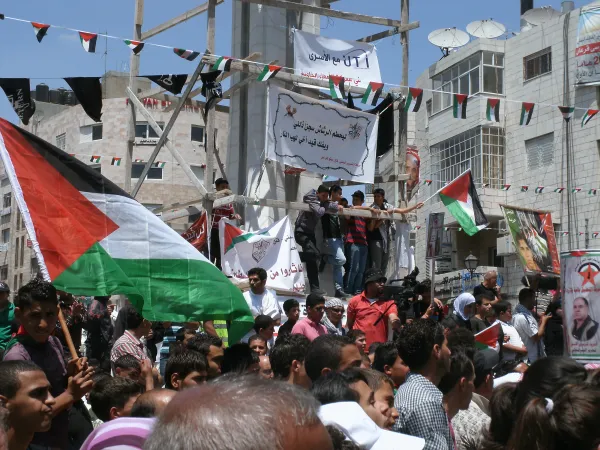
The Nakba is back on the Palestinian agenda.
For nearly three decades, Palestinians were told that the Nakba - or Catastrophe - is a thing of the past. That real peace requires compromises and sacrifices, therefore, the original sin that has led to the destruction of their historic homeland should be entirely removed from any ‘pragmatic’ political discourse. They were urged to move on.
The consequences of that shift in narrative were dire. Disowning the Nakba, the single most important event that shaped modern Palestinian history, has resulted in more than political division between the so-called radicals and the supposedly peace-loving pragmatists, the likes of Mahmoud Abbas and his Palestinian Authority. It also divided Palestinian communities in Palestine and across the world around political, ideological and class lines.
Israel’s coalition government of right-wing Prime Minister Naftali Bennett is on the verge of collapse, which is unsurprising. Israeli politics, after all, is among the most fractious in the world, and this particular coalition was born out of the obsessive desire to dethrone Israel’s former leader, Benjamin Netanyahu.
While Netanyahu was successfully ousted in June 2021, Bennett’s coalition has been left to contend with the painful reality that its odd political components have very little in common.
On April 6, Israeli lawmaker Ildit Salman defected from the coalition, leaving Bennett and his temporary allies wrangling with the fact that their Knesset (Israel’s Parliament) coalition no longer has a majority. Now that the Knesset count stands at 60-60, a single defection could potentially send Israelis back to the voting booth, which has been quite habitual recently.
BANGKOK, Thailand -- In a stunning victory, Ferdinand "Bongbong" Marcos Jr. won the Philippines' presidential election, bringing him to the frontlines of U.S.-China confrontations in the South China Sea amid denials that he is Beijing's puppet "Manchurian candidate".
Mr. Marcos Jr.'s election advantage was that he is the son of his "idol," the somewhat popular, late U.S.-backed dictatorial president Ferdinand Marcos Sr. and his flamboyant wife Imelda who is now 92.
"When I miss the precious presence of [husband] Ferdinand, I call, 'Bongbong' and ask him to come," Imelda Marcos told me in a 1991 interview when she and her children were permitted to return to the Philippines from exile, two years after her husband died in Hawaii.
"He sounds like his father. I listen to Bongbong, it's eerie. Like Ferdinand was there. Even in his mannerisms. His voice. His movements. His hand movements. When he walks.
"I feel surely Ferdinand the First was born again in Ferdinand the Second."
More than 18,000 positions were decided in the polls including senators, city councilors and others.
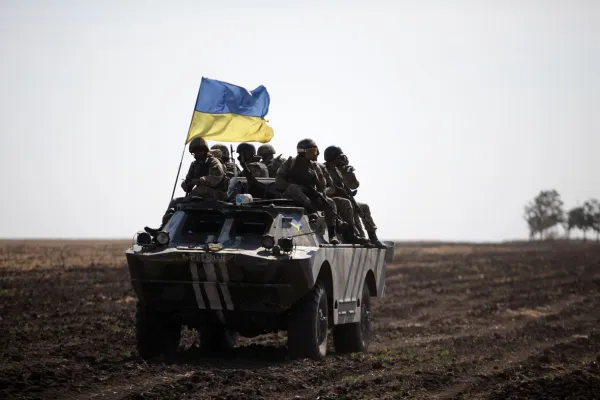
The horrific scenario, however, awaits countries in the Global South which, unlike Germany, will not be able to eventually substitute Russian raw material from elsewhere.

Starting on April 15, the Israeli occupation army and police raided Al-Aqsa Mosque in Occupied East Jerusalem on a daily basis.

BANGKOK, Thailand -- A Las Vegas-based cannabis company has become the first foreign franchise to jointly open a medical marijuana clinic in Thailand, treating Parkinson's, Alzheimer's, cancer, eating disorders and insomnia in Bangkok's flashy tourist zone.
"I hope that Thailand becomes the Silicon Valley of Cannabis for Asia," the clinic's Thai partner Julpas Kruesopon -- "or as most people in Thailand call me now, 'Mister Weed'" -- said in an interview.
"I welcome Israeli companies. I welcome European companies. The key is to grow the industry," Mr. Julpas said.
The Herbidus Medical Center opened in March along Bangkok's main Sukhumvit Road which is lined with restaurants, hotels, massage parlors, sex bars, and extravagant shopping malls amid exotic sleaze and 5-star venues.
The U.S.-Thai joint venture "makes us, to the best of our knowledge, the first international company with an operational presence in the Asian legal cannabis market," Audacious CEO Terry Booth said in a statement.
Mr. Julpas said theirs was "absolutely" the first joint cannabis clinic with a foreign company in Thailand.
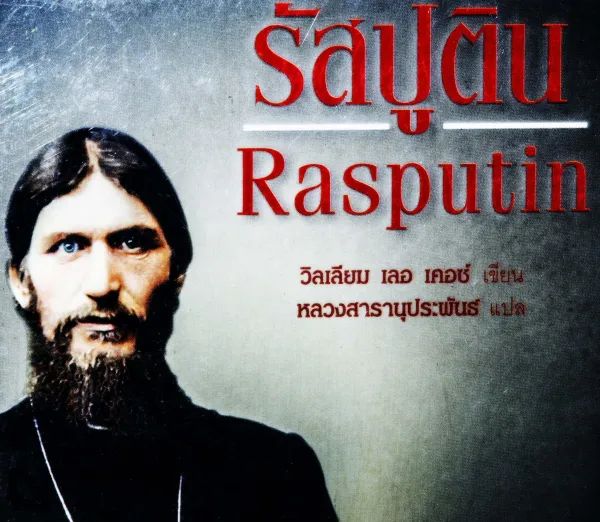
BANGKOK, Thailand -- Moscow is trying to profit by offering weapons, investment, tourism and diplomatic support to Thailand and other best friends in Southeast Asia, to buffer Russia's international losses caused by U.S.-led sanctions against its invasion of Ukraine.
Russia's latest success appeared April 7 when Bangkok joined 57 other nations and abstained from voting at the United Nations General Assembly when it suspended Moscow from the UN Human Rights Council (UNHRC).
"Thailand is deeply sorry about the loss of life, and is gravely concerned about the escalating conflict and humanitarian crisis in Ukraine, and believes urgent actions are needed to address the allegations about human rights violations," by Russia during its war in Ukraine, said Thailand's Ambassador to the UN Suriya Chindawongse.
Other Southeast Asian abstentions included Cambodia, Singapore, Malaysia, and Indonesia.
Thailand -- a non-NATO U.S. treaty ally -- declined on February 28 to obey an unusually pointed, public demand by 25 Bangkok-based European ambassadors telling the government to condemn the invasion.
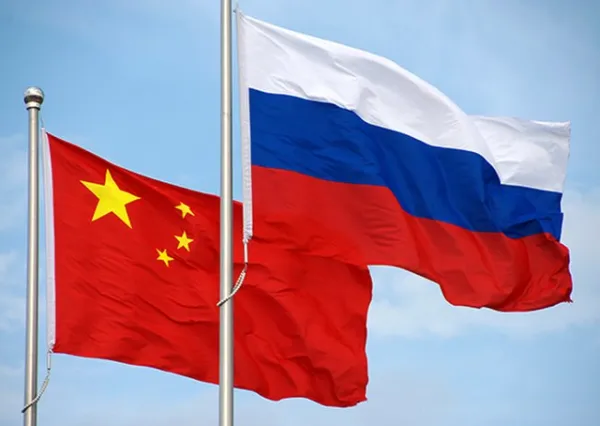
The meeting between Russian Foreign Minister Sergey Lavrov and Chinese Foreign Minister Wang Yi, in the Chinese eastern city of Huangshan on March 30, is likely to go down in history as a decisive meeting in the relations between the two Asian giants.
The meeting was not only important due to its timing or the fact that it reaffirmed the growing ties between Moscow and Beijing, but because of the resolute political discourse articulated by the two top diplomats.
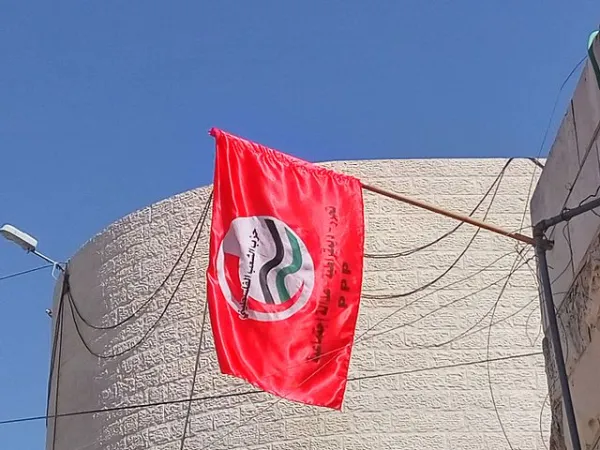
When Russian and Ukrainian delegations meeting in Turkey on March 29 reached an initial understanding regarding a list of countries that could serve as security guarantors for Kyiv should an agreement be struck, Israel appeared on the list. The other countries included the US, the UK, China, Russia, France, Turkey, Germany, Canada, Italy and Poland.