
THE G-20 IN PITTSBURGH
by Tom Over 9-23-09
<br><br>
On Tuesday, Sept 22, activists from Philadelphia, New York City, Pittsburgh and other cities held a mock funeral procession to demand better policies for addressing the AIDS pandemic, a day ahead of the arrival of delegates for the G-20.
<br><br>
The approximately 50 participants in the New Orleans-style funeral march drew a mix of interest, irritation, and amusement from onlookers in the business district of downtown Pittsburgh.
<br><br>
At the head of the funeral march where pallbearers carried a cardboard coffin, a man shouted into a microphone while someone else carried a portable amplifier, “when people with AIDS are under attack, what do we do ?” and marchers shouted in unison, “fight back!”
<br><br>
Amidst the early afternoon bustle of an weekday, the demonstrators repeated this call-and-answer and similar chants as the funeral march made its way around the perimeter of the David L. Lawrence Convention Center, the site of the G-20 Summit later this week.
<br><br>
Erica Goldberg works with ACT UP Philadelphia. She said global health is not on the agenda of the G-20 Summit.
“One of the things that some of the G-20 nations have promised us is funding for the global fund to fight, TB, malaria, and HIV/AIDS. This is all really important, especially if we want to meet the United Nations’ Millennium goal of eradicating these diseases by 2015. As of right now, this won’t be met. We have to hold our leaders accountable. They are the ones making decisions for the poorer countries,” Goldberg said.
<br><br>
She commented on the timing of the demonstration. “We wanted this to be the first thing they (the G-20 delegates) see. They’re coming here tomorrow. We’re holding them accountable. This needs to be on the agenda.”
<br><br>
She said AIDS activists chose Sept 22, two days before the official start of the G-20 Summit, and one day before the arrival of the delegates, so as to not have to compete with other protests. Also, she said the AIDS activists figured there would be less of a chance of conflict with police if they staged their protest earlier in the week.
<br><br>
“We hope that this will hit the papers tomorrow, that it’s the first thing they see when they walk in, that they have this on their conscience and know we’re not going away,” Goldberg said. She urges people to contact legislators about supporting the Global Fund to Fight AIDS, Tuberculosis, and Malaria.
“President Obama, as much as I love him, went back on his promise to fulfill the funding,” Goldberg said.
<br><br>
She commented on how drug companies factor into all of this. “ Medication does not need to be this expensive. They can definitely lower their prices. We have big drug interests lobbying to prevent AIDS medication from getting” to developing nations.
<br><br>
Goldberg said debt cancellation for developing nations is a factor that comes into play.
“When you don’t cancel debts of nations and they have to pay back loans to the IMF and the World Bank, they won’t have the funds necessary for getting AIDS medication, or they might get the medication but can’t pay the health professional because of their debt.
<br><br>
She said vested interested motivated by huge profits stand in the way of doing a better job of addressing tuberculosis, malaria, and HIV/AIDS. “We have the power, the ability, and the medication.”
World News

“Could China’s economy collapse?” was the title of an October 15 article published by QUARTZ magazine. The article makes an ominous case of a Chinese economic crash and its impact on China’s and global economies.
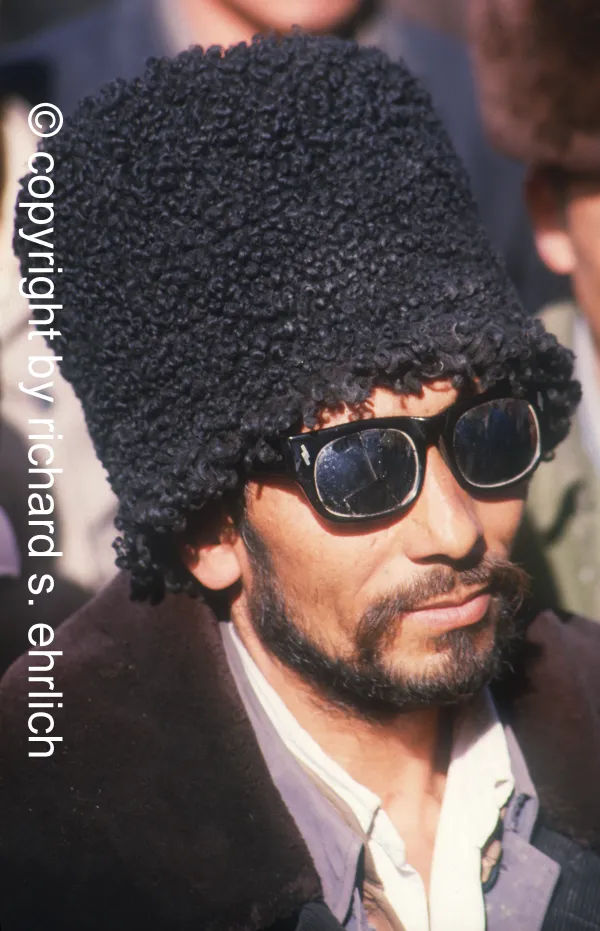
BANGKOK, Thailand -- Ancient Silk Road travelers cursed China's
largest desert as "Takla Makan," an ominous Persian-Turkic expression
which translates as "enter and you may never return."
Undeterred by its sandstorms and merciless terrain in the oblong basin
north of Tibet's glacier-packed peaks, China has announced completion
of the final section of a Taklamakan Desert railway loop line, the
world's first to encircle a desert.
Elsewhere, China is constructing maglev train systems, capable of
hurtling passengers and freight hundreds of miles per hour, including
an underwater route near Shanghai to reach tiny offshore islands.
These latest railways increase China's military, industrial,
agricultural and political prowess, amid escalating rivalry with the
U.S. over each nation's capabilities.
The Taklamakan Desert railway loop also allows Beijing greater access
to rebellious Kashgar, a distant southwestern city near vulnerable
borders with India, Pakistan, Afghanistan and Kyrgyzstan.
Kashgar and elsewhere in Xinjiang province comprise a large population
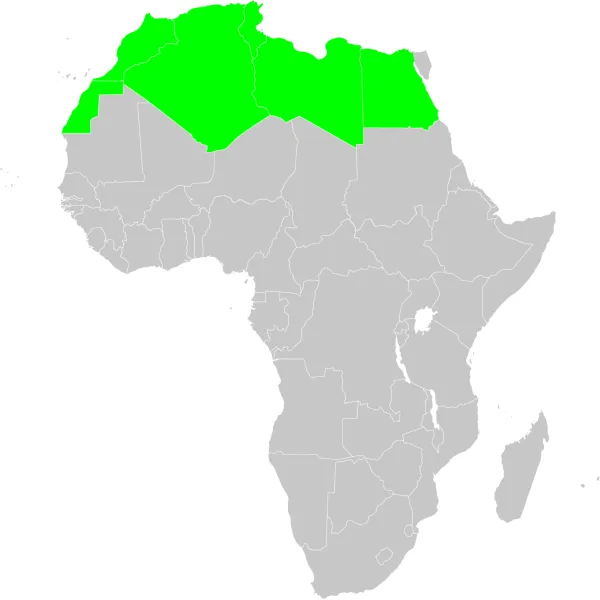
When the news circulated that Morocco's leading political group, the Development and Justice Party (PJD), has been trounced in the latest elections, held in September, official media mouthpieces in Egypt celebrated the news as if the PJD's defeat was, in itself, a blow to the Egyptian Muslim Brotherhood movement. Regionally, political commentators who dedicated much of their time to discredit various Islamic political parties - often on behalf of one Arab government or another - found in the news another supposed proof that political Islam is a failure in both theory and practice.
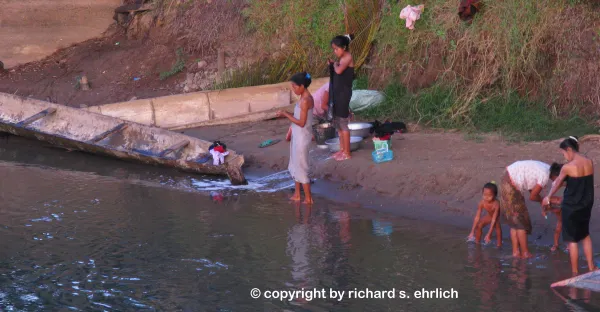
BANGKOK, Thailand -- After China's recent cryptocurrency crackdown,
impoverished Laos is now allowing Bitcoin mining, fueled by abundant
hydroelectric power from the Mekong River and shrugging off U.S.
warnings of disastrous environmental problems.
The surprise announcement on September 9 by the Prime Minister's
Office, allowing the creation of Bitcoin, Ethereum, and other
blockchain-based currencies, makes Laos the only Southeast Asian
country to officially permit and participate in it.
China had allowed Bitcoin miners to feed on its cheap electricity for
several years -- mostly in the provinces of Inner Mongolia, Xinjiang,
Sichuan and Yunnan -- but shut down their systems in May, by
tightening regulations.
Worried foreign investors struggled to export expensive, delicate,
massive computers out of China while scouring the world for fresh
places to set up.
China's central bank also banned on all cryptocurrency transactions,
in an effort to control the flow of money in and out of the country.
"China has shot itself in the foot by going after its Bitcoin miners,"

Canada’s unpopular general election of September 20 is increasingly recognized as a mistake by the country’s leading political analysts. However, this mistake could potentially prove to be the very undoing of Justin Trudeau’s Liberal Party in future elections.
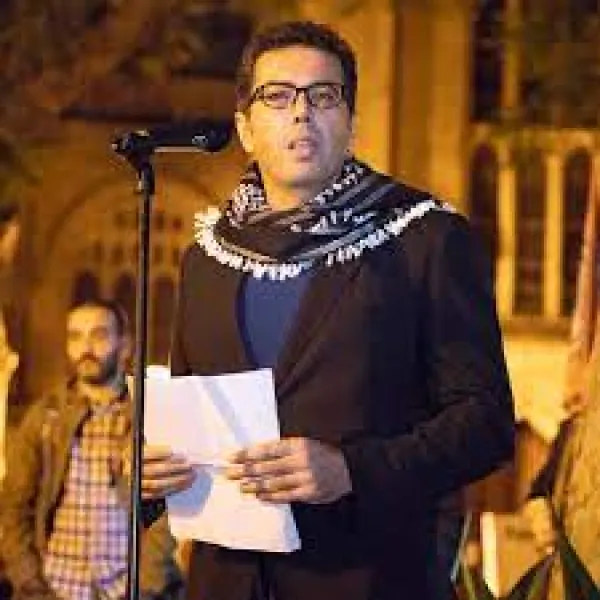
The political division in Palestinian society is deep-rooted, and must not be reduced to convenient claims about the ‘Hamas-Fatah split’, elections, the Oslo accords and subsequent disagreements. The division is linked to events that preceded all of these, and not even the death or incapacitation of the octogenarian, Mahmoud Abbas, will advance Palestinian unity by an iota.
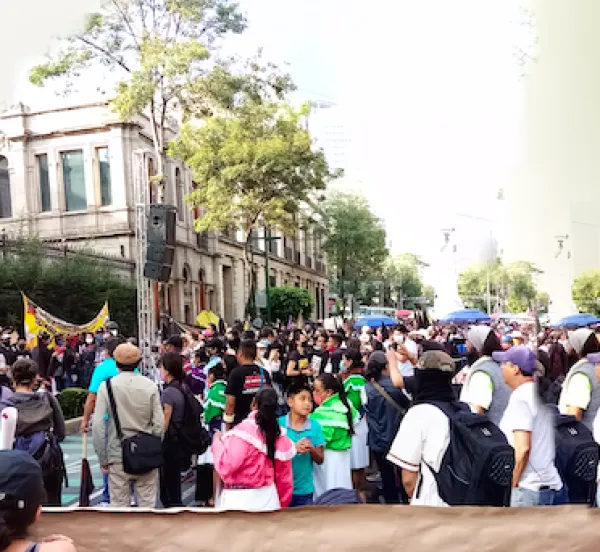
The street in front of Mexico’s Secretary of the Interior was filled Friday afternoon in solidarity with the Zapatista National Liberation Army (EZLN). The peaceful, youthful crowd was made up of mostly organized contingents of long-time Zapatista supporters from Mexico City’s humble neighborhoods, including many indigenous groups.
The Sunday before, the EZLN made a public communiqué warning that the state of Chiapas is “on the verge of civil war,” denouncing “actions and omissions of the state and federal governments regarding” recent kidnappings, murders and detentions.
In Mexico City, this reporter counted about three thousand protesters of many of the country’s ethnicities responding to the EZLN’s call made only the day before to march and protest to this downtown building — the equivalent to the U.S.’s State Department or the U.K. Home Office. Protests were likewise held in cities across the country and at Mexican embassies around the world.
Simultaneous with the march, a contingent took over the Chiapas state offices here in the nation’s capital.
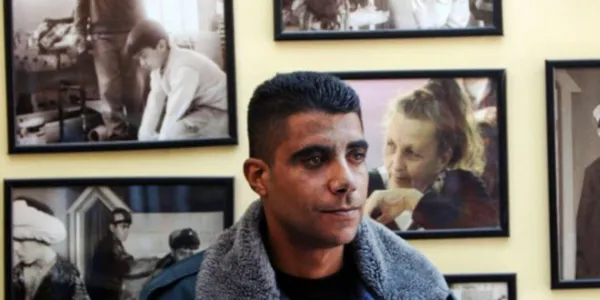
Zakaria Zubeidi is one of six Palestinian prisoners who, on September 6, tunneled their way out of Gilboa, a notorious, high-security Israeli prison. Zubeidi was recaptured a few days later. The large bruises on Zubeidi’s face told a harrowing story, that of a daring escape and of a violent arrest. However, the story does not begin, nor end, there.

Scenes of thousands of Afghans flooding the Kabul International Airport to flee the country as Taliban fighters were quickly consolidating their control over the capital, raised many questions, leading amongst them: who are these people and why are they running away?
In the US and other Western media, answers were readily available: they were mostly ‘translators’, Afghans who ‘collaborated’ with the US and other NATO countries; ‘activists’ who were escaping from the brutality awaiting them once the Americans and their allies left the country, and so on.
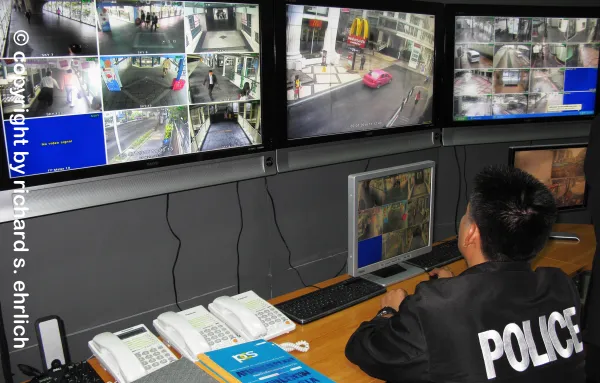
BANGKOK, Thailand -- Thailand's prime minister and public appeared
horrified after watching provincial police chief "Joe Ferrari"
allegedly torture and kill a drug suspect by wrapping his head with
layers of plastic bags until he suffocated.
"I put the bag on his head only because I did not want him to see my
face," Police Col. Thitisan Utthanaphon, 39, told this shocked nation
which saw the suffocation and death in a nine-minute video on
nationwide TV news and online.
"But he tried to rip the bag off, so I had to tie him down and put
handcuffs on him, or else he would try to rip the bag.
"My intention was to get information, so we could find the drugs that
are hurting the people in Nakhon Sawan," Col. Thitisan said on August
26 in the police-supervised broadcast from in his town 150 miles (250
km) north of Bangkok.
"I admit what I have done is wrong, and I will accept whatever the
court rules. They can sentence me to life imprisonment. I had no
intention to kill him."
The unfolding case is gripping the public, because it provides a rare,