
THE G-20 IN PITTSBURGH
by Tom Over 9-23-09
<br><br>
On Tuesday, Sept 22, activists from Philadelphia, New York City, Pittsburgh and other cities held a mock funeral procession to demand better policies for addressing the AIDS pandemic, a day ahead of the arrival of delegates for the G-20.
<br><br>
The approximately 50 participants in the New Orleans-style funeral march drew a mix of interest, irritation, and amusement from onlookers in the business district of downtown Pittsburgh.
<br><br>
At the head of the funeral march where pallbearers carried a cardboard coffin, a man shouted into a microphone while someone else carried a portable amplifier, “when people with AIDS are under attack, what do we do ?” and marchers shouted in unison, “fight back!”
<br><br>
Amidst the early afternoon bustle of an weekday, the demonstrators repeated this call-and-answer and similar chants as the funeral march made its way around the perimeter of the David L. Lawrence Convention Center, the site of the G-20 Summit later this week.
<br><br>
Erica Goldberg works with ACT UP Philadelphia. She said global health is not on the agenda of the G-20 Summit.
“One of the things that some of the G-20 nations have promised us is funding for the global fund to fight, TB, malaria, and HIV/AIDS. This is all really important, especially if we want to meet the United Nations’ Millennium goal of eradicating these diseases by 2015. As of right now, this won’t be met. We have to hold our leaders accountable. They are the ones making decisions for the poorer countries,” Goldberg said.
<br><br>
She commented on the timing of the demonstration. “We wanted this to be the first thing they (the G-20 delegates) see. They’re coming here tomorrow. We’re holding them accountable. This needs to be on the agenda.”
<br><br>
She said AIDS activists chose Sept 22, two days before the official start of the G-20 Summit, and one day before the arrival of the delegates, so as to not have to compete with other protests. Also, she said the AIDS activists figured there would be less of a chance of conflict with police if they staged their protest earlier in the week.
<br><br>
“We hope that this will hit the papers tomorrow, that it’s the first thing they see when they walk in, that they have this on their conscience and know we’re not going away,” Goldberg said. She urges people to contact legislators about supporting the Global Fund to Fight AIDS, Tuberculosis, and Malaria.
“President Obama, as much as I love him, went back on his promise to fulfill the funding,” Goldberg said.
<br><br>
She commented on how drug companies factor into all of this. “ Medication does not need to be this expensive. They can definitely lower their prices. We have big drug interests lobbying to prevent AIDS medication from getting” to developing nations.
<br><br>
Goldberg said debt cancellation for developing nations is a factor that comes into play.
“When you don’t cancel debts of nations and they have to pay back loans to the IMF and the World Bank, they won’t have the funds necessary for getting AIDS medication, or they might get the medication but can’t pay the health professional because of their debt.
<br><br>
She said vested interested motivated by huge profits stand in the way of doing a better job of addressing tuberculosis, malaria, and HIV/AIDS. “We have the power, the ability, and the medication.”
World News
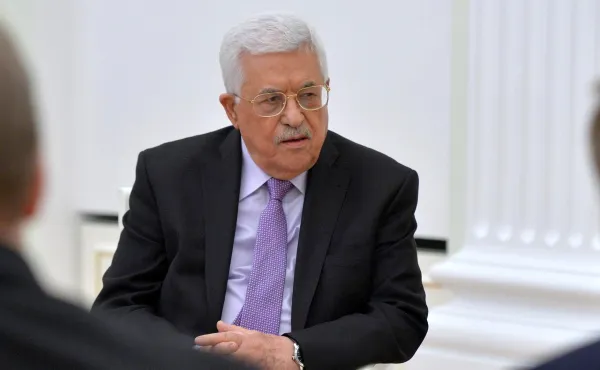
No one seemed as excited about the election of Joe Biden being the next President of the United States as Palestinian Authority President, Mahmoud Abbas. When all hope seemed lost, where Abbas found himself desperate for political validation and funds, Biden arrived like a conquering knight on a white horse and swept the Palestinian leader away to safety.
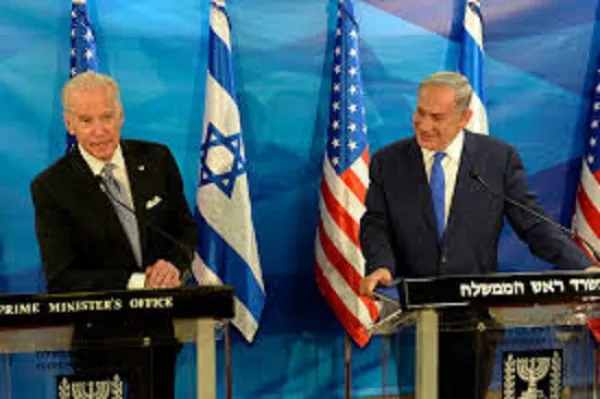
Right-wing Israeli Prime Minister, Benjamin Netanyahu, has nothing to worry about as the man who will directly handle America’s foreign policy in the Middle East is a loyal friend of Israel. Crisis averted.
President-elect, Joe Biden’s appointment of Antony J. Blinken as his Secretary of State was a master stroke, according to the Biden Administration. Blinken is a State Department veteran, a strong believer in a US-led Western alliance and a true friend of Israel.
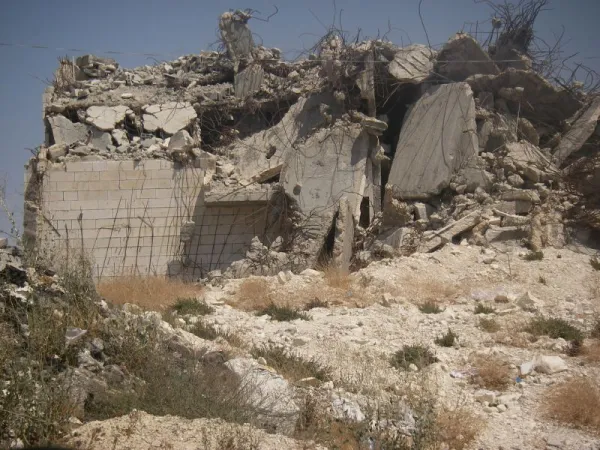
Once again, Europe's top diplomats expressed their ‘deep concern’ regarding Israel’s ongoing illegal settlement expansion, again evoking the maxim that Israeli actions “threaten the viability of the two-state solution”.
This position was communicated by EU Foreign Affairs Chief, Josep Borrell, on November 19, during a video-conference with Palestinian Authority Foreign Minister, Riyad al-Maliki.
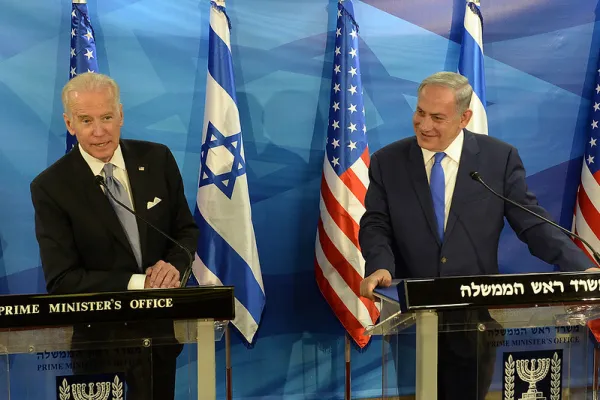
Even though there was virtually no debate on foreign policy during the recent presidential campaign, there has been considerable discussion of what President Joe Biden’s national security team might look like. The general consensus is that the top levels of the government will be largely drawn from officials who previously served in the Obama administration and who are likely to be hawkish. There has also been, inevitably, some discussion of how the new administration, if it is confirmed, will deal with Israel and the Middle East in general.
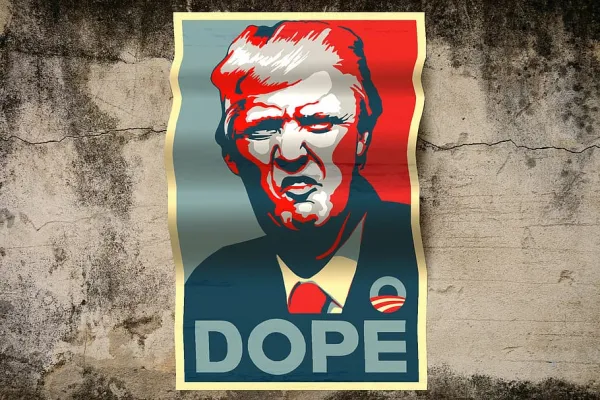
In January 2017, the Economist Intelligence Unit (EIU)’s Democracy Index downgraded the state of democracy in the United States from “full democracy” to “flawed democracy”.
The demotion of a country that has constantly prided itself, not only on being democratic but also on championing democracy throughout the world, took many by surprise. Some US pundits challenged the findings altogether.
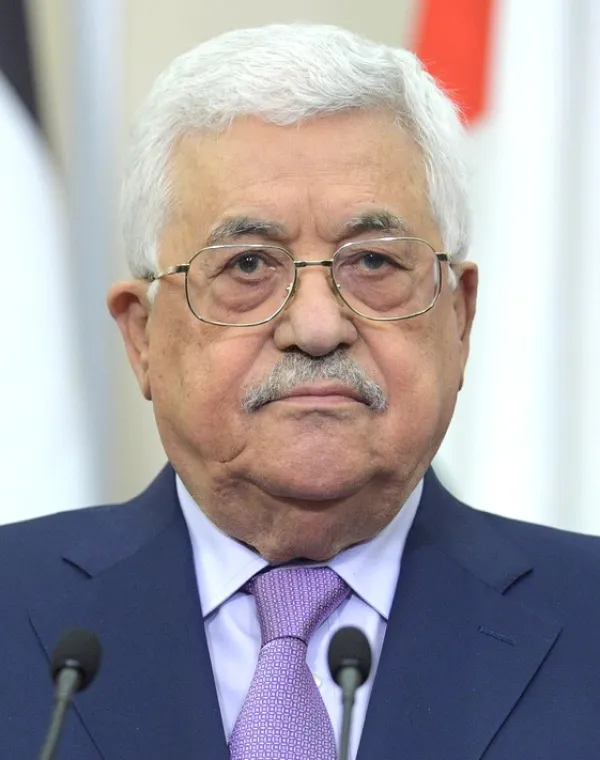
“If we are going to live another four years with President Trump, God help us, God help you and God help the whole world.”
These were the words of Palestinian Authority Prime Minister, Mohammed Shtayyeh, during a virtual meeting with European legislators on November 3. While some may agree with Shtayyeh’s assessment, such utterances by a top Palestinian official are hardly reassuring.

There is no moral or ethical justification for the killing of innocent people, anywhere. Therefore, the murder of three people in the French city of Nice on October 29 must be wholly and unconditionally rejected as a hate crime, especially as it was carried out in a holy place, the Notre Dame Basilica.
However, we would be remiss to ignore the political context that led a 21-year-old Tunisian refugee to allegedly stage a knife attack against peaceful worshippers in Nice. While it is fairly easy to recognize the individual culprit behind such a violent event, it takes much introspection, let alone honesty, to identify the true culprits, who, often for political reasons, fan the flames of hate and violence.
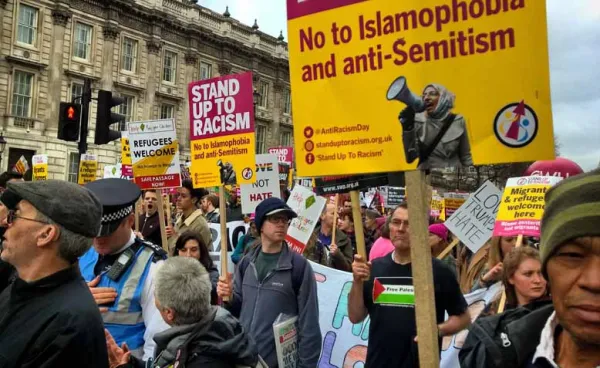
The discussion on institutional Israeli racism against its own Palestinian Arab population has all but ceased following the final approval of the discriminatory Nation-State Law in July 2018. Indeed, the latest addition to Israel’s Basic Law is a mere start of a new government-espoused agenda that is designed to further marginalize over a fifth of Israel’s population.

BANGKOK, Thailand -- Thailand's U.S.-backed authoritarian leader
seized power six years ago in a military coup but now appears
bewildered, vulnerable and unable to stop two months of street
protests against the government and previously monarchy.
Some people wonder if Prime Minister Prayuth Chan-ocha can stay at the
top, who might replace him, and will bullets be used against the tens
of thousands of peaceful, idealistic youths demanding revolutionary
changes.
Many Thais predict the protesters will not be able to curtail the vast
influence and wealth of 68-year-old King Vajiralongkorn.
"Now it is understood that the country needs people who love the
country and love the monarchy,” the constitutional king said in a
speech on October 16.
Prayuth agreed and recently said, "What the government needs to do is
to protect the monarchy.
"There are millions of people who are loyal to the monarchy, and they
are in all provinces. So please help us defuse the tension."
University students and school children have been blocking afternoon
traffic in scattered cities, voicing often vulgar speeches against
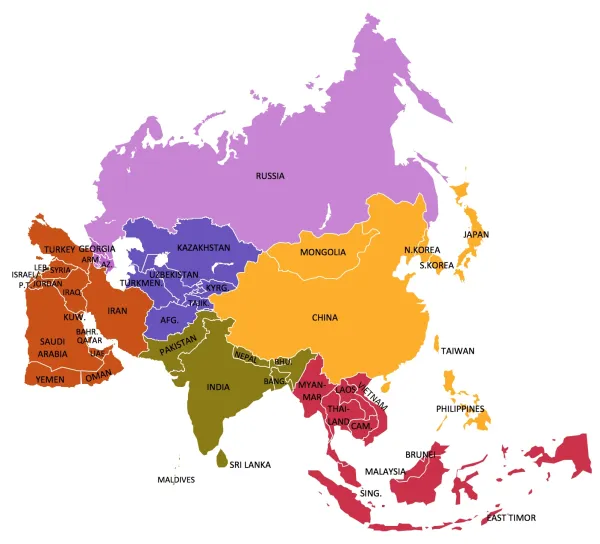
The outdated notion that China ‘just wants to do business’ should be completely erased from our understanding of the rising global power’s political outlook.
Simply put, Beijing has long realized that, in order for it to sustain its economic growth unhindered, it has to develop the necessary tools to protect itself, its allies and their combined interests.
The need for a strong China is not a novel idea developed by the current Chinese President, Xi Jinping. It goes back many decades, spanning various nationalist movements and, ultimately, the Communist Party. What sets Xi apart from the rest is that, thanks to the unprecedented global influence acquired by Beijing during his incumbency (2013 - present), China is now left with no alternative but to match its ‘economic miracle’ with a military one.