
Global


The Best of Substack -Today.
Today is a great example of why everyone who is interested in current affairs should be using substack to gather information. I could write this everyday, but for today:
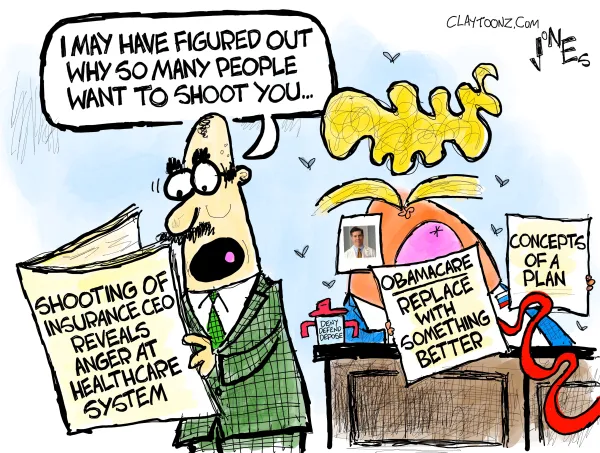
Ken Klippenstein has published Luigi Mangione's manifesto. The mainstream media in the American Empire is funded via advertising revenue by the health care industry, so it should be no surprise that they are burying Luigi's manifesto. Ken asked the MSM for comment. “I queried the New York Times, Washington Post, CNN and NBC to at least give them a chance to make their case for withholding the Luigi Mangione manifesto. They didn't even respond! “
Ken also published the UHC talking points to it's employees. And for your entertainment, the comments on his this are fun reading. No MSM hand wringing about how terrible we should feel when a psychopath is murdered. Instead, what does Luigi have to say?
The manifesto is partially reprinted below.

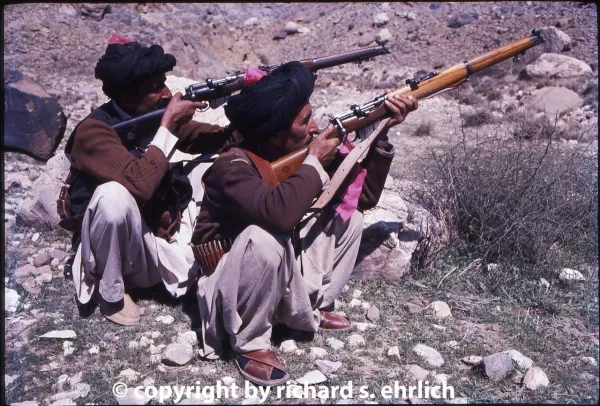
BANGKOK, Thailand -- China's joint, three-week, anti-terrorism exercise in Pakistan on November 20-December 11 was to help defend Beijing's $70 billion Belt and Road Initiative projects against deadly anti-Chinese insurgents in Baluchistan province.
Under threat is the China-Pakistan Economic Corridor (CPEC) which includes upgrading Pakistan's north-south roads and Karakoram Highway, to link Kashgar in China's landlocked Xinjiang province directly to Pakistan's hammerhead-shaped peninsula and port of Gwadar in Baluchistan on the Arabian Sea, close to the Persian Gulf.
The CPEC is also expanding Gwadar's deep-water port, so large Chinese vessels will have a much shorter route for shipping petroleum from the Persian Gulf to oil-hungry China.
Currently, oil-laden ships bound for China depart the Middle East through the Persian Gulf into the Arabian Sea and then route south around India toward Singapore.
To reach China's east coast ports, those ships must pass through the congested Malacca Strait, where U.S.-backed Singapore monitors its narrow waters.
People’s willingness to get upset about evidence-free allegations of rapes by Hamas is not purely because people rightly condemn rape but also because the topic distracts from condemning open shameless public mass-murder which happens to be even worse than rape.
All the attention going to which idiots are supposedly protesting Jewish restaurants or murdering Palestinian college students is not due purely to wanting to place blame correctly but also to valuing any topic that’s not the open shameless public mass murder underway right before our eyes.
People’s obsession with who knew what before the Hamas attack is not due purely to wanting to expose Israel’s lies or Hamas’s nefariousness but also to how hard it is to look at open shameless public mass murder underway before our eyes.
**I’ll be speaking on this urgent situation at the National Press Club in DC today, calling for cessation to the escalations which are now directly impacting America’s national security. Tune in at 5pm ET and watch the livestream on YouTube @DKucinich**
Has the world forgotten the real danger of nuclear war?
Do we live in a fantasy world where we think we can escalate tensions and put entire portions of the world under threat by using Ukraine as a sacrificial pawn (in what is classically sold as providing humanitarian and ally support) in a decades-long psychopathic foreign policy play to destroy Russia?
Caveat: The Free Press believes that the election results are in doubt due to the statistical analysis and evidence presented by computer and election security expert Stephan Spoonamore, which can be found in its entirety on substak. https://substack.com/@spoonamore