
Global

and friends and people we followed on social media before they left us.
(Please leave your comment. Mourn!) I mourn the loss of all lives,
especially the 31 members of my extended family, three first cousins and
their children, Refaat, Marouf, Hind, Hamza, Yousef, Ismael, and lately my
brilliant student Hatem. I mourn the destruction of our house, my books, my
mint plant, the pigeons, ducks, and rabbits. My bike. The family photo
album. The school where I taught. The graves of my relatives that were
razed, especially my young brother and my grandparents. I mourn, I mourn.
It does not end." Mosab Abu Taha
Ongoing US supported genocide: 365 days of forced starvation and deliberate
preventing humanitarian aid; 3628 massacres; 41900 registered deaths that
arrived at hospitals; over 10,000 missing presumed dead (some maybe in
Israeli jails); 11,458 registered women and >16,891 registered children
killed (710 less than one year old); estimated 90,000-100,000 dead due to
medical and food conditions; 986 medical personnel killed; 174 journalists
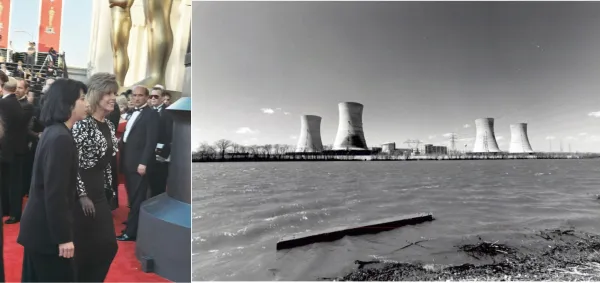
SLUGGO WASSERMAN: The prime mover of today’s show is an outrageous column that appeared in the LA Times attacking Jane Fonda’s magnificent op-ed questioning the move to re-open the atomic reactor at Three Mile Island.
Jane Fonda has turned out to be one of the world's great activists. She’s a wonderful human being, two-time Oscar winner, everybody in LA knows who Jane Fonda is.
She’s written one of the best op eds I’ve read on nuclear power. It has appeared in the Philadelphia Inquirer. It’s about 3 Mile Island, which they want to reopen.
Somebody in the American utility industry ate the brown acid at Woodstock and they keep coming up with these insane ideas.
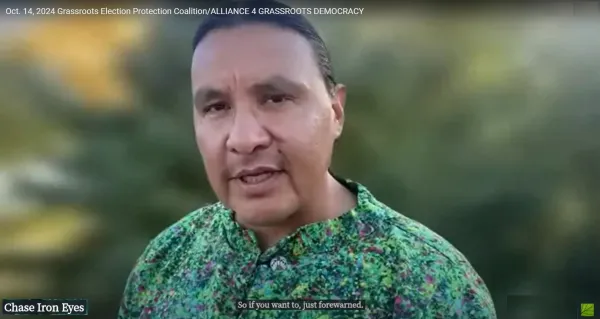
We start with the legendary Indigenous leader-lawyer CHASE IRON EYES, who gives us a brilliant overview of the current state of Indigenous America & Leonard Peltier.
The great grassroots organizer ANDREA MILLER of the Center for Common Ground gives us a guide to phone banking to spark voter turnout in critical states.
JASON BERLIN of Field Team Six fills us on his unique phone banking operation, focussed especially on young potential voters.
MYLA RESON asks Jason about what the polls are saying, especially in Montana, Texas & Florida.
The idea of switching and offsetting votes from fringe parties in and out of swing states comes from RUSSELL GREENE.
Threats to FEMA disaster workers in North Carolina are exposed by ILENE PROCTOR in Asheville.
MIKE HERSH gives us a quick introduction to a civil discussion of the situation in the Middle East.
Civilian deaths, land development issues, economic resources and spiritual forces are discussed by LYNN FEINERMAN.
STEVE CARUSO raises issues about the horrifying slaughter in Gaza.
Massive underground oil resources are discussed by DAVID GRACE.
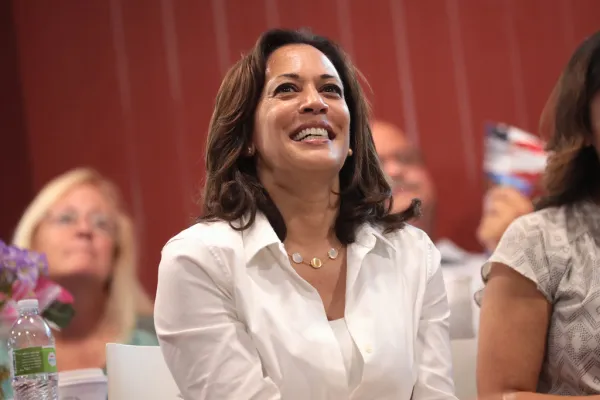
Dear Vice President Harris:
Allow me to offer my assessment as to where we stand regarding our hopes for your victory in the State of Michigan…
1. Your stunning candidacy has given tens of millions throughout the country a new hope — and a belief that we can save our Democracy, restore women’s fundamental rights, and create an economy where everyone has a seat at the table and a slice of the pie.
2. Those of us from Michigan have serious concerns about you possibly losing Michigan — and we just can’t let that happen. We fear you may not have the whole picture that we see here on the ground. This is why we are reaching out to you.
3. The war on Gaza has not only resulted in the deaths of 42,000+ civilians (nearly half of them children), but those still alive are literally being starved to death. Most hospitals, schools and social services have been obliterated. This suffering must end.

This week, the U.S. Department of the Treasury’s Office of Foreign Assets Control in a joint action with Canada Public Safety Ministery have officially designating the Samidoun Palestinian Prisoner Solidarity Network, or “Samidoun,” as a foreign terrorist organization and you would never guess why. Toronto Star ran a story yesterday, October 15, 2024, citing Canadian officials who accused the organization of spreading hate. Seriously? The US' reason was that Samidoun act as a sham charity that serves as a fundraiser for the Popular Front for the Liberation of Palestine (PFLP). Again, zero evidence. I will get to that in a in minute!

“The past carries unforgettable trauma and pain across the land and among generations of refugees; yet we choose to transform victimhood into agency. We want to be the authors of our future.”
Let these words resonate. In a sense, they’re all we have — if we oppose war and envision a future that transcends it. I’ve quoted these words of Ali Abu Awwad before. They’re part of the Palestinian Nonviolence Charter, but they reach beyond Palestine: deep into the soul, and the hope, of all humanity.
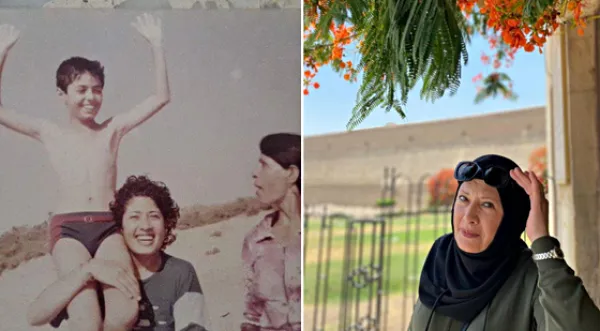
"Your lives will continue. With new events and new faces. They are the faces of your children, who will fill your homes with noise and laughter."
These were the last words written by my sister in a text message to one of her daughters.
Dr. Soma Baroud was murdered on October 9 when Israeli warplanes bombed a taxi that carried her and other tired Gazans somewhere near the Bani Suhaila roundabout near Khan Yunis, in the southern Gaza Strip.
I am still unable to understand whether she was on her way to the hospital, where she worked, or leaving the hospital to go home. Does it even matter?
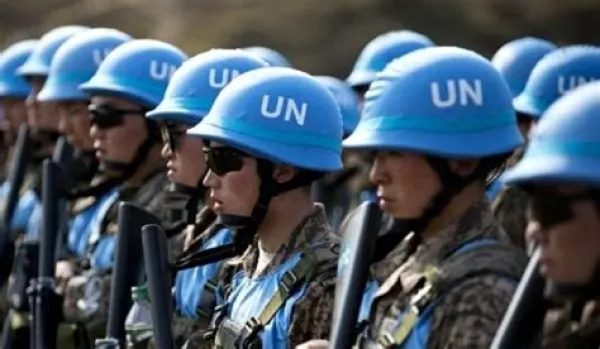
That Israel is now attacking United Nations peacekeepers in south Lebanon might well be decisive in turning its few remaining “friends” against it. Spain, France, Ireland and Italy, all of which contribute to the peacekeepers force (UNIFIL), and which continued to look the other way when Prime Minister Benjamin Netanyahu and his band of war criminals committed atrocity after atrocity against Arabs, are now finding themselves mortified when European soldiers are being attacked and wounded by cannon fire from snipers and Israeli tanks. In one incident, Israeli armored vehicles smashed their way through the gate of a UNIFIL base, allegedly using chemical weapons that injured 15 UN soldiers.