
Global
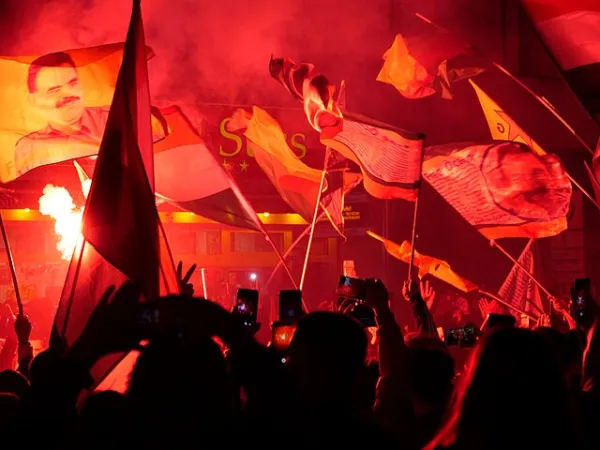
For decades, the struggle for national liberation in Palestine was rightly understood to be part and parcel of a global struggle for liberation, mainly in the Global South.
And since national liberation movements were, per definition, the struggle for indigenous people to assert their collective rights for freedom, equality and justice, the Palestinian struggle was positioned as part of this global indigenous movement.
Alas, the collapse of the Soviet Union, the growing dominance of the United States and its allies, the return of Western colonialism in the form of neocolonialism to Africa, the Middle East and elsewhere, have localized many of the indigenous movements’ struggles.
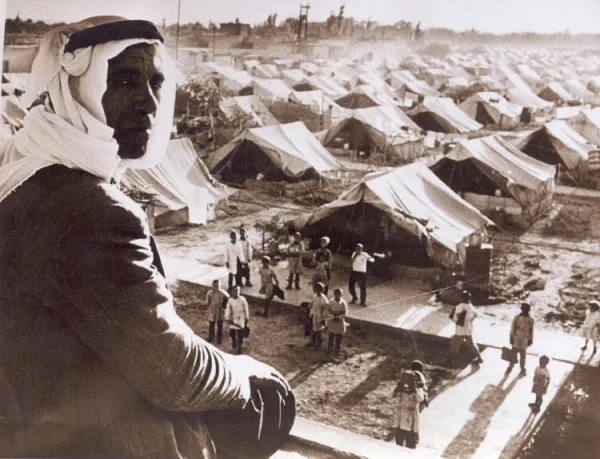
It is simply inaccurate to claim that the ongoing Israeli attempt to displace all, or many Palestinian refugees from Gaza to Sinai is a new idea, compelled by recent circumstances.
Displacing Palestinians, or as it is known in Israeli political lexicon, the ‘transfer’, is an old idea - as old as Israel itself.
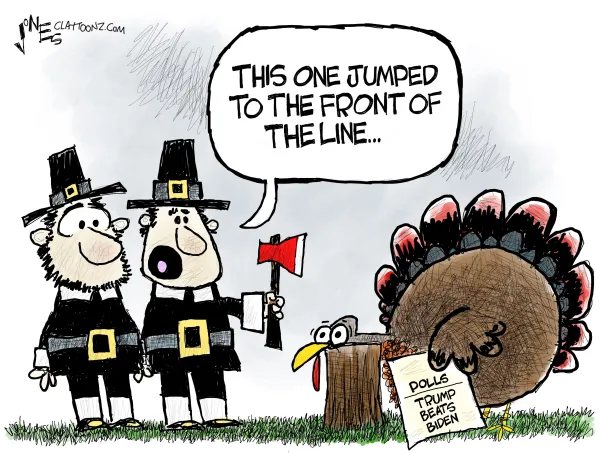
Much as I love Thanksgiving — seeing my family . . . oh the turkey, oh the cranberry sauce —I feel like maybe a bomb fragment has hit the “thanks” part.
I find myself struggling to let a sense of thankfulness flow, because when I do — and doing so has always been a crucial part of the holiday — suddenly my gratitude for the blessings of my life starts to feel more like luck and, even worse, privilege. Yeah, how nice. I’m thankful for the books in my library. I’m thankful for the air I breathe, for my daughter, my sister, my nieces and nephews and all the friendship, all the love, that fortifies my life. But then . . .
As I give thanks to the walls of my house, as I kiss the computer at which I sit, I hear bombs flying and suddenly I can envision all of it . . . all of it, all of it … being taken from me in an instant. I envision digging for a child in the rubble.
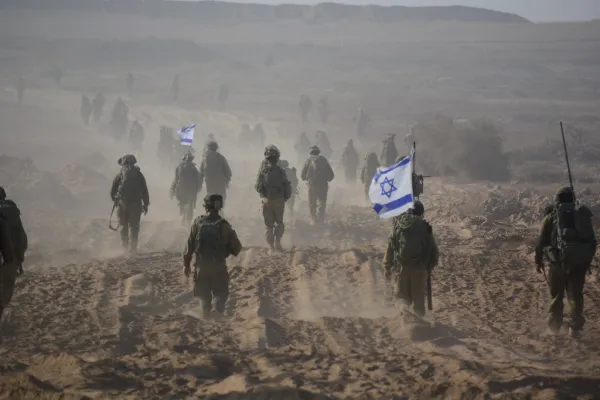
Israel continues to deliberately target residential buildings, hospitals,
schools, bakeries, flour mills, water storage facilities and other public
facilities. But they will nget to pause occasionally over the next few days
- like a rapist agreeing reluctantly to take a break occasionally. 6000
children were killed in the pointed genocidal campaign to drive Gazans to
Sinai in order to steal the natural gas off the coast of Gaza. The western
governments are still partners in the genocide even if they occasionally
start to speak of "unacceptable level of civilian deaths" (sicking language
for an ongoing genocide). Israel killed over 102 UN workers and 65
journalists to prevent the truth from coming out (largest number of
Jouranalists murdered in any conflict since WWII). The two wars go on: A war
of ethnic cleansing and genocide which is used to vent and give Israeli
soldiers the psychological satisfaction of murdering civilians because they
are losing the other war against the resistance.
There is an exchange of prisoners (as many as 150 Palestinian women and
1) NEED AN APOLOGY from Israel and its backers for lies about what happened
7 October (and it is not just the lie aboutt beheaded babies but more
seriously about who bombed Israeli houses and cars killing civilians) and
the genocide that folowed and still ongoing. Here are some of the lies
(taken from ongaza.org):
-IDF lookouts threatened with court martial after early worning about Hamas