Global
As Jews and refugees increasingly come under attack, the Wallis Annenberg Center for the Performing Arts returns to live theater with the world premiere of a play about a Jewish immigrant. Tevye in New York! imagines what happened to the Ukrainian dairyman depicted in the popular Broadway musical Fiddler on the Roof, which in turn is based on Sholem Aleichem’s short stories written in the 1890s. As those familiar with Fiddler may recall, the show ends with a pogrom (race riot) that, with only a three day notice (!!!) expels Tevye and his family from their Ukrainian village of Anatevka, and those beleaguered, bewildered, wandering Jews embark on their long march to America.
The two biggest cities on the shores of Lake Erie are now centers of political upheaval. For decades, Buffalo and Cleveland have suffered from widespread poverty and despair in the midst of urban decay. Today, the second-largest cities in New York and Ohio are battlegrounds between activists fighting for progressive change and establishment forces determined to prevent it.
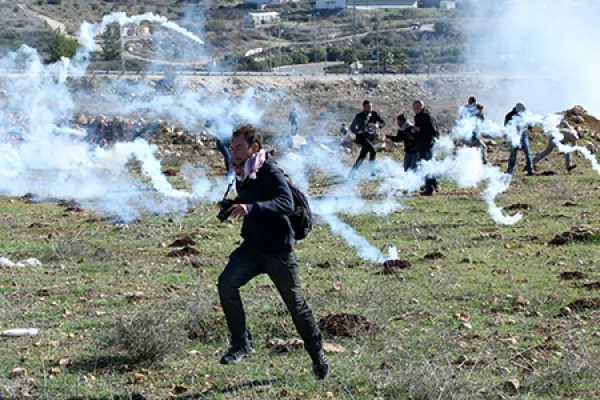
Many Palestinians believe that the May 10-21 military confrontation between Israel and the Gaza Resistance, along with the simultaneous popular revolt across Palestine, was a game-changer. Israel is doing everything in its power to prove them wrong.
Palestinians are justified to hold this viewpoint; after all, their minuscule military capabilities in a besieged and impoverished tiny stretch of land, the Gaza Strip, have managed to push back - or at least neutralize - the massive and superior Israeli military machine.
However, for Palestinians, this is not only about firepower but also about their coveted national unity. Indeed, the Palestinian revolt, which included all Palestinians regardless of their political backgrounds or geographic locations, is fostering a whole new discourse on Palestine - non-factional, assertive and forward-thinking.
The challenge for the Palestinian people is whether they will be able to translate their achievements into an actual political strategy, and finally transition past the stifling, and often tragic, post-Oslo Accords period.
For Derek Chauvin, nine minutes and twenty-nine seconds have turned into twenty-two and a half years — the prison sentence he recently received for the murder of George Floyd.
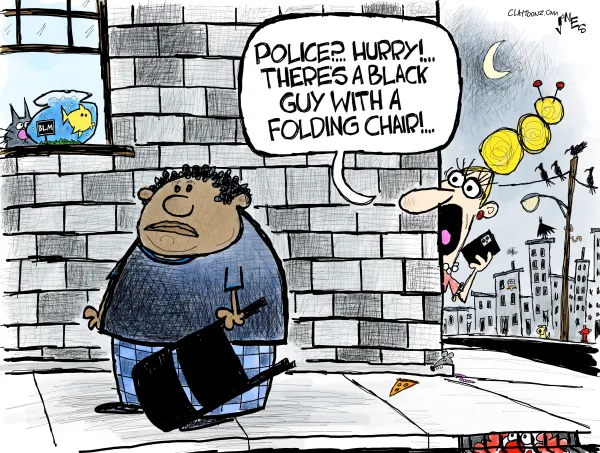
Chauvin famously knelt on George Floyd’s neck last year, as he lay handcuffed and helpless, for those nine-plus minutes, while three colleagues stood by, indifferent to the murder so obviously underway . . . police administering the death sentence to a man accused of trying to use a counterfeit $20 bill at a nearby convenience store. Unfortunately for the smirking Chauvin, his crime was caught on cellphone video and shocked much of the nation and the world. And a year later, something almost unprecedented happened: A police officer was held accountable for killing a black man.
But is this “justice” or is it simply bureaucracy? George Floyd is still dead. His young daughter remains robbed of her father; his loved ones, his family, still have a terrifying void in their lives. And the racist social structure in which Chauvin acted, though now under intense scrutiny, remains intact. People continue to needlessly suffer and die at the hands of our militarized police.
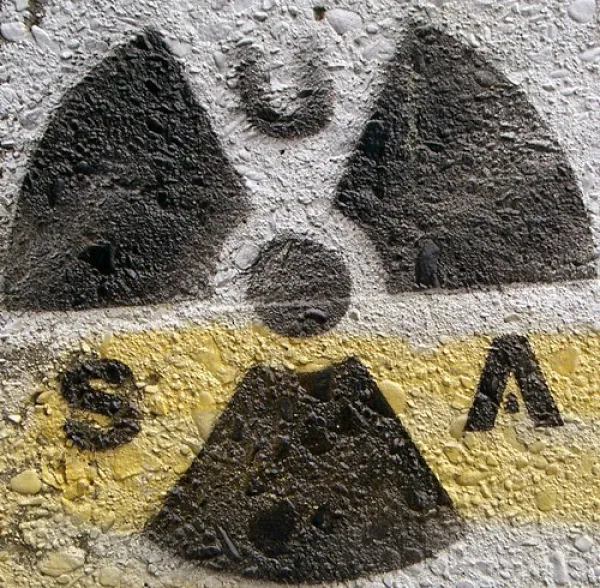
The horrifying collapse of a south Florida condo should alarm us all about the next reactor catastrophe.
The owners of that 13-story condo were warned years ago that it could implode. They were apparently getting ready for repairs, but in the interim did nothing.
The owners of America’s 93 licensed reactors have been warned for decades that they could both implode and explode. They have also done nothing.
More than 150 people may have died in this avoidable Florida disaster. The death toll from the next avoidable reactor disaster could stretch into the millions, with property damage in the trillions, a blow from which our economy and ecosystems might never recover.
South Florida authorities have now ordered inspections of large buildings over forty years old. Nearly all US reactors – including four on the ocean in South Florida – are also now around forty years old.
They all must be immediately shut for rigorous inspection. To wait is to invite a radioactive version of what just happened to that condo.
The argument is not about nuclear power. It’s about basic sanity.
The hand count of 2.1 million paper ballots from 2020’s presidential election in Arizona’s most populous county has reached a turning point. Inside Phoenix’s Veterans Memorial Coliseum, the last boxes of ballots—said by observers to hold the final votes that lifted Joe Biden to a 2020 victory in Maricopa County and statewide—have been manually tallied.
Now the process moves to assessing and working with the data from 70,000-plus hand count tally sheets; from verifying it was accurately entered into spreadsheets on computers in the arena, to the most consequential question. Are the reported results credible? If so, why? If not, why not?
A new freely downloadable book. I would like to announce the publication of a book, which discusses the reasons why the institution of war continues to threaten human civilization and the biosphere, and the steps that might be taken to rid the world of war. The book may be downloaded and circulated free of charge from the following link:
https://eacpe.org/app/wp-content/uploads/2021/06/Why-War-by-John-Scales-Avery.pdf
Albert Einstein's letter to Sigmund Freud
“Why War?”, the title of this book, was also the title of a famous letter written to Sigmund Freud by Albert Einstein.
Since the assassinations of President John Fitzgerald Kennedy, Martin Luther King, Robert Fitzgerald Kennedy (and the Vietnam War that had much to do with all three) it has been hard for historically-literate and open-minded Americans to generate much patriotic fervor on the Fourth of July. But they should have been skeptical long before those idealism-shattering events. My own seriously deficient high school education in world and American history has necessitated decades of catch-up reading and research in order to find the truth about the dark, covered-up underbelly of America.
The killing of a Muslim family on June 6 in Ontario, Canada, again presented an opportunity for Canadian Prime Minister, Justin Trudeau, to brand himself as a voice of reason and communal harmony. However, Trudeau’s amiable and reassuring language is designed to veil a sinister reality which has, for many years, hidden the true face of Canadian politics.