
Global
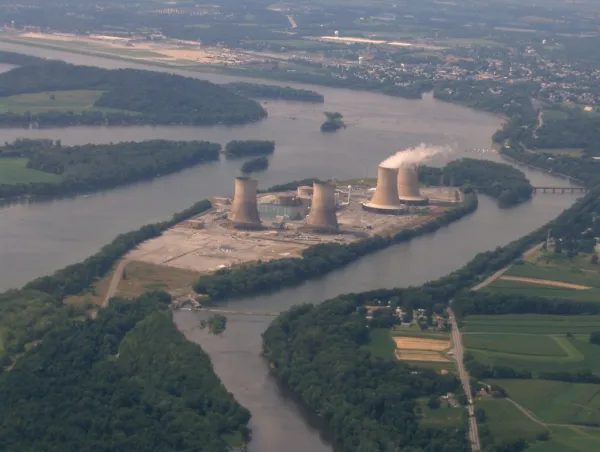
Radioactive: The Women of Three Mile Island is the title of a newly-released documentary feature film directed, written and produced by award-winning filmmaker Heidi Hutner, a professor of environmental humanities at Stony Brook University, a “flagship” school of the State University of New York.
With greatly compelling facts and interviews, she and her also highly talented production team have put together a masterpiece of a documentary film.
It connects the proverbial dots of the 1979 Three Mile Island nuclear plant disaster—doing so brilliantly.

All Israeli wars on the Palestinians throughout the years have been promoted and justified by Tel Aviv in the name of ‘security’ and ‘fighting terrorism’.
Israel’s biggest challenge throughout many of these wars was hardly the Palestinian Resistance, however steadfast and resilient. The challenge has always been Tel Aviv’s ability to kill many Palestinians, including civilians, without tarnishing its image internationally as an oasis of democracy and civilization.
Israel has been losing the public relations battle and rapidly so and, now, it is losing a different kind of battle as well.
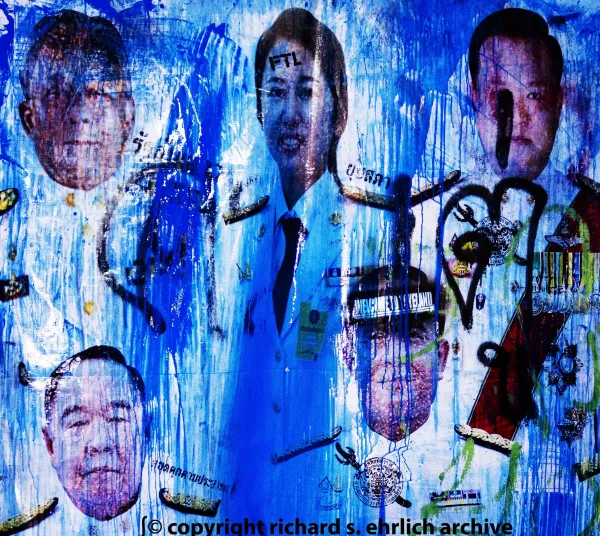
BANGKOK, Thailand -- A dynastic daughter of the billionaire, anti-coup Shinawatra family is leading opinion polls to become prime minister in Sunday's (May 14) nationwide elections, but her victory could trigger another putsch by the coup-empowered, politicized, U.S.-trained military.
Paetongtarn Shinawatra and her Pheu Thai (PTP) "For Thais" party's massive popularity sparked warnings by Thai media, politicians, academics, and others that the military may ignore the majority or crush them with fresh coup.
Responding to Thailand's latest public spasm of coup anxiety, Army Chief Gen. Narongpan Jittkaewtae told reporters on May 11:
"I can assure you that what occurred in the past, the chance is zero now," Gen. Narongpan said.
The army chief censored himself -- and asked all journalists to conform -- against uttering, publishing, or looking up the dictionary definition of the word "coup".
His linguistic demand made it difficult for him to say bluntly no coup would happen, and instead limited him to euphemisms.
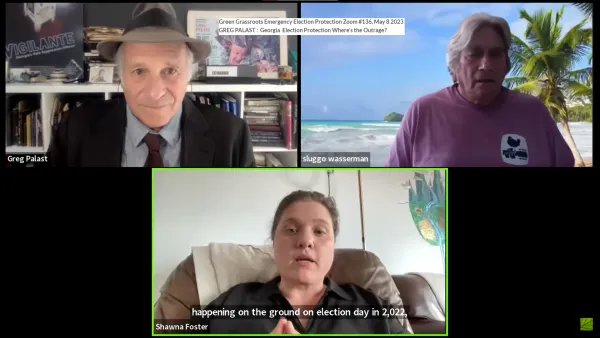
With his stunning revelations about mass partisan disenfranchisement in the Florida 2000 presidential fiasco, Greg god-fathered the modern election protection movement.
He played a key role in the reporting that came out of Ohio 2004, and too many additional “irregularities” that have surfaced since.
He has continued this incredibly important work most recently with his documentary film VIGILANTE, about Jim Crow election theft in current-day Georgia.
Greg also has a long history in reporting on atomic energy, and gives us a deep, knowledgeable presentation on the latest “Nuke Renaissance.”
There is no one on the American media scene with more to say about where we’re at than Greg Palast. Don’t miss this amazing show.
No Nukes! No More Coup Selections.

More mass killings. More bloody “normal” — not just in Texas, not just in the United States, but around the world.
Eerily, Texas Gov. Greg Abbott inadvertently reminded us of the international nature of this scourge when he referred to five recent murder victims, in a tweet announcing a $50,000 reward for the killer, as “illegal immigrants.”
Hey, this is a divided world! Were you aware of that?
There’s “us” and there’s “them” — which apparently is a viewpoint that a mass shooter shares with the governor of Texas. Abbott, of course, was inundated with flak and wound up apologizing for his careless tweet, but the reality of it won’t go away. A private belief —that someone’s immigration status matters more than life itself — suddenly went public.

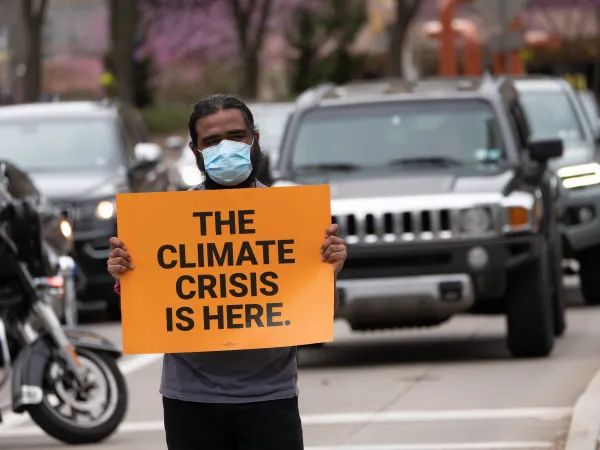
Re “The Tragedy of Fox News,” by Bret Stephens (column, April 26):
We’ve heard this plea before: If only there were a rational, honest, center-right party or news source!
Mr. Stephens and similar lamenters don’t indicate what such a party’s positions would be, other than general shifts to more liberal democratic ideals.
The fact is, the agendas of these center-right Republicans have already won the day. We live in a country dominated by their policies, which today’s Democrats either acquiesce to or try vainly to mitigate, while occasionally passing a measure that’s inadequate to solve a problem.
So the wealth gap steadily increases; the rich continue to evade fair taxation; the prospects of the poor continue to worsen; the judicial system incarcerates disproportionate numbers of minorities; military-style weapons continue to proliferate, resulting in an absurd rate of mass shootings; debt handicaps the young and the poor; and the list goes on.

Today, the Nuclear Regulatory Commission (NRC) announced it approved licensing for Holtec International’s controversial consolidated interim storage facility (CISF) in southeastern New Mexico’s Lea County, not far from the Texas border. The facility is designed to store high-level radioactive waste from nuclear power plants across the U.S. But NRC approval notwithstanding, a recently enacted New Mexico State law and multiple federal court challenges may yet block the project.
Holtec’s Bid to Enter the Nuclear Waste Storage Business

Recent developments in Washington relating to Ukraine and the Middle East remind me that there is a big difference between maintaining secrecy when a situation warrants it and lying over issues where there is no compelling reason to do so beyond political expediency. Having spent more than twenty years in American intelligence agencies where secrecy was the operative norm, I would illustrate that difference as follows: a legitimate secret would be something like not revealing information that would place people or vital national interests in jeopardy, while a lie would be committing a crime and fabricating a narrative that would deny or obfuscate that anything dire had actually taken place. When it comes to lying, I am, of course, referring to the bizarre behavior by the United States government, most particularly ever since 9/11, to commit war crimes and then come up with reasons for its foreign and national security policies to have taken a singular aggressive and coercive turn not justified by reality or by any real threat.