
Global
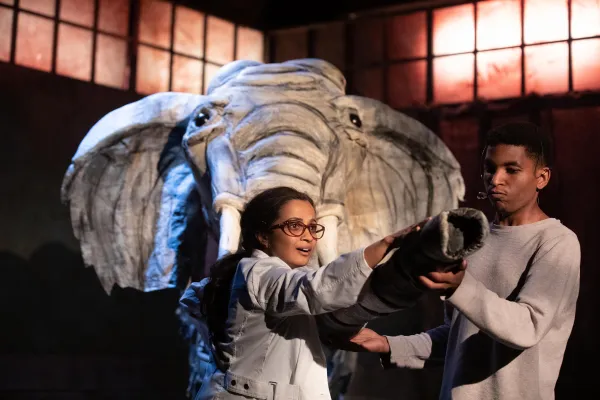
In lesser hands, Rogue Machine Theatre’s production of Bekah Brunstetter’s Miss Lilly Gets Boned could have been a conventional crowd pleasing rom com. Instead, this one act play veers wildly off of the tried and true primrose path into uncharted territory which hasn’t been explored much on the boards since Eugene Ionesco’s 1959 Rhinoceros. (Interestingly, Rogue’s Co-Artistic Director, Guillermo Cienfuegos, helmed an unforgettable version of Ionesco’s play in 2017 at Pacific Resident Theatre, which like Rogue’s current venue is in Venice.)

Senator Cory Booker has become a Pro-Nuke Holocaust Denier and must not be president or vice.
As desperate mostly-young millions march worldwide for the survival of our Earth, Booker embraces explosive atomic 500-F climate killing machines that are roasting Her.
As desperate mostly-young millions march worldwide for the survival of our Earth, Booker embraces explosive atomic 500-F climate killing machines that are roasting Her.
Any of our 96 badly run, rarely inspected US nukes could explode into a nuclear holocaust at any time.
In Booker’s New Jersey, three dying public-subsidized nukes spew heat, radiation, and carbon. Their safety is “guaranteed” by Trump’s fake Nuclear Regulatory Commission. They’re dangerously decrepit, but what’s he done to guarantee their safety? (Hint: they can’t get private insurance).
Now he’s Trump-style slandering the global grassroots safe energy movement for demanding nuke accountability.
Nuke reactors spew gargantuan quantities of waste heat and deadly radiation. That includes Carbon 14, a global warming agent.

Many Canadians have been closely following the beginning of the Trump presidency, watching in shock and horror as Trump passes a series of authoritarian executive orders.
One executive order in particular, planned for the near future, is poised to resurrect one of the darkest chapters in recent American history. I’m talking about the potential reopening of CIA “black sites”—secret prisons where detainees were systematically tortured during the War on Terror.
In 2009, President Obama ordered that these black sites be closed, consigning the episode, perhaps prematurely, to history—alongside a long list of past American crimes.
Accompanying it on that list is a similarly chilling episode that played out right here in Montreal, but which has since been largely forgotten.
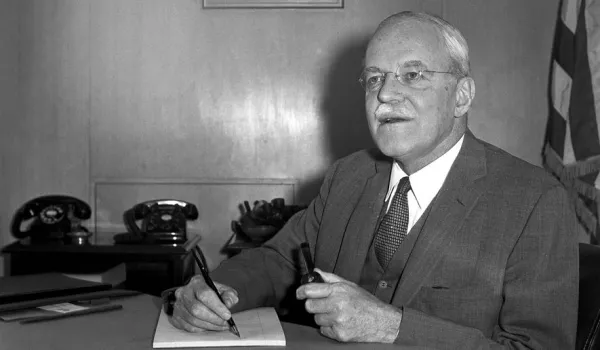
Nestled cozily at the foot of Mount Royal, in the middle of the McGill University campus, is the Allan Memorial Institute. Sixty years ago, the now-weathered building was an unlikely accomplice to a series of human experiments designed to study methods of drug-induced mind control.

The world premiere of Leda Siskind’s thought provoking, topical The Surveillance Trilogy is so perfectly timed - opening the same week that Edward Snowden’s book Permanent Record has been published and the Trump administration is mired in an alleged whistleblower scandal - that one of three things must have happened:
1) Trilogy’s publicist is a marketing mastermind who contrived for Snowden to reappear on the world stage and for the Inspector General/Director of National Intelligence/Trump whistleblower brouhaha the same week this play opened, as publicity stunts for Trilogy;
OR:
2) The playwright is a theatrical Nostradamus with the gift of prophecy;
OR:
3) The insightful Ms. Siskind has her finger on the pulse of our times.
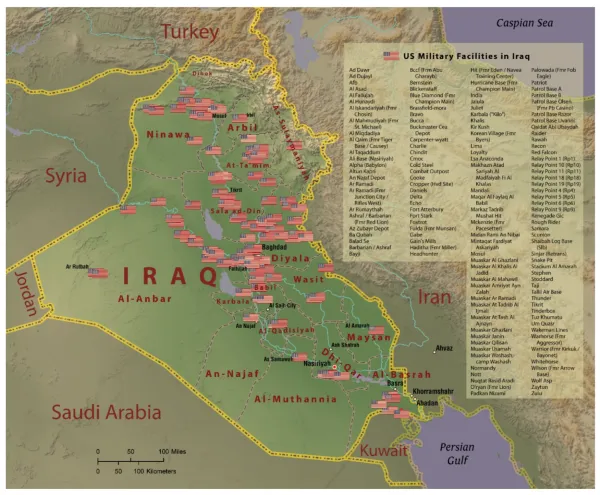
In the years following 2003, the U.S. military dotted Iraq with over 500 military bases, many of them close to Iraqi cities. These cities suffered the impacts of bombs, bullets, chemical and other weapons, but also the environmental damage of open burn pits on U.S. bases, abandoned tanks and trucks, and the storage of weapons on U.S. bases, including depleted uranium weapons. Here’s a map of some of the U.S. bases:
This map and the other illustrations below have been provided by Mozhgan Savabieasfahani, one of the authors of a forthcoming article in the journal Environmental Pollution. The article documents the results of a study undertaken in Nasiriyah near Tallil Air Base. Nasiriyah was bombed by the U.S. military in 2003 and in the early 1990s. Open-air burn pits were used at Tallil Air Base beginning in 2003. See a second map:

 Harvey Wasserman
Article Tools
Harvey Wasserman
Article ToolsE-mail | Print
Comments (2) FB comments (0)
Energy Policy by Harvey Wasserman | September 21, 2019 - 5:50am
Senator Cory Booker has become a Pro-Nuke-Holocaust Denier and must not be president or vice.
As desperate mostly-young millions march worldwide for the survival of our Earth, Booker embraces explosive atomic 500-F climate killing machines that are roasting Her.
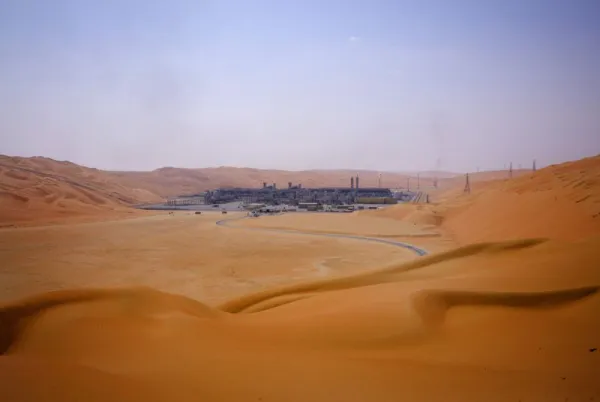
Attacks on two Saudi Arabian oil facilities on Saturday reportedly reduced the production of Aramco, the state oil company, by one half. It was a devastating demonstration of just how vulnerable the Kingdom’s oil economy actually is. Initial reports suggested that the damage had been caused by explosive drones launched by the Houthi rebels in Yemen, who claimed responsibility, but there has been considerable skepticism regarding whether the drones available to the Houthi could actually have carried out the attack.
Inevitably, the United States and the Saudis are blaming Iran, which has often been accused of being the Houthi’s sponsor. U.S. Secretary of State Mike Pompeo quickly claimed there was no evidence that the attacks emanated from Yemen and blamed Tehran, tweeting predictably that “amid all the calls for de-escalation, Iran has now launched an unprecedented attack on the world’s energy supply.”
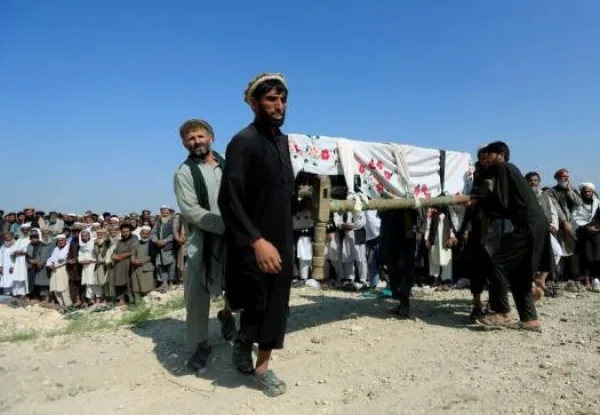
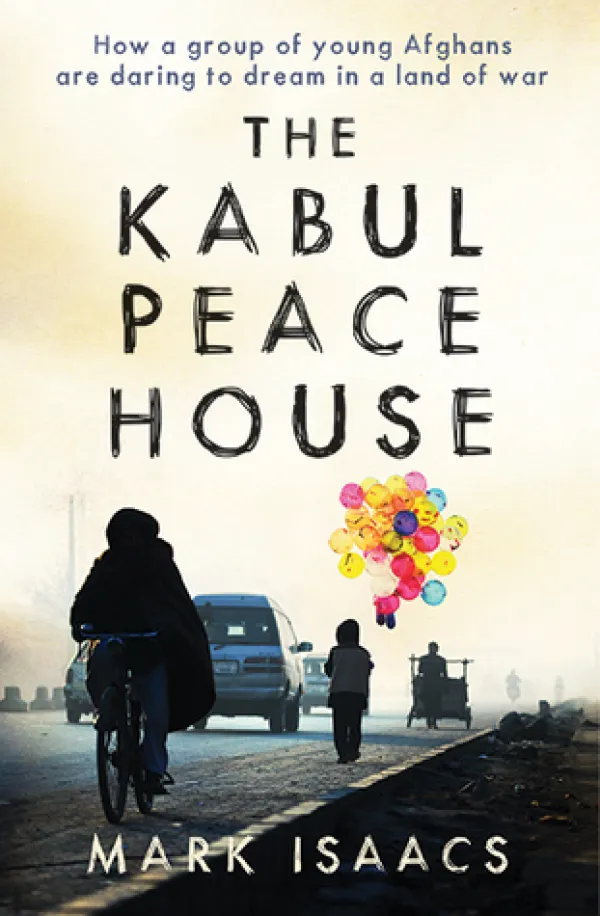
I have just read a superb book by Mark Isaacs, an Australian who has documented several years of effort by a group of incredibly committed young people in Afghanistan to build peace in that war-torn country the only way it can be built: by learning, living and sharing peace.
The book, titled The Kabul Peace House: How a Group of Young Afghans are Daring to Dream in a Land of War, records in considerable detail the struggle, both internal and external, to generate a peaceful future in Afghanistan. Some might consider this vision naive, others courageous, but few would doubt the simple reality: it is slow, daunting, incredibly difficult, often saddening, frightening, infuriating or painful, sometimes uplifting or hilarious and, just occasionally, utterly rewarding.