
Global

It’s early 2019, and Brazil’s up surging right-wing elects Jair Bolsonaro, a retired army Captain. With it, comes a new administration alongside him, carrying the promises of a political shift away from the claws of corruption which have historically scarred the Latin American country’s turbulent political past.
Brazil’s still young democracy felt the tension of electing a pro-military strongman figure considering its worrisome relation with its military, which ruled the country through means of a dictatorship up until 1985.
Known for his controversial remarks, ranging from misogynistic statements to outright disregard for the rights of minorities and democratically established institutions, Bolsonaro’s reputation did not favor him when he came into office. Having significant low approval ratings from the start, the new president would have to gain the public’s trust. And by appointing lauded experts of their field as ministers of his administration, he found a way.
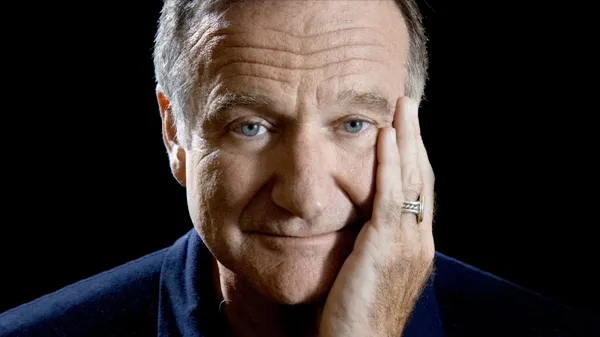
55 years ago (July 2, 1961) an American literary icon, Ernest Hemingway, committed suicide at his beloved vacation retreat in Ketchum, Idaho. He had just flown to Ketchum after being discharged from a psychiatric ward at the Mayo Clinic in Rochester, MN where he had received a series of electroconvulsive “treatments” (ECT) for a life-long depression that had started after he had experienced the horrors of World War I. In the “War To End All Wars” he had been a non-combatant ambulance driver and stretcher-bearer.
One of Hemingway’s wartime duties was to retrieve the mutilated bodies of living and dead humans and the body parts of the dead ones from the Italian sector of the WWI battle zone. In more modern times his MOS (military occupational specialty)might have been called Grave’s Registration, a job that - in the Vietnam War - had one of the highest incidences of posttraumatic stress disorder (PTSD) that arose in that war’s aftermath.

BANGKOK, Thailand -- After shooting dead an army gunman on February 9
in a Korat shopping mall where he killed 29 people, security forces
faced the difficult task of securing weapons, ammunition and vehicles
at military bases throughout the country to prevent a repeat of
Thailand's worst mass shooting of civilians in modern history.
The military may also want to examine the wisdom of having many of its
senior, most experienced officers busy playing politics, running
ministries, plus leading and supporting coups instead of focusing on
tightening discipline and access at their bases and barracks.
It is impossible to stop a lone gunman determined to kill innocent
people at a undefended venue anywhere in the world.
Mass shootings of civilians are rare in Thailand, unlike the United
States and some other wealthier, more advanced countries.
The shopping mall massacre in Korat, a northeast city also known as
Nakorn Ratchasima, showcased heroic, altruistic, unarmed security
guards who bravely escorted terrified customers to safety during the
17-hour ordeal.

BANGKOK, Thailand -- Thailand's health minister has provoked outrage
by demanding a warning to embassies and the deportation of all "those
damn Caucasian tourists" if they do not wear medical face masks, even
if they do not suffer from the coronavirus.
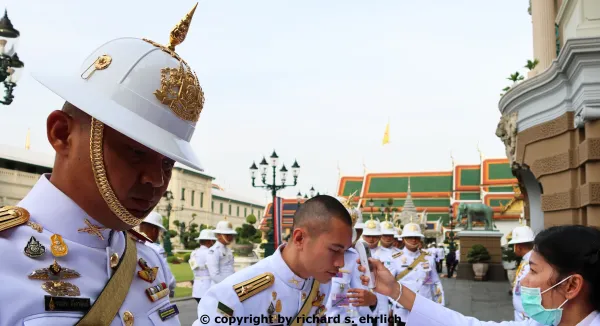
Health Minister Anutin Charnvirakul, who is not a doctor, shocked the
public when he broke medical protocol and pulled down his own mask, so
it dangled under his chin before angrily cursing Caucasian tourists on
February 7 at a busy public rail station in Bangkok.
He had offered -- with his bare, ungloved hands -- some unwrapped,
unsterilized medical face masks to wary random foreigners who walked
away.
Mr. Anutin then unleashed a stream of verbal abuse during a photo
opportunity showcasing to the media how he dealt with the coronavirus.
"Those damn Caucasian tourists, that is something the embassies should
be notified of, and the public as well, that they are not wearing
medical face masks.
"We are handing them [medical face masks] out and they still refuse.
As a center of elite power, the Democratic National Committee is now floundering. Every reform it has implemented since 2016 was the result of progressive grassroots pressure. But there are limits to what DNC Chair Tom Perez is willing to accept without a knock-down, drag-out fight. And in recent weeks, he has begun to do heavy lifting for corporate Democrats -- throwing roadblocks in the way of the Bernie 2020 campaign as it continues to gain momentum.
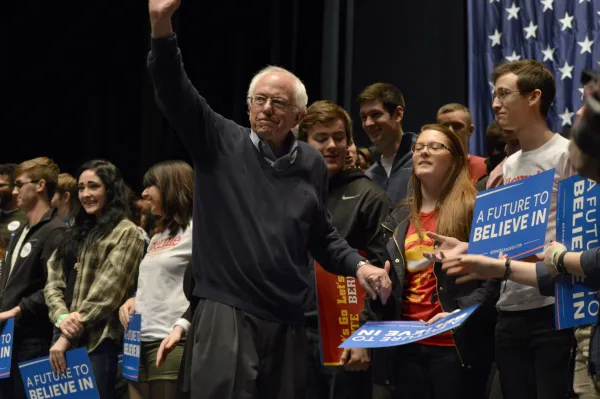
You’d think that a presidential campaign backed by 40 billionaires and untold numbers of bundled rich people wouldn’t worry about just one leaflet on Medicare for All.
But minutes after Pete Buttigieg finished speaking in an auditorium at Keene State College in New Hampshire on Saturday, a Pete for America official confronted me outside the building while I was handing out a flier with the headline “Medicare for All. Not Healthcare Profiteering for the Few.”
“You can’t pass that out,” the man told me. I did a double take, glancing at the small “Pete” metal badge on his lapel while being told that he spoke on behalf of the Buttigieg campaign.

BANGKOK, Thailand -- When Thailand's popular, anti-government graffiti
artist Headache Stencil wrote racist rants about Chinese infected with
the coronavirus, many of his Thai and foreign fans were shocked,
outraged, and disgusted.
"Hey Chink! Please go back to ur shit-eating country. Our government
need ur money to keep their power but you all not welcome for us now.
#notwelcometothailand #backtourchinklandpls," wrote @headachestencil
on his Twitter site on January 26, which had more than 6,000
followers.
The English-language slur against Chinese is not common in Thailand,
so the artist apparently wanted foreigners to also see his post.
Headache Stencil often tweets several times a day but mostly in Thai language.
Starting in 2018, he gained wide support and pride of place in some of
Bangkok's edgy art galleries when he illustrated Bangkok's dilapidated
streets with wall graffiti showing a large clock, politicians' faces,
and other satirical imagery.
During that year, one of his graffiti targets was coup-installed
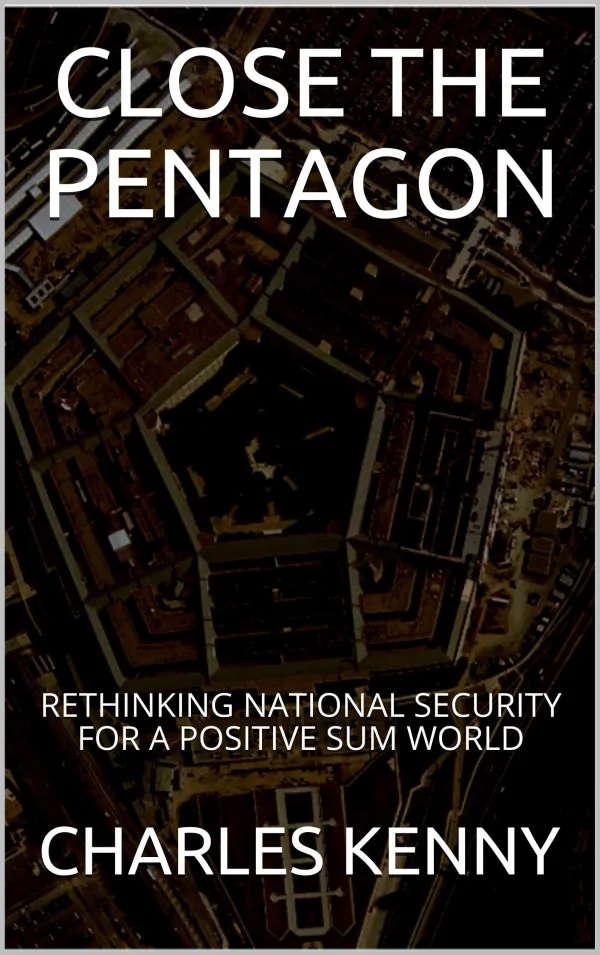
Charles Kenny’s book, Close the Pentagon, has an endorsement from Steven Pinker despite wanting to close something that Pinker rarely acknowledges exists.
This is a book to answer the question: What if someone who believed that war was only committed by poor, dark, distant people, and had therefore almost vanished from the earth, were to encounter the U.S. military and the U.S. military budget?
The answer is basically a proposal to move the money from militarism to human and environmental needs — and who doesn’t want to do that?
And if people who think war is almost gone and disappearing on its own can nonetheless be motivated to help end war-making by what they consider a bit player and what Dr. King correctly labeled the greatest purveyor of violence on earth, so much the better!
But a strategy to make it happen is going to need to be in greater contact with the real world than is a book that contains words like these: “If the U.S. wants to reduce the number of civil wars and their resulting spillovers . . . .”

The Anti-Blacklist/HUAC/McCarthyism community and free speech champions everywhere have lost two of our historic giants. It has been widely reported that actor/producer KIRK DOUGLAS passed away at the age of 103. It is gratifying that news reports have noted that Kirk played an important, courageous role in breaking the Hollywood Blacklist and cited 1960’s Spartacus as probably his most iconic role.
As you likely know, it was with that epic movie that Kirk helped end the Blacklist by allowing screenwriter DALTON TRUMBO, one of the HOLLYWOOD TEN - who’d been banned from (openly) making movies since 1947 - to publicly have screen credit. Just as OTTO PREMINGER bravely did that same year, for the Trumbo-scripted Exodus.
BANGKOK, Thailand -- Public anger is increasing against Thailand's
military-backed government for its handling of Wuhan's deadly
coronavirus, because Bangkok's toll is among the biggest number of
infected people outside China.
"The country is now in the stage of disease transmission," said
Disease Control Department director-general Dr. Tanarak Plipat in a
warning for tourists and others.
"Since they are staying in places full of foreign visitors, tourists
are likely to be in areas of disease transmission."
As for "the degree of risk concerning the disease in Thailand, chances
of contraction remain low in this country," Dr. Tanarak said.
Twenty-five people in Bangkok had confirmed virus infections as of
February 6, the Health Ministry said.
Twenty-one of them, including a Thai woman, arrived in Bangkok from
Wuhan, the city in China believed to be the source of the outbreak of
the mysterious disease.
No coronavirus deaths were reported in Thailand, and some quarantined
victims recovered and were released.